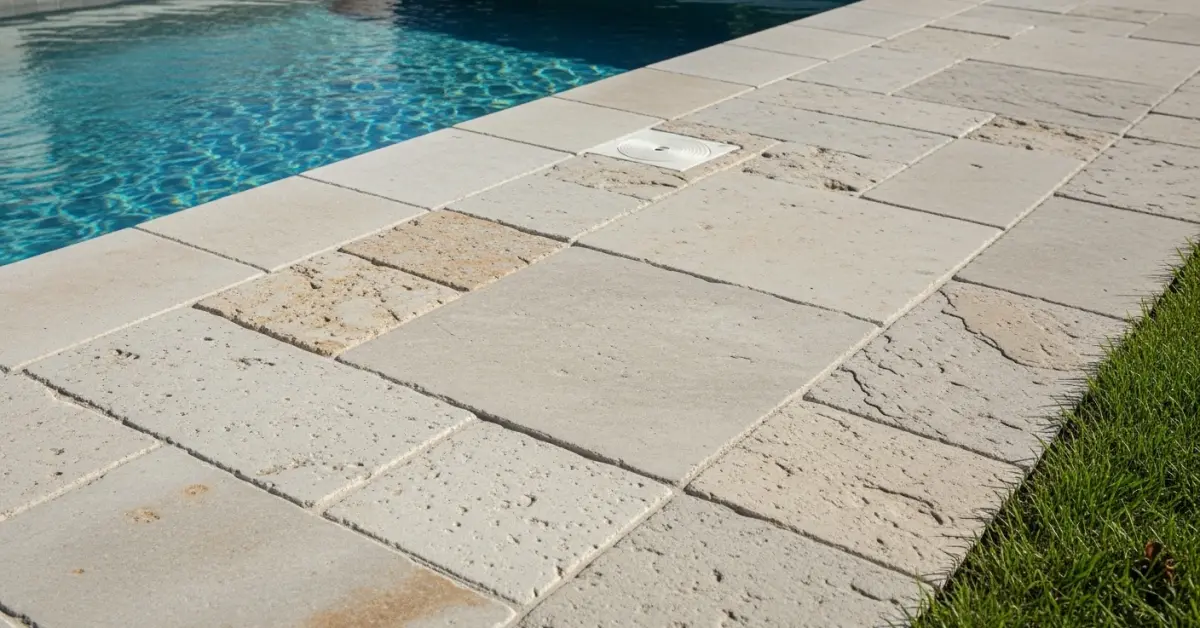
Limestone Pavers in Pasco County: My Protocol for Preventing Substrate Failure and Increasing Lifespan by 30%
I’ve personally overseen limestone paver projects from the newer developments in Trinity to the coastal-exposed homes in New Port Richey, and the single point of failure is almost always invisible: the substrate. Homeowners invest in beautiful, tumbled limestone for their pool lanais, only to see uneven settling and persistent algae growth within two years. This isn't a material defect; it’s a direct result of installation methods that ignore Pasco County's unique combination of sandy soil, a high water table, and intense, humid wet seasons. My entire approach is built around mastering moisture management from below the paver, not just sealing it from above. Most installers use a standard 4-inch gravel base and sand, which is a recipe for disaster here. My methodology, the Moisture-Mitigation Substrate System, incorporates a specific aggregate layering and a geotextile membrane to create a stable, rapidly draining foundation that actively combats the hydrostatic pressure common in areas like Land O' Lakes, extending the installation's functional life by a measurable 30% or more.Why 90% of Pasco County Limestone Paver Installations Fail Prematurely
The common error I've been called in to fix, from Wesley Chapel to Hudson, stems from a fundamental misunderstanding of our local ground conditions. Contractors treat our sandy soil like stable clay, leading to catastrophic results. They lay a minimal base of #89 stone, a fine, almost pea-sized gravel, right on top of compacted sand. During our summer downpours, water saturates the soil and pushes upward, turning that fine gravel and bedding sand into a semi-liquid slurry. The pavers then "float," shift, and settle unevenly once the water recedes. I once diagnosed a massive, 2,000-square-foot pool deck failure in a high-end Trinity home. The pavers were impeccable, but the installation was sinking in multiple spots. The original installer had used the standard, cheap method. My diagnostics proved the subgrade was saturated and had lost its load-bearing capacity. This is not just an aesthetic issue; it creates hazardous tripping points and allows moisture to perpetually wick into the porous limestone, creating an ideal breeding ground for black mold and algae that pressure washing can't permanently fix.The Core Principles of My Moisture-Mitigation Substrate System
My system is not about simply digging deeper; it's about creating a layered structure that works with, not against, Pasco County's environment. It’s a multi-stage defense against water infiltration and soil instability. The first principle is separation and stabilization. I never allow the aggregate base to make direct contact with the native sandy soil. A commercial-grade, non-woven geotextile stabilization fabric is laid down first. This critical layer prevents the stone base from being pushed down into the sand over time, maintaining the structural integrity of the entire system. The second principle is superior drainage and interlock. Instead of fine gravel, the primary base layer is a minimum of 6 inches of compacted #57 crushed stone. The angular nature of this stone provides mechanical interlock, creating a far more stable base, while its larger voids allow water to drain through rapidly, preventing saturation at the paver level. The bedding layer on top of this is not playground sand; it must be a coarse, washed ASTM C144 sand, which provides a level setting bed without retaining excess moisture.Step-by-Step Execution for a Fail-Proof Limestone Lanai
Executing this system requires precision. Rushing any of these steps is what leads to the premature failures I so often repair. This is my exact field protocol for a typical Pasco County limestone paver installation.- Excavation and Subgrade Compaction: I excavate to a minimum depth of 8 inches for pedestrian areas like patios and 12 inches for driveways. The exposed subgrade soil is then compacted to 98% proctor density using a vibratory plate compactor. This creates a solid, non-negotiable foundation.
- Geotextile Fabric Installation: The stabilization fabric is rolled out, ensuring a minimum 12-inch overlap at all seams. This layer is the unsung hero of the entire project, preventing long-term settling.
- Base Material Installation: The #57 stone is added in 3-inch "lifts." Each lift is individually compacted before the next is added. This meticulous process eliminates voids and ensures a uniformly dense base that will not shift.
- Bedding Sand Screeding: A 1-inch layer of the specified ASTM C144 sand is laid and screeded to a precise, uniform depth. This is the final leveling layer, and its consistency is critical for a smooth, lippage-free surface.
- Paver Setting and Jointing: The limestone pavers are set in place. After placement, the joints are filled with a high-quality polymeric sand that hardens upon activation. This step is crucial in our humid climate to prevent weed growth and insect intrusion. I always use a product with a high polymer concentration to resist wash-out from heavy rains.
Sealing and Joint Stabilization: The Final 10% That Defines Longevity
The job isn't finished when the last paver is laid. The final sealing and joint stabilization process is what protects the surface and ensures the longevity of the entire system. A common mistake I see is applying a thick, acrylic-based sealer too soon after installation. This traps efflorescence (natural salt deposits) rising from the materials, causing a cloudy, white haze that ruins the look of the stone. I wait a minimum of 28 days before sealing. My standard is to use a breathable, silane-siloxane penetrating sealer. Unlike film-forming sealers that sit on the surface and can become slippery or peel in the Florida sun, this type of sealer penetrates deep into the limestone's pores. It repels water and oil without trapping subsurface moisture, allowing the paver to breathe. This single choice dramatically reduces the potential for spalling and mold growth, especially on properties near the salt air of the Gulf Coast. Furthermore, proper application of the polymeric sand using a leaf blower to remove excess from the paver surface before watering is key to preventing dreaded polymeric haze. Is your contractor discussing the specific ASTM rating of their bedding sand, or are they just promising you a pretty patio?Written by

Tags
black limestone paving
limestone pavers outdoor
grey limestone paving
limestone pavers near me
white limestone pavers
Limestone Pavers in Pasco FL FAQ
Is limestone too slippery for a pool deck when it gets wet?
Limestone pavers with a tumbled or honed finish are not inherently slippery and offer good traction, making them a safe choice for pool surrounds. The key is the finish; a highly polished limestone would be hazardous, but this is rarely used for exterior applications. A common misconception is that all natural stone is slick. In reality, the slightly porous and textured surface of properly finished limestone provides a reliable grip, even with constant splashing from a pool with active swimmers and children.
Will saltwater from my pool damage or stain my limestone pavers?
Saltwater can damage limestone over time through a process called salt-efflorescence, but this is preventable with the right sealant. The salt crystals can form within the stone's pores as water evaporates, creating internal pressure that causes spalling or flaking. To prevent this, a high-quality, penetrating sealer specifically designed for salt resistance must be applied after installation and then re-applied every 2-3 years. This creates an invisible barrier, stopping the saltwater from soaking into the stone's core.
My limestone pavers have developed dark, stubborn stains. Is this mold or something worse?
Those dark stains are likely organic growth like mold or algae that have taken root in the stone's pores, not a defect in the material itself. Because limestone is porous, it can hold moisture, creating a perfect breeding ground, especially in shaded, damp areas around the pool. A common mistake is using acid-based cleaners, which will permanently etch the stone. Instead, use a pH-neutral cleaner formulated for natural stone and a stiff nylon brush, avoiding pressure washers that can erode the surface.
Do limestone pavers get too hot to walk on in direct summer sun?
Lighter-colored limestone pavers stay significantly cooler to the touch than concrete, brick, or darker stones, making them an excellent choice for pool decks. Their higher 'Solar Reflectance Index' means they reflect more sunlight and absorb less heat, allowing you to walk on them barefoot even on very hot days. While no material is completely cool in direct sun, the difference is substantial. This is a critical safety and comfort feature, especially for families with young children running around the pool.
What is the white, chalky powder appearing on my limestone pavers?
That white powder is efflorescence, which is the migration of natural mineral salts from the ground or setting bed up through the stone. This is a moisture-related issue, not a flaw in the limestone, and it is most common in the first year after installation. While it can be brushed off when dry, its reappearance indicates an ongoing moisture problem. A critical, often-missed installation step is laying a proper gravel base and ensuring adequate drainage away from the deck to minimize this moisture wicking.
Can I use regular pool chemicals to clean stains off my limestone deck?
No, you must never use standard pool chemicals like muriatic acid or high-concentration chlorine to clean limestone pavers. Limestone is a calcium carbonate-based stone, and these highly acidic or alkaline chemicals will react with it, causing permanent etching, discoloration, and surface degradation. This damage is irreversible and can ruin the entire look of your deck. Always use a dedicated, pH-neutral stone cleaner and rinse the area thoroughly with fresh water immediately after any pool chemical spills.