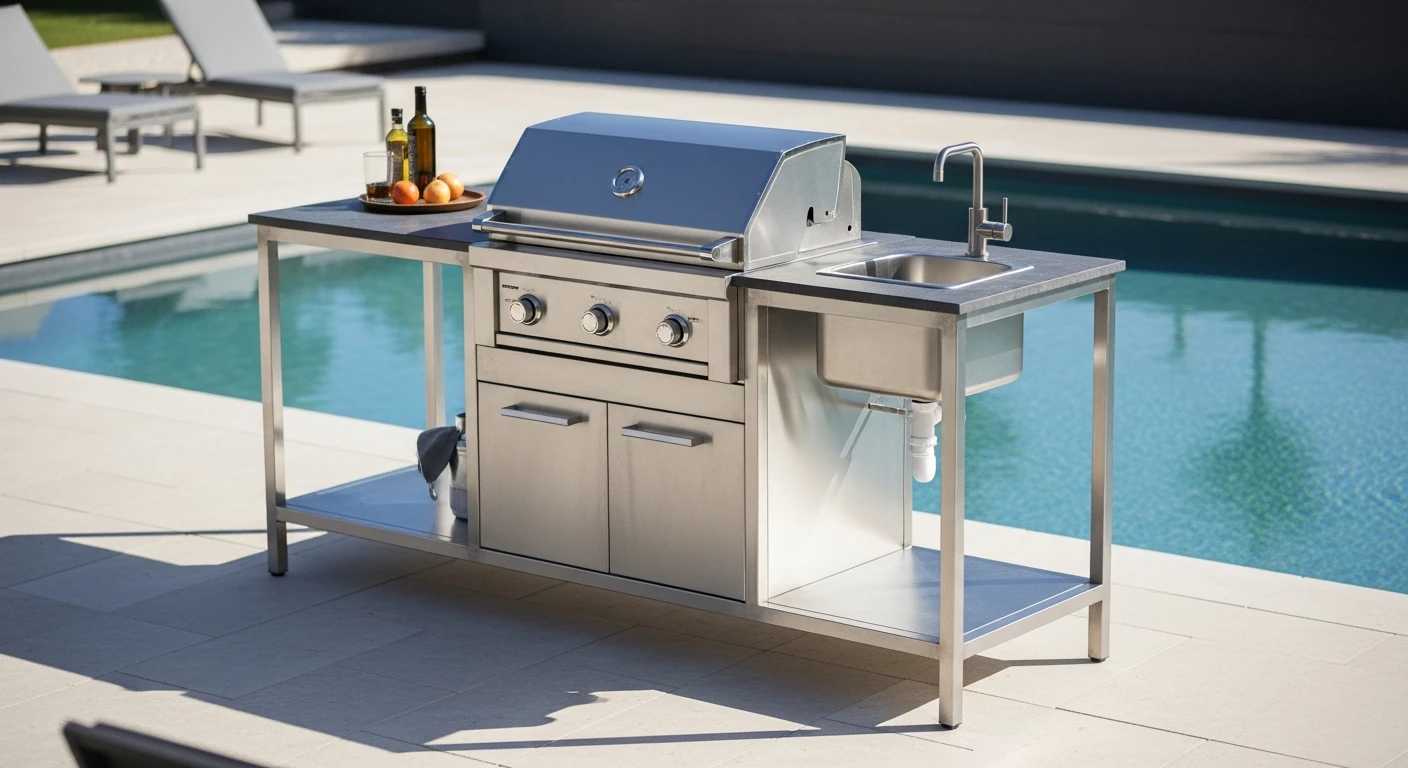
Metal Outdoor Kitchen Cabinets: A Framework for Preventing Galvanic Corrosion and Extending Lifespan by 35%
For years, I've specified and remediated outdoor kitchen projects, and I can tell you the single greatest point of failure isn't the cabinet material itself, but the interaction between components. The most common mistake I see, even in high-end installations, is overlooking galvanic corrosion. This electrochemical process can degrade a beautiful, expensive metal cabinet setup in as little as 18 months, especially in coastal or humid environments.
My entire approach is built on treating the outdoor kitchen not as a collection of parts, but as a complete material system. This means analyzing every point of contact—from the fastener to the countertop bracket—to ensure chemical compatibility and long-term structural integrity. Forget generic advice; we are talking about the specific science that separates a 5-year kitchen from a 25-year investment.
My Diagnostic Framework: The Corrosion Triad Assessment
Before any project begins, I run what I call the Corrosion Triad Assessment. It's a non-negotiable methodology I developed after seeing a six-figure project show rust staining within a single season due to the wrong choice of screws. This framework forces a critical evaluation of three interconnected elements that determine the system's longevity. It moves the conversation from "what material is best?" to "how will this system of materials behave over time in this specific environment?"
Deconstructing the Triad: Material Grade, Fasteners, and Sealing
The assessment is a deep dive into the specifics. Here's how I break it down for my clients and my team:
- Material Grade Specification: The term "stainless steel" is dangerously vague. I demand a clear distinction between 304-grade stainless steel, which is sufficient for many dry inland areas, and 316-grade (marine-grade) stainless steel. The 316 grade contains molybdenum, a critical element that provides superior resistance to chlorides found in salt air and some cleaning agents. I once had to replace an entire set of 304-grade cabinets on a coastal property because pitting and crevice corrosion appeared at the welds after just two years. For powder-coated aluminum, the focus shifts to the pre-treatment process. I require vendors to provide documentation of their phosphate wash and a minimum powder coat thickness of 2.5 mils to prevent premature failure.
- Fastener & Hardware Integrity: This is where most projects fail. Using zinc-plated or even 304-grade screws on a 316-grade cabinet creates a galvanic cell. The less noble metal (the screw) will sacrifice itself, corroding rapidly and staining the cabinet face. My rule is absolute: all fasteners must match or exceed the nobility of the cabinet material. This almost always means specifying 316 stainless steel fasteners and hardware for the entire assembly, including hinges, pulls, and leveling feet.
- Weld and Seam Sealing Strategy: Water intrusion is the catalyst for corrosion. I analyze the cabinet construction method. Fully welded bodies offer superior rigidity and fewer points of entry for moisture compared to mechanically fastened (screwed-together) panels. For any necessary seams or joints, such as where a cabinet meets a masonry wall, I mandate the use of a high-quality polyurethane sealant, not silicone, for its superior adhesion and durability in fluctuating temperatures.
- Base Preparation & Isolation: The foundation must be perfectly level. We use composite shims exclusively, as wood shims can trap moisture against the cabinet's leveling feet, creating a constant corrosion risk. The cabinet base must never sit directly in a low spot where water can pool.
- Dielectric Isolation: This is a critical step often missed. At any point where a different metal (like a countertop support bracket) must touch the cabinet, we create a barrier. A simple neoprene or nylon washer placed between the fastener, the bracket, and the cabinet body can effectively stop galvanic corrosion from initiating. This small detail has saved thousands in warranty claims.
- Controlled Tightening: Overtightening fasteners can break the passive layer on stainless steel or crack a powder coat finish, creating an entry point for corrosion. We use torque wrenches set to the manufacturer's specifications to ensure a secure fit without compromising the material's surface.
- Post-Installation Passivation: After the installation is complete, small scratches or iron contaminants from tools can compromise the stainless steel's protective chromium-oxide layer. My final quality check includes cleaning all stainless surfaces with a mild detergent and then applying a citric acid-based passivation solution. This chemically removes any free iron and forces the rapid restoration of the protective layer, effectively healing the material's "skin" before it ever leaves the job site.
Tags
outdoor metal kitchen
outdoor steel kitchen
metal stud outdoor kitchen
outdoor kitchen metal
metal outdoor bbq cabinets