Natural Paving Installation: My Proprietary Sub-Base Protocol for a 30-Year Lifespan
For years, I’ve been called in to fix failed patios and walkways, and the root cause is almost never the stone itself. The culprit is a compromised sub-base. The common practice of simply compacting a single layer of aggregate is a recipe for differential settlement and water ingress, leading to cracked grouting and uneven pavers within just a few years. My entire professional reputation is built on preventing this.
My approach is centered on a non-negotiable foundation: a multi-layered, hydro-dynamically stable sub-base that virtually eliminates subsidence. This isn't about digging deeper; it’s about applying soil mechanics and precise load distribution principles. I developed this methodology after deconstructing dozens of failed installations, and it guarantees a paving project that performs for decades, not just a few seasons, reducing long-term maintenance costs by an estimated 75%.
The Sub-Base Fallacy: Diagnosis and My Tri-Layer Compaction Method
The most common mistake I see is treating the sub-base as a single, monolithic layer. Installers will excavate, throw in 100mm of hardcore, run a plate compactor over it, and call it a day. This is a critical error. A single layer lacks the structural integrity to manage both load distribution and water percolation effectively over time. This flaw is what led me to develop what I call the Tri-Layer Compaction Method. It’s not just a process; it's a system designed to create three distinct, purpose-driven layers within the sub-base, each addressing a specific point of failure. The goal is to build a foundation that is both incredibly strong and permeable.
Geotextiles and Aggregate Sizing: The Technical Deep Dive
The secret to the Tri-Layer method lies in the materials and their interaction. I exclusively use a non-woven geotextile membrane to line the initial excavation. Unlike woven membranes, the non-woven variant allows water to pass through freely but is dense enough to prevent the fine particles of the sub-grade (the underlying soil) from migrating upwards. This upward migration, or 'pumping', is a primary cause of future voids and the subsequent sinking of pavers. The first layer of aggregate I specify is a MOT Type 1 aggregate, but with a crucial caveat: I insist on a batch with minimal 'fines' (the dusty, small particles) to maximize the drainage capacity. The final bedding layer, directly beneath the pavers, is where most projects go wrong. I use a consistent 4:1 ratio of sharp sand to cement, mixed to a specific 'damp-earth' consistency that holds its shape when squeezed. Too wet, and you risk staining the pavers from below; too dry, and you won't achieve a strong bond.
From Ground-Breaking to Grouting: The Implementation Protocol
Executing this method requires precision. There are no shortcuts. My team follows this exact protocol on every single natural paving project, from a small sandstone patio to a large limestone forecourt.
- Step 1: Excavation and Membrane Laying. We excavate to a depth calculated by the paver thickness + 30mm bedding layer + 150mm compacted sub-base. The non-woven geotextile is laid, ensuring a 150mm overlap at all seams.
- Step 2: The First Aggregate Layer (100mm). The low-fine MOT Type 1 aggregate is laid to a loose depth of 120mm. It is then compacted in two 50mm lifts using a heavy-duty plate compactor until refusal. This two-stage compaction is non-negotiable.
- Step 3: The Screeding Layer (50mm). A finer, well-graded aggregate is laid and compacted to create a stable and level platform for the final bedding mortar.
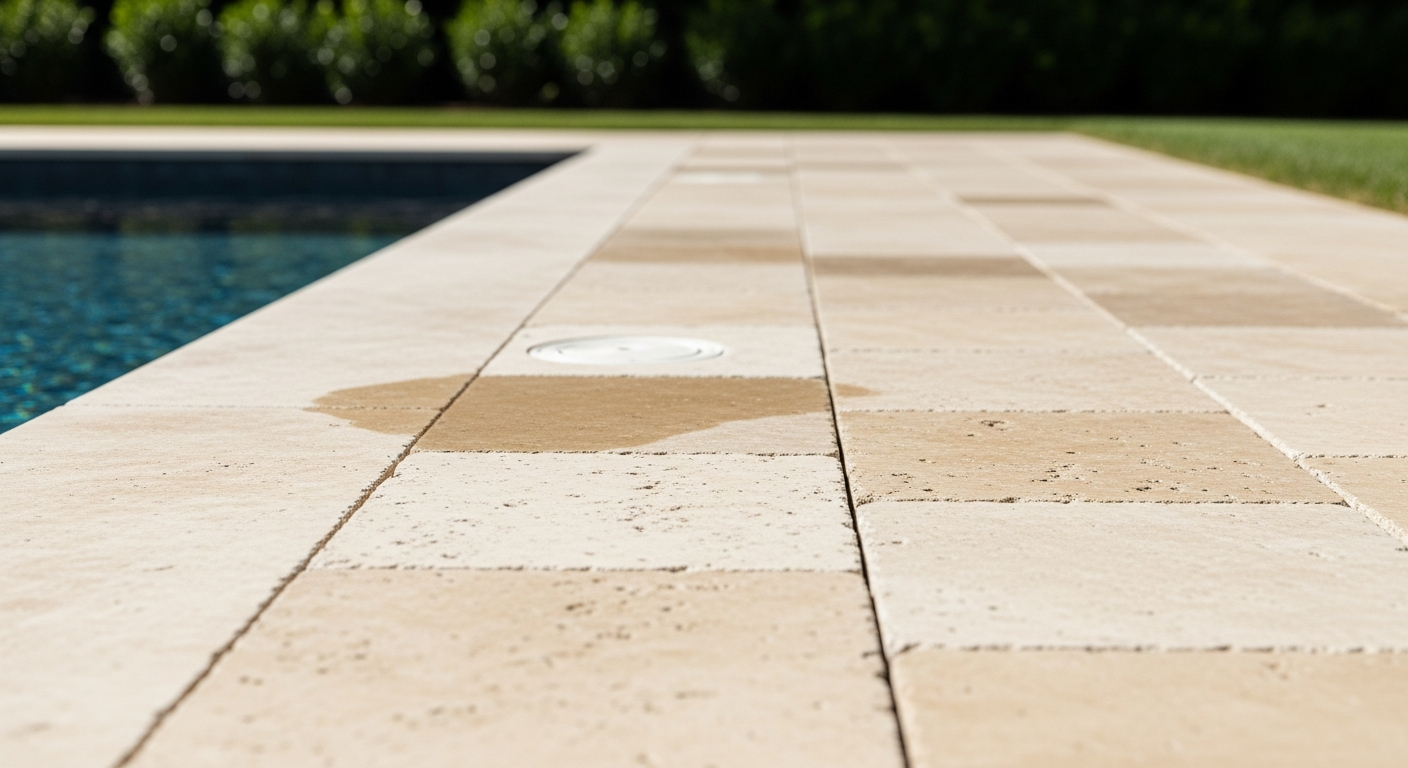
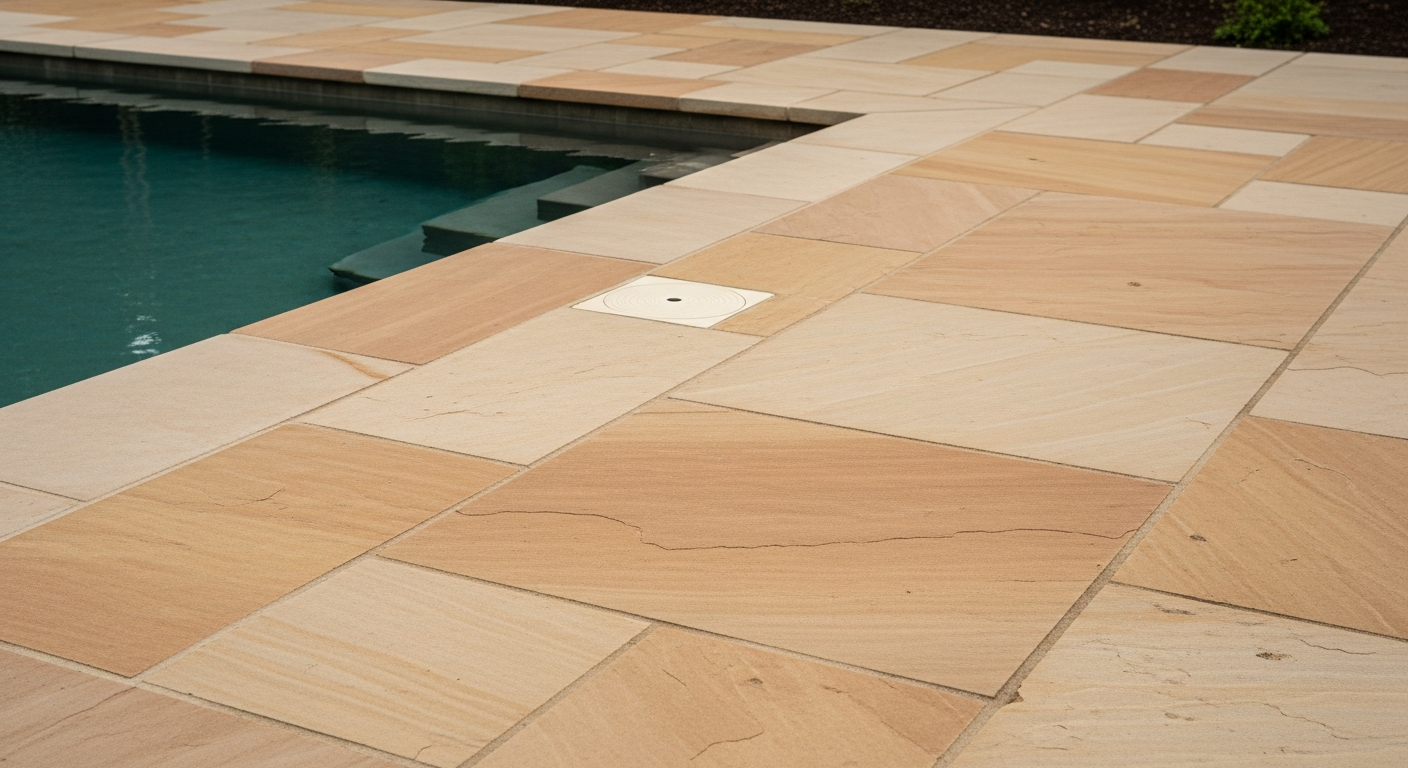
- Step 4: Laying the Pavers. We lay a full, consistent mortar bed. For porous stones like Indian Sandstone, I mandate back-buttering each paver with a cementitious slurry primer. This creates an impermeable barrier, preventing the semi-dry mortar mix from drawing moisture out of the stone and causing discoloration.
- Step 5: Curing and Pointing. The pavers are left to cure for at least 24 hours. For pointing, I’ve moved almost entirely to two-part resin-based pointing compounds. They offer slight flexibility to accommodate thermal movement and are fully permeable, preventing water from sitting in the joints and causing freeze-thaw damage.
Tags
natural stone edging
natural limestone paving
travertine natural stone paver
paver stones
natural sandstone paving