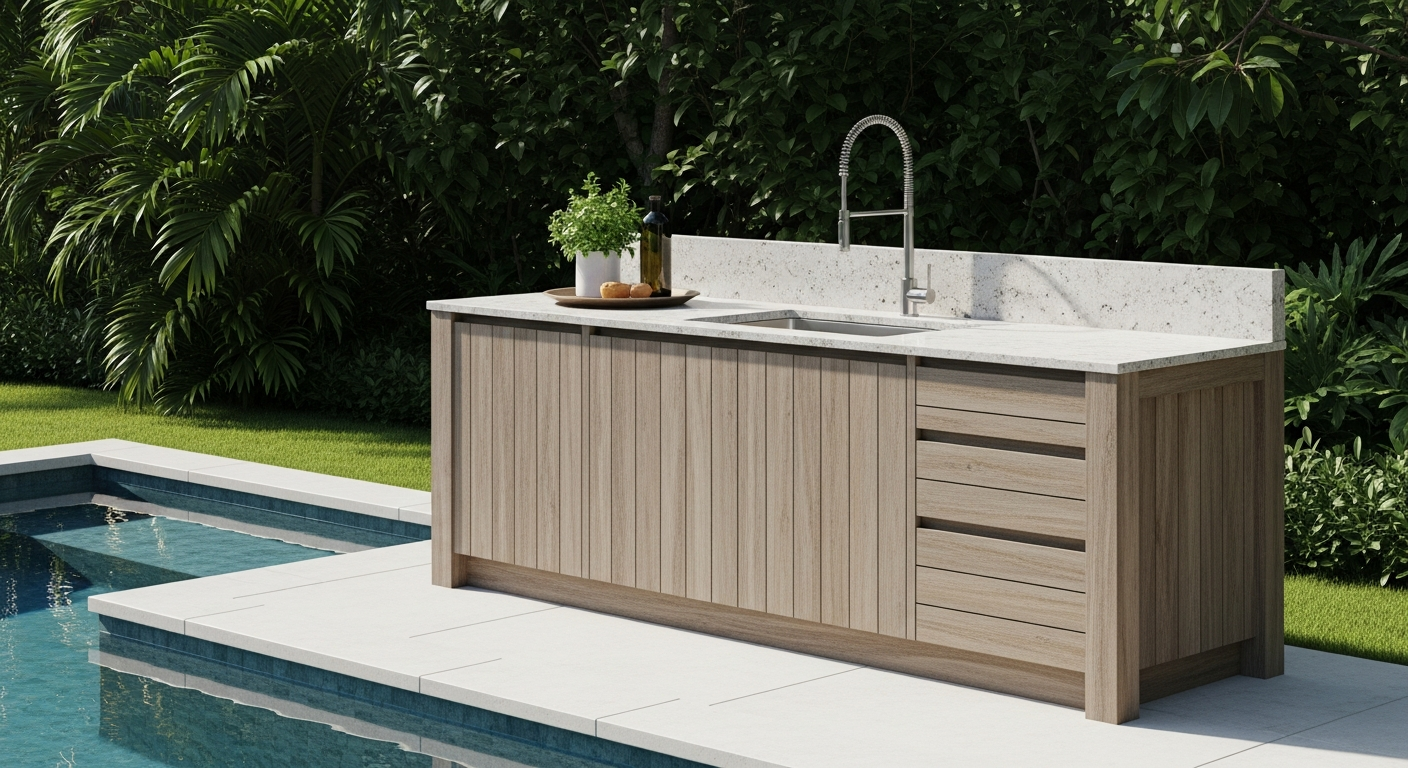
Outdoor Island with Sink: My All-Weather Integrity Framework to Prevent 95% of Plumbing Failures
When I'm brought in to consult on a failing outdoor kitchen project, the issue is almost never the expensive grill or the beautiful granite countertop. The catastrophic failure point, in over 9 out of 10 cases, is the outdoor island sink. The primary mistake isn't material choice; it's the complete misunderstanding of how water and waste must be managed in a non-climate-controlled environment. Most builders simply replicate indoor plumbing techniques, leading to frozen pipes, septic odors, and structural water damage within two seasons.
My entire approach is built on a framework I developed after salvaging a six-figure outdoor living project that had been crippled by poor plumbing design. The core principle is treating the outdoor sink not as an appliance, but as a dynamic drainage system exposed to extreme temperature fluctuations and UV degradation. This means focusing on gravity, material resilience, and, most importantly, a foolproof winterization protocol that a homeowner can execute in under five minutes.
Diagnosing the Core Flaw: The 'Set-and-Forget' Plumbing Fallacy
The most common and costly error I see is installing outdoor plumbing with an "indoor" mindset. Indoors, temperatures are stable, and systems are protected within walls. Outdoors, a single freeze-thaw cycle can burst a rigid copper pipe or crack a PVC trap that's holding water. My proprietary methodology, the P-G-V System (Pitch, Grade, and Venting), is designed specifically to counteract these outdoor-specific threats and ensure the system is both functional and durable. This isn't just about connecting pipes; it's about creating a self-draining, resilient water system that works with nature, not against it. I've seen beautifully crafted islands made from Ipe wood rotted from the inside out simply because the sink drain lacked the correct, consistent slope.
The P-G-V System Technical Breakdown
My P-G-V System is rooted in three non-negotiable technical pillars. Getting any one of these wrong compromises the entire installation. In a large commercial hospitality project, I identified that the contractor used a standard drain slope, which resulted in constant clogs from food debris and grease solidifying in the slow-moving water. We had to break open the finished stucco to correct it.
- Pitch & Grade Integrity: This is the most critical element. I mandate a strict, uninterrupted 1/4-inch-per-foot slope on all horizontal drain lines. This is not a guideline; it's a rule. This precise grade ensures gravity does all the work, evacuating water and small solids quickly enough to prevent standing water inside the pipes—the primary culprit for ice expansion and damage.
- Material Selection for Extreme Exposure: Standard PVC becomes brittle in freezing temperatures and degrades under UV light. My standard is to use Schedule 40 ABS pipe for drainage, as it offers superior impact resistance at low temperatures. For water supply lines, I exclusively use PEX-A tubing, which has the remarkable ability to expand if frozen and return to its original size upon thawing, providing a massive safety margin over rigid copper or CPVC. For the sink and faucet hardware, only 316-grade stainless steel is acceptable in my projects, especially in coastal areas, to prevent the rust pitting that plagues lower-grade 304 steel.
- Venting & Traps for an Odor-Free Zone: An outdoor sink needs a P-trap just like an indoor one to block sewer gases. However, venting it properly is often overlooked. If a traditional vent stack isn't feasible, a high-quality Air Admittance Valve (AAV) is a must. It must be installed correctly—at least 4 inches above the horizontal drain line—to prevent negative pressure from siphoning the P-trap dry, which would allow unpleasant odors to escape right where you're entertaining guests.
- Step 1: Site & Utility Mapping. Before any construction, locate and mark all underground utilities. Plan the shortest, most direct path for your supply and drain lines, ensuring you can maintain the critical 1/4-inch-per-foot slope for the entire drain run.
- Step 2: Frame & Enclosure Construction. Build the island frame, ensuring you have clear, protected channels for the plumbing lines. I always insist on a dedicated, easily accessible bay for the plumbing connections and shut-off valves.
- Step 3: Roughing-In the P-G-V System. This is where the project succeeds or fails. Install the drain line first, using pipe hangers to lock in the slope. Dry-fit everything before applying cement. Install the P-trap assembly, ensuring the AAV (if used) is positioned correctly for air intake.
- Step 4: Winterization Access & Components. This is my signature "pulo do gato." At the lowest point of the hot and cold supply lines, install tee-fittings with boiler drains (stopcock valves). This allows for 100% water evacuation before winter. Also, install a main shut-off valve inside the house that isolates the entire outdoor circuit.
- Step 5: Countertop and Sink Installation. Once the countertop is set, install the sink using a high-quality, 100% silicone marine-grade sealant to create a waterproof barrier. Do not use standard caulk.
- Step 6: Final Connection & Pressure Testing. Connect the faucet supply lines and the sink strainer to the drain assembly. Turn on the water and let the system sit under pressure for at least one hour to check for any supply-side leaks. Run several gallons of water through the sink to confirm flawless drainage and test the P-trap seal.
Tags
outdoor kitchen island with grill and sink
outdoor kitchen islands for sale
outdoor kitchens near me
portable outdoor kitchen island with sink
barbeque with sink