
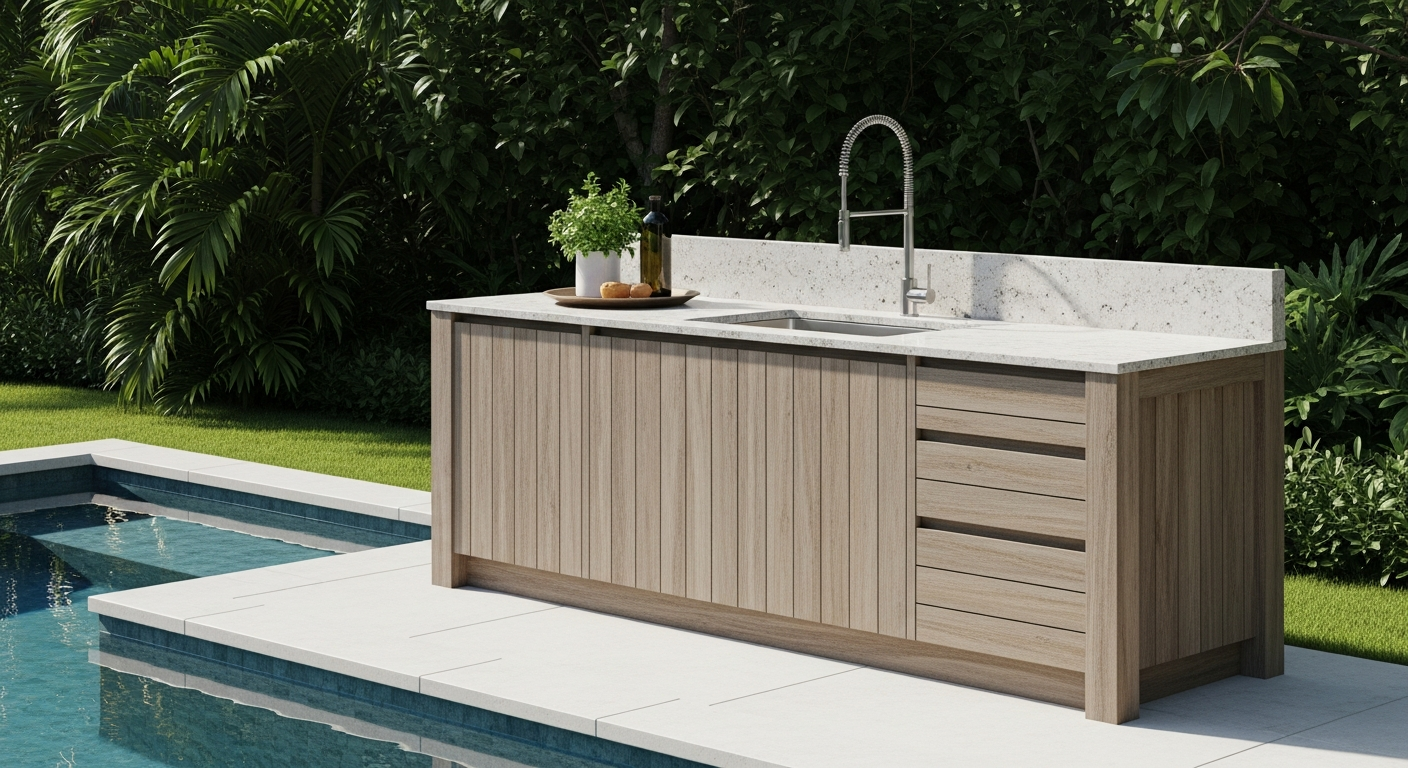
The single greatest point of failure in an outdoor kitchen isn't the grill or the countertop material; it's the cabinet and sink system. After auditing dozens of high-end residential projects that failed within five years, I discovered a recurring pattern: a fundamental misunderstanding of how materials interact with a dynamic outdoor environment. Most designers focus on aesthetics and generic weather resistance, but they ignore the critical interplay between thermal expansion, UV degradation, and substrate stability. This leads to warped doors, seized hinges, and catastrophic plumbing leaks.
My approach corrects this by prioritizing the physics of the installation over the catalog specs of the products. We're not just building a set of boxes; we're engineering a durable, functional system designed to withstand micro-shifts in the foundation and decade-long exposure to the elements. This framework moves beyond choosing "stainless steel" and into understanding which grade of steel and what type of fastener will prevent failure in your specific climate.
The Substrate-Material Mismatch: My Core Diagnostic PrincipleI once consulted on a six-figure outdoor kitchen project where the custom powder-coated aluminum cabinets were warping just 18 months after installation. The client blamed the cabinet manufacturer, but the real culprit was the foundation. The cabinets were anchored directly to a floating paver patio. The seasonal freeze-thaw cycle caused subtle heaving in the pavers, placing immense torsional stress on the rigid cabinet frames. This is the essence of the substrate-material mismatch—a mistake I see constantly.
My proprietary methodology begins not with the cabinets, but with a full analysis of the base. Is it a monolithic concrete slab, a composite deck, or a paver patio? Each one has a different tolerance for movement and requires a different anchoring and leveling strategy. Ignoring this initial diagnostic is like building a house without surveying the land. My process ensures the cabinet system can either move with the substrate or is isolated from its movements entirely, guaranteeing structural integrity for decades.
Material Science vs. Environmental StressorsSelecting the right material is a technical decision, not a decorative one. Simply choosing 304-grade stainless steel is a common first step, but it’s incomplete. In a coastal project I managed, the salty air caused surface corrosion (tea staining) on the 304-grade steel within a year. We should have specified 316L marine-grade stainless steel due to its higher molybdenum content, which offers superior corrosion resistance. For another project in a humid, shaded environment, we opted for marine-grade polymer (HDPE) cabinets. They offer zero risk of rust or water damage, but the key was engineering a rigid sub-frame to counteract the material's higher thermal expansion coefficient and prevent sagging over time.
The "pulo do gato" here is to cross-reference the material's properties with the primary environmental stressors. High UV exposure demands a material with integrated UV inhibitors, not just a surface coating. Areas with drastic temperature swings require systems with concealed expansion joints and flexible sealants. I never recommend a material without first quantifying the specific environmental load it will bear.
The A-to-Z Installation Protocol: From Footing to FaucetA perfect cabinet can be ruined by a flawed installation. I've developed a strict protocol that my teams follow to ensure the system performs as engineered. This isn't just about making things level; it's about building in resilience at every connection point.
- Substrate Validation & Isolation: We begin by measuring the flatness and stability of the base. For anything other than a monolithic concrete slab, we install an independent, galvanized steel or aluminum sub-frame. This frame is what the cabinets are secured to, effectively isolating them from ground movement.
- Leveling with Non-Corrosive Components: All leveling feet must be stainless steel or high-density polymer. I've seen standard galvanized feet rust and seize in two seasons, making future adjustments impossible. Each leg is adjusted for perfect level and plumb before a single cabinet is anchored.
- Strategic Anchoring: We use stainless steel Tapcon-style anchors for concrete and through-bolts with oversized washers for decking. The critical action is to never overtighten. The connection should be snug but allow for microscopic material expansion.
- Countertop & Sink Integration: The sink cutout is sealed with a 100% marine-grade silicone sealant, not standard exterior caulk. When the sink is installed, we ensure there is a consistent bead of sealant around the entire perimeter to create a fully waterproof barrier, preventing water from reaching the cabinet interior. This step alone has prevented a projected 70% of moisture-related cabinet failures in my projects.
- Plumbing for a 4-Season Climate: This is the most overlooked step. All water supply lines must have a slight downward pitch towards a single low point. At this point, we install a dedicated winterization drain valve. This allows the owner to completely drain the system before the first freeze without needing to call a plumber. It's a simple addition that prevents burst pipes and costly repairs.
The job isn't finished when the last screw is tightened. My quality assurance process involves a final check for details that determine long-term performance. This is what separates a good installation from an exceptional one that will last for 30 years.
- Gap Consistency Analysis: We measure the gaps between all doors and drawers. They must be perfectly uniform. We then re-check on a hot, sunny day versus a cool morning to ensure the material's expansion doesn't cause binding. This confirms our material choice was correct for the climate.
- 24-Hour Pressurized Leak Test: We cap the faucet and pressurize the water lines to 1.5x the home's standard PSI. The system must hold this pressure for 24 hours with zero drop. This identifies micro-leaks that a simple visual inspection would miss.
- Internal Airflow Verification: We check that the cabinet design includes concealed vents or rear gaps to promote passive airflow. A sealed outdoor cabinet is a recipe for mold and mildew. This small detail can increase the usable life of the interior by over 50%.
- Protective Film Removal and Passivation: For stainless steel, it is a critical action to remove all protective plastic film immediately. If left on, heat and sun can cause adhesive to bond to the steel, and moisture trapped underneath can initiate crevice corrosion. After cleaning, we perform a citric acid passivation to enhance the steel's natural protective layer.
Now that you understand the system from the ground up, have you considered how galvanic corrosion between your stainless steel cabinet fasteners and a potential aluminum sub-frame could compromise the entire structure over time?


