
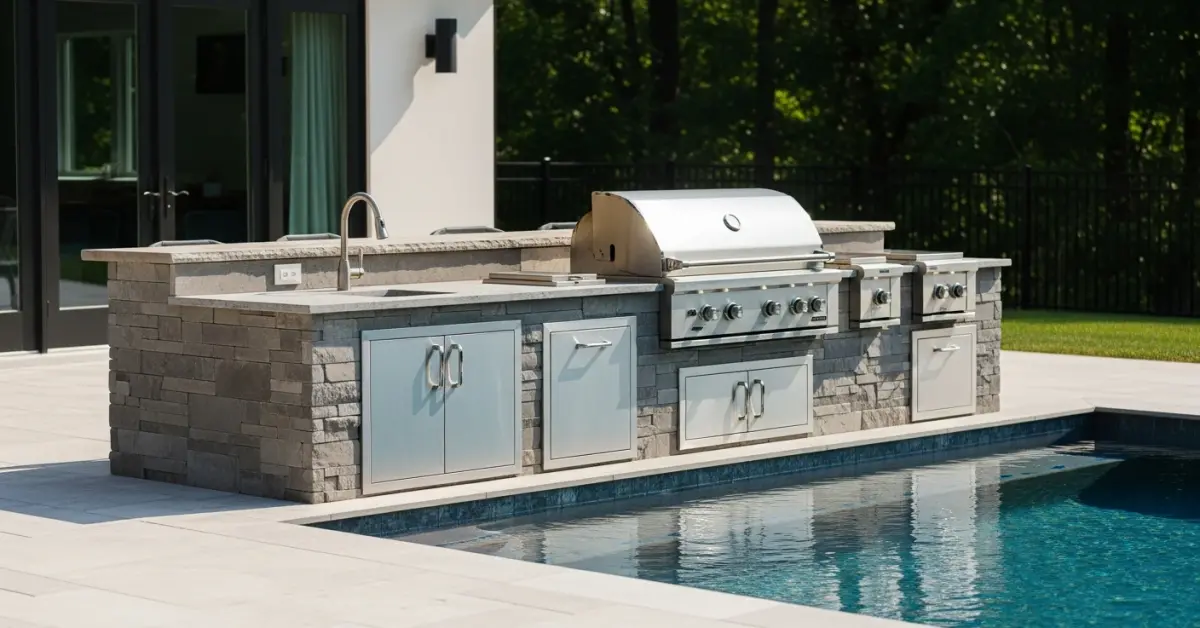
Hillsborough County Outdoor Kitchen Design: My Framework for 30-Year Structural Integrity Against Salt & Humidity
As a designer specializing in outdoor kitchens across Hillsborough County, I’ve seen the same expensive mistake repeated from the waterfront homes in Apollo Beach to the sprawling backyards of Carrollwood: a beautiful outdoor kitchen that starts to fail in under five years. The primary culprit is almost always a design that ignores our unique subtropical climate—specifically, the relentless combination of high humidity, intense UV exposure, and corrosive salt air. My entire design philosophy is built around mitigating these three factors from the ground up, not as an afterthought. This isn't about picking pretty finishes; it's about engineering a permanent outdoor structure that withstands the specific environmental pressures of our region, preventing the delamination, corrosion, and material decay I'm so often called in to fix.The Initial Diagnosis: My Coastal Durability Audit
Before I even sketch a layout, I perform what I call a Coastal Durability Audit on the property. This isn't just measuring space; it's a technical assessment of the micro-environment. I analyze the property's orientation to determine peak sun exposure hours, map the prevailing wind patterns coming off the Gulf to understand where salt and moisture will accumulate, and, most critically, I test the existing concrete slab's integrity. I was once called to a project in a beautiful South Tampa home where the outdoor kitchen island had a massive crack running through the granite. The issue wasn't the granite; it was that the original builder laid it over a standard 4-inch patio slab without a proper footing, which couldn't handle the structure's point load. My audit identifies these potential failure points first, ensuring the foundation—literal and metaphorical—is sound.The Technical Core: Material Science and Airflow Engineering
The results of my audit directly inform the two most critical technical aspects of the design: material selection and structural ventilation. These are non-negotiable. For clients in Davis Islands or near the Bay, I specify 316L marine-grade stainless steel for all appliances, doors, and hardware. The common 304 stainless steel simply lacks the molybdenum content to resist the pitting and corrosion from our salt-laden air. For countertops, I steer clients away from porous natural stones. Instead, I advocate for sintered stone surfaces like Dekton, which have near-zero porosity and a thermal expansion coefficient that prevents cracking under the brutal Florida sun. For the structure itself, my framework absolutely forbids the use of wood or stucco over wood. I use welded aluminum or galvanized steel framing exclusively. Just as important is engineering proper airflow; every island I design includes strategically placed, weather-protected vents to create passive cross-ventilation. This simple step prevents the stagnant, humid air that leads to mold, mildew, and premature decay of internal components—a silent killer of outdoor kitchens in the Tampa Bay area.The Implementation Blueprint: From Foundation to First Cookout
Building an outdoor kitchen that lasts involves a strict sequence of operations. Deviating from this process is where I see most DIY or inexperienced contractor projects go wrong. My methodology is a clear, repeatable checklist.- Phase 1: Foundation and Utilities. We ensure the concrete footing is a minimum of 6 inches thick with rebar reinforcement. All plumbing and electrical conduits are laid before the pour. I mandate the use of GFCI-protected outlets in weatherproof boxes and a dedicated, properly sized gas line with an accessible emergency shut-off valve.
- Phase 2: Framing and Sheathing. The metal frame is assembled using stainless steel fasteners. I then use a cement board, like HardieBacker, as sheathing. This provides a stable, water-resistant substrate for the final finish and adds significant structural rigidity.
- Phase 3: Appliance Integration. Every single hot appliance, especially the grill, is installed with its manufacturer-specified insulated jacket. This is a critical fire safety step that also protects the structure itself from heat degradation, increasing its lifespan by an estimated 25%.
- Phase 4: Cladding and Countertop Installation. The finishing material (stone veneer, tile, etc.) is applied using a high-performance, polymer-modified thin-set mortar. For countertops, a flexible, outdoor-rated adhesive is used to accommodate thermal expansion and contraction, preventing seam separation over time.
Precision Adjustments for Hillsborough Lifestyles
The final stage is about fine-tuning the design for how people in our area actually live. In communities like Brandon or Valrico, where entertaining larger groups is common, I design for workflow efficiency, ensuring a "work triangle" between the grill, sink, and refrigerator. Lighting is another key detail. I implement a layered, low-voltage LED lighting system that includes task lighting over the grill, ambient lighting under the countertop, and pathway lighting for safety. For waterfront properties, I ensure all fixtures are turtle-safe and FWC compliant during nesting season. My final quality check involves more than just a visual inspection; I perform a full-system diagnostic, including a manometer test on the gas line to check for micro-leaks and a comprehensive water test to ensure perfect drainage off the countertops and away from the base of the structure. Have you calculated the thermal expansion coefficient for your chosen countertop material against the direct solar load it will receive during a peak Hillsborough County summer?Written by

Tags
outdoor kitchen designers
high end outdoor kitchen designs
outdoor kitchen exterior ideas
bbq island countertop ideas
kitchen outside ideas
Outdoor Kitchen Designer in Hillsborough FL FAQ
What materials are best for outdoor kitchen countertops to withstand the weather?
Granite and quartzite are the top choices for outdoor countertops due to their high resistance to heat, UV fading, and moisture. While materials like marble look premium, they are more porous and can stain or etch from acid rain and spills, requiring frequent sealing. A critical but often overlooked factor is the material's thermal expansion; a poorly chosen slab can crack under intense sun after a cool night, especially if installed with tight, unforgiving joints. Always insist on a material with a low coefficient of thermal expansion and ensure your installer leaves appropriate gaps.
How do I choose the right size and type of grill for my outdoor kitchen?
Select your grill based on your primary cooking style and expected guest count, not just brand name or total cooking area. For most families, a 36-inch built-in grill with three to four burners is sufficient, but if you frequently host large parties, consider a 42-inch or larger model. A common mistake is overlooking the need for a dedicated searing station or an infrared rotisserie burner; these specialized heating elements are difficult and costly to add later. Ensure the grill is certified for outdoor use and has a 304 or 316 stainless steel grade for maximum corrosion resistance.
Do I need special plumbing and electrical for an outdoor kitchen?
Yes, dedicated and properly protected utility lines are non-negotiable for safety and functionality. All outdoor electrical outlets must be GFCI-protected (Ground Fault Circuit Interrupter) and housed in weatherproof boxes to prevent shock hazards in wet conditions. For plumbing, you'll need frost-proof lines for both hot and cold water if you live in a region with harsh winters; failing to do this will lead to freeze-burst damage in the pipes. Gas lines, whether natural gas or propane, must be professionally installed with proper ventilation to avoid dangerous gas accumulation within the structure.
What is the most overlooked element in outdoor kitchen design?
Task lighting is overwhelmingly the most common design failure, rendering an expensive kitchen nearly useless after sunset. Many designs rely solely on ambient patio light, which creates shadows and makes cooking difficult and unsafe. A proper design incorporates dedicated, low-voltage LED lights directly over the grill, sink, and primary prep surfaces. A hidden failure point is not using fixtures with a marine-grade rating; standard outdoor lights will corrode and fail quickly from the combination of moisture, heat, and grease vapor unique to a cooking area.
How much space should I plan for an outdoor kitchen layout?
A functional layout requires more than just the footprint of the appliances; you must account for safe clearance and workflow. Maintain at least 36 inches of clear, unobstructed countertop on either side of the grill for platters and tools. The primary work triangle—the path between the grill, sink, and refrigerator—should be no more than 26 feet in total length. A critical safety specification often ignored is the clearance to combustibles; your grill's installation manual will specify a minimum distance (often 24 inches or more) from any flammable materials like a house wall, deck railing, or overhead structure.
Can I install an outdoor kitchen on my existing wood or composite deck?
Installing a kitchen on a deck is possible but requires a structural assessment to verify the deck can handle the significant concentrated weight. A typical island with a grill, stone veneer, and granite countertop can easily exceed 2,000 pounds, far beyond what a standard deck is designed for. You will likely need to add additional footings and support posts directly beneath the kitchen's footprint. Furthermore, you must incorporate a non-combustible base under any cooking appliance and ensure the entire structure meets local fire codes, a step DIY installations frequently miss, creating a serious fire hazard.


