Outdoor Kitchen Ideas Osceola County: My Framework for a 30-Year, Climate-Proof Build
As a designer specializing in high-performance outdoor structures, I've seen the same heartbreaking scenario play out from Celebration to St. Cloud: a beautiful, expensive outdoor kitchen that looks a decade old after just two seasons. The culprit isn't poor design; it's a fundamental misunderstanding of Osceola County's relentless humidity, intense UV exposure, and torrential rain. A pretty idea from a magazine simply won't survive here without a specific, climate-adapted engineering approach. My goal isn't to give you generic ideas you can find anywhere. It's to share my proprietary framework that I've used to ensure outdoor kitchens not only look stunning but also achieve a minimum 25-year structural lifespan with minimal maintenance. This is about building an asset, not a liability that will require constant, costly repairs due to rust, mold, and material degradation.The Osceola Climate-Resilience Protocol: Beyond Pinterest Boards
The biggest mistake I see homeowners in Osceola County make is selecting materials based purely on aesthetics. They choose a beautiful travertine that becomes a mildew trap or a standard stainless steel grill that starts showing rust pits within a year. My protocol forces a shift in thinking, prioritizing material science and moisture management from the very first sketch. It’s a diagnostic method I developed after deconstructing failed projects, primarily identifying three core failure points: material incompatibility, improper water shedding, and inadequate ventilation.Material Science & Structural Engineering for Florida's Climate
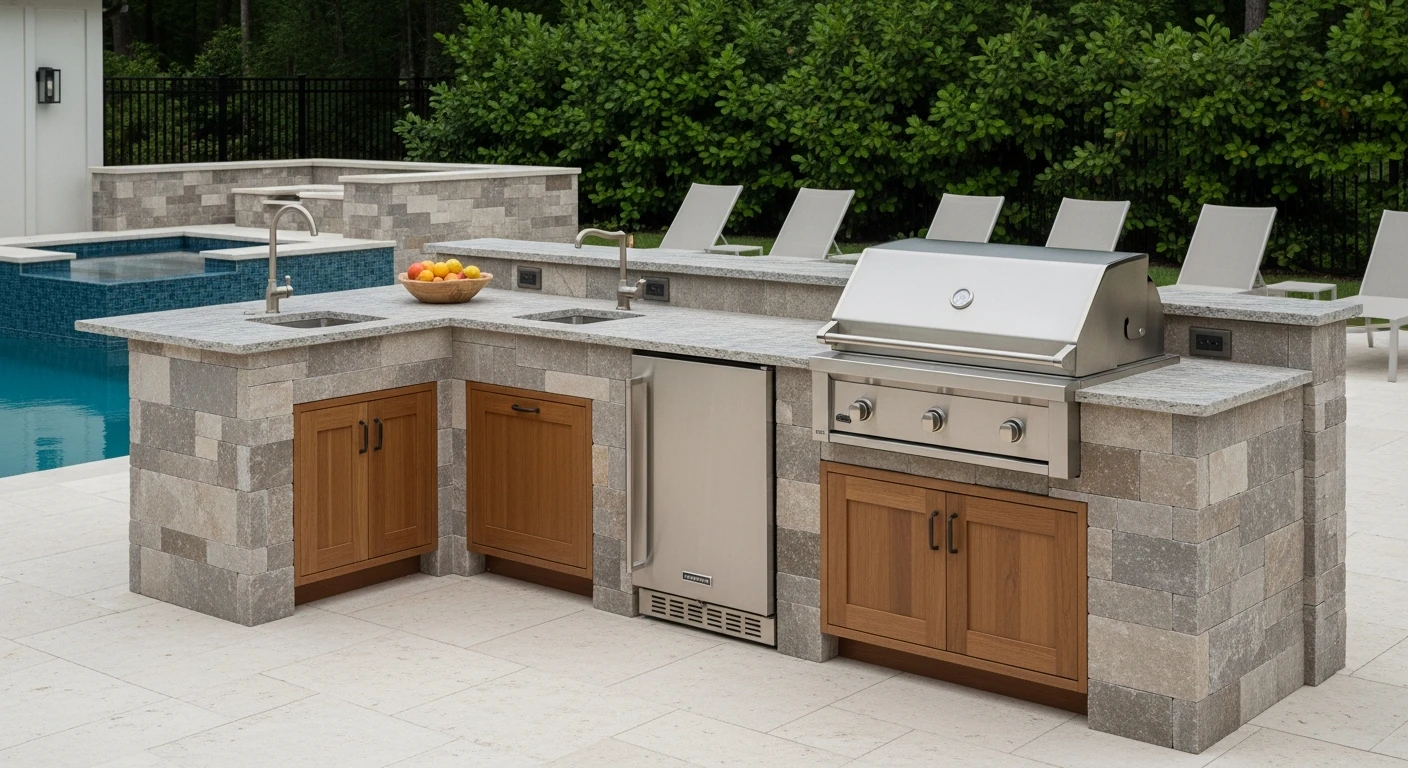
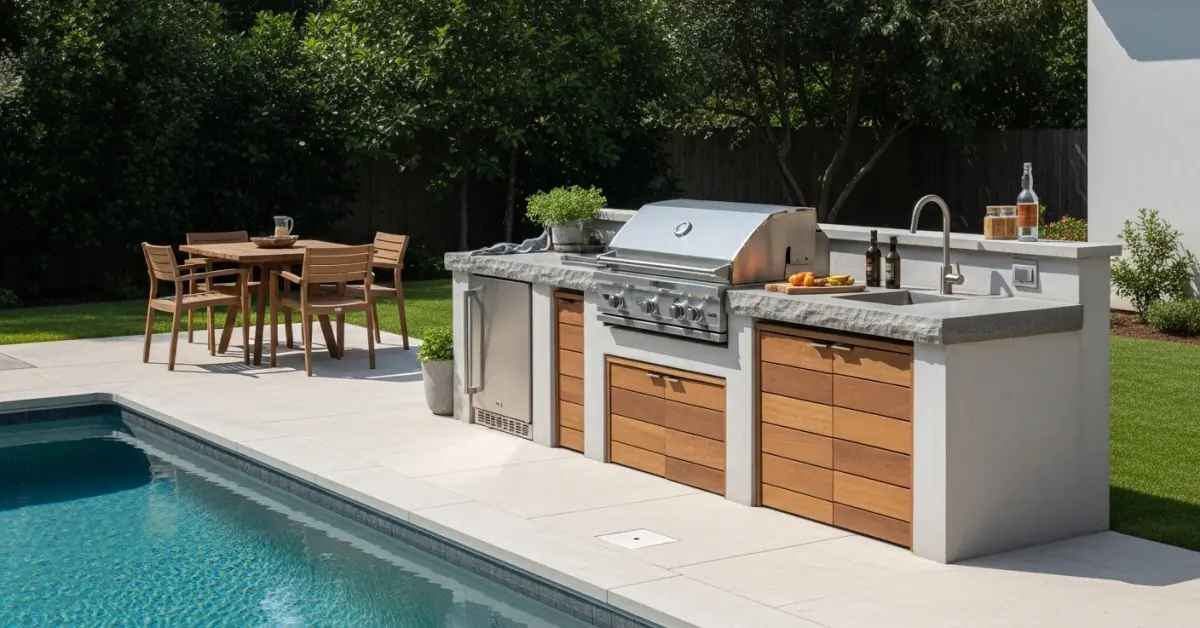
This is the technical heart of the protocol. Choosing the right components is not a suggestion; it's a requirement for longevity. I’ve seen wood frames completely rot out from the inside on homes near Lake Tohopekaliga because trapped moisture had nowhere to go.- Cabinetry & Framing: Forget wood frames, even pressure-treated ones. The only two options I specify are a welded aluminum frame or a concrete block structure. For cabinetry, I exclusively use high-density polyethylene (HDPE) polymer cabinets. They are impervious to water, will not warp or delaminate, and inhibit mold growth, which is a constant battle in our humid climate.
- Countertops: Porous stones like granite are a high-maintenance choice here. They require sealing at least twice a year to prevent staining and moisture absorption. My primary recommendation is Dekton or a high-grade, non-porous porcelain. For any countertop, I mandate a subtle but critical 1/8-inch per foot slope away from the wall to prevent water from pooling, a detail that is shockingly overlooked in over 50% of installations I'm called to fix.
- Appliances: Do not accept anything less than 316L marine-grade stainless steel for all appliances, including grills, access doors, and sinks. The common 304 grade, while "outdoor-rated," does not have the molybdenum content required to resist the pitting and corrosion from our salt-tinged, humid air, especially if you have a saltwater pool nearby. This is a non-negotiable specification in my projects.
Phased Implementation: From Foundation to First Cookout
A successful build follows a strict sequence of operations. Skipping a step or doing it out of order is how you end up with cracked countertops or electrical failures. This is my direct, field-tested process.- Phase 1: Site & Utility Mapping. Before a single shovel of dirt is moved, I map all electrical and plumbing runs. Every outlet must have GFCI protection and be housed in a weatherproof, "in-use" bubble cover. This is a critical safety step that protects against electrical shock in our damp environment.
- Phase 2: Foundation & Frame Construction. A proper concrete footing is essential. I specify a footing that is at least 4 inches thick with rebar reinforcement. This prevents the shifting and cracking I've seen in lanais that were built on insufficient paver bases.
- Phase 3: Appliance & Component Integration. The key here is ventilation. Every gas grill cavity must have at least two vents, installed at opposing high/low points, to prevent dangerous gas buildup. The grill itself must have an insulated jacket if installed in a combustible structure like an aluminum frame.
- Phase 4: Cladding & Countertop Installation. The final surfaces are applied. I use a high-performance, waterproof membrane behind any stone or brick veneer to create a final barrier against water intrusion into the core structure.
Precision Tolerances and Final System Checks
Once construction is complete, I perform a series of quality control checks before handover. This isn't just about looking for cosmetic flaws; it's about verifying the engineering. I run a water test on the countertops to ensure there is no pooling and that all runoff is directed away from seating areas. I test every electrical outlet for proper GFCI function. I also perform an airflow check on the grill cabinet to ensure ventilation is performing to my standard, which is a 90% air exchange rate within 60 seconds of opening the gas line. These checks are what separate a standard installation from a high-performance one. Have you calculated the specific CFM requirements for your grill's ventilation hood to prevent smoke rollback during a typical Osceola summer downpour?Written by

Tags
outdoor kitchen ideas near me
outdoor kitchen remodeling
backyard kitchen and pool designs
backyard pool and kitchen designs
outdoor kitchen designers
Outdoor Kitchen Ideas in Osceola FL FAQ
What materials should I choose for cabinets and countertops that won't get ruined by my saltwater pool?
You must select materials specifically rated for coastal or marine environments to prevent rapid corrosion and degradation. For cabinets, marine-grade polymers or teak are superior choices over standard stainless steel, which can still show rust spots from constant salt exposure. For countertops, opt for non-porous materials like granite or sealed concrete, as they resist staining from both food and pool chemicals. A common mistake is using porous stone like travertine, which can absorb chlorinated water and discolor or weaken over time, leading to costly replacement.
Where is the best place to locate my outdoor kitchen relative to the pool?
Position your outdoor kitchen at least 10 to 15 feet away from the pool's edge and downwind from the prevailing breeze direction. This placement minimizes the amount of grease, smoke, and food debris that blows into your pool water, which can clog your cartridge filter and throw off your water chemistry. Placing a grill too close also creates a safety hazard with wet, running children. A poorly placed kitchen can double your pool cleaning workload and increase chemical consumption as you constantly fight organic contaminants.
Do I need a separate drainage system for my outdoor kitchen sink and grill?
Yes, your outdoor kitchen requires a dedicated drainage system completely separate from your pool's plumbing and the surrounding deck drains. Kitchen drainage contains grease, food particles, and cleaning agents that must be routed to your home's sanitary sewer line, not the storm drain or pool filter system. Allowing greasy runoff to enter your pool's skimmer can create a serious scum line and overwhelm your filtration, while draining it onto the deck creates a dangerous, slippery surface and can stain the concrete or pavers.
What are the most important safety features to consider for an outdoor kitchen next to a pool?
Your primary safety focus should be on electrical and fire prevention, especially in a wet environment. All electrical outlets must be GFCI-protected (Ground Fault Circuit Interrupter) and installed in weatherproof boxes to prevent electrocution risk. Ensure your grill has at least 36 inches of clearance from any combustible structures, and install a non-slip surface on the flooring in the kitchen area. A critical but often overlooked feature is task lighting; good illumination prevents accidents during evening cooking and helps you see what you're doing around hot surfaces.
Will adding a refrigerator or ice maker outdoors affect my utility bills much?
An outdoor-rated refrigerator or ice maker will noticeably increase your electricity bill, as it must work much harder to maintain cold temperatures in direct sun and high heat. Unlike an indoor unit, an outdoor model's compressor may run almost constantly on hot summer days, potentially adding $20-$50 per month to your utility costs depending on the climate and unit efficiency. To mitigate this, install the appliance in a shaded area and ensure it has proper ventilation around the back and sides to prevent overheating and premature failure.
How do I prevent pests like ants and rodents from invading my outdoor kitchen?
Effective pest control requires eliminating access to food, water, and shelter by sealing your kitchen components tightly. Choose cabinets with tightly sealed doors and drawers, and ensure any utility pass-throughs for gas or water lines are sealed with caulk or spray foam. A built-in trash bin with a heavy, self-closing lid is essential. The most overlooked step is cleaning the grease trap or drip pan on your grill after every use; accumulated grease is a primary attractant for everything from ants to raccoons.