Outdoor Kitchen Islands for Sale: My Framework for Avoiding Catastrophic Material Failure
After designing and specifying over 50 custom outdoor kitchens, I can tell you the single most expensive mistake isn't the initial price—it's selecting a pre-fabricated island based on showroom appeal instead of material science. I’ve seen powder-coated steel frames rust into oblivion in two seasons and "weather-proof" countertops delaminate after a single freeze-thaw cycle. This is a colossal waste of money that is entirely preventable.
My entire approach is built on a diagnostic framework that bypasses marketing claims and focuses exclusively on structural integrity and material compatibility for your specific climate. This isn't about finding the cheapest option; it's about securing the highest possible ROI by ensuring your island has a functional lifespan of 15-20 years, not 3-5. What follows is the exact methodology I use to vet every single "for sale" outdoor kitchen island for my clients.
The C.L.A.D. Assessment Protocol: My Diagnostic Blueprint
Early in my career, I recommended an expensive, beautiful island for a client in a coastal area. The brochure promised "all-weather durability." Within three years, galvanic corrosion had fused the stainless steel grill to the cheaper galvanized steel frame, requiring a full teardown. That costly error forced me to develop the C.L.A.D. (Climate, Load, Access, Durability) protocol. It's a non-negotiable assessment I apply to any ready-made or modular island, forcing a brutal analysis of its long-term viability before a single dollar is spent. This protocol shifts the focus from "How does it look?" to "How will it fail, and how do we prevent it?".
Deconstructing the Island: A Technical Breakdown of the C.L.A.D. Factors
This is where we go beyond the surface. I physically inspect and demand spec sheets for these four pillars.
- Climate Exposure Analysis: I classify the installation environment into three risk tiers: Coastal/High-Salinity, Freeze-Thaw, or High-UV/Arid. For coastal projects, I disqualify any island using 304-grade stainless steel and mandate 316L "marine-grade" stainless steel for all hardware and framing to mitigate chloride-induced pitting. For freeze-thaw zones, I reject porous countertops like unsealed concrete or certain granites in favor of non-porous sintered stone or porcelain, which have a near-zero water absorption rate.
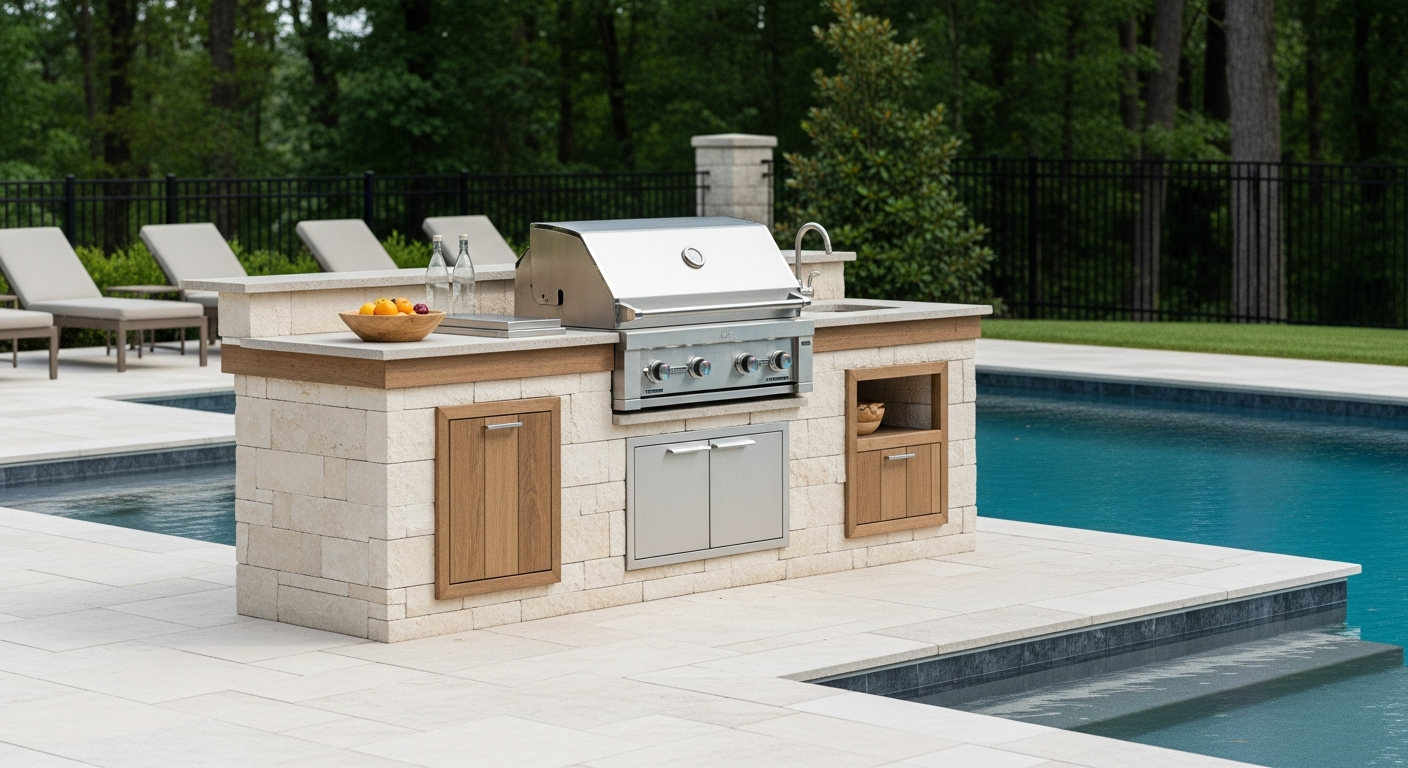
- Load-Bearing Integrity: The weight of a granite slab plus a 150lb grill creates significant point loads. I probe the island's frame, looking for a minimum of 18-gauge steel or 0.08" thick aluminum tubing. I also check the quality of the connections. Welded joints are superior, but if it's a bolt-together system, I require stainless steel fasteners with nylon-insert lock nuts to prevent loosening from thermal expansion and contraction cycles.
- Access for Serviceability: This is a massive failure point in many "sleek" designs. I learned this the hard way when a gas line fitting began leaking inside a completely sealed island. Now, I mandate clearly defined and easily removable access panels for all utility connections—gas, water, and electrical. If I can't trace the utility lines and access shutoff valves within two minutes, the unit is an automatic failure in my assessment.
- Durability of Finishes: I look past the color. Is the finish a simple paint or a true AAMA 2605-compliant powder coat? The latter offers a 5x increase in UV and abrasion resistance. For cabinetry, I look for materials like high-density polyethylene (HDPE) or teak, which are inherently weatherproof, rather than "weather-resistant" materials that rely on a temporary surface sealant.
- Demand the Bill of Materials: Don't accept vague terms. Get the exact alloy grades for all metals and the specific composite makeup of any plastic components.
- Inspect Weld Penetration: Look at the frame's joints. I look for clean, consistent TIG welds. Messy, spattered MIG welds or, worse, tiny spot welds are immediate red flags for future structural failure.
- Confirm Appliance Cutout Tolerances: The pre-cut openings for grills and side burners must include a "breathing room" of at least 1/4-inch on all sides. This is critical to accommodate the thermal expansion of the stainless steel appliance; a tight fit will cause the countertop to crack over time.
- Verify Electrical Safety Standards: All electrical outlets integrated into the island MUST be GFCI-protected and housed in a NEMA 3R-rated weatherproof enclosure. No exceptions.
Tags
outdoor kitchen island with seating
kitchen outdoor island
prefab outdoor grill island
outdoor kitchen islands prefabricated
outdoor kitchen concepts