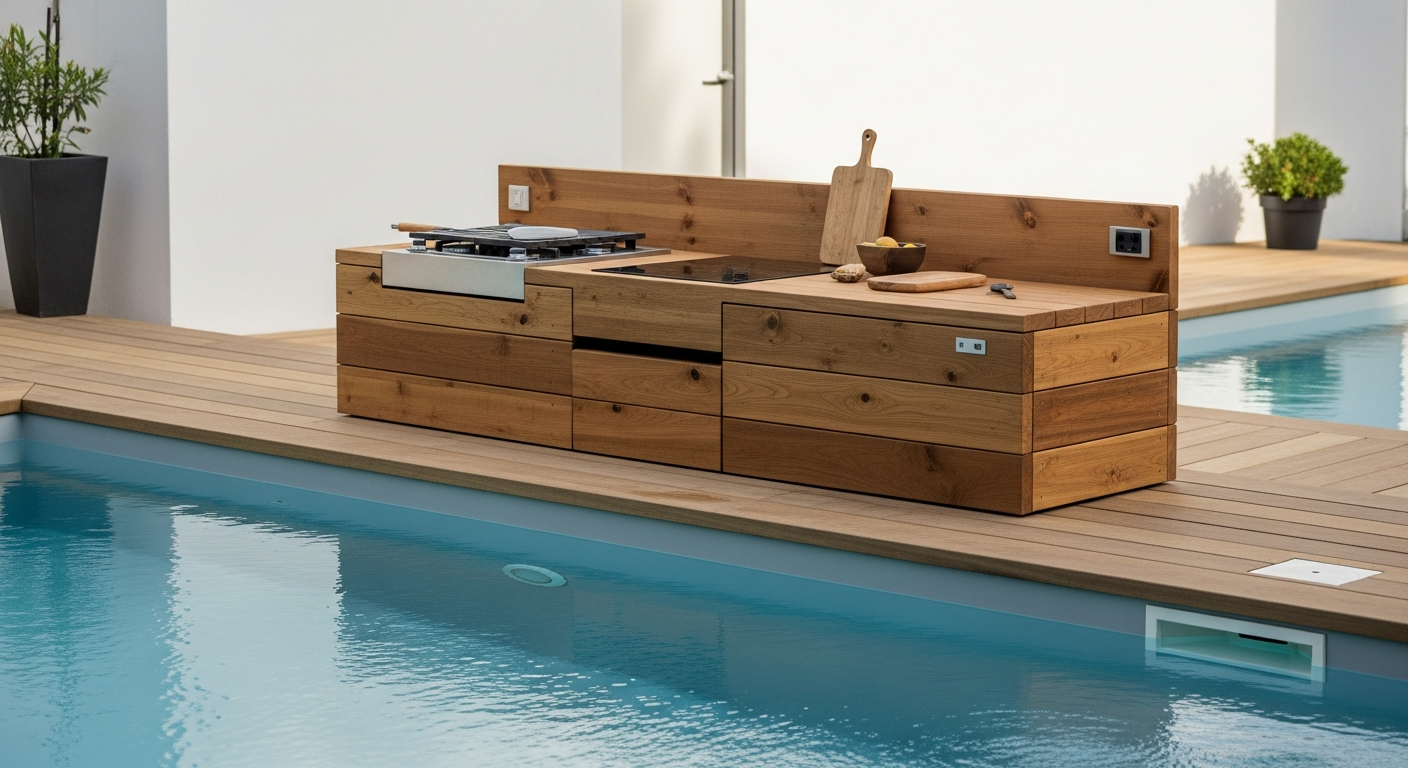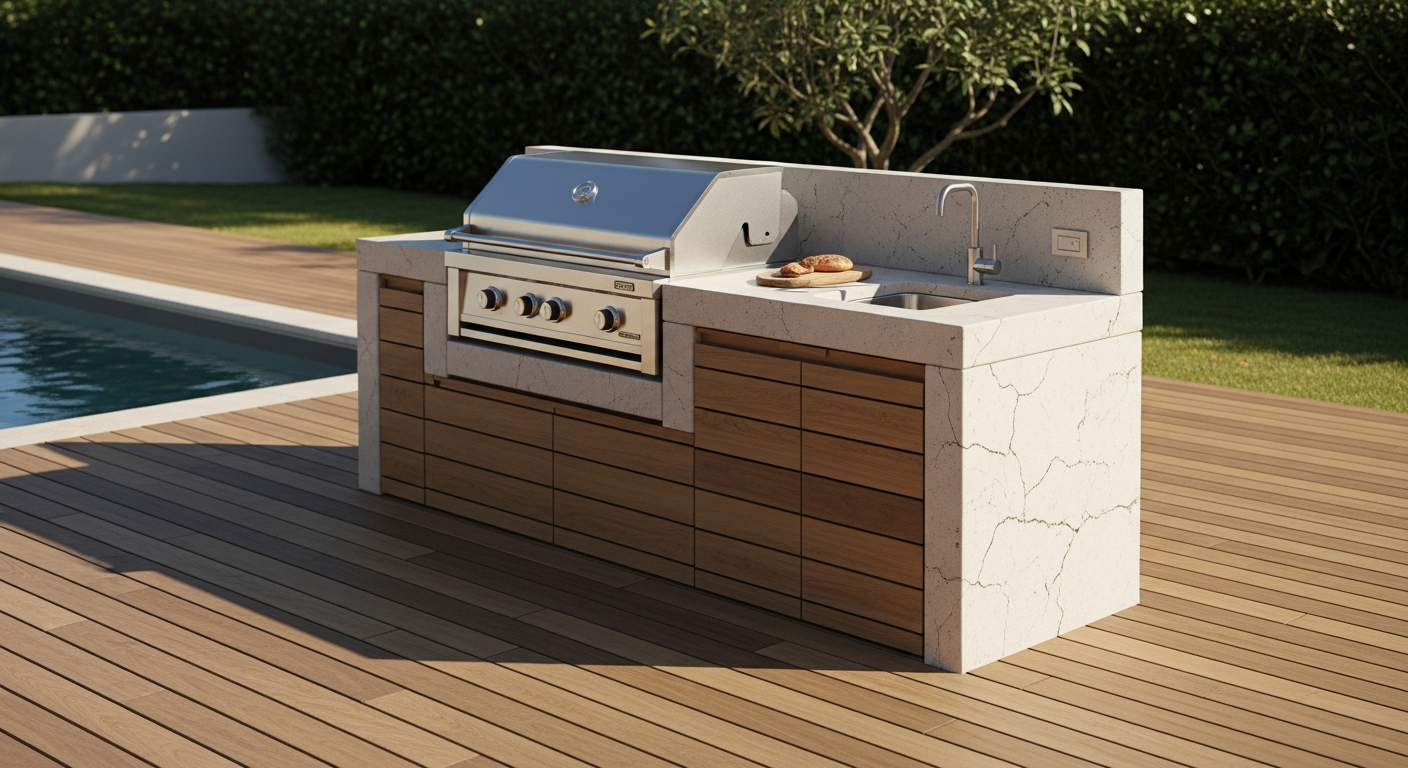
Most homeowners installing an outdoor kitchen on a wood deck focus on the wrong threat. They obsess over fireproofing the area directly behind the grill, but the real, catastrophic failure I've witnessed on high-end projects comes from a silent problem: structural overload and moisture entrapment. A standard deck is engineered for distributed live loads, like people walking, not the massive static point load of granite countertops and steel appliances concentrated in a 10-square-foot area. This oversight can lead to a sagging deck, compromised joists, and ultimately, a complete structural collapse.
My entire approach is built on treating the outdoor kitchen not as an appliance placed on a deck, but as an integrated structural element. Before a single cabinet is ordered, my proprietary method requires a full substructure audit to ensure the deck can handle at least 200% of the kitchen's calculated dead load. This preemptive reinforcement is the single most important factor in guaranteeing a safe, permanent installation with a 30-year+ lifespan, preventing the costly repairs I'm often called in to fix.
The Deck Load & Thermal Integrity Protocol: A Diagnostic FrameworkI developed my Deck Load & Thermal Integrity Protocol after a client called me to diagnose why their brand new, $50,000 outdoor kitchen was causing the deck to visibly "bounce." The previous contractor had simply built the kitchen on top of a standard 16-inch on-center joist system. My protocol immediately identified that the point loads from the concrete countertop and grill were exceeding the shear capacity of the joist hangers. My framework is built on two core pillars: Load Path Analysis and Thermal Zone Mapping, which prevent such near-disasters before they are built.
Technical Deep Dive: Load Path vs. Thermal CreepLoad Path Analysis is about more than just adding up the weight. It's the process of tracing that weight from its source—the countertop—down through every connection point to the ground. We map the force as it transfers from the kitchen's frame to the deck boards, then to the joists, the beams, and finally, the footings. The most common failure I see is in the connection between the joists and the main support beam. Standard construction often isn't prepared for a permanent dead load of 800-1500 lbs. We must verify that the load is transferred directly and vertically to the posts, often by adding dedicated footings directly beneath the kitchen's primary weight-bearing points. Thermal Creep, on the other hand, is the slow, insidious degradation of wood fibers from prolonged exposure to moderate, sub-combustion heat. A simple heat shield behind a grill doesn't stop the radiant heat from cooking the joists and beams *below* the deck over several years, reducing their structural capacity by up to 25%.
Implementation: A Non-Negotiable 4-Step Reinforcement PlanPutting theory into practice requires a systematic, non-negotiable sequence. Placing a heavy kitchen island on an unprepared deck is not an option; it's a liability. My team follows this exact process on every project to create a dedicated "structural island" within the deck's framework.
- Expose and Inspect the Substructure: We first remove the deck boards in the designated kitchen area. This provides direct access to the joists and beams. We inspect for any signs of rot, insect damage, or undersized lumber. This is a critical first step; you cannot reinforce a compromised foundation.
- Calculate the Total Dead Load: We weigh or get spec sheets for every single component: the grill, side burners, sink, cabinet frames, and especially the countertops (granite can be 18-20 lbs per square foot). We add a 50% safety margin to this total. This number dictates the reinforcement strategy.
- Execute Structural Reinforcement: Based on the load calculation, we implement the necessary upgrades. This typically involves:
- Sistering joists: Doubling up the joists directly under the kitchen's footprint by bolting a new joist to each existing one.
- Adding mid-span blocking: Installing solid wood blocks between the joists to prevent them from twisting or rolling under load.
- Installing new footings and posts: For extremely heavy units, we will dig and pour new concrete footings and add 6x6 posts directly beneath the kitchen's main supports, so the weight bypasses the deck's original joist span entirely.
- Install the Thermal & Moisture Barrier: Before reinstalling the deck boards, we create a multi-layer barrier. This involves installing a layer of cement backer board on top of the reinforced joists, followed by creating a 1-inch air gap, and then the non-combustible material base for the kitchen. Crucially, we use composite shims to lift the kitchen's base frame 1/4-inch off the deck boards, creating a capillary break that allows water to drain freely and prevents trapped moisture.
The difference between a good job and an exceptional one is in the details. Once the primary structure is sound, we focus on material science and micro-adjustments. We exclusively use stainless steel fasteners for all new structural connections to prevent corrosion from pressure-treated lumber chemicals. We also ensure that any new cuts made to pressure-treated posts or joists are immediately sealed with a wood preservative to protect the exposed end-grain from moisture wicking, a tiny step that prevents rot from starting deep inside the wood and adds years to the installation's life. This level of detail is our minimum standard of quality.
Now that you've reinforced the structure for the static dead load, have you calculated how the concentrated mass will alter the deck's harmonic resonance and lateral sway under a dynamic live load?