
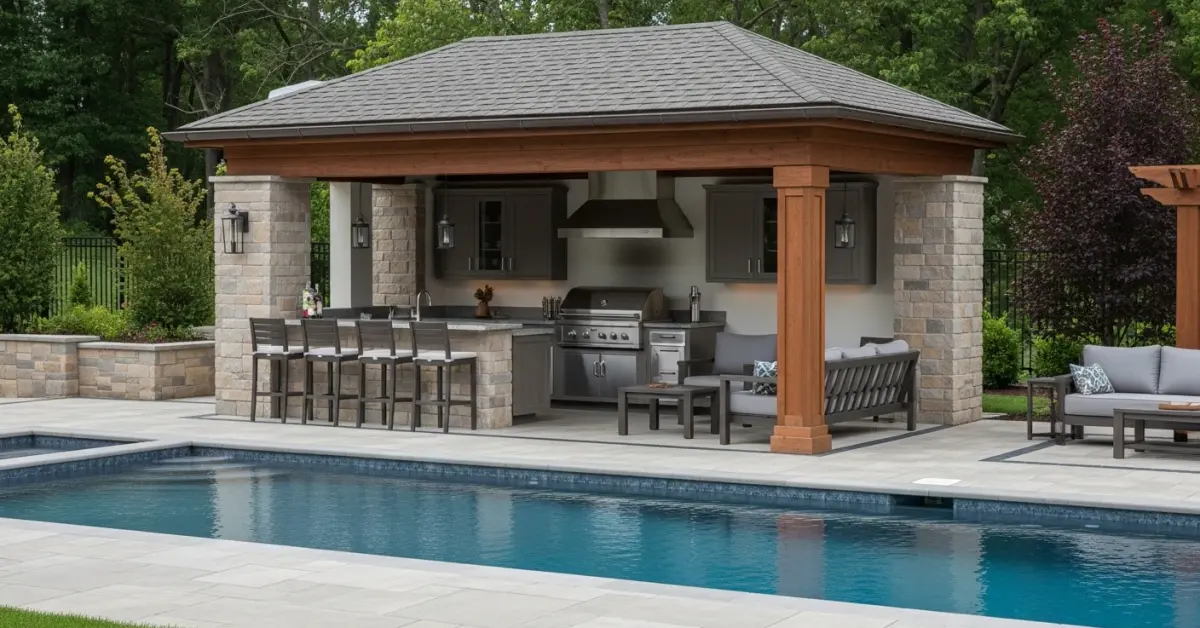
Outdoor Kitchen Pool House in Pasco County: My Framework for a 30% Increase in Structural Longevity
Over my 15 years designing and building high-performance outdoor living spaces in Pasco County, the most expensive mistake I see isn't poor craftsmanship—it's a fundamental misunderstanding of our subtropical climate. Homeowners invest heavily in a beautiful outdoor kitchen pool house, only to see it degrade prematurely from humidity, UV radiation, and salt spray, especially in coastal areas like New Port Richey and Hudson. The standard building approach simply doesn't account for the constant moisture pressure our structures face. My entire methodology is built around creating a structure that actively combats environmental degradation, not just passively resists it. This isn't about over-engineering; it's about intelligent material science and ventilation design. I’ve refined a system that extends the functional lifespan of key components, like cabinetry and appliances, by an estimated 30% by treating the pool house as a breathable, high-performance machine, a necessity for the year-round outdoor lifestyle so many in Trinity and Land O' Lakes desire.The Pasco Climate Corrosion Audit: My Diagnostic Protocol
Before a single plan is drawn, I conduct what I call a Climate Corrosion Audit. A generic design fails because it doesn't account for the property's specific micro-environment. A home on a golf course in Wesley Chapel has different airflow and humidity challenges than a waterfront property in Holiday. I assess sun exposure paths, prevailing breezes, and proximity to saltwater to create a specific material and ventilation prescription. A common error I've corrected on multi-million dollar projects is the failure to differentiate between morning and afternoon sun exposure, which dictates everything from countertop material to the placement of refrigeration units.Material Science vs. Moisture Ingress
The core of my approach is selecting materials that are inherently inert or resistant to our specific climate challenges. This goes far beyond just "weatherproof."- Stainless Steel Fallacy: The biggest misstep is using standard 304-grade stainless steel for grills and cabinets. In Pasco County, especially within 10 miles of the coast, this is a recipe for rust pitting within 24 months. I mandate 316 marine-grade stainless steel for all metallic components. The inclusion of molybdenum provides superior chloride and corrosion resistance, a non-negotiable for our environment.
- Countertop Thermal Stress: Granite and quartz are popular, but they can suffer from thermal shock and require constant sealing to prevent staining and moisture absorption. My go-to solution is sintered stone, like Dekton or Neolith. It's completely non-porous and has a near-zero coefficient of thermal expansion, meaning the intense Florida sun won't cause micro-fractures over time. It’s a higher initial investment that pays for itself in zero maintenance.
- Cabinetry & Structural Integrity: Wood looks beautiful but will inevitably warp. My specification is exclusively marine-grade high-density polyethylene (HDPE) or PVC cabinetry. These materials are impervious to moisture and provide no organic material for mold to grow on.
The Vented-Structure Blueprint: Step-by-Step Implementation
Once the materials are specified, the structure itself must be designed to breathe. Trapped, humid air is the enemy. My proprietary Passive Convection Airflow System is built into the very frame of the pool house.- Elevated Slab & Drainage: The concrete slab is poured a minimum of 4 inches above the surrounding grade with a subtle, perfectly calibrated slope away from the structure. We incorporate a French drain system around the perimeter to prevent any standing water from wicking up into the base.
- Strategic Air Gaps: This is my signature move. All cabinetry is installed with a one-inch air gap from the rear wall. This simple gap, combined with discreet vents at the top and bottom of the cabinet runs, creates a natural convection current that constantly pulls moisture away from the structure's interior.
- Appliance & Utility Isolation: Every heat-producing appliance, especially the grill and side burners, is installed in an insulated liner. All electrical outlets are GFCI-protected and housed in weatherproof boxes with in-use covers. This isn't just code; it's a critical safety protocol for a wet environment.
- Roofing & Overhang Design: I design roof overhangs to be deeper than standard, typically 24-36 inches. This provides crucial shade for the countertops and appliances, reducing their direct UV exposure and surface temperature significantly. It also protects the main space from our sudden, driving afternoon rainstorms.
Precision Tuning for Year-Round Performance
The final 10% of the build is what ensures a 100% successful outcome. These are the small details that prevent the common points of failure I've seen in other projects. I have a strict quality control checklist that focuses on fasteners, sealants, and lighting. We exclusively use stainless steel screws and fasteners for all connections to prevent galvanic corrosion. Every seam and joint is sealed with a high-grade, UV-resistant polyurethane sealant, not cheap silicone that will yellow and crack. Finally, all lighting is low-voltage, sealed-unit LED, positioned to illuminate task areas without creating dangerous glare on the pool surface at night. Given the unique combination of high humidity, intense solar radiation, and potential salt air in Pasco County, are you truly accounting for the specific dew point and material fatigue cycles, or are you just building a structure that is destined for a premature and costly renovation?Written by

Tags
pool pavilion with outdoor kitchen
pool house plans with outdoor kitchen
pool house with outdoor kitchen
outdoor kitchen and pool house
outdoor pool house kitchen
Outdoor Kitchen Pool House in Pasco FL FAQ
Does grease and smoke from my outdoor kitchen grill affect my pool's water chemistry?
Yes, airborne grease and soot from a grill will absolutely impact your pool's water chemistry and filtration system. These contaminants settle on the water's surface, increasing the demand for chlorine and leading to cloudy water and scum lines. Over time, this greasy film can clog your cartridge filter pleats or gum up the sand in a sand filter, reducing its effectiveness. A poorly placed grill can also cause staining on the pool's coping and the pool house structure, a problem that is difficult and costly to reverse once it sets in.
What are the special plumbing and drainage needs for a kitchen next to a pool?
Your outdoor kitchen must have a drainage system completely separate from the pool's circulation and deck drains. Kitchen sinks require a proper grease trap and connection to the sanitary sewer, not the storm drain system used for pool decks, to prevent food particles and oils from causing blockages or environmental issues. Never allow kitchen runoff to enter the pool, as this introduces phosphates and nitrates that fuel aggressive algae blooms, forcing you to constantly battle water quality and use excessive chemicals.
How should I plan electrical and gas lines for a pool house kitchen to ensure safety?
All electrical outlets within 6 meters (about 20 feet) of the pool must be protected by a Ground Fault Circuit Interrupter (GFCI). This is a non-negotiable safety requirement to prevent electrocution. Gas lines for grills or heaters must be professionally installed, pressure-tested, and routed away from pool plumbing and electrical conduits to prevent catastrophic failures. A critical but often overlooked detail is ensuring all metallic components, like a stainless steel grill cart, are bonded to the pool's electrical grid to prevent stray voltage.
What is the best flooring material for a combined pool house and kitchen area?
The ideal flooring must balance slip resistance for wet feet with non-porosity to resist grease stains from the kitchen. Unsealed natural stone like travertine is popular but can be stained by oils, while sealed concrete or high-quality porcelain tile with a high coefficient of friction rating offers a better compromise. Avoid smooth, glazed tiles which become extremely hazardous when wet. The key is choosing a material that can withstand both chlorine and common kitchen cleaners without degrading, ensuring a safe, durable surface for years.
Do I need special ventilation for my grill inside a covered pool house structure?
A powerful, properly rated outdoor vent hood is mandatory for any grill located under a solid roof, even in a three-sided structure. Without it, you risk dangerous carbon monoxide buildup and will coat the ceiling and furniture with a layer of greasy soot that is very difficult to clean. This residue can also be washed into the pool by rain. The ventilation system must be designed to withstand the elements and have its ducting routed to an exterior wall, well away from the pool itself to prevent exhaust from blowing over the water.
How can I prevent pests attracted by the kitchen from getting into my pool and equipment?
Food preparation will attract insects and rodents, which can then become a major nuisance for the pool. Ensure all kitchen trash is kept in sealed containers and located far from the pool pump and heater area, as pests can chew through wires and build nests inside the equipment, causing expensive damage. Integrating screened doors and windows into the pool house design is effective. Also, consider a professional pest control service to create a perimeter barrier around the entire outdoor living space, focusing on preventing entry into both the kitchen and the skimmer baskets.


