Cheap Outdoor Kitchen in Charlotte County: My Framework for 15+ Year Durability Against Humidity and Salt Spray
I’ve seen countless "cheap" outdoor kitchens in Charlotte County fail within three years, and the root cause is almost always the same: a fundamental misunderstanding of our local climate. The intense humidity in Port Charlotte and the corrosive salt air along the Punta Gorda canals don't just affect paint; they aggressively attack the very structure of your build. A budget-friendly project isn't about cutting corners; it's about making surgically precise material choices that deliver longevity without the premium price tag. My approach sidesteps the common pitfalls by focusing entirely on the kitchen's "bones." Forget the fancy granite countertops for a moment. If your frame is made from standard pressure-treated lumber or, even worse, interior-grade wood, you're building a beautiful facade on a foundation of guaranteed rot. I've personally torn out mold-infested wooden frames from gorgeous lanai kitchens in Deep Creek that looked perfect on the surface but were structurally compromised. The key to a truly cost-effective build is a non-organic frame that is impervious to moisture and pests from day one.My Diagnostic Protocol for Budget-Friendly Outdoor Kitchens
My evaluation process for an affordable yet durable outdoor kitchen begins with a single question: what will destroy this structure first? In Charlotte County, the answer is unequivocally moisture and humidity. Therefore, my entire design and material selection methodology, which I call the "Inorganic Core Framework," is built around eliminating any material that can rot, swell, or host mold. The most frequent and costly error I encounter is the use of wood framing. A contractor might save a few hundred dollars upfront, but the homeowner is left with a ticking clock. I was called to a project in a beautiful Punta Gorda Isles home where a two-year-old outdoor kitchen's frame had completely rotted from ambient humidity and splash-back from the pool. The homeowner had to pay for a full demolition and rebuild, erasing any initial savings. This is why my diagnostic phase focuses 100% on the structural base and substrate, not the cosmetic finish.The Core Material Matrix: Concrete Block vs. Galvanized Steel
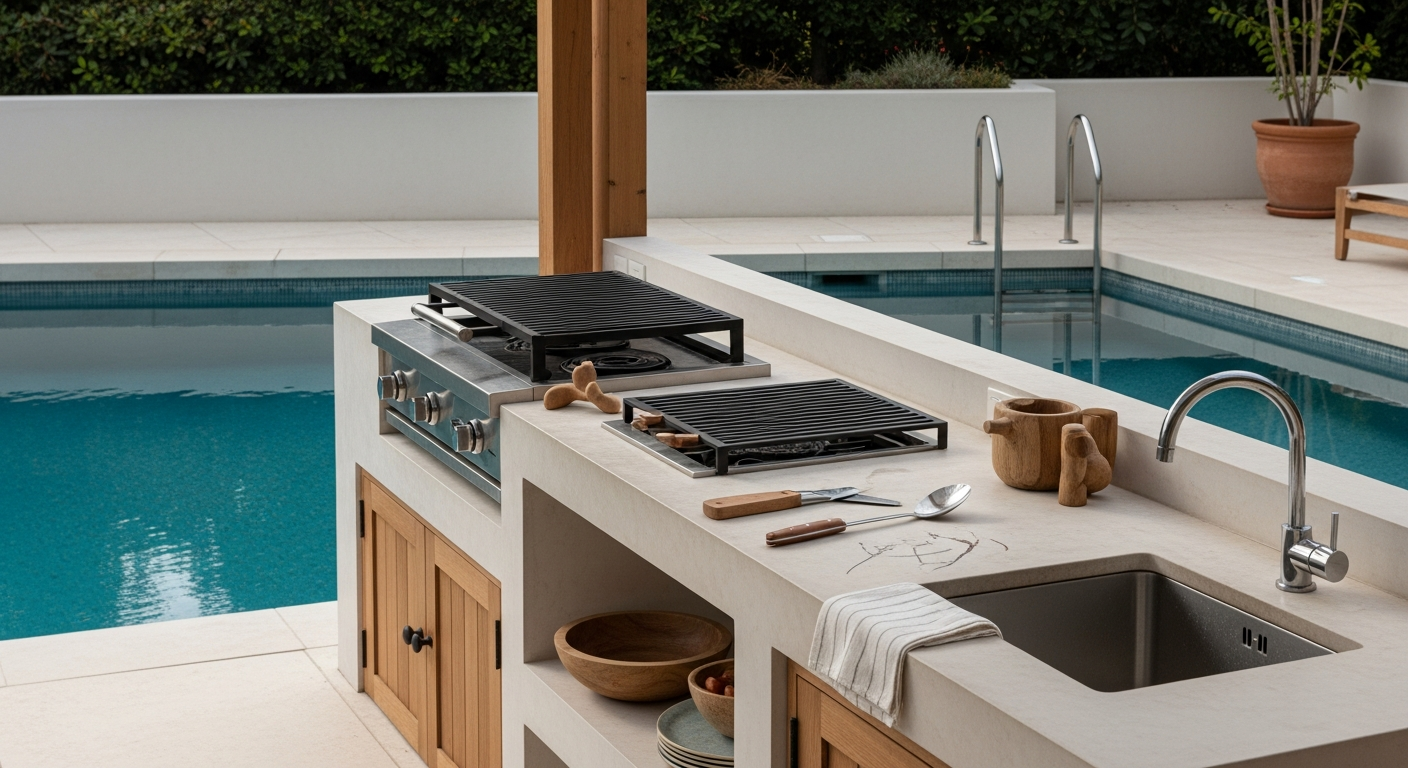
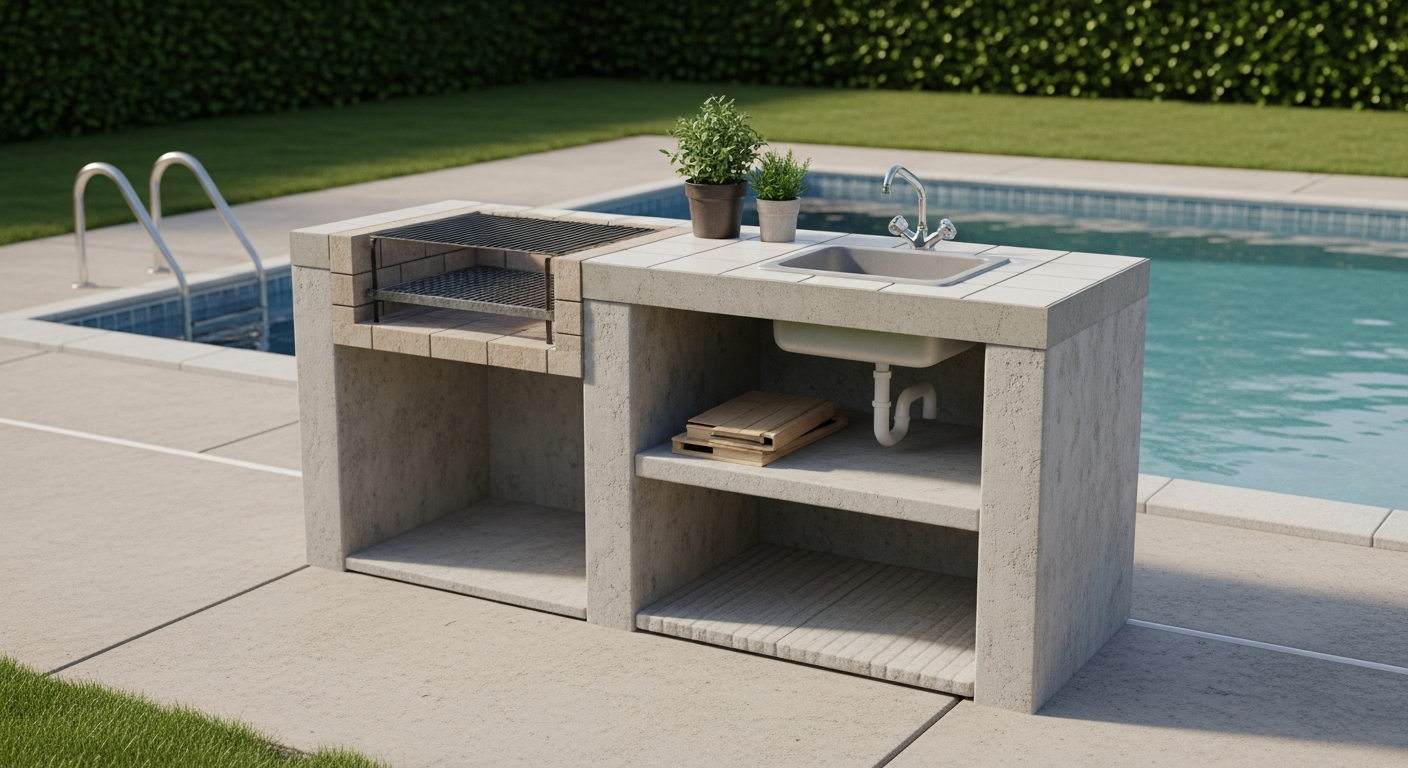
To achieve that 15+ year lifespan on a budget, I rely on two primary framing materials, each with specific applications.- Concrete Masonry Units (CMU) / Cinder Blocks: This is my gold standard for absolute durability. It is completely impervious to water, salt, and termites. For homes on the water in Englewood or near the Peace River, CMU is the ultimate defense. While the material itself is cheap, the labor can be more intensive. However, for a simple rectangular island, it provides an indestructible foundation that will outlive any appliance you put in it.
- Galvanized Steel Studs: This is my go-to for more complex designs or for DIYers with moderate skills. It's lighter than block, easier to run utilities through, and still offers excellent resistance to rot and pests. The critical, non-negotiable step here is to seal every single cut end with a cold galvanizing compound. A raw steel edge, even on a galvanized stud, will become a rust point in our humid environment, compromising the structure from the inside out.
The Phased Implementation for Maximum ROI
Executing a budget-friendly outdoor kitchen requires a disciplined, sequential process. Rushing or performing steps out of order is how costs spiral and quality suffers.- Foundation and Utility Blueprint: Before a single block is laid, I map all utilities. You must have a solid concrete slab to build on. Building on pavers is a recipe for an unstable, cracked structure. Mark the exact locations for the gas line, electrical conduit, and any water/drain lines. Changing this later is expensive.
- Core Frame Construction: Assemble the CMU or steel stud frame directly on the slab. Ensure it is perfectly level and square. My standard practice is to use Tapcon concrete anchors to secure the base track of the steel frame or the first course of block to the slab. This prevents any shifting.
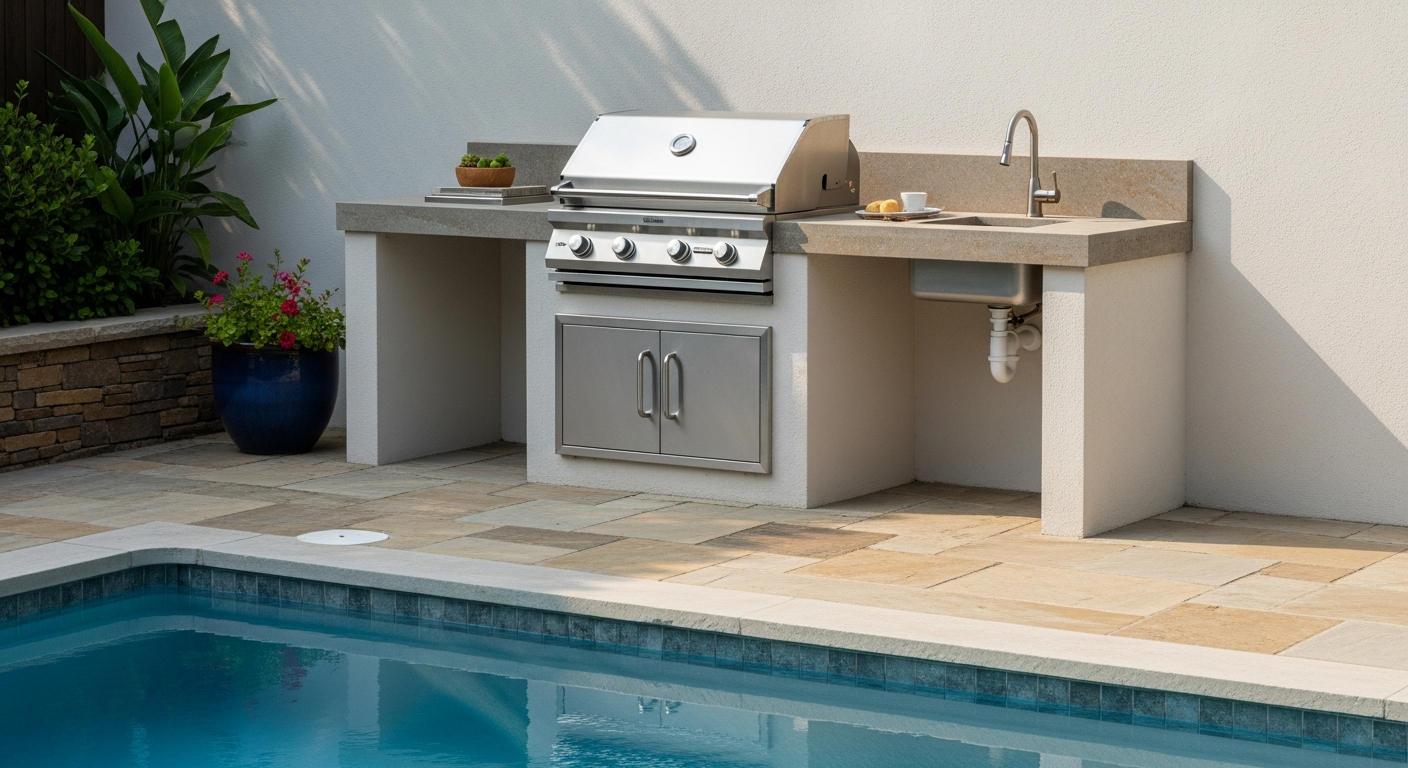
- Substrate Cladding: Fasten 1/2-inch cement board (like HardieBacker or Durock) to the entire exterior of the frame. This provides a stable, water-resistant surface for your final finish, whether it's stucco, stone veneer, or tile. Do not use drywall or green board.
- Countertop and Appliance Integration: For a poured concrete top, you'll build the mold now. For other materials, you'll install the countertop substrate. Critically, ensure you have the exact cutout dimensions for your grill and any other drop-in units *before* this stage. Test-fit the appliances.
Precision Tuning for Charlotte County's Climate
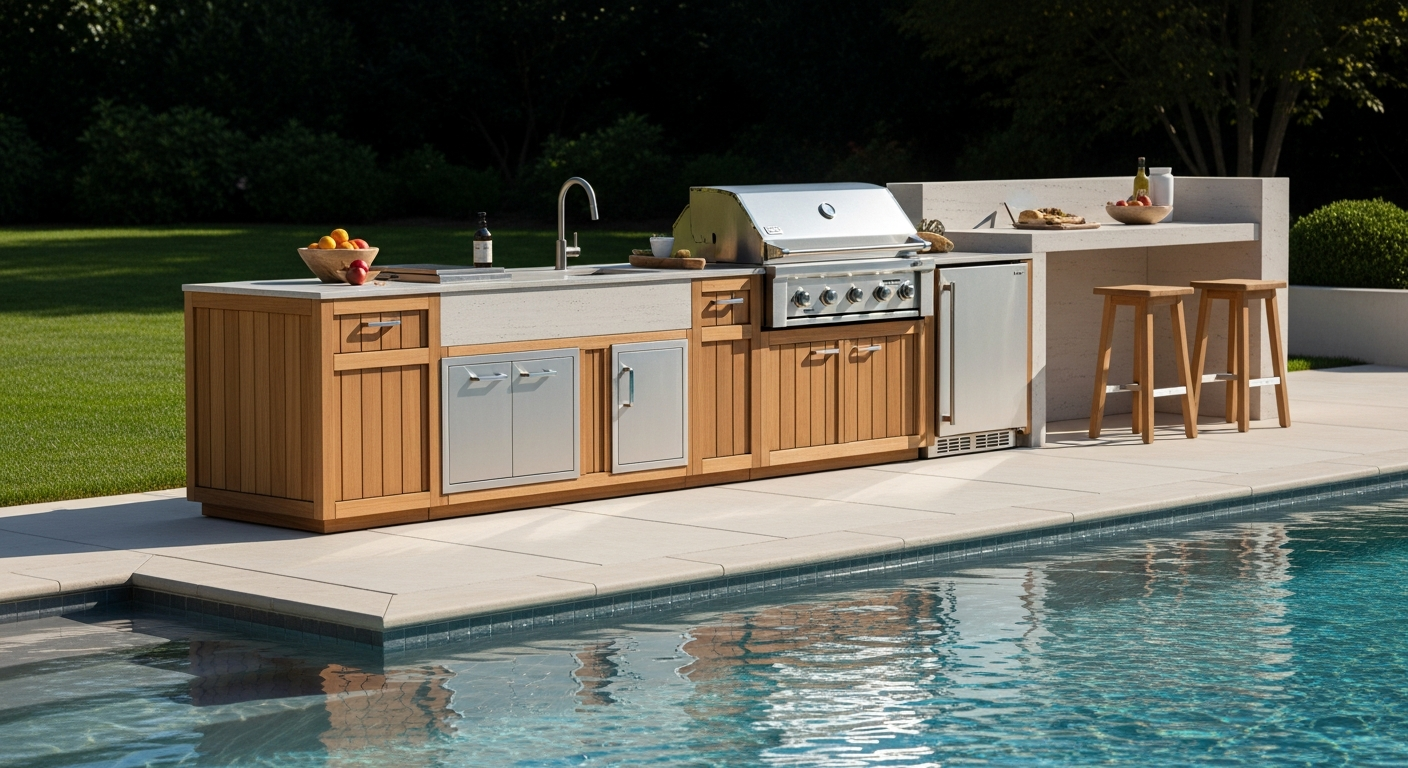
Getting the structure right is 80% of the battle. The final 20% is about details that ensure longevity against our specific environmental pressures.- Hardware and Appliance Grade: Do not compromise on stainless steel quality. I mandate a minimum of 304-grade stainless steel for all access doors, drawers, vents, and grill heads. For homes directly on the water, investing in 316L "marine grade" steel is a wise, long-term decision to fight pitting from direct salt spray.
- Mandatory Ventilation: This is a safety and a durability requirement. I always install at least two vents in any cabinet housing a propane tank or natural gas connection. They should be on opposite sides of the island to create cross-flow, preventing gas buildup and also reducing internal moisture and heat.
- Sealant Application Protocol: Every porous surface must be sealed. For concrete countertops and grout lines in a tile finish, I use a high-quality, UV-resistant, food-safe penetrating sealer. My rule is a scheduled re-application every 18 to 24 months to maintain a hydrophobic barrier against our frequent rain.
Written by

Tags
stainless steel outdoor kitchen units
prefab outdoor kitchen island
high end outdoor grills built in
u shaped outdoor kitchen
outdoor kitchen u shape