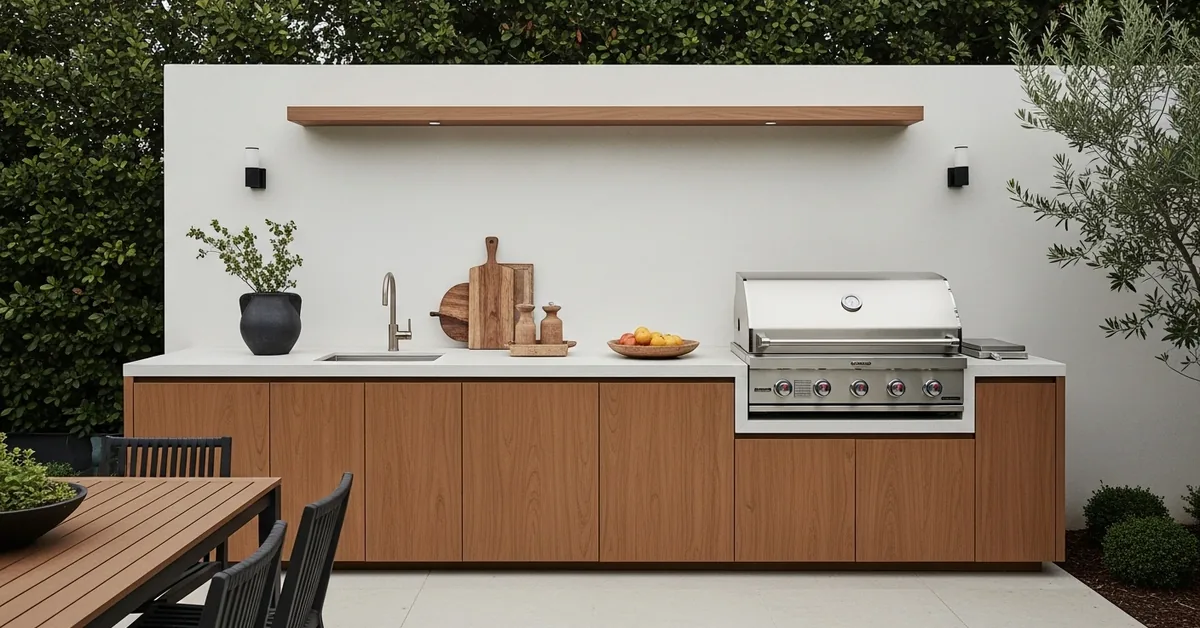
Outdoor Living Kitchen Charlotte County: My C-SALT Framework for 30-Year Material Integrity
Most outdoor kitchen projects I'm called to fix in Charlotte County, particularly in waterfront areas like Punta Gorda Isles, fail prematurely. The common denominator isn't poor craftsmanship; it's a fundamental misunderstanding of our coastal environment. A contractor can build a beautiful structure that starts degrading in under five years from humidity, salt spray, and intense UV exposure. I developed my proprietary C-SALT Framework after diagnosing a catastrophic failure in an otherwise stunning Port Charlotte home. The client’s 304-grade stainless steel grill was covered in rust pitting, and the polymer cabinet doors had warped from the afternoon sun. My framework directly addresses these failure points, focusing on material science and environmental adaptation to ensure a minimum 25-year structural lifespan, even in the most exposed locations near Englewood Beach.The Core Problem: Diagnosing Premature Failure in Coastal Kitchens
The initial call that sparked my methodology was for a home overlooking Charlotte Harbor. The outdoor kitchen was less than four years old but looked a decade older. The "stainless" steel showed significant "tea staining"—a precursor to serious corrosion. The granite countertop, while beautiful, had developed faint stains because its sealant wasn't specified for high-humidity, high-UV environments. It was a classic case of applying interior design rules to an exterior, marine-grade application. My first step is never to look at the design, but at the material specification sheet. I’ve found that 90% of failures originate here. General contractors often specify materials that are "outdoor-rated" but not "coastal-rated." There's a critical difference. This insight led me to create the C-SALT (Corrosion, Sun, Airflow, Longevity, Thermal-management) protocol, a system I use to audit designs and specify materials before a single dollar is spent on construction.C-SALT Deconstructed: A Technical Deep-Dive
My framework isn't a simple checklist; it's a diagnostic system. Each component addresses a specific, aggressive element of the Charlotte County climate.- Corrosion: The standard is to demand 316L marine-grade stainless steel for all metallic components, including fasteners and grill housings. Unlike the common 304-grade, 316L contains molybdenum, which provides superior resistance to chloride and salt corrosion. I failed a project inspection once because the contractor used 304-grade screws on a 316L frame, creating a weak point for rust.
- Sun: Intense Florida sun degrades polymers and wood. I specify powder-coated aluminum cabinetry or high-density polyethylene (HDPE) with UV inhibitors built into the material, not just a surface coating. For countertops, I favor sintered stone over porous natural stones, as it's non-porous and completely UV-stable, preventing fading and heat damage.
- Airflow: A common mistake in lanai kitchens is inadequate ventilation. Trapped heat and cooking fumes can damage the lanai’s ceiling and create a safety hazard. I mandate a properly sized outdoor-rated vent hood with a minimum of 1200 CFM and a dedicated, non-combustible ventilation channel.
- Longevity: This is the sum of the parts. By specifying materials correctly, we shift the investment from a 5-7 year replacement cycle to a 25-30 year asset.
- Thermal-management: Grills generate immense heat. I require insulated jackets and a minimum 6-inch clearance from any combustible materials, a standard often overlooked in tight lanai spaces.
From Blueprint to Reality: My Implementation Checklist
Executing the C-SALT framework requires discipline and attention to detail. I follow a strict sequence of operations to ensure the theoretical benefits translate into real-world durability. This is a condensed version of my project management workflow.- Site-Specific Material Audit: Before finalizing any order, I assess the property’s exact exposure. A home on a canal in Punta Gorda requires a higher spec than one further inland in Port Charlotte. This dictates the specific grade of all materials.
- Supplier Vetting: I personally verify material certifications from suppliers. It's not enough for them to say it's 316L steel; I require the documentation to prove it. This single step has prevented costly errors on multiple occasions.
- Ventilation Pathway Mapping: I map the vent hood’s exhaust path to ensure the shortest, most efficient route outside the lanai screen, minimizing bends that can reduce airflow efficiency. Every bend reduces CFM by about 10%.
- Component Isolation: To prevent galvanic corrosion, I ensure dissimilar metals are isolated. This means using non-conductive washers and gaskets between aluminum frames and stainless steel appliances—a small detail that adds years to the kitchen's life.
- Sealant and Grout Specification: All countertop seams and backsplash grout must be an epoxy-based or 100% silicone marine-grade product. Standard cementitious grout will crack and grow mildew in our humidity within a year.
Precision Tuning for Peak Performance and Aesthetics
The final 10% of the project is about refinement. This is where a good outdoor kitchen becomes exceptional. I focus on the "liveability" factors that are unique to our local lifestyle, like cooking the day's catch. This involves specifying integrated features like outdoor-rated refrigerators for bait and drinks, sinks with high-pressure faucets for easy cleanup, and correctly placed, low-voltage lighting for evening entertaining. A critical quality check I perform is what I call the "fastener test." I randomly check screws and bolts in non-visible areas to ensure the specified grade was used throughout the entire construction, not just on the visible surfaces. This level of scrutiny is non-negotiable for achieving true longevity. The goal is to build a functional, beautiful outdoor space that genuinely stands up to the forces of nature in Charlotte County, becoming a permanent and valuable extension of the home. Your design may look stunning on day one, but have you specified the correct fastener alloy to prevent galvanic corrosion between your grill housing and the aluminum frame?Written by

Tags
outdoor kitchen projects
prefab outdoor kitchen
prefabricated outdoor kitchen
modular bbq outdoor kitchen
covered outdoor kitchen
Outdoor Living Kitchen in Charlotte FL FAQ
What materials should I choose for my outdoor kitchen countertops and cabinets if they're right next to my saltwater pool?
You must select non-porous, corrosion-resistant materials like granite, soapstone, or specialized outdoor-rated stainless steel to withstand constant exposure to salt and chlorinated water. Avoid porous stones like marble or travertine, as they will etch and stain from pool chemical splash-out, and never use standard indoor-grade stainless steel, which will show rust spots within a single season. The key is specifying marine-grade (316) stainless steel for all metallic components, including cabinet hardware and appliance fronts, as it contains molybdenum for superior corrosion resistance against chlorides.
How far away from the pool's edge should my outdoor kitchen be for safety and to protect the equipment?
Your outdoor kitchen, especially any electrical outlets or gas lines, should be located a minimum of 10 to 15 feet from the pool's water edge to comply with most local building codes and prevent electrical hazards. This distance minimizes the risk of splash damage to expensive appliances like grills and refrigerators, whose electronics are not designed for direct water contact. A critical, often overlooked detail is prevailing wind direction; positioning the kitchen upwind from the pool significantly reduces the amount of chlorine vapor and mist that can accelerate corrosion on your equipment.
Do I need a separate plumbing system for my outdoor kitchen sink, or can it connect to my pool's plumbing?
Your outdoor kitchen requires a completely separate plumbing system for both fresh water supply and wastewater drainage; never connect it to the pool's circulation system. Tying into the pool plumbing would introduce soaps, food particles, and grease, which would overwhelm the pool filter, disrupt the water's pH balance, and promote algae growth. The kitchen drain must be properly trapped and routed to your home's main sanitary sewer line, just like an indoor sink, to handle waste safely and prevent odors and clogs.
What kind of ventilation is required for a grill installed under a covered patio or pavilion near my pool?
A grill installed under any type of roof structure requires a dedicated, outdoor-rated vent hood to safely exhaust heat, smoke, and dangerous gases like carbon monoxide away from the seating area. Simply having an open-sided patio is not sufficient ventilation and creates a serious fire and health hazard. The vent hood must be powerful enough for the grill's heat output (measured in BTUs) and constructed from weather-resistant materials to prevent premature failure from humidity and temperature swings common in a poolside environment.
How do I prevent pests like ants and wasps from taking over my outdoor kitchen and dining area?
Effective pest prevention relies on sealing all food sources and eliminating nesting spots, starting with cabinets that have tight-fitting, fully sealed doors. Choose non-porous countertop materials with minimal seams where food debris can collect, and ensure your outdoor trash receptacle has a heavy, self-closing lid. A crucial design choice is to avoid hollow metal legs or unsealed masonry voids in the kitchen's structure, as these are prime locations for wasps to build hidden nests that are difficult and dangerous to remove once established.
What is the most common point of failure you see in outdoor kitchen appliances?
The most common and premature failures in outdoor kitchen appliances are caused by moisture intrusion into their electronic components, such as digital displays and ignition modules. Homeowners often mistakenly believe that a 'weather-resistant' rating means an appliance is fully waterproof, but it is not designed to withstand sustained rain or direct spray from pool cleaning. Using a high-quality, fitted weatherproof cover for every appliance when not in use is the single most important maintenance step to prevent costly electronic repairs and can easily double the lifespan of your investment.