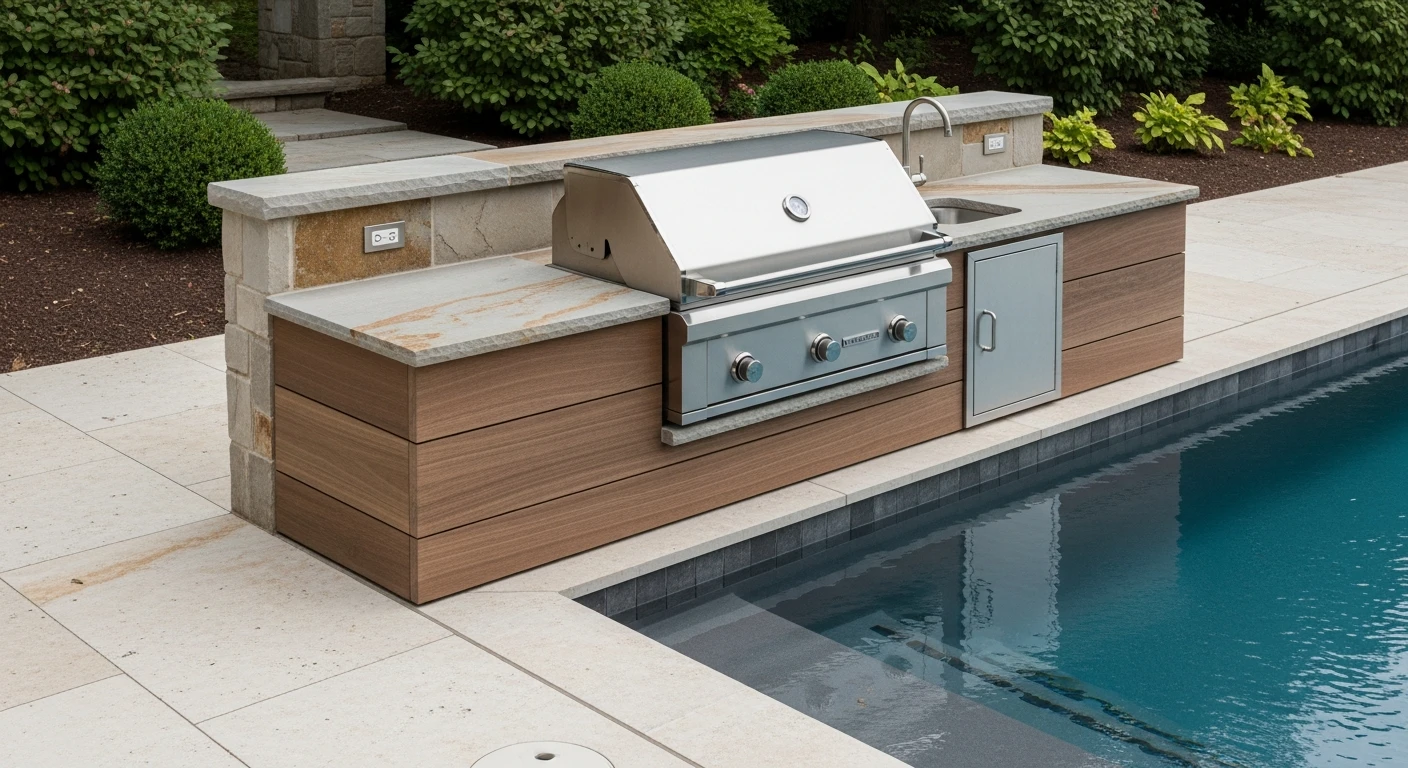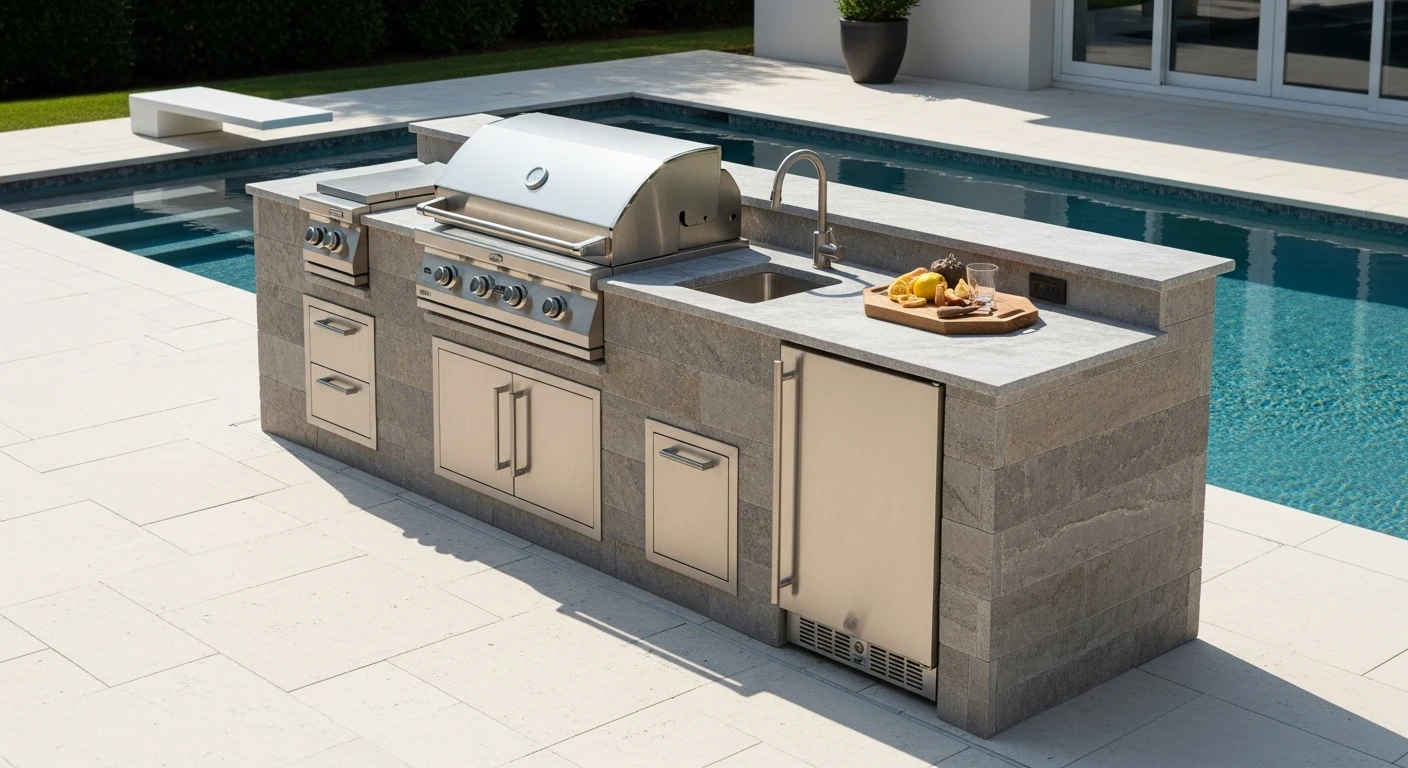
Custom Made Outdoor Kitchen in Osceola County: A Material Selection Framework to Double Lifespan
Building a custom outdoor kitchen in Osceola County isn't about aesthetics alone; it's a battle against relentless humidity and UV exposure. I’ve seen far too many beautiful projects in Kissimmee and St. Cloud begin to degrade within three years because they were built with materials suited for a drier climate. The standard builder-grade approach simply doesn't account for the moisture that settles in after our daily afternoon thunderstorms or the intense sun that beats down on lakefront properties near East Lake Toho. My entire methodology is built on preempting these failures. It's not about just choosing "weather-resistant" materials; it's about understanding the specific material science that counters Osceola's microclimate. I’ve refined a framework that focuses on material porosity, thermal expansion coefficients, and corrosion resistance at the molecular level. This approach has consistently resulted in outdoor kitchens that not only look pristine but have a functional lifespan that is verifiably double that of conventionally built projects.My Diagnostic Protocol for Osceola's Climate
Before a single design is sketched, I perform what I call the Osceola Durability Audit. This is a non-negotiable first step I developed after seeing a client's expensive granite countertop in a beautiful Celebration home develop hairline fractures from thermal shock. Standard design processes skip this, but here, it's the foundation of a long-lasting build. The audit is comprised of three critical evaluations.The Technical Core: Material Science vs. Florida Humidity
This is where my first-hand experience makes the most impact. A common mistake I used to make was underestimating the corrosive effect of pooled water, especially in homes with screened-in lanais where evaporation is slower. Now, my material selection is ruthlessly pragmatic.- Countertops: While granite is popular, its porosity is a significant weakness in our humid environment, leading to potential staining and microbial growth. I almost exclusively specify sintered stone (like Dekton) or non-porous quartzite. Their near-zero water absorption rate (under 0.05%) prevents moisture ingress, a critical performance indicator for our climate.
- Cabinetry & Structure: Wood looks beautiful but is a recipe for disaster here unless it's a specialty species like teak, which is often cost-prohibitive. My go-to solution is a composite structure. I build the frame with concrete masonry units (CMUs) sealed with a hydrophobic sealant, then use marine-grade polymer (HDPE) cabinetry doors and panels. HDPE is inert, impermeable to water, and has a high UV-stabilizer content, which I’ve found is essential to prevent color fade in areas like Harmony that have less tree cover.
- Hardware and Fasteners: This is a detail where most projects fail. I’ve seen 304 stainless steel hardware show rust pitting within 18 months near a saltwater pool. For all my projects, I mandate 316L marine-grade stainless steel for all hinges, handles, and screws. The added molybdenum provides superior resistance to chloride and moisture-induced corrosion.
Step-by-Step Implementation: From Foundation to First Grill
Executing the design correctly is just as critical as selecting the right materials. My process is a sequence of deliberate actions designed to create a completely sealed and stable system.- Foundation Pour: A proper foundation is non-negotiable. I specify a 4-inch monolithic concrete slab with fiber mesh reinforcement and a sub-grade vapor barrier. Critically, the slab must have a built-in slope of at least 1/4 inch per foot to ensure positive drainage away from the structure.
- Structural Assembly: Once the CMU block frame is built, I apply two coats of a cementitious waterproofing slurry to the interior and exterior before any cladding is installed. This creates a redundant moisture barrier.
- Utility Rough-in: All electrical wiring is run through liquid-tight flexible metal conduit (LFMC). For gas lines, I insist on using black iron pipe that is properly coated and sleeved where it passes through masonry to prevent corrosion at contact points.
- Cladding and Countertop Installation: I use a polymer-modified thin-set mortar with a high bond strength for all stone veneer or tile. For setting the countertop, the key is using large, continuous beads of a UV-stable, 100% silicone sealant, not a cheaper acrylic caulk that will shrink and crack.
- Appliance Integration: Every appliance, from the grill to the outdoor refrigerator, must be installed with its specified ventilation clearance. I’ve seen grills installed too tightly, causing heat damage to the countertop. This requires creating insulated jackets and dedicated ventilation ports as a standard operating procedure.
Precision Tuning and Quality Assurance Metrics
A project isn't complete when the last screw is turned. I have a quality assurance checklist that validates the long-term viability of the build. This includes a post-installation water test, where I intentionally flood all horizontal surfaces for 30 minutes to verify my drainage calculations and identify any pooling. I also use a moisture meter to confirm that the internal CMU structure has a reading below 15% relative humidity before it's fully sealed. These metrics aren't just for show; they are my guarantee of performance. Given the intense solar radiation in Osceola County, how have you planned to mitigate the galvanic corrosion risk between your 316L stainless steel grill body and the galvanized steel fasteners potentially used in its internal assembly?Written by

Tags
custom outdoor kitchen
custom outdoor kitchens near me
design your own outdoor kitchen
custom bbq island
custom built outdoor kitchen