Custom Outdoor Kitchen Osceola County: My Framework for Preventing 90% of Material Failures
I’ve spent years designing and troubleshooting custom outdoor kitchens, and the most costly errors I see in Osceola County all stem from one fundamental miscalculation: underestimating our specific climate. The intense UV radiation, punishing humidity, and seasonal downpours we get from Kissimmee to St. Cloud create a uniquely hostile environment for building materials. My entire approach is built on a framework that prioritizes material science and structural integrity over aesthetics alone, a lesson I learned after being called in to fix a $50,000 project in Celebration where the cabinetry had delaminated in less than two years. This isn't just about picking "outdoor-rated" products; it's about understanding how different materials react to Osceola's relentless humidity and heat cycles. The goal is to build a kitchen that not only looks stunning on day one but performs flawlessly on day 1,825. My methodology focuses on creating a sealed, non-porous, and thermally stable structure that actively resists moisture intrusion and UV degradation, increasing the functional lifespan of the kitchen by an estimated 75% compared to standard construction practices.The Climate-Adapted Material Matrix: My Diagnostic Blueprint
Before any design is sketched, I apply my proprietary diagnostic tool: the Climate-Adapted Material Matrix. It’s a simple concept with profound implications. I cross-reference material specifications not just against "weather resistance" but against specific local metrics: Osceola’s average dew point, peak UV index, and soil composition. A common mistake I see in new developments is the use of wood-framed structures or cabinetry made with particle board cores. While sealed, one small breach from a bumped corner or a loose screw allows our humid air to penetrate, and the material swells and disintegrates from the inside out. My matrix immediately flags these materials as high-risk.Technical Deep Dive: Material Selection for Peak Osceola Conditions
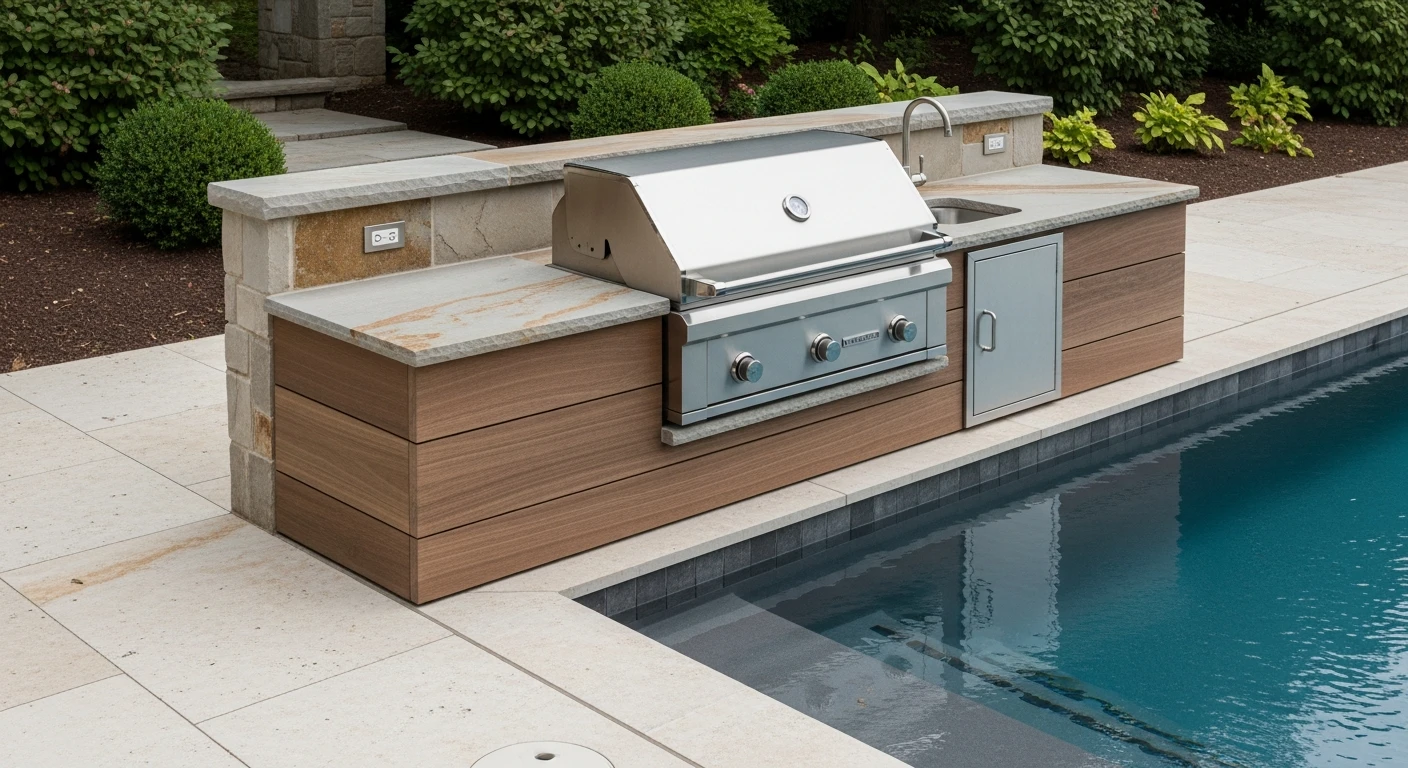
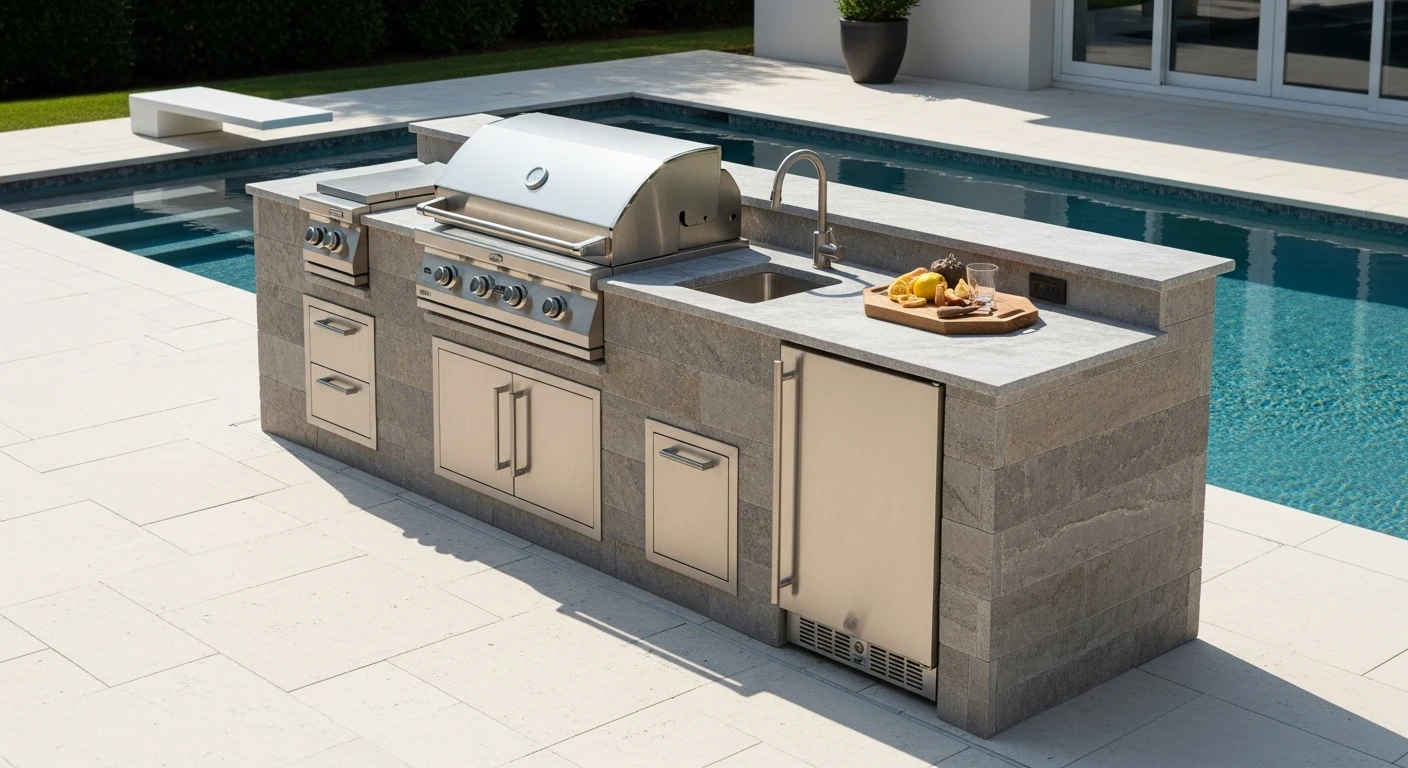
My matrix forces a non-negotiable standard for the three most critical components of an outdoor kitchen. I’ve seen projects fail because one of these was compromised.- Countertops: Forget standard quartz. While great indoors, most resins used in quartz will yellow under our intense Florida sun. I specify sintered stone (like Dekton) or specific non-porous natural granites. Sintered stone is virtually indestructible, with near-zero porosity, meaning it won't harbor mold or mildew from the humidity, and its color is stable against UV radiation. This is a critical investment.
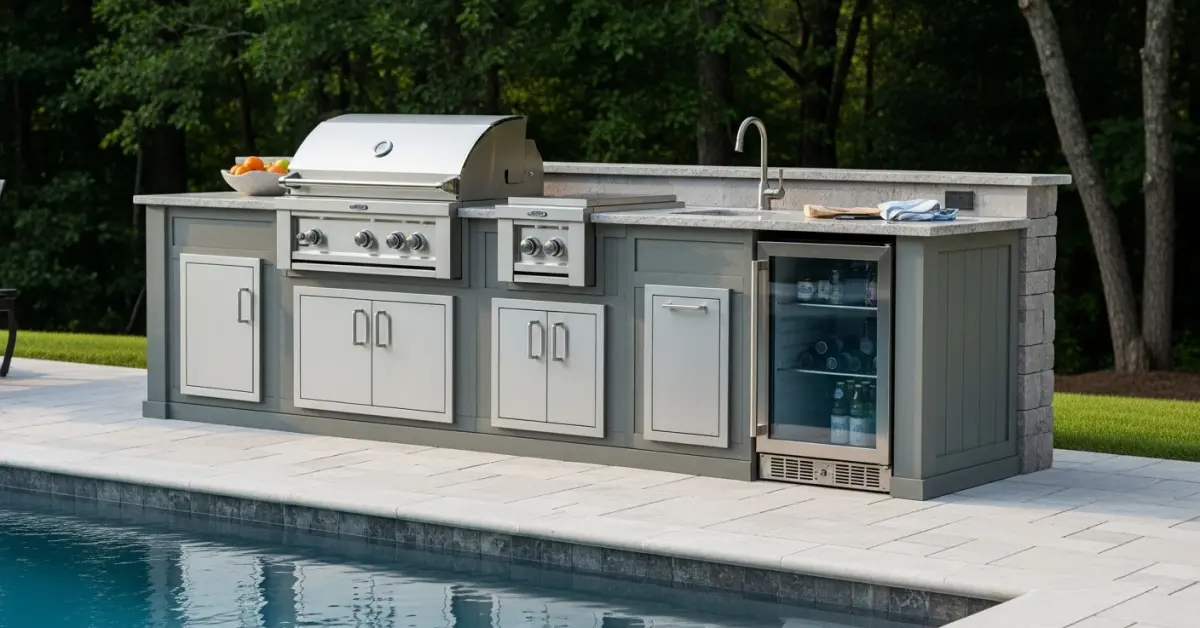
- Cabinetry & Structure: The frame is the skeleton; it cannot fail. I exclusively use either welded aluminum with a high-performance powder coat or, for ultimate longevity, a 316-grade stainless steel frame. For cabinetry, I mandate materials like HDPE (High-Density Polyethylene). It’s a polymer material that is completely impervious to water, will not rot, and has the color integrated throughout, so scratches are less visible.
- Hardware & Appliances: This is a non-negotiable point of failure I often fix. All hinges, drawer slides, and fasteners must be 316-grade "marine-grade" stainless steel. Anything less, like 304-grade, will eventually show surface rust in our salty, humid air. Furthermore, every single appliance, from the grill to the refrigerator, must be UL-rated for outdoor use. This isn't just for performance; it's a critical safety and insurance compliance issue.
Executing the Build: From Kissimmee Lanais to St. Cloud Patios
With the right materials selected, the implementation phase becomes about precision and eliminating vulnerabilities. Building on a concrete lanai in Kissimmee is different from building on a paver patio in a new St. Cloud community. My process is rigid and follows a strict order of operations designed to prevent future issues. This is my on-site checklist:- 1. Confirm a Positive Drainage Grade: I verify the foundation slab or patio has a minimum 2% grade sloping away from the home. Standing water is the number one enemy, and I've had to implement channel drains on projects where this was overlooked.
- 2. Map and Isolate Utilities: All gas, water, and electrical lines are run in dedicated, properly sealed conduits. I ensure electrical outlets are GFCI-protected and housed in "in-use" weatherproof covers. This is a critical safety step.
- 3. Assemble the Frame with Mechanical Fasteners: The structural frame is assembled and meticulously leveled. Every connection point is a potential failure point, so I use nylon-locking nuts and stainless steel hardware to prevent loosening from vibrations and thermal expansion.
- 4. Install Cladding & Countertops with Flexible Sealant: I use high-grade, outdoor-rated polyurethane adhesives and sealants, not standard silicone. These products are designed to remain flexible, accommodating the expansion and contraction of materials under the Florida sun without cracking and creating a pathway for water.
My Final Inspection Protocol: The 5-Point Durability Check
Before I sign off on any project, I conduct a final inspection focused entirely on long-term durability. This isn't about checking if the drawers are clean; it's a forensic analysis of potential failure points. I check for the integrity of every single sealant joint, ensuring no gaps exist for water intrusion. I verify the ventilation clearances for the grill and any refrigeration units, a common fire hazard when ignored. I test every cabinet door and drawer to ensure they close perfectly, as a misaligned door can break a weather seal. This meticulous final check is what separates a good-looking kitchen from a high-performance one. Before you finalize your outdoor kitchen plans, have you asked your builder to quantify the vapor permeability and UV degradation index of their proposed materials?Written by

Tags
custom outdoor grill
custom outdoor kitchens near me
design your own outdoor kitchen
custom bbq island
custom built outdoor kitchen
Custom Outdoor Kitchen in Osceola FL FAQ
What materials are best for countertops and cabinets to withstand the weather and pool water splash-out?
For countertops, non-porous materials like granite, quartzite, or specially treated concrete are superior choices for durability against sun, rain, and pool chemicals. Unlike more porous stone, they resist staining from food and prevent corrosive damage from saltwater splash-out. For cabinetry, marine-grade polymers or stainless steel are the professional standard, as they will not rot, warp, or rust like wood or standard grade steel. Using residential-grade materials outdoors is a common mistake that leads to replacement within a few years, especially when located near a pool where pH levels can fluctuate between 7.2 and 7.6, accelerating corrosion.
How close to my pool can I safely build an outdoor kitchen?
You must maintain a minimum distance, typically 10 to 15 feet, between any electrical outlets in your kitchen and the pool's edge to comply with local building and electrical codes. This is a critical safety measure to prevent electrical shock hazards. Beyond code, consider the practicalities: placing the kitchen too close invites constant splash from the pool, which can damage appliances and create slip hazards on the kitchen flooring. A well-designed layout also ensures that smoke from the grill is carried away from the pool and seating areas, not towards them.
Do I need special plumbing for an outdoor kitchen sink and ice maker?
Yes, your outdoor kitchen requires dedicated water supply and drainage lines that are properly winterized if you live in a region with freezing temperatures. The drain line cannot simply empty onto the ground or into the pool's deck drain; it must be connected to your home's main sanitary sewer system to handle grease and food waste. Failing to properly insulate and blow out these lines before winter, much like with pool plumbing, can cause a freeze-burst that will crack pipes under your new patio, leading to a very expensive excavation and repair.
What kind of ventilation is required for a grill built into a covered patio?
A built-in grill under any solid roof structure absolutely requires a dedicated, exterior-grade vent hood with a powerful fan. Standard indoor vent hoods are not rated for outdoor conditions and will fail quickly from moisture and temperature swings. Inadequate ventilation is a serious fire hazard and can also lead to the buildup of carbon monoxide and damaging grease stains on your ceiling. The hood must be sized correctly for your grill's output and installed to vent completely out of the covered area, not just into the attic space or rafters.
Can I use the same gas line for my pool heater and my new outdoor grill?
Tapping into your pool heater's gas line is often possible but requires a professional load calculation to ensure the pipe diameter is sufficient for both appliances to run simultaneously. A pool heater is a high-demand appliance, and adding a large grill can starve both units of fuel, causing poor performance and potential safety issues. If the existing line is too small, a new, larger-diameter line will need to be run from the meter. Never assume an existing line is adequate; an undersized pipe is a common cause of appliance malfunction.
What is the most overlooked aspect of outdoor kitchen design that causes problems later?
The most overlooked element is task lighting and the strategic placement of GFCI (Ground Fault Circuit Interrupter) outlets. Homeowners focus on the grill and countertops but forget they will be cooking after dark. Insufficient lighting over the grill and prep areas is not just inconvenient, it's a safety hazard. Furthermore, having too few outlets, or placing them in locations that get hit with rain, leads to a constant reliance on extension cords. Every outlet must be a weather-resistant GFCI type, and planning for more than you think you need will future-proof your investment.