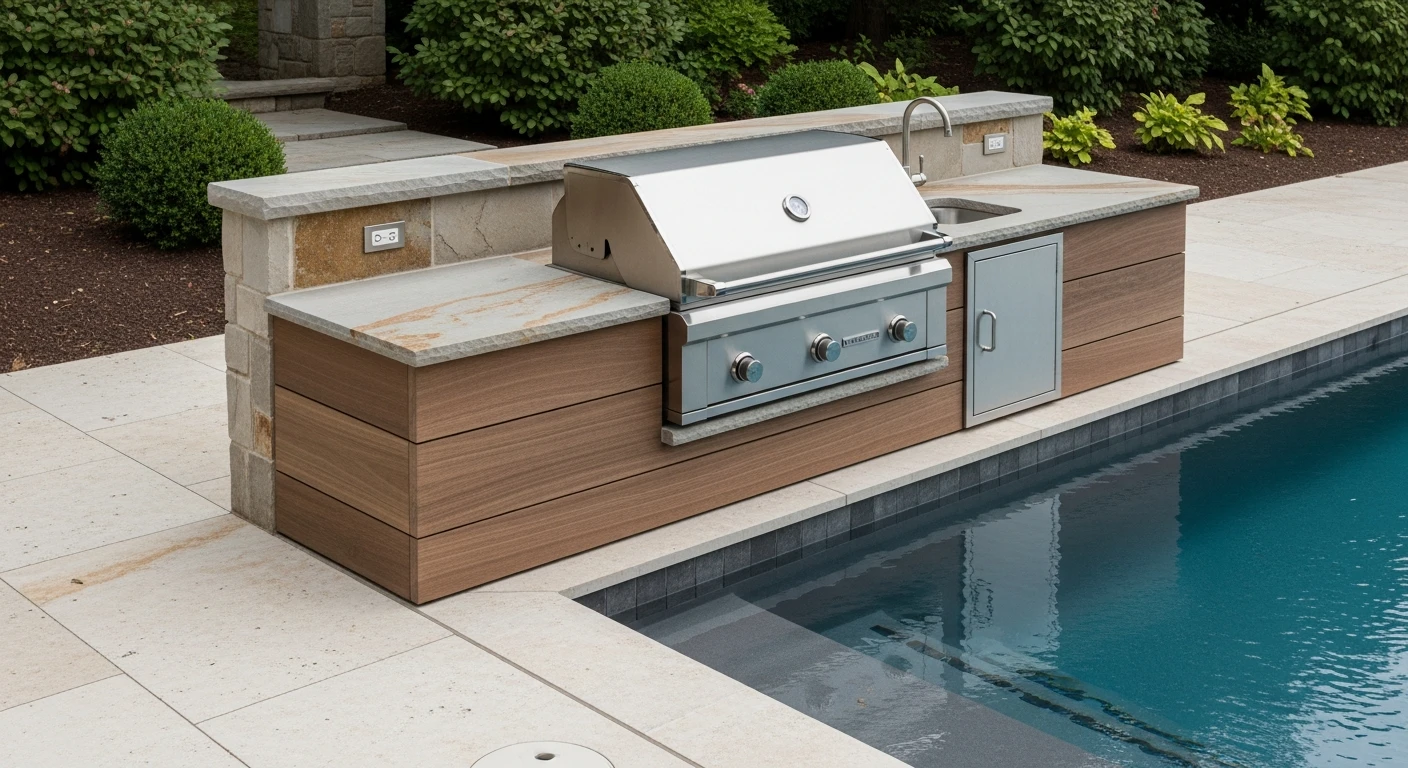
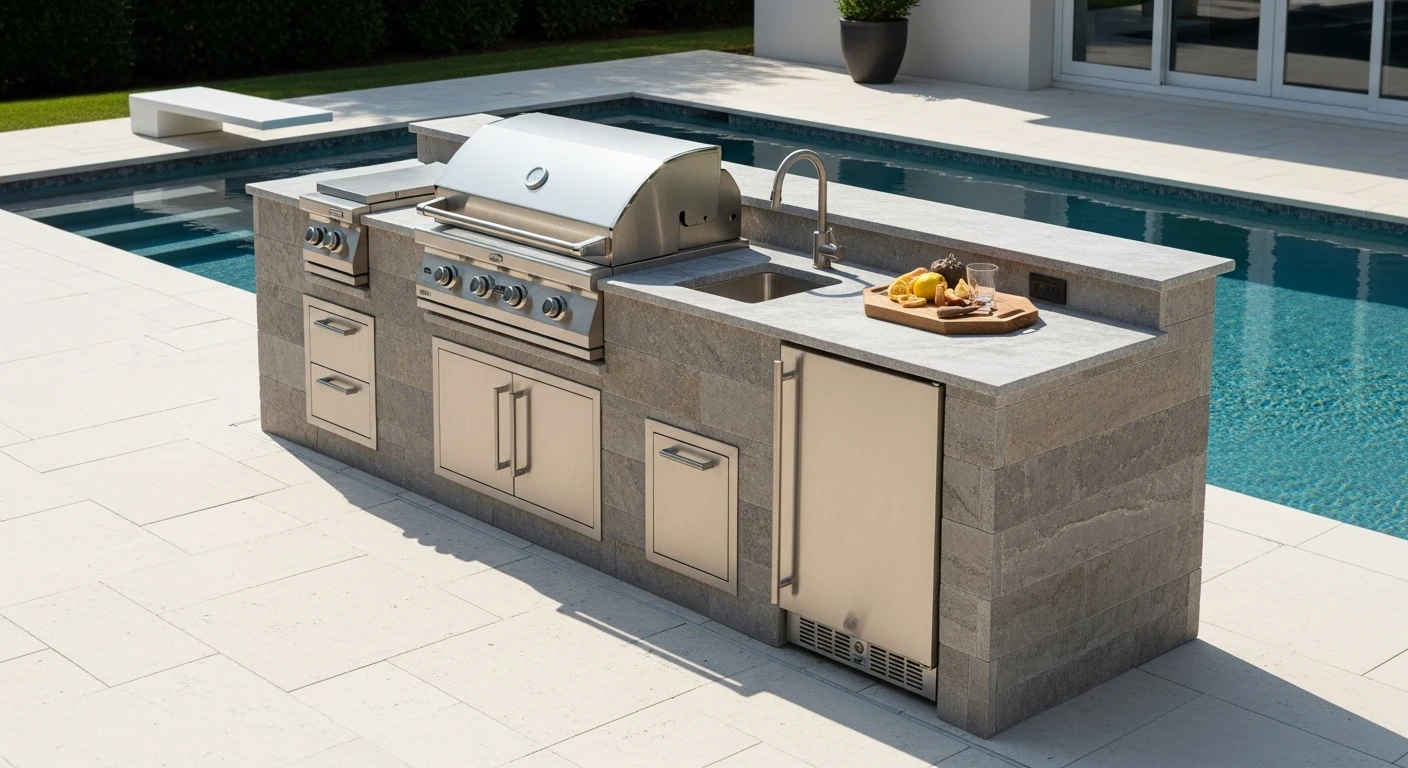
Custom Outdoor Kitchen Islands in Osceola County: My Material Selection Framework for 30-Year Structural Integrity
Building a custom outdoor kitchen island in Osceola County isn't just about aesthetics; it's a battle against two relentless opponents: extreme humidity and intense UV radiation. I've seen far too many beautiful, expensive islands in Kissimmee and St. Cloud fail within five years due to fundamental material science errors. The most common failure point I diagnose is moisture ingress into the core structure, causing delamination, warping, and irreversible mildew growth, something standard builders often overlook. My entire approach is built on a framework that preempts these specific local challenges. It’s not about over-engineering; it’s about a precise material and construction methodology designed for our year-round outdoor lifestyle. Forget the generic advice. The key to longevity is creating a completely non-hydrophilic (water-repelling) core structure and ensuring every component, from the frame to the fasteners, can handle the thermal stress of a hot Florida summer afternoon followed by a sudden thunderstorm.My Diagnostic Protocol for Osceola's Climate Challenges
Before I even sketch a design, I perform what I call a Site-Specific Environmental Audit. The sun exposure on a property in Celebration is different from a lakeside home in East Lake Toho. This isn't a simple compass reading; it's a technical assessment. I analyze the total hours of direct sun exposure, the proximity to chlorinated pools which can accelerate corrosion, and the typical airflow across the lanai or patio. This data dictates the material hierarchy for the project. A frequent and costly error I've been hired to fix is the use of "weather-resistant" MDF or pressure-treated wood for the island's cabinet boxes. In Osceola's humidity, which can average over 75%, these materials act like a sponge. The wood swells, cracks the exterior stucco or stone veneer, and creates a breeding ground for mold. My methodology completely eliminates wood and wood-composite products from any structural component of the island.The Core Failure Point: Material Mismatch and Moisture Ingress
The single biggest technical oversight I encounter is the lack of a capillary break between the concrete lanai slab and the island's frame. Concrete is porous and wicks moisture upwards. When a standard galvanized steel or aluminum frame sits directly on it, moisture gets trapped, leading to premature corrosion at the base—the island's most critical structural point. My non-negotiable standard is to install a base of high-density composite spacers, creating a 1/4-inch air gap that stops moisture transfer completely. Furthermore, I analyze the thermal expansion coefficient of every material. In our climate, a dark-colored countertop can reach surface temperatures exceeding 150°F. If the countertop material expands at a significantly different rate than the substrate (like cement board) and the frame, it will eventually cause hairline cracks in grout lines or, in worst-case scenarios, stress fractures in the stone itself. My material pairing system ensures these expansion rates are compatible, a detail that ensures long-term stability.The Implementation Blueprint: From Foundation to Finish
My construction process follows a strict sequence designed to build a monolithic, weather-impermeable structure. There are no shortcuts here; every step is a critical component of the final system's integrity.- Frame Construction: I exclusively use either welded T6061 aluminum tubing or structures made from closed-cell PVC. These materials have zero water absorption and are structurally stable across our temperature extremes. All fasteners are 316-grade stainless steel, which offers superior corrosion resistance to the more common 304 grade, especially important for homes near pools.
- Substrate & Cladding: The frame is sheathed in 1/2-inch cement backer board, with every seam taped and sealed with a waterproof membrane. This creates a solid, stable box. This is the only acceptable substrate for applying stucco, stone veneer, or tile finishes in our wet environment.
- Countertop Specification: I favor materials like Dekton or other sintered stones for their near-zero porosity and high UV resistance. While granite is a popular choice, I mandate a specific multi-coat sealing process and educate clients on the required annual upkeep to prevent staining and moisture absorption.
- Appliance Integration: Every drop-in appliance, like a grill or side burner, is installed with a dedicated insulating liner. This protects the island's structure from extreme heat and is a critical safety measure. I also design specific ventilation pathways within the island—typically two vents low on one side and two high on the other—to promote passive airflow and prevent gas or heat buildup.
Precision Tuning for Longevity and Functionality
The final 10% of the work is what separates a good outdoor kitchen from a great one. This is where I focus on the micro-details. For instance, the choice of sealant for control joints and around the sink is critical. I use a marine-grade silicone sealant, not a standard exterior caulk, for its superior flexibility and resistance to mildew. For electrical, every outlet must be a GFCI-protected, in-use "bubble" cover. All wiring is run through waterproof conduit, and I ensure the placement accounts for both ergonomics and complete protection from wind-driven rain, a common occurrence in our afternoon storms. These small, precise adjustments are not up-sells; they are fundamental to my quality standard for a project in Osceola County. Ultimately, the goal is an outdoor kitchen that performs like a seamless extension of the indoor living space, without the constant worry of weather-related degradation. Have you specified a ventilation plan for your island that accounts for both heat dissipation from the grill and passive moisture evacuation from the cabinet interiors?Written by

Tags
custom outdoor grill station
custom made outdoor kitchen
custom outdoor grill
custom outdoor kitchen design
custom bbq island