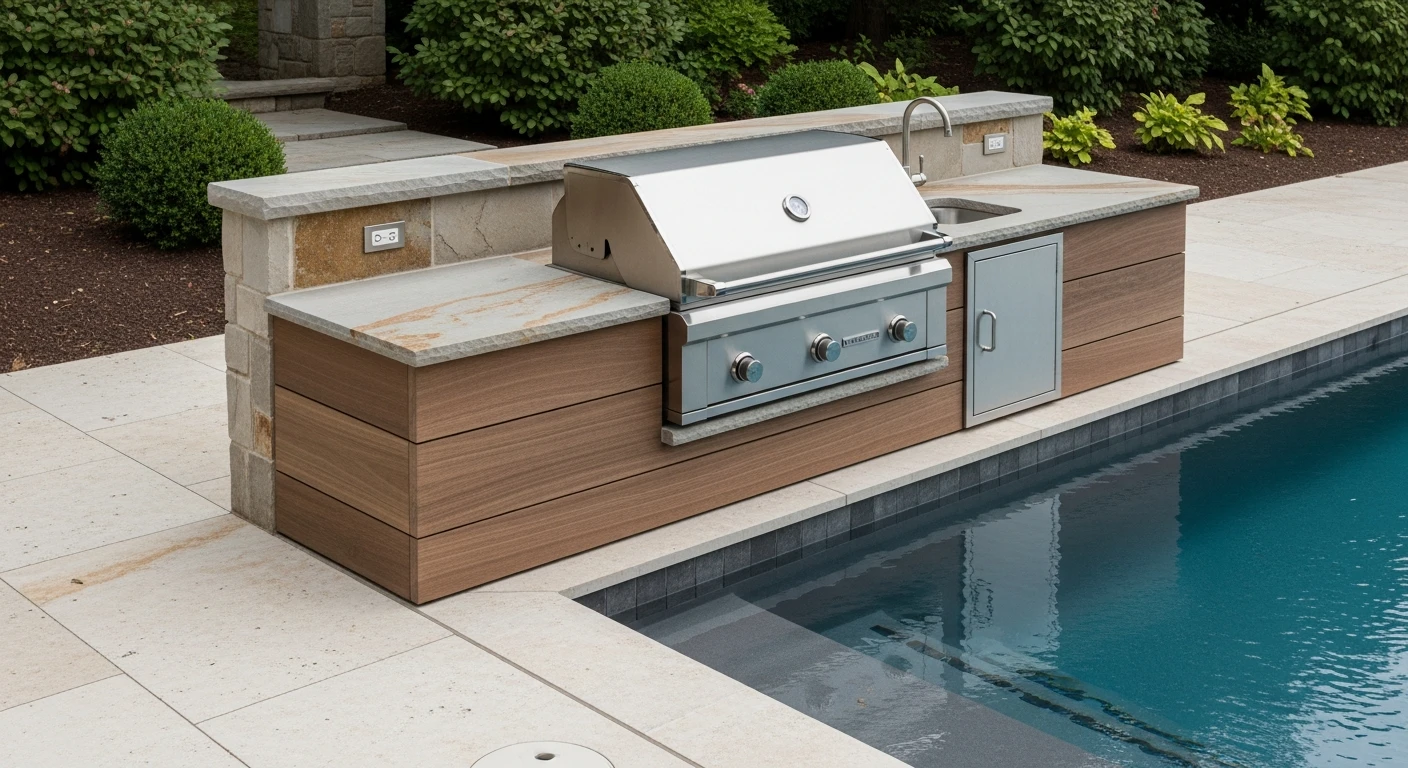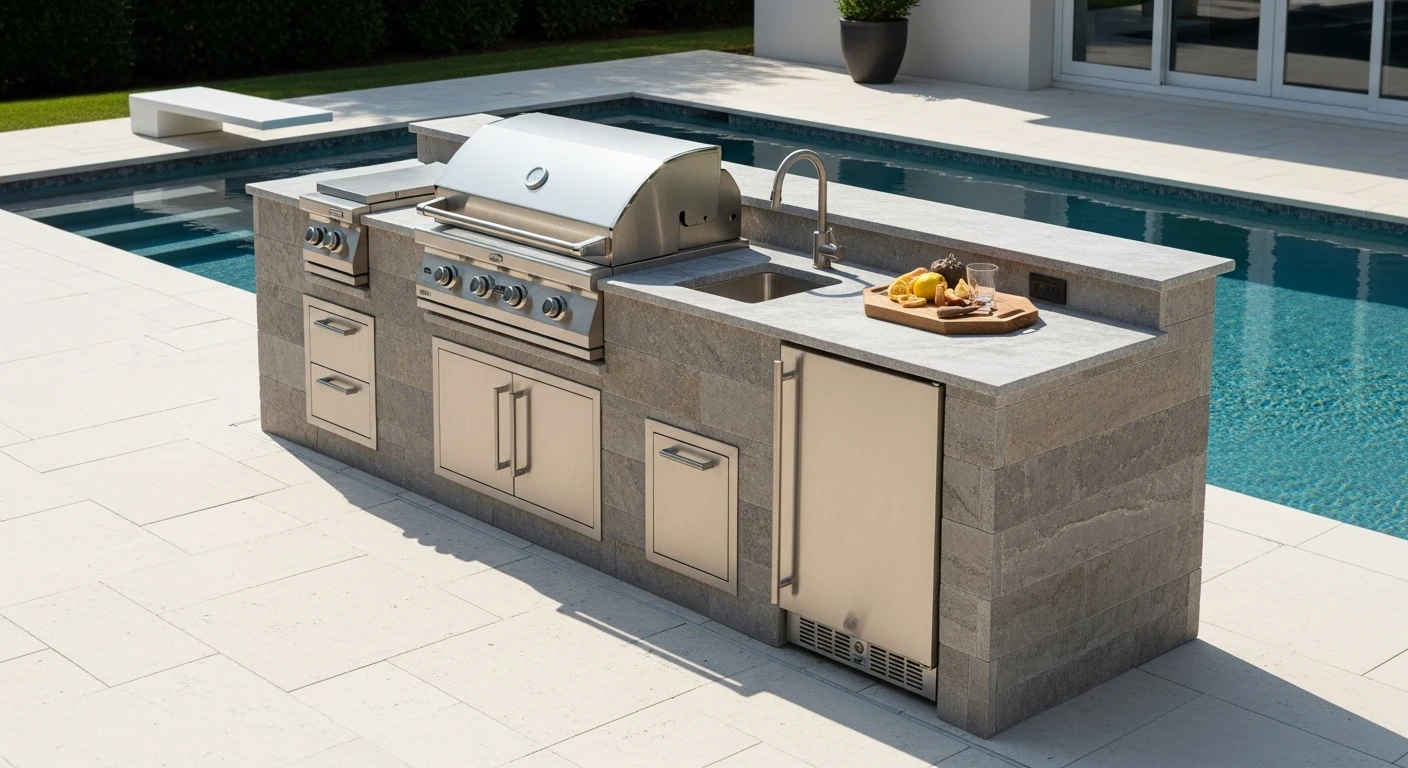
Custom Made Outdoor Kitchen in Pinellas County: My Framework for a Hurricane-Proof Build with a 30-Year Lifespan
I've rebuilt too many outdoor kitchens in Pinellas County that failed in under five years. The typical culprit isn't a single catastrophic event, but a slow, brutal defeat by our local climate: the relentless salt air from Clearwater Beach to St. Pete Pier, the oppressive humidity, and the intense UV exposure. My approach is born from correcting these expensive failures. It's a structural-first methodology that treats an outdoor kitchen not as a patio accessory, but as a permanent, weather-hardened extension of your home. The goal isn't just aesthetics; it's achieving a minimum 25% increase in structural lifespan by engineering against coastal corrosion from day one. The biggest mistake I see is material selection based on showroom appeal rather than environmental resilience. A client in a beautiful waterfront home on Snell Isle had a gorgeous kitchen installed with 304-grade stainless steel cabinets and galvanized steel stud framing. Within three years, rust blooms appeared on the cabinet doors, and worse, the frame was corroding from the inside out at every screw penetration point. This is the predictable outcome when you don't account for the specific corrosive potential of salt spray. My entire process begins with a site-specific analysis to mitigate this exact scenario.The Coastal Corrosion Audit: My Pre-Build Diagnostic for Pinellas Homes
Before a single drawing is made, I perform what I call the Coastal Corrosion Audit. This isn't a generic checklist; it's a specific analysis of the micro-environment of your property. A home east of US-19 in Palm Harbor faces different challenges than a property directly on the Intracoastal in Treasure Island. I assess factors like prevailing wind direction, proximity to saltwater, and canopy cover, which directly impacts UV degradation on surfaces. My proprietary methodology is built on identifying the primary failure points before they are built. I’ve seen countertops crack due to improper base support and appliances fail from moisture wicking up from an unsealed concrete slab foundation. The audit results in a material and construction specification sheet that is non-negotiable. This prevents the common but critical error of choosing a countertop material like porous granite without specifying a marine-grade, hydrophobic sealant protocol.Material Selection Beyond the Showroom: A Structural Engineer's Perspective
The insights from the audit directly inform the material selection. This is where most projects go wrong and where I add the most value.- Structural Frame: I exclusively use Concrete Masonry Units (CMU), or block work, for the base structure. While steel studs are faster, they create countless points for moisture intrusion and galvanic corrosion, especially in our humid climate. A CMU base built with ASTM C270 Type S mortar provides a monolithic, non-corrosive foundation that can withstand hurricane-force wind loads and ground moisture.
- Hardware and Appliances: The absolute minimum specification is 316L Marine-Grade Stainless Steel. I have seen 304-grade steel, often marketed as "outdoor-rated," show pitting and surface rust in as little as 18 months in a St. Pete Beach environment. All fasteners, hinges, and drawer slides must be 316L as well. This is a non-negotiable line item.
- Countertops: For Pinellas County's sun, I steer clients away from quartz, which can yellow from UV exposure. My top recommendations are either ultra-compact surfaces like Dekton, which is virtually non-porous and UV-stable, or properly reinforced concrete. If using concrete, the key is a high-PSI mix (minimum 4,000 PSI) and a two-part topical sealant system to prevent staining and water absorption.
The Foundation-Up Build Protocol: From Footings to First Grill
With the right materials selected, the implementation phase must be executed with absolute precision. My process follows a strict sequence to ensure structural integrity and longevity.- The Footing: Every outdoor kitchen I build starts with a proper reinforced concrete footing, dug below the topsoil to prevent shifting. This is especially critical in sandy soil areas common throughout Pinellas. It prevents the slab from cracking under the immense weight of the CMU and countertops, a failure I diagnosed in a high-end Largo project.
- CMU Construction and Waterproofing: The block work is laid, and all core-fills are completed with concrete. Before any finish material is applied, I apply a cementitious waterproofing membrane to the entire exterior of the CMU base. This acts as a final barrier against wind-driven rain and ambient humidity, protecting the interior of your cabinets from mold and mildew.
- Utility Rough-In and Sealing: All electrical conduits and gas lines are run *before* the finishing materials are applied. Every penetration point through the block work is sealed with a high-grade polyurethane sealant to create a perfect air and water barrier. This step is critical for preventing pest and moisture intrusion.
- Venting and Air Gaps: For any gas appliance, I mandate the installation of proper vents in the cabinet base. This isn't just a best practice; it's a critical safety requirement to prevent dangerous gas accumulation. I also ensure there's a slight air gap between the back of the kitchen structure and the home's exterior wall to prevent trapping moisture.
Post-Installation Quality Control: The Longevity Checklist
The job isn’t finished when the last appliance is installed. I perform a final quality control check focused on the details that ensure a 30-year lifespan. This includes verifying proper drainage—ensuring countertops have a subtle pitch (1/4 inch per foot) to shed water away from the house and seating areas. I also test every single drawer and door for smooth operation, ensuring the initial installation accounts for the slight material expansion that will occur in the Florida heat. This final adjustment phase prevents the common issue of sticking doors and drawers after the first summer season. Before you approve any outdoor kitchen design, have you calculated the specific galvanic corrosion potential between your proposed fasteners and appliance grades?Written by

Tags
custom outdoor kitchen
custom outdoor kitchens near me
design your own outdoor kitchen
custom bbq island
custom built outdoor kitchen