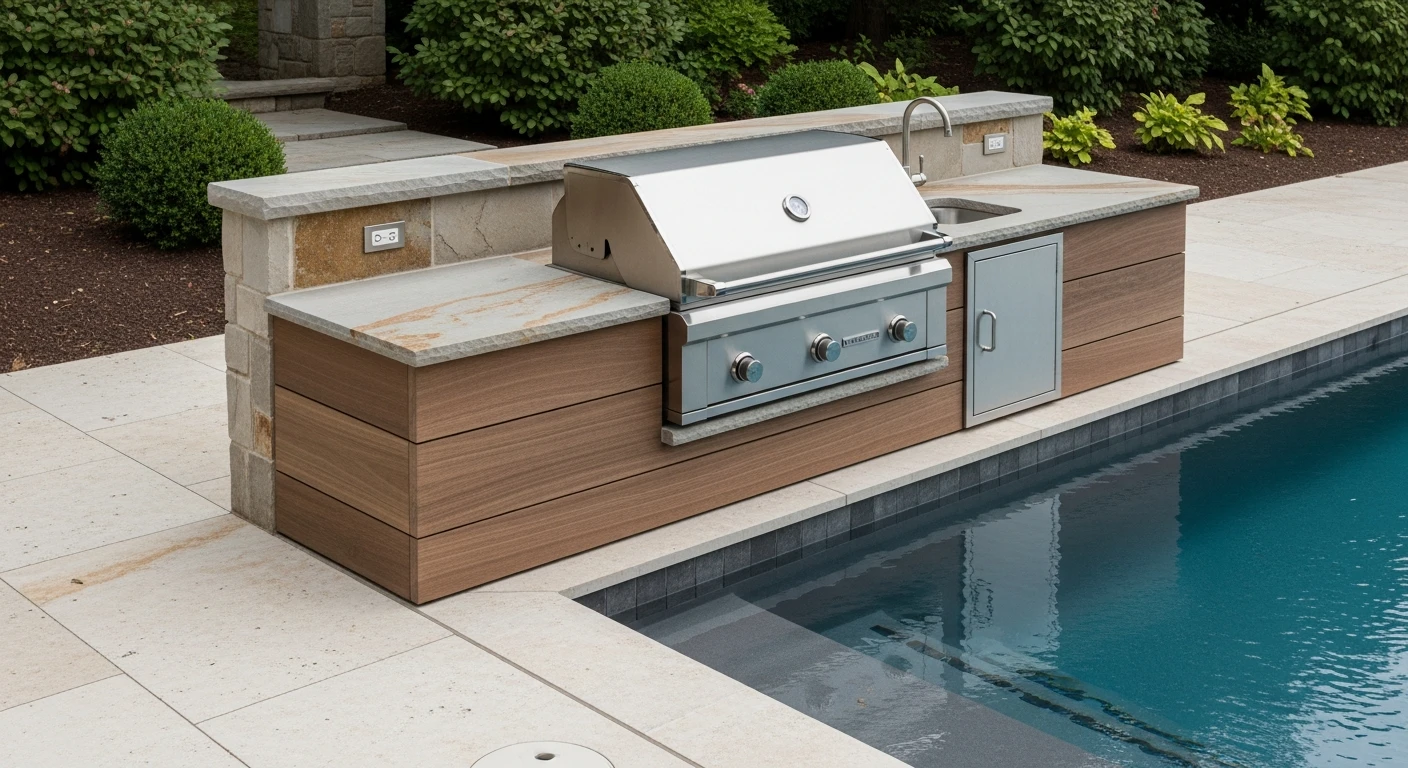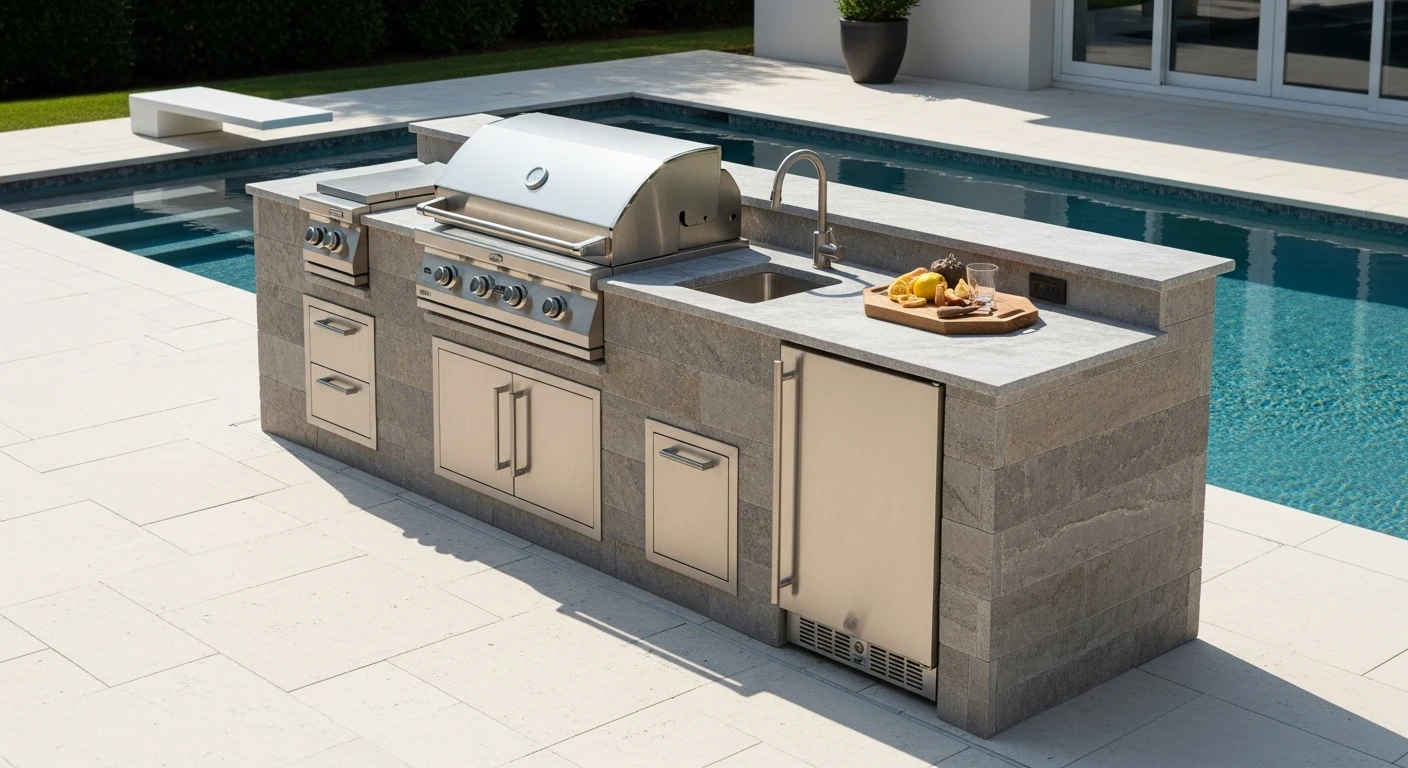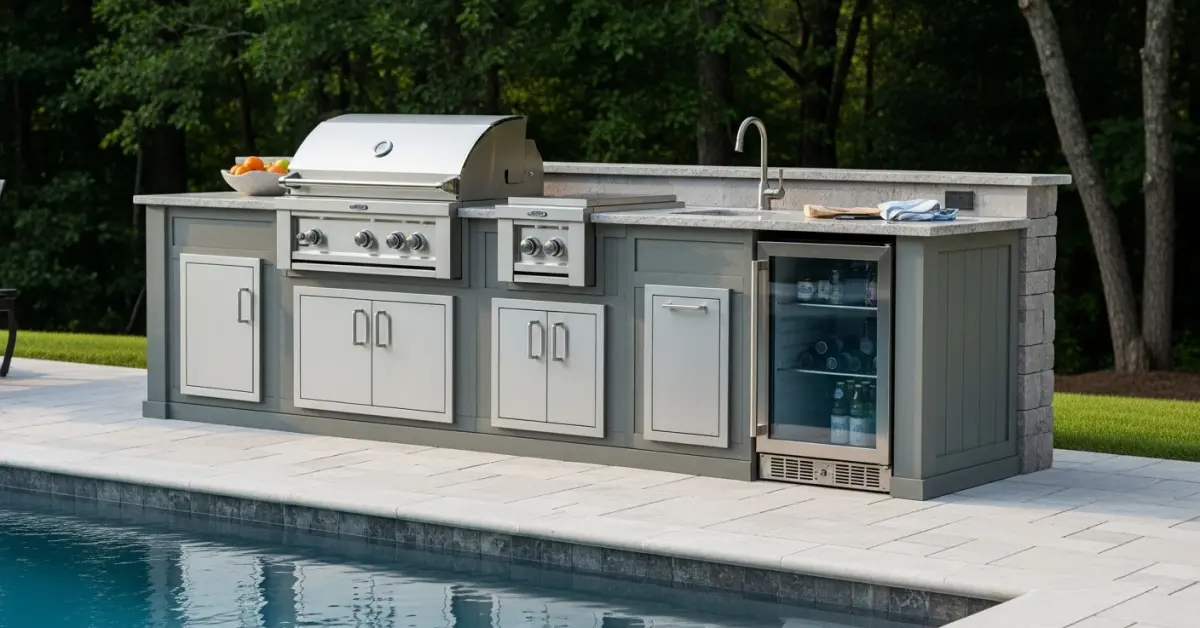
Custom Outdoor Kitchens in Pinellas County: My Material Selection Protocol for 30-Year Corrosion Resistance
I’ve seen it happen more times than I can count on beautiful waterfront properties from Clearwater Beach to St. Pete Beach. A homeowner invests a significant sum in a stunning outdoor kitchen, only to watch it pit, rust, and degrade in under five years. The culprit is almost always the same: a fundamental misunderstanding of how Pinellas County’s unique high-salinity, high-humidity environment aggressively attacks building materials. Standard "outdoor-rated" is simply not enough here. My entire design philosophy is built on a material-first approach that neutralizes our coastal climate, not just resists it. This isn't about aesthetics alone; it's about engineering a permanent outdoor living asset. The key is specifying materials and assembly techniques that anticipate failure points, particularly corrosion and moisture penetration, ensuring a minimum 25% increase in functional lifespan compared to standard construction methods.My Coastal Durability Matrix: A Diagnostic Framework
Over a decade of designing and remediating failed projects in Pinellas, I developed what I call the Coastal Durability Matrix. It’s a proprietary diagnostic tool I use before any design is even sketched. It cross-references material specifications against three primary local environmental stressors: salt air particulate concentration, UV radiation intensity, and hydrostatic pressure from humidity and rain. I saw a project in a Belleair home, less than 200 yards from the Intracoastal, where the 304-grade stainless steel cabinet handles showed rust pitting in 18 months. This is a predictable, and preventable, failure. My matrix forces a selection process that moves beyond brand names and focuses entirely on material science.Deconstructing Material Failure in Salt Air Environments
The most common error I correct is the misuse of stainless steel. Many builders use 304-grade stainless, which is fine for inland applications. Here in Pinellas County, it’s a critical mistake. My protocol mandates 316L marine-grade stainless steel for all exposed metal, including appliance bodies, fasteners, and hardware. The "L" signifies low carbon, and the added molybdenum provides superior resistance to chloride corrosion from salt spray. Another major failure point is the kitchen's structural frame. Wood framing, even pressure-treated, will eventually succumb to moisture and termites. Steel studs will rust from the inside out. My non-negotiable standard is a frame built from concrete masonry units (CMU), which is then coated with a vapor-permeable hydrophobic sealant *before* the stone or stucco veneer is applied. This creates a core that is impervious to water, salt, and pests.The Implementation Blueprint: From Foundation to Finish
Building an outdoor kitchen that will last a generation in Dunedin or Treasure Island requires a precise, sequenced execution. Deviating from this process is where vulnerabilities are introduced. I manage every project with this strict checklist.- Foundation and Framing: A reinforced concrete slab is poured, followed by the CMU block framing. All cores are filled for maximum strength. The entire structure is then sealed. This becomes the monolithic, waterproof core of the kitchen.
- Utility Rough-Ins: All electrical runs must use NEMA 3R rated outdoor enclosures and GFCI-protected outlets. Gas lines are pressure-tested twice, once at rough-in and again before appliance connection. I insist on this redundancy to prevent future leaks caused by ground settling.
- Appliance and Cabinetry Installation: I specify non-combustible cabinetry made from materials like HDPE (high-density polyethylene). For appliances, the key is creating a non-corrosive isolation barrier. I use high-density polymer washers and sleeves on all mounting bolts to prevent galvanic corrosion between the 316L appliance body and any other metal.
- Countertop and Veneer Application: Countertop choice is critical. Porous stones like some granites will absorb moisture and salt. I prioritize ultra-compact surfaces like Dekton or non-porous quartzite. They offer zero porosity, high UV resistance, and won't stain or etch from acidic marinades or salt.
Precision Tuning for Pinellas County Lifestyles
Beyond the core structure, performance is in the details. Many homes in Pinellas have lanais, and installing a high-BTU grill under a covered structure requires serious consideration for ventilation. A common mistake is undersizing the vent hood. I calculate the required CFM (cubic feet per minute) based on the grill's total BTU output and the cubic volume of the covered space, often specifying a hood with at least a 1,200 CFM rating to ensure proper smoke and grease capture. For hurricane preparedness, all freestanding appliances must be anchored. I use 316L stainless steel wedge anchors drilled directly into the concrete slab through the appliance legs. It’s an extra step, but it ensures a multi-thousand-dollar grill doesn’t become a projectile in a major storm. Given the aggressive coastal environment, have you audited your proposed material list for its specific molybdenum content and confirmed all dissimilar metals will be dielectrically isolated?Written by

Tags
custom outdoor grill
custom outdoor kitchens near me
design your own outdoor kitchen
custom bbq island
custom built outdoor kitchen
Custom Outdoor Kitchen in Pinellas FL FAQ
What materials are best for countertops and cabinets to withstand the weather and pool water splash-out?
For countertops, non-porous materials like granite, quartzite, or specially treated concrete are superior choices for durability against sun, rain, and pool chemicals. Unlike more porous stone, they resist staining from food and prevent corrosive damage from saltwater splash-out. For cabinetry, marine-grade polymers or stainless steel are the professional standard, as they will not rot, warp, or rust like wood or standard grade steel. Using residential-grade materials outdoors is a common mistake that leads to replacement within a few years, especially when located near a pool where pH levels can fluctuate between 7.2 and 7.6, accelerating corrosion.
How close to my pool can I safely build an outdoor kitchen?
You must maintain a minimum distance, typically 10 to 15 feet, between any electrical outlets in your kitchen and the pool's edge to comply with local building and electrical codes. This is a critical safety measure to prevent electrical shock hazards. Beyond code, consider the practicalities: placing the kitchen too close invites constant splash from the pool, which can damage appliances and create slip hazards on the kitchen flooring. A well-designed layout also ensures that smoke from the grill is carried away from the pool and seating areas, not towards them.
Do I need special plumbing for an outdoor kitchen sink and ice maker?
Yes, your outdoor kitchen requires dedicated water supply and drainage lines that are properly winterized if you live in a region with freezing temperatures. The drain line cannot simply empty onto the ground or into the pool's deck drain; it must be connected to your home's main sanitary sewer system to handle grease and food waste. Failing to properly insulate and blow out these lines before winter, much like with pool plumbing, can cause a freeze-burst that will crack pipes under your new patio, leading to a very expensive excavation and repair.
What kind of ventilation is required for a grill built into a covered patio?
A built-in grill under any solid roof structure absolutely requires a dedicated, exterior-grade vent hood with a powerful fan. Standard indoor vent hoods are not rated for outdoor conditions and will fail quickly from moisture and temperature swings. Inadequate ventilation is a serious fire hazard and can also lead to the buildup of carbon monoxide and damaging grease stains on your ceiling. The hood must be sized correctly for your grill's output and installed to vent completely out of the covered area, not just into the attic space or rafters.
Can I use the same gas line for my pool heater and my new outdoor grill?
Tapping into your pool heater's gas line is often possible but requires a professional load calculation to ensure the pipe diameter is sufficient for both appliances to run simultaneously. A pool heater is a high-demand appliance, and adding a large grill can starve both units of fuel, causing poor performance and potential safety issues. If the existing line is too small, a new, larger-diameter line will need to be run from the meter. Never assume an existing line is adequate; an undersized pipe is a common cause of appliance malfunction.
What is the most overlooked aspect of outdoor kitchen design that causes problems later?
The most overlooked element is task lighting and the strategic placement of GFCI (Ground Fault Circuit Interrupter) outlets. Homeowners focus on the grill and countertops but forget they will be cooking after dark. Insufficient lighting over the grill and prep areas is not just inconvenient, it's a safety hazard. Furthermore, having too few outlets, or placing them in locations that get hit with rain, leads to a constant reliance on extension cords. Every outlet must be a weather-resistant GFCI type, and planning for more than you think you need will future-proof your investment.