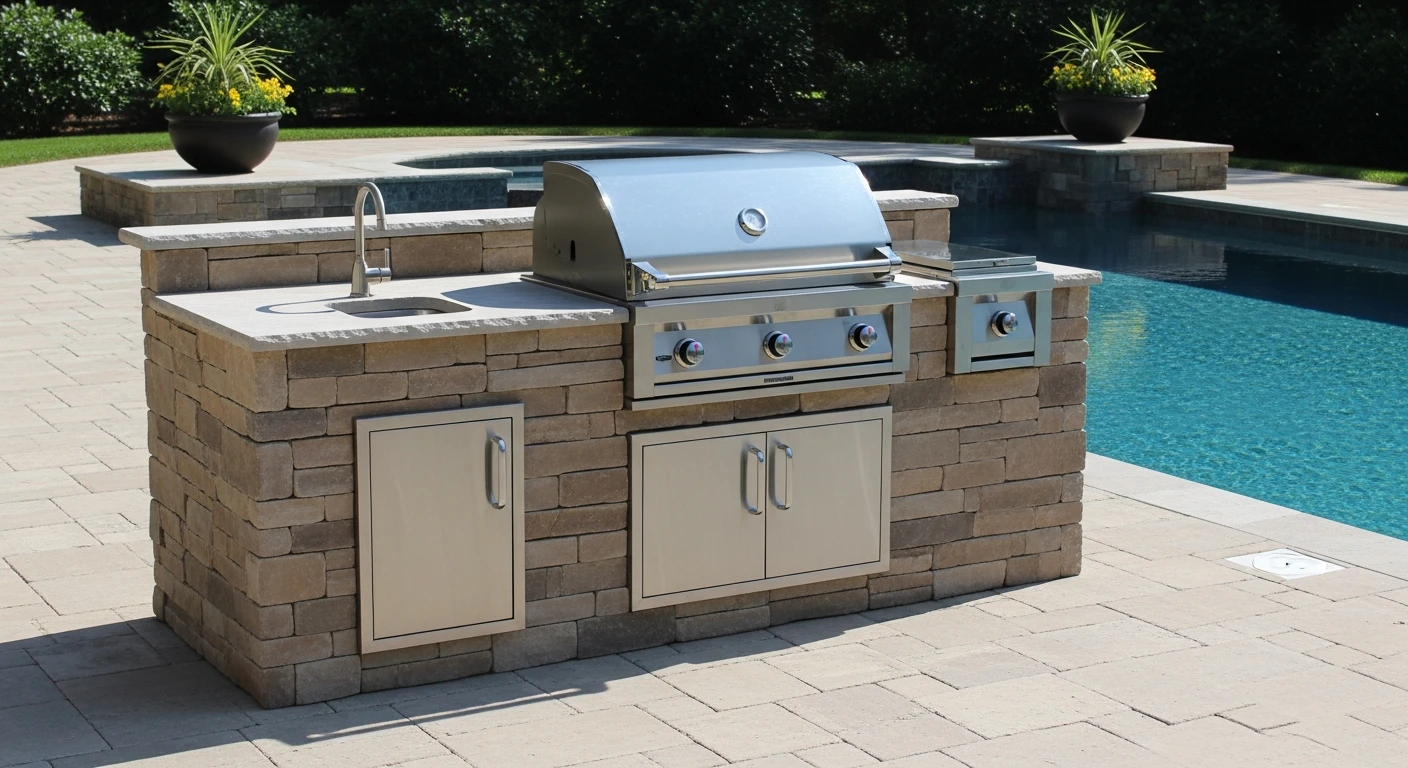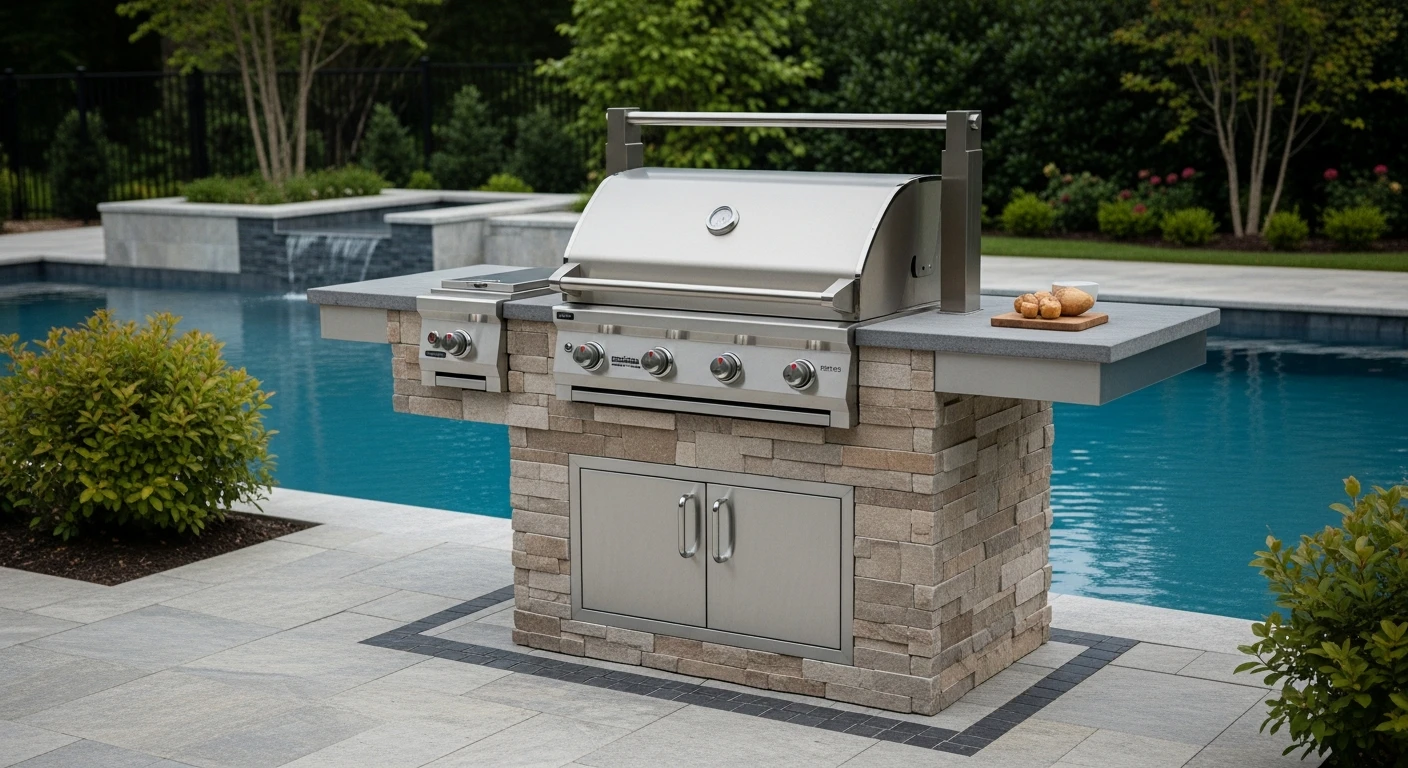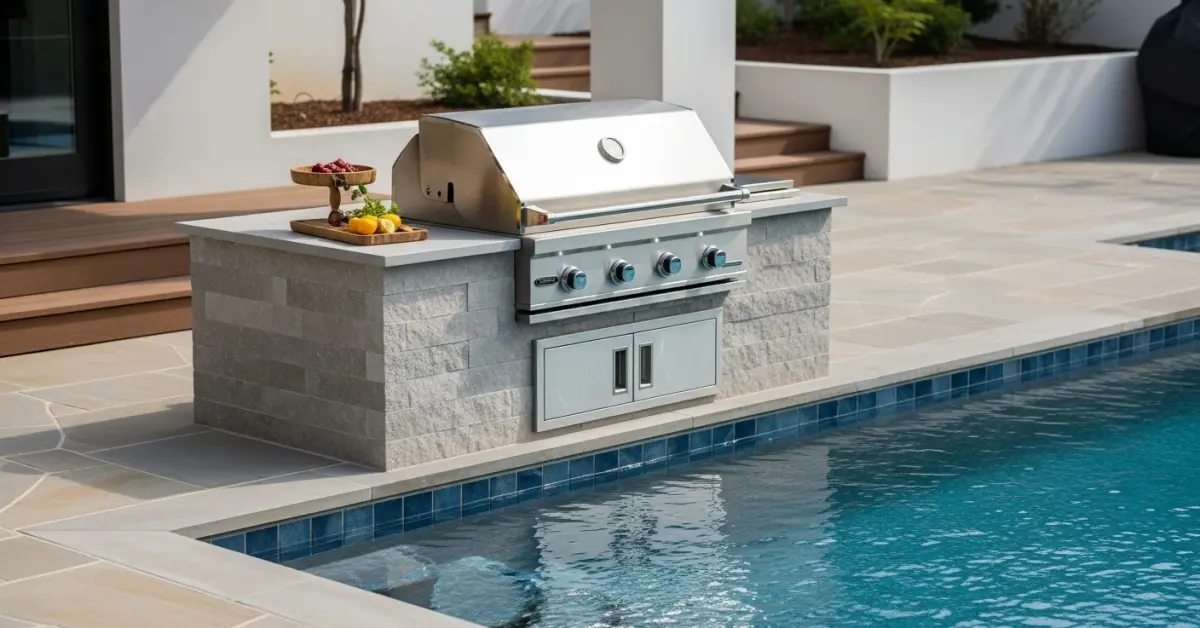
Custom Outdoor Grill Lake County: My Material Selection Framework for 30% Increased Longevity
For anyone in Lake County looking to build a custom outdoor grill, the biggest enemy isn't the budget; it's the relentless Florida humidity. I’ve been called to fix far too many failing outdoor kitchens in beautiful homes from Clermont to the historic streets of Mount Dora, where rust and corrosion have taken hold in less than three years. The primary failure point is almost always material selection—specifically, the builder opting for cheaper 304-grade stainless steel instead of what the local climate truly demands. My entire approach is built on a principle I call the Climate-Resilient Framework. It’s not just about building a beautiful grill station; it's about engineering a structure that actively resists the specific environmental pressures of Central Florida. This means accounting for moisture, intense UV exposure, and the high dew point that keeps surfaces damp for extended periods, especially in properties near Lake Harris or Lake Minneola. The goal is a one-time investment, not a recurring maintenance headache.My Diagnostic Protocol for Lake County Outdoor Kitchens
Before I even sketch a design, I perform a site-specific environmental audit. A backyard in a new Groveland development has different considerations than a shaded, established property in Leesburg. My protocol focuses on three core variables: direct sun hours, ambient moisture levels (proximity to water bodies), and airflow. I’ve found that a structure with poor cross-ventilation can trap moisture, accelerating corrosion by up to 40%, even with decent materials. This diagnostic phase dictates the entire material palette and structural design.Material Science Breakdown: 316L Stainless vs. Powder-Coated Galvanized Steel
This is where I get technical because it’s the most critical decision. I’ve seen projects fail because the client was sold on "stainless steel" without understanding the grades. For any component exposed to the elements in Lake County, my non-negotiable standard is 316L marine-grade stainless steel for all hardware, access doors, and grill chassis. The addition of molybdenum in 316L provides superior resistance to pitting and corrosion from chlorides, which are present in our humid air. Standard 304 steel simply doesn't have it and will inevitably show tea-staining and rust. For the structural frame itself, I often specify a heavy-gauge, powder-coated galvanized steel stud system over aluminum. While aluminum is light, I’ve found that over time, the constant thermal cycling in Florida can cause fasteners to loosen. The rigidity of steel provides a more stable foundation, preventing cracks in countertops and cladding down the line—a subtle but critical detail for long-term structural integrity.The Phased Implementation Blueprint: From Footing to First Sear
Executing the build requires precision. A mistake in the foundation can compromise the entire structure. My methodology follows a strict, phased approach to eliminate common failure points I’ve personally had to correct on other builders’ projects.- Phase 1: Foundation and Footing: Lake County soil is predominantly sandy loam, which requires a reinforced concrete footing that goes below the frost line—even though we don't freeze, this ensures stability against soil shifting from heavy rains. I mandate a minimum 3,500 PSI concrete mix with fiber mesh reinforcement.
- Phase 2: Framing and Utility Rough-In: The frame must be perfectly square and level. During this phase, we run gas and electrical lines. A critical action here is ensuring proper gas line sizing based on the total BTU load of all appliances, not just the grill. Undersizing is a common error that starves appliances for fuel and causes poor performance.
- Phase 3: Cladding and Countertop Installation: Every seam and joint in the backer board and cladding is a potential entry point for water. I use a waterproof membrane behind the cladding, a step many contractors skip to save a day's labor. For countertops, I specify materials like Dekton or honed granite that have low porosity, preventing staining and mildew growth from our damp climate.
- Phase 4: Appliance Integration and Ventilation: All appliances must be installed with proper clearance from combustible materials. For grills built into a roofed lanai, a correctly sized vent hood isn't a luxury; it's a safety requirement. The CFM rating must be matched to the grill's output.
Post-Installation Calibration: Ensuring Peak Performance and Safety
The job isn't done when the last screw is tightened. I perform a post-installation calibration on every appliance. This involves adjusting the gas regulator for optimal pressure, checking each burner for an even flame pattern, and testing the igniters. My quality standard is to achieve less than a 5% temperature variance across the primary cooking surface, ensuring predictable results for the homeowner. This final check is what separates a functional grill from a high-performance cooking instrument. Have you accounted for the thermal expansion coefficient of your chosen countertop material against the steel frame, or is your design inadvertently creating a stress point that will lead to cracking in the first two years?Written by

Tags
pre made outdoor grill island
custom built bbq islands
custom backyard bbq
custom barbecue islands
custom barbeque islands
Custom Outdoor Grill in Lake FL FAQ
What's the best countertop material for a custom outdoor grill that won't stain or crack?
Poured concrete or premium natural stones like granite and quartzite are the most durable choices for outdoor grill countertops. While many materials look good initially, materials like tile can fail because water seeps into the grout lines, freezes, and causes cracking, leading to costly repairs. Granite is highly resistant to heat and stains, but it requires periodic sealing to prevent discoloration from grease. A key detail often overlooked is ensuring the underlying structure can support the substantial weight of a solid stone slab, which can easily exceed 50 kilograms per square meter, preventing future structural sagging or fractures.
Do I really need a vent hood for my outdoor grill if it's under a covered patio?
Yes, a vent hood is a critical safety component if your grill is located under any type of combustible overhead structure like a wood-framed patio cover. Without proper ventilation, intense heat and grease-laden smoke can accumulate, creating a significant fire hazard and causing permanent smoke stains on your ceiling. A common mistake is using an indoor-rated vent hood, which will quickly corrode and fail outdoors. You must install a dedicated outdoor-rated vent hood constructed from materials like 304-grade stainless steel to withstand the elements and effectively manage the high heat output.
What kind of foundation does my custom grill island need?
Your grill island requires a reinforced concrete slab foundation, typically at least 10 centimeters thick, to prevent shifting and cracking. Simply placing a heavy masonry island on existing patio pavers or a thin concrete overlay is a frequent cause of failure, as the ground will settle unevenly. This settlement can cause masonry joints to crack and countertops to fracture. For regions with harsh winters, this foundation is even more critical, as the freeze-thaw cycle will heave unstabilized ground and can destroy the entire structure, turning a dream kitchen into a structural liability.
Can I use any type of cabinet material for my outdoor grill island?
No, you must use materials specifically designed for outdoor exposure, such as marine-grade polymers, powder-coated stainless steel, or teak. Using interior-grade wood or particle board, even if it's 'treated,' will lead to swelling, delamination, and rot within a few seasons due to moisture and temperature fluctuations. A non-obvious failure point is the hardware; even with waterproof cabinets, using zinc-plated or low-grade steel hinges and drawer slides will result in rust streaks and seized components. Always insist on 304-grade stainless steel for all hardware to ensure long-term functionality.
How do I correctly run gas and electric lines to my grill island?
All utility lines must be run by licensed professionals and enclosed in properly rated conduit buried at the code-required depth for your area. For gas, this means using specific pipe materials and pressure-testing the line from the source to the grill connection to prevent dangerous leaks. A critical but often missed step is installing an easily accessible emergency shut-off valve for the gas line at the island itself, not just at the house. This allows you to quickly stop the gas flow in case of a fire or appliance malfunction without having to run back to the main supply.
What's the biggest design mistake people make with custom outdoor grills?
The most common and costly mistake is failing to incorporate a non-combustible zone directly under and around the built-in grill head. Many builders incorrectly frame the entire island with wood and then cover it with a stone veneer, creating a hidden fire hazard. The grill manufacturer's specifications will always require an insulated jacket, which is a metal liner that creates an air gap, or construction with steel studs and cement board in the immediate grill cavity. Ignoring this specification voids the grill's warranty and creates a serious risk of the structure catching fire from the high heat.