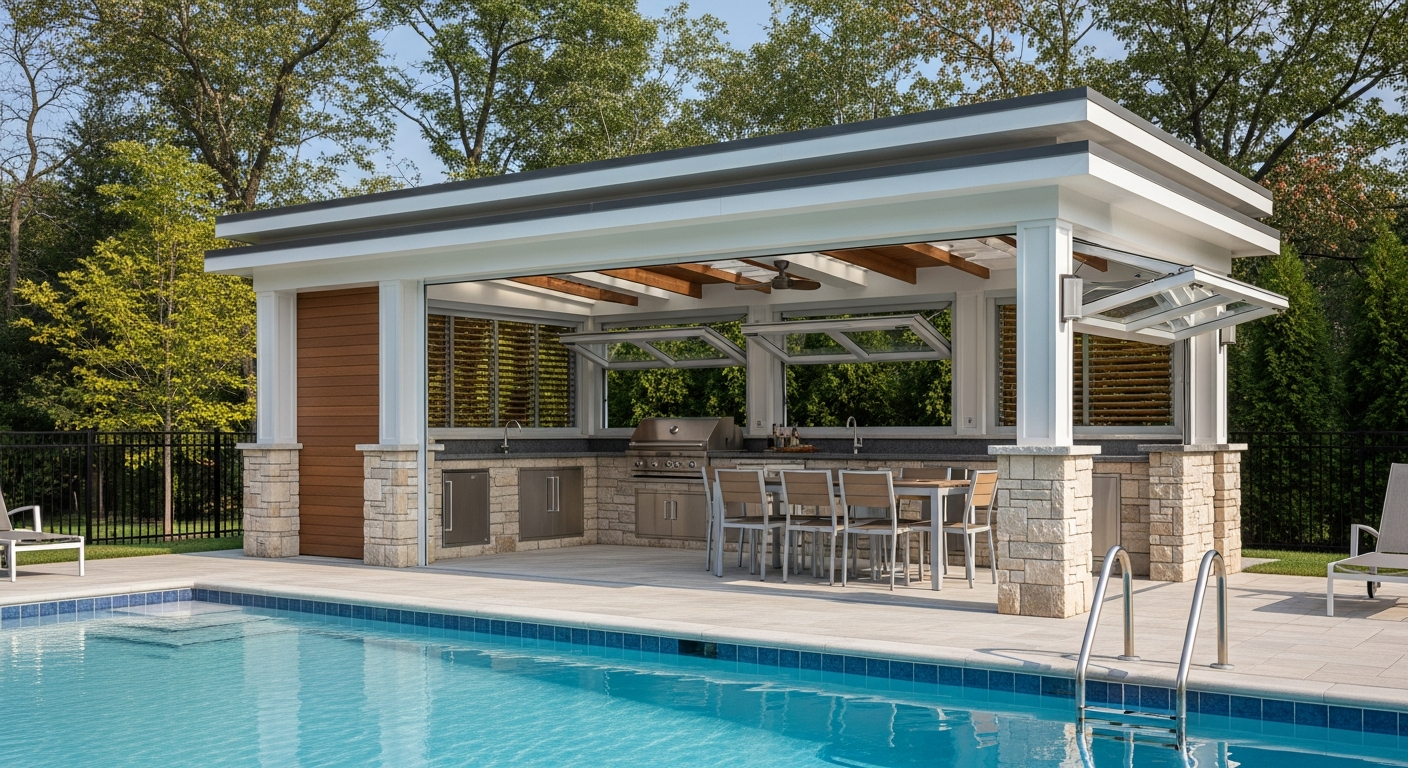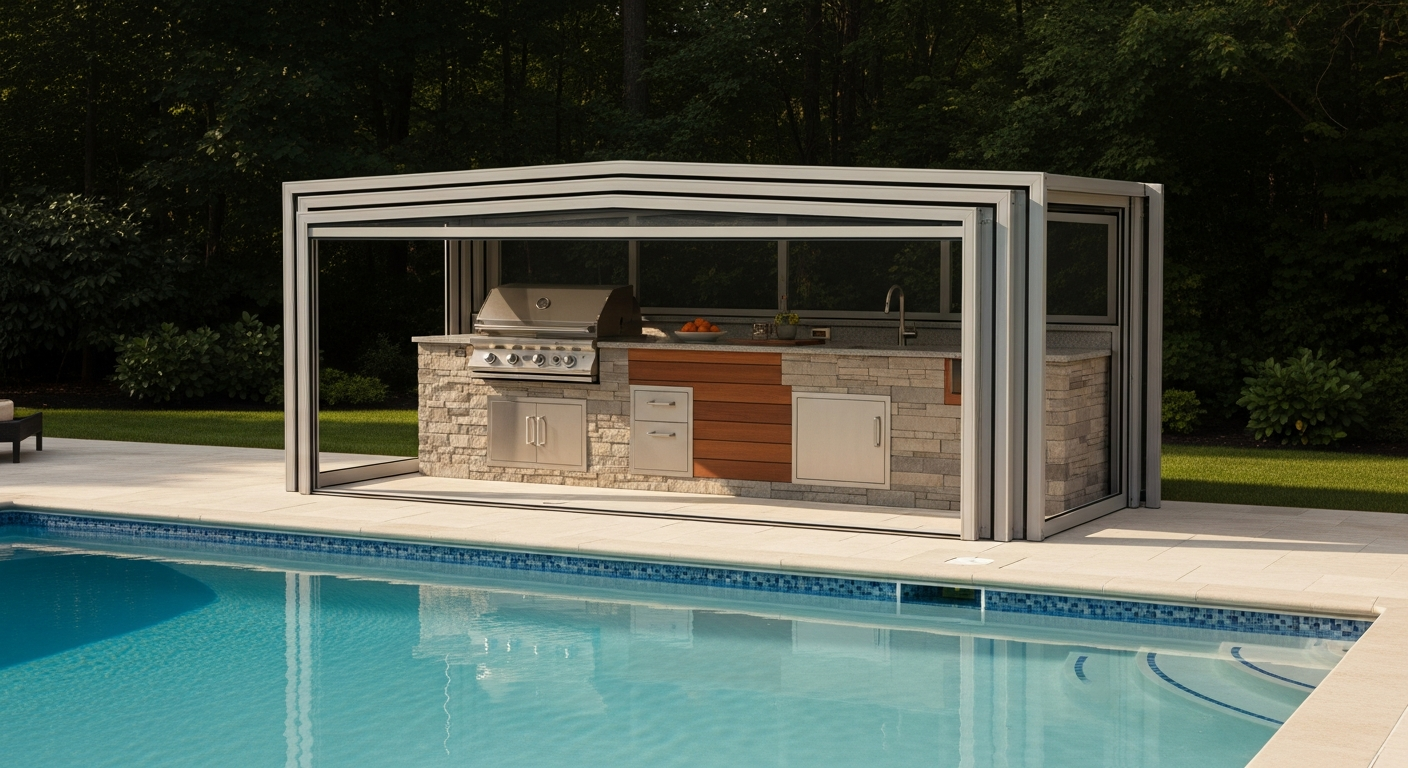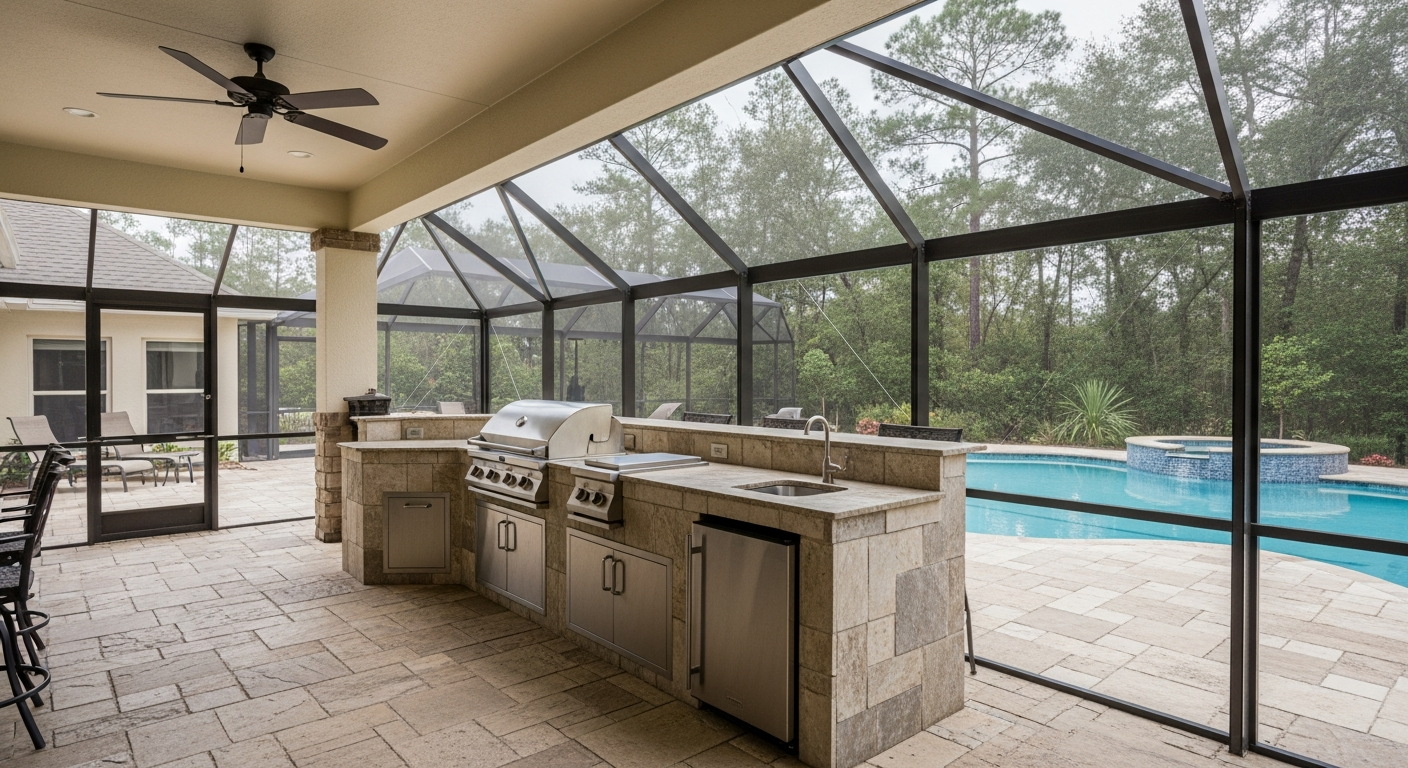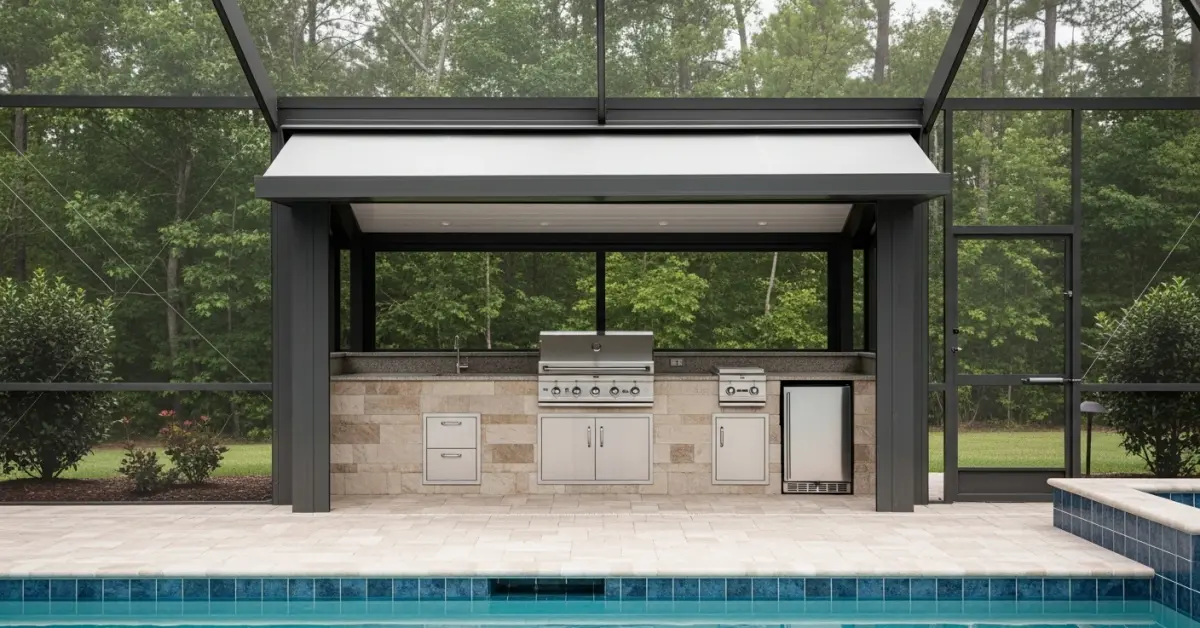
Enclosed Outdoor Kitchen Lake County: A Framework for 30-Year Material Longevity
For years, I've seen countless enclosed outdoor kitchen projects in Lake County fail not because of the grill or the countertops, but because of a fundamental misunderstanding of our local climate. The intense humidity, punishing summer sun, and seasonal deluges create a uniquely hostile environment for building materials. My entire approach is built on defeating this environment from day one, focusing on a specific engineering triad that ensures structural and aesthetic integrity for decades, not just a few seasons. This isn't about picking pretty finishes; it's about a technical framework designed for the specific challenges from Mount Dora to Clermont. The goal is to prevent the premature corrosion, warping, and system failures I've been called in to fix time and time again. I’ve seen expensive stainless steel cabinets rusting within two years near Lake Harris simply because the wrong grade was specified. My method prevents these costly oversights.My VMC Protocol: Ventilation, Moisture, and Corrosion Control
Every successful enclosed outdoor kitchen project I’ve engineered in Lake County adheres to my proprietary VMC Protocol. It stands for Ventilation, Moisture Control, and Corrosion Mitigation. Ignoring any one of these pillars is a direct path to failure. I developed this after a large-scale project in Leesburg suffered catastrophic moisture damage due to a poorly specified ventilation hood, creating a negative pressure zone that actually pulled humid air *into* the wall cavities. The VMC Protocol ensures all systems work in concert, not against each other. It’s a diagnostic and preventative methodology that forms the foundation of the entire build.Decoding Airflow and Material Specs for Florida's Climate
Getting the VMC Protocol right is about the technical details. For Ventilation, I don't guess. The calculation is straightforward: a range hood's power, measured in CFM (Cubic Feet per Minute), must be matched to the grill's total BTU output. My baseline is 1 CFM for every 100 BTUs. For a powerful 100,000 BTU grill, a 1,000 CFM hood is the absolute minimum to properly exhaust heat, smoke, and grease, preventing buildup on your enclosure's ceiling and surfaces. For Moisture Control, the floor is the first line of defense. I mandate a non-porous material like porcelain tile over travertine and specify a concrete slab with a minimum 1/4-inch-per-foot slope away from the house. This detail is non-negotiable. It actively channels water from our notorious afternoon downpours out of the enclosure. For countertops, I steer clients away from porous granite and toward engineered quartz or Dekton, which offer near-zero water absorption, preventing staining and microbial growth. Finally, Corrosion Mitigation is where most builds go wrong. That "outdoor-rated" label can be misleading. In Lake County's humidity, I only specify 316-grade (marine-grade) stainless steel for all hardware, fasteners, and appliance exteriors. The common 304-grade, while cheaper, lacks the molybdenum content needed to resist our specific type of ambient moisture and will show pitting and rust. This single material specification can increase the lifespan of your investment by over 50%.The Foundational Blueprint: From Slab to Electrical
Executing the VMC Protocol requires a precise implementation sequence. I've refined this process to eliminate backtracking and ensure every component is installed to technical specifications from the start. Any deviation here compromises the entire system.- Phase 1: Foundation and Drainage: The process starts with the correctly sloped concrete slab, including an embedded vapor barrier to stop ground moisture from wicking up. All plumbing and gas lines are run at this stage, planned with precise locations for sinks, ice makers, and the grill.
- Phase 2: Framing and Utilities: Whether using pressure-treated wood or aluminum framing, every joint must be sealed. I insist on running all electrical wiring through conduits. Every outlet must be an outdoor-rated, cover-protected GFCI (Ground Fault Circuit Interrupter) outlet. This is a critical safety step, not a suggestion.
- Phase 3: Core Component Installation: This is where the kitchen takes shape. Cabinetry, countertops, and appliances are installed. I personally inspect every seal and seam. The ventilation hood is mounted, ensuring the ducting is rigid, sealed, and vents completely outside—never into an attic or soffit.
- Phase 4: Enclosure and Sealing: The final step is installing the screens or windows. Every single penetration point—from the gas line entry to the water spigot—must be sealed with a high-grade, UV-resistant silicone caulk to create an insect-proof and water-resistant barrier.
Calibrating for Peak Performance and Local Code
The final 10% of the work is what ensures 100% performance. This involves fine-tuning and quality control. For projects within specific HOA communities, like those found in parts of The Villages, I perform a pre-build design review to ensure full compliance with their aesthetic and structural mandates. Lighting is another critical detail. I design with three distinct zones: high-intensity task lighting directly over the grill and prep surfaces, soft ambient lighting for the seating area, and low-voltage safety lighting for steps and walkways. Finally, before handover, I conduct a full system diagnostic, including a smoke test on the ventilation hood to verify proper airflow and capture, ensuring it performs under real-world cooking conditions. After correctly sizing your exhaust hood based on the grill's BTU output, have you factored in the necessary makeup air system to prevent creating a hazardous negative pressure environment within your specific enclosed volume?Written by

Tags
outdoor kitchen
outdoor kitchen grill
outdoor kitchen bbq grill
outdoor kitchen cabinets
outdoor kitchen and grill
Enclosed Outdoor Kitchen in Lake FL FAQ
What kind of ventilation is absolutely necessary for an enclosed outdoor kitchen to be safe?
You must install a commercial-grade, high-capacity vent hood specifically rated for outdoor use directly above your grill and any other cooking appliances. Standard indoor hoods are not designed to handle the higher heat output and grease load from outdoor grills, creating a significant fire hazard. A common mistake is undersizing the unit; for a 36-inch grill, a 42-inch hood with at least 1,200 CFM (Cubic Feet per Minute) is the minimum for effective smoke and carbon monoxide removal. Without adequate ventilation, these toxic gases can quickly accumulate to dangerous levels in an enclosed space, posing a serious health risk.
Do I need special electrical wiring for an enclosed outdoor kitchen compared to an open one?
Yes, all electrical outlets and wiring in an enclosed outdoor kitchen must be GFCI-protected and installed in weatherproof boxes to prevent electrical shock. Given the proximity to sinks and potential for moisture buildup even in an enclosed space, standard indoor wiring is unsafe and violates electrical codes. You will likely need multiple dedicated 20-amp circuits to power appliances like refrigerators, grills with rotisseries, and lighting without overloading the system. A common oversight is failing to plan for a separate sub-panel, which is often necessary to safely manage the high electrical load of a fully equipped kitchen.
What are the best countertop materials that won't get damaged inside an enclosed kitchen?
Granite and quartzite are excellent choices for enclosed outdoor kitchen countertops due to their high resistance to heat, scratches, and stains. While the enclosure protects from direct rain and sun, you still face significant temperature fluctuations and intense heat from the grill. Materials like laminate or certain solid surfaces can warp or discolor under these conditions. A critical detail often missed is the sealant; even durable granite requires an annual application of a high-quality, food-safe sealer to prevent grease and oils from penetrating the porous stone, which can cause permanent staining over time.
Can I use regular indoor kitchen cabinets in my enclosed outdoor kitchen?
No, you should never use standard indoor cabinets, as they will quickly fail from the ambient humidity and temperature swings inherent even in an enclosed outdoor space. Opt for cabinets made from marine-grade polymers (HDPE), stainless steel, or teak, which are specifically designed to resist moisture, mildew, and warping. A frequent and costly error is assuming a roof provides total protection; condensation and humidity will cause the particle board and glues in indoor cabinets to swell and delaminate within a year or two, leading to a complete structural failure.
Is a floor drain required in an enclosed outdoor kitchen?
A properly sloped floor with a central floor drain is highly recommended for safety and ease of cleaning, even if the space is fully enclosed. Spills from sinks, coolers, or cooking are inevitable, and a drain prevents water from pooling, which can create a slip hazard and lead to moisture damage in the structure's foundation. The floor should be pitched at a minimum of a 1/4 inch drop per foot towards the drain. Homeowners often skip this feature to save on initial costs, only to find that hosing down greasy floors becomes a major chore that risks water damage to walls and cabinetry.
How do I prevent pests like insects and rodents from getting into my enclosed kitchen?
Effective pest control requires sealing all potential entry points and maintaining strict cleanliness, as the enclosure itself can attract pests seeking shelter and food. Ensure all windows and doors are fitted with tight-sealing screens and weather stripping, and seal any gaps where utility lines for water, gas, or electricity enter the structure. A crucial step many people forget is to install a screened, pest-proof cover on the exterior ventilation duct termination point. Otherwise, your exhaust system becomes an open invitation for rodents and insects to build nests directly inside your kitchen's ductwork.