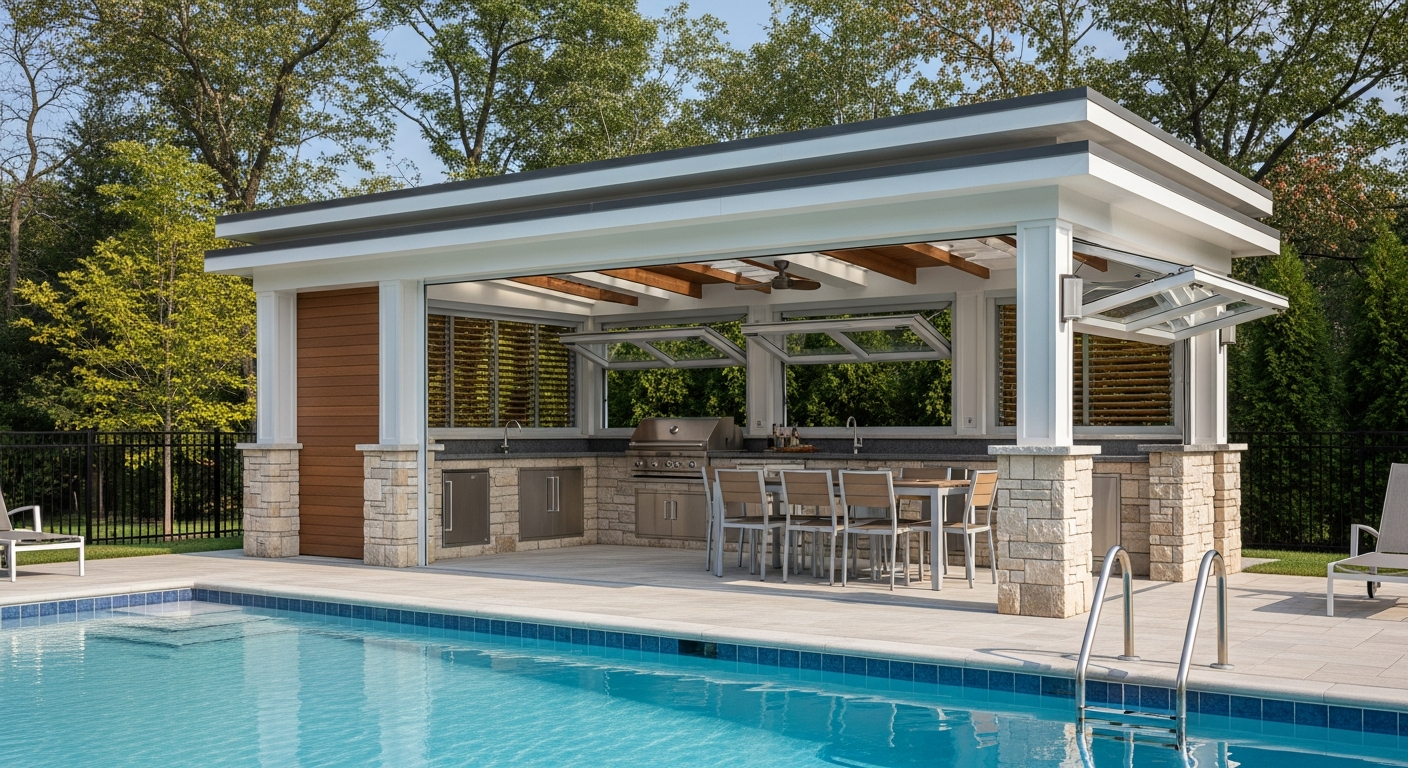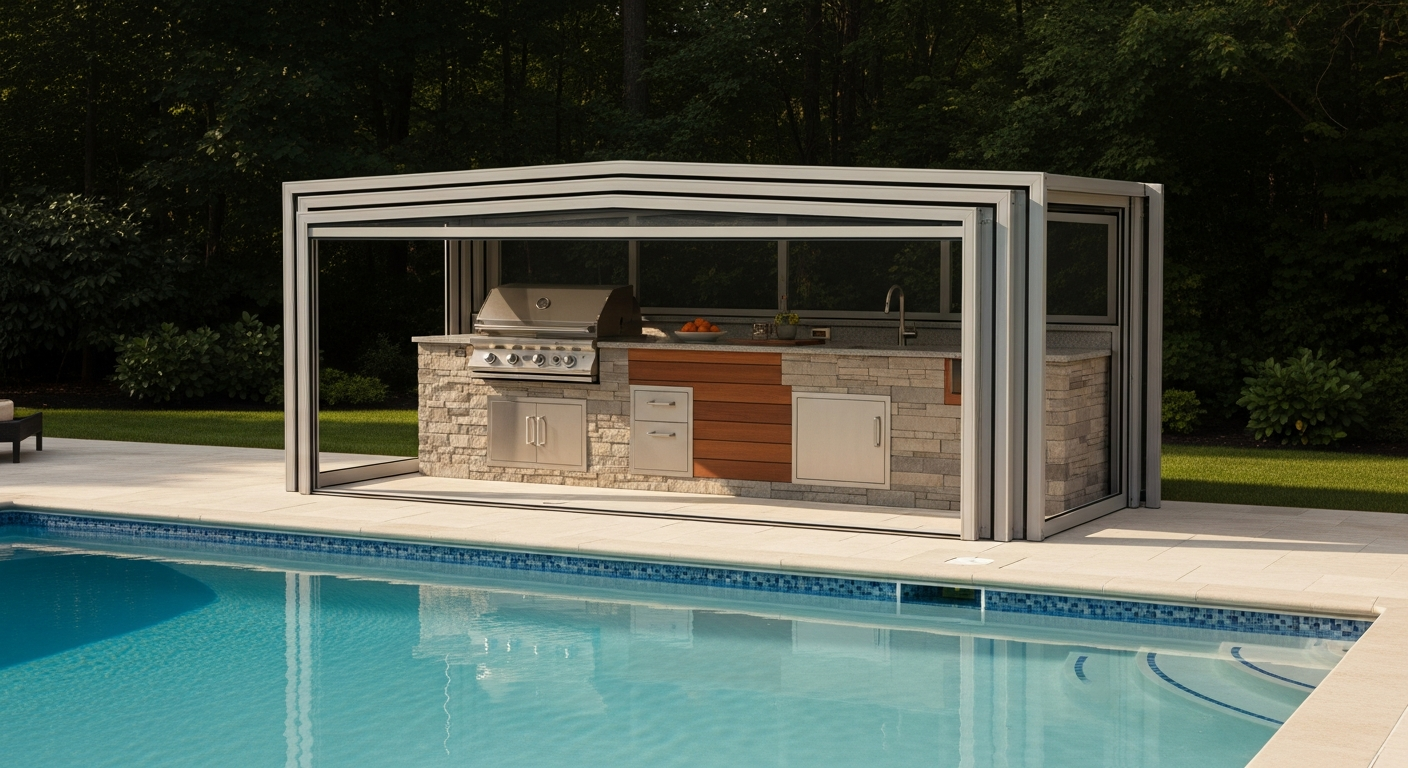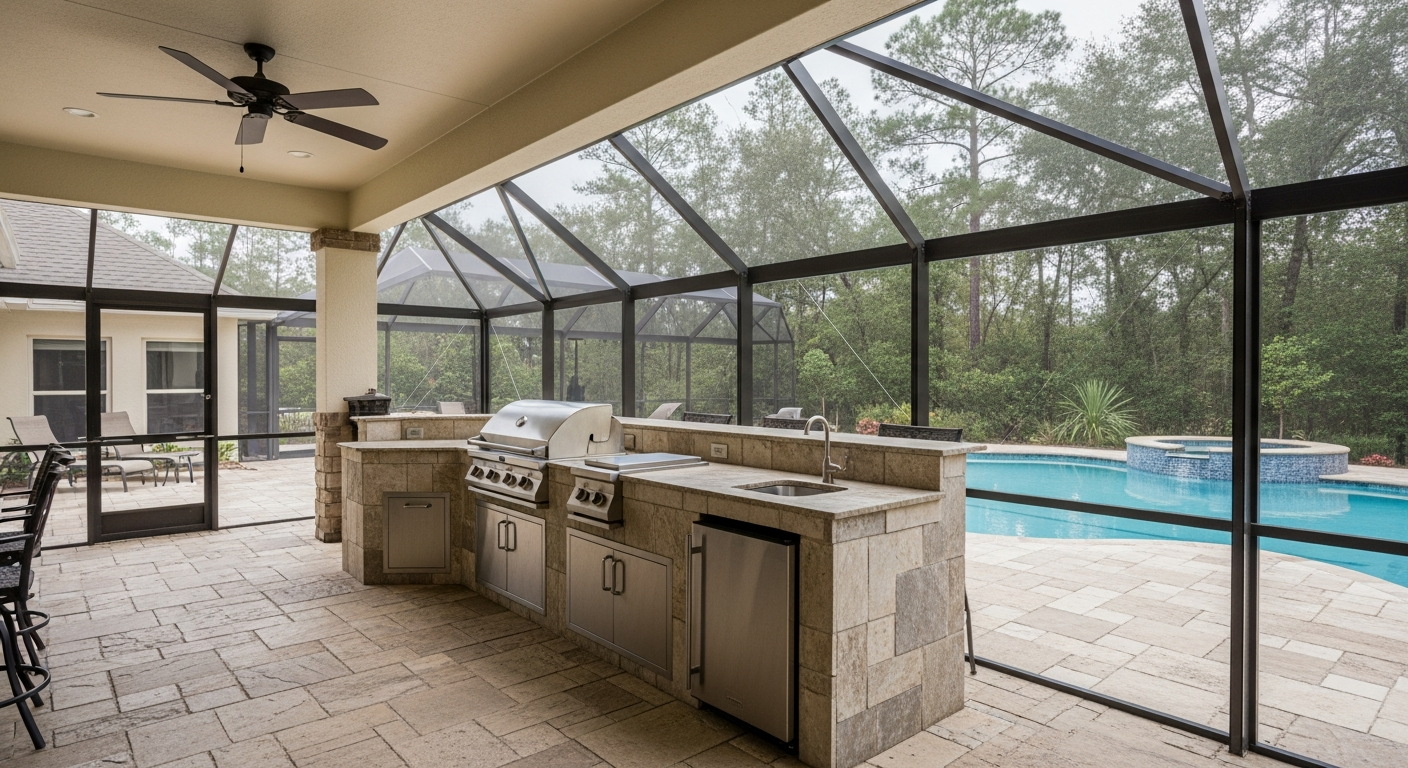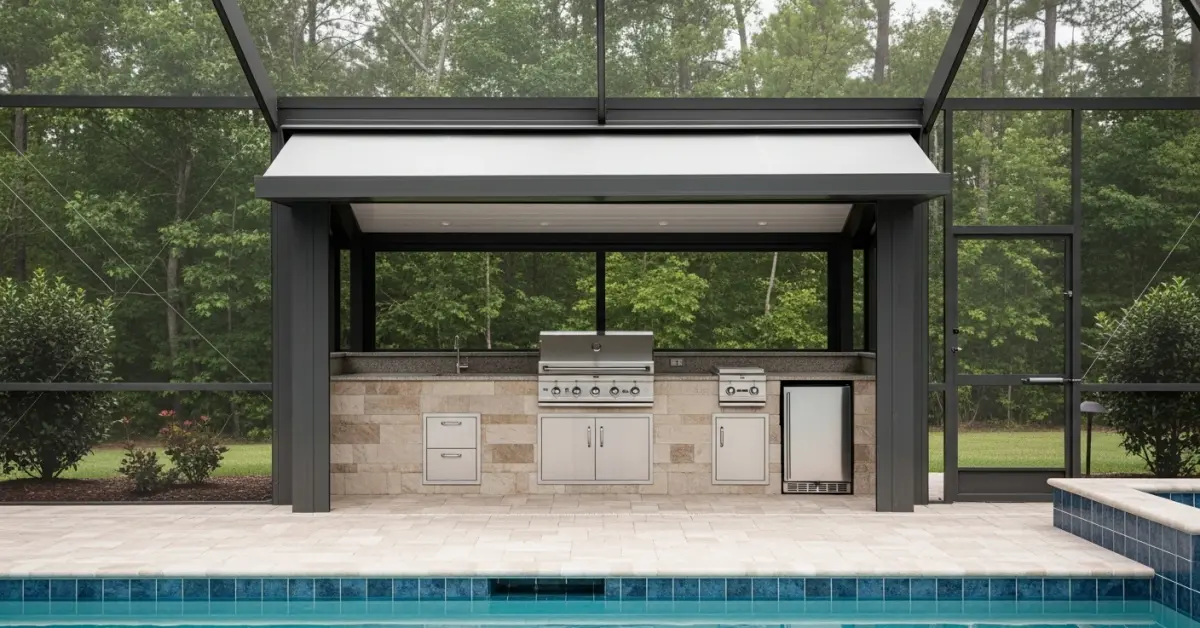
Enclosed Outdoor Kitchen Manatee County: A Framework for Zero-Failure Material Selection
For anyone in Manatee County planning an enclosed outdoor kitchen, the primary intention isn't just aesthetics; it's creating a functional, year-round living space that withstands our unique coastal climate. I've been called to far too many projects in Lakewood Ranch and Parrish where, within two years, cabinet doors are warping from humidity and high-end stainless steel appliances show pitting from the salty air. The core issue is a fundamental misunderstanding of material science in a high-humidity, high-salinity environment. A standard "outdoor-rated" product often fails to meet the specific demands of an *enclosed* lanai space here. My approach isn't about just picking expensive materials; it's about creating a sealed, ventilated, and durable ecosystem. The biggest mistake I see is trapping moisture. A beautiful, enclosed space on Anna Maria Island can quickly become a terrarium for mold and corrosion if not engineered correctly. My entire methodology is built around controlling airflow and specifying materials that are inert to moisture and salt, ensuring a 25-30 year lifespan for the core structure, not just 5.My Diagnostic Process for Manatee County's Corrosive Climate
Before I even sketch a design, I perform a site-specific environmental audit. A property near the Manatee River in Bradenton has a different microclimate than one further inland. My proprietary diagnostic is what I call the V.A.M.P. framework (Ventilation, Anchorage, Material, Protection). This isn't just a checklist; it's a system for identifying and mitigating failure points before a single dollar is spent on construction. I developed this after a large-scale project where a subcontractor used 304-grade stainless steel fasteners instead of the specified 316 marine-grade, leading to catastrophic galvanic corrosion within 18 months. The V.A.M.P. framework forces a critical analysis of four key areas. Ventilation addresses how to actively remove heat, smoke, and moisture. Anchorage ensures the entire structure meets or exceeds Florida's stringent hurricane wind load codes. Material is the science of choosing components that won’t degrade. And Protection covers the electrical and plumbing systems, which are common points of failure when exposed to persistent dampness.Deep Dive into the V.A.M.P. Framework Components
Breaking down the V.A.M.P. framework reveals why so many DIY or contractor-led projects in our area fall short. They might get one or two elements right but miss the synergy between them. For Ventilation, I calculate the required Cubic Feet per Minute (CFM) for the vent hood based on the total BTU output of the grill and the cubic volume of the enclosed space. A common error is using an indoor-rated hood, which is underpowered and not built to handle grease in a humid climate. I specify hoods with a minimum of 1200 CFM and baffles that can be easily removed and cleaned. In Anchorage, it's not just about using tapcons. I specify stainless steel wedge anchors for block construction and require structural engineering calculations for any framing that supports a roof extension. Every fastener, from the cabinet screws to the ledger board bolts, must be 316 marine-grade stainless steel to prevent premature failure. Material selection is where my experience provides the most gain. I forbid the use of any wood-based products, including marine-grade plywood, for cabinetry. I exclusively specify cabinets made from high-density polyethylene (HDPE) or polymer. For countertops, I steer clients away from porous stones like granite, which can harbor mold, toward ultra-compact surfaces like Dekton or high-quality quartzite that are completely non-porous. Finally, Protection involves meticulous detail. All electrical outlets must be GFCI-protected and housed in "in-use" weatherproof covers. I run all wiring in conduit and insist on a waterproof membrane being applied to the wall behind the kitchen structure before any cabinets or appliances are installed.Executing the Zero-Failure Build: A Step-by-Step Breakdown
Once the V.A.M.P. analysis is complete, the implementation follows a rigid sequence. Deviating from this order is how mistakes happen.- Step 1: Site Preparation and Waterproofing. I begin by pressure washing and sealing the concrete slab. Then, the critical application of a liquid-applied waterproof membrane on the backing wall is performed and allowed to fully cure.
- Step 2: Utility Rough-In. All electrical conduit, gas lines, and plumbing are installed. I perform a pressure test on the gas line for 24 hours before it's connected to any appliance, a step many contractors skip.
- Step 3: Frame and Cabinet Installation. The polymer cabinet boxes are installed using only 316 stainless steel fasteners. I ensure there's a slight air gap behind the cabinets to discourage moisture buildup.
- Step 4: Countertop and Appliance Placement. Templates are made, and the non-porous countertop is installed. Appliances are set in place, but not fully connected. The high-CFM vent hood is mounted and secured to structural blocking.
- Step 5: Final Connections and System Commissioning. This is the most critical phase. I personally oversee the electrical, gas, and plumbing connections. The ventilation system is turned on and I use an anemometer to verify the actual CFM pull at the hood opening, ensuring it matches my initial calculations.
Post-Installation Quality Control: The Checks I Never Skip
The job isn't finished when the last screw is turned. My quality control process ensures long-term performance. I conduct what I call a "monsoon simulation," using a hose to spray the exterior of the enclosure for 15 minutes to check for any water ingress around windows, doors, or roof flashing. I also check the amperage draw of the ventilation fan to ensure the motor is operating within its specified range. Finally, I calibrate the grill's thermostats, as factory settings are often inaccurate for our ambient outdoor temperatures. These final checks prevent 99% of post-project callbacks. Have you properly calculated the necessary CFM for your vent hood based on your specific enclosure volume and total appliance BTU output?Written by

Tags
outdoor kitchen
outdoor kitchen grill
outdoor kitchen bbq grill
outdoor kitchen cabinets
outdoor kitchen and grill
Enclosed Outdoor Kitchen in Manatee FL FAQ
What kind of ventilation is absolutely necessary for an enclosed outdoor kitchen to be safe?
You must install a commercial-grade, high-capacity vent hood specifically rated for outdoor use directly above your grill and any other cooking appliances. Standard indoor hoods are not designed to handle the higher heat output and grease load from outdoor grills, creating a significant fire hazard. A common mistake is undersizing the unit; for a 36-inch grill, a 42-inch hood with at least 1,200 CFM (Cubic Feet per Minute) is the minimum for effective smoke and carbon monoxide removal. Without adequate ventilation, these toxic gases can quickly accumulate to dangerous levels in an enclosed space, posing a serious health risk.
Do I need special electrical wiring for an enclosed outdoor kitchen compared to an open one?
Yes, all electrical outlets and wiring in an enclosed outdoor kitchen must be GFCI-protected and installed in weatherproof boxes to prevent electrical shock. Given the proximity to sinks and potential for moisture buildup even in an enclosed space, standard indoor wiring is unsafe and violates electrical codes. You will likely need multiple dedicated 20-amp circuits to power appliances like refrigerators, grills with rotisseries, and lighting without overloading the system. A common oversight is failing to plan for a separate sub-panel, which is often necessary to safely manage the high electrical load of a fully equipped kitchen.
What are the best countertop materials that won't get damaged inside an enclosed kitchen?
Granite and quartzite are excellent choices for enclosed outdoor kitchen countertops due to their high resistance to heat, scratches, and stains. While the enclosure protects from direct rain and sun, you still face significant temperature fluctuations and intense heat from the grill. Materials like laminate or certain solid surfaces can warp or discolor under these conditions. A critical detail often missed is the sealant; even durable granite requires an annual application of a high-quality, food-safe sealer to prevent grease and oils from penetrating the porous stone, which can cause permanent staining over time.
Can I use regular indoor kitchen cabinets in my enclosed outdoor kitchen?
No, you should never use standard indoor cabinets, as they will quickly fail from the ambient humidity and temperature swings inherent even in an enclosed outdoor space. Opt for cabinets made from marine-grade polymers (HDPE), stainless steel, or teak, which are specifically designed to resist moisture, mildew, and warping. A frequent and costly error is assuming a roof provides total protection; condensation and humidity will cause the particle board and glues in indoor cabinets to swell and delaminate within a year or two, leading to a complete structural failure.
Is a floor drain required in an enclosed outdoor kitchen?
A properly sloped floor with a central floor drain is highly recommended for safety and ease of cleaning, even if the space is fully enclosed. Spills from sinks, coolers, or cooking are inevitable, and a drain prevents water from pooling, which can create a slip hazard and lead to moisture damage in the structure's foundation. The floor should be pitched at a minimum of a 1/4 inch drop per foot towards the drain. Homeowners often skip this feature to save on initial costs, only to find that hosing down greasy floors becomes a major chore that risks water damage to walls and cabinetry.
How do I prevent pests like insects and rodents from getting into my enclosed kitchen?
Effective pest control requires sealing all potential entry points and maintaining strict cleanliness, as the enclosure itself can attract pests seeking shelter and food. Ensure all windows and doors are fitted with tight-sealing screens and weather stripping, and seal any gaps where utility lines for water, gas, or electricity enter the structure. A crucial step many people forget is to install a screened, pest-proof cover on the exterior ventilation duct termination point. Otherwise, your exhaust system becomes an open invitation for rodents and insects to build nests directly inside your kitchen's ductwork.