Enclosed Outdoor Kitchen in Polk County: A Blueprint for 365-Day Use & 20-Year Material Integrity
I’ve seen too many outdoor kitchens in Polk County fail within five years, and the reason is almost always the same: a fundamental misunderstanding of our local climate. The intense humidity, blistering sun, and seasonal storms we experience from Lakeland to Haines City aren't just inconveniences; they are destructive forces that break down materials. An enclosed outdoor kitchen isn't merely about screening out mosquitoes; it's about creating a controlled micro-environment that protects a significant investment. My approach shifts the focus from aesthetics alone to a performance-based design. The goal is to build a space that you can use comfortably in the middle of a July downpour and that won't be a mess of rust, mold, and warped cabinetry after a few hurricane seasons. This is achieved by prioritizing material science and airflow engineering from the very first sketch, a lesson I learned after having to completely gut a high-end project in a South Lakeland golf community that used the wrong grade of stainless steel.My Polk Climate-Adaptive Framework for Enclosed Kitchens
After years of troubleshooting projects across Central Florida, I developed my own methodology. It’s not about just picking expensive materials; it's about creating a synergistic system where every component works to combat our specific environmental challenges. I call it the Polk Climate-Adaptive Framework, and it’s built on three core pillars: hyper-localized material specification, dynamic airflow management, and seamless structural integration with existing lanai architecture. This framework directly addresses the failure points I've repeatedly identified in conventional builds.Beyond Stainless Steel: Material Specs That Withstand Florida Humidity
The single biggest mistake I see is a generic material list. What works in Arizona will disintegrate here. For instance, many builders use 304-grade stainless steel, which is fine for indoor use. But in a humid, screened-in lanai near a chlorinated pool in Winter Haven, galvanic corrosion will appear in as little as 18 months. My non-negotiable specification is 316-grade (marine-grade) stainless steel for all hardware, fasteners, and appliance exteriors. It has a higher molybdenum content, providing a critical defense against chloride corrosion. For countertops, I steer clients away from porous natural stones like granite, which can harbor mildew in our climate. My go-to is sintered stone or ultra-compact surfaces. They are completely non-porous, meaning no sealing is required, and they offer a UV resistance rating of over 99%, preventing the fading I often see on south-facing patios. For cabinetry, I avoid wood entirely, even treated varieties. I exclusively use marine-grade polymer (HDPE) cabinets, which are impervious to water, will not swell or delaminate, and are surprisingly easy to clean after a dusty day.The Critical Path: From Lanai Slab to Functional Enclosure
Executing this correctly is a matter of precise sequencing. A flawed process at any stage compromises the entire structure. I’ve been called in to fix issues where heavy grill islands were placed on a standard 4-inch patio slab without proper footers, causing cracks within a year. My implementation path is rigid for this reason.- Foundation and Slab Vetting: Before anything else, I assess the existing concrete slab. I perform a core test to verify its thickness and compressive strength (PSI). If it's under 3,000 PSI or lacks proper reinforcement for the intended appliance load, we must pour new, dedicated footers. This is a critical failure prevention step.
- Utility Rough-In First: All electrical and plumbing lines must be planned and run before framing. This includes dedicated 20-amp circuits for refrigerators or smokers and ensuring all outdoor outlets are GFI (Ground Fault Circuit Interrupter) protected. This is not just best practice; it's a major safety requirement.
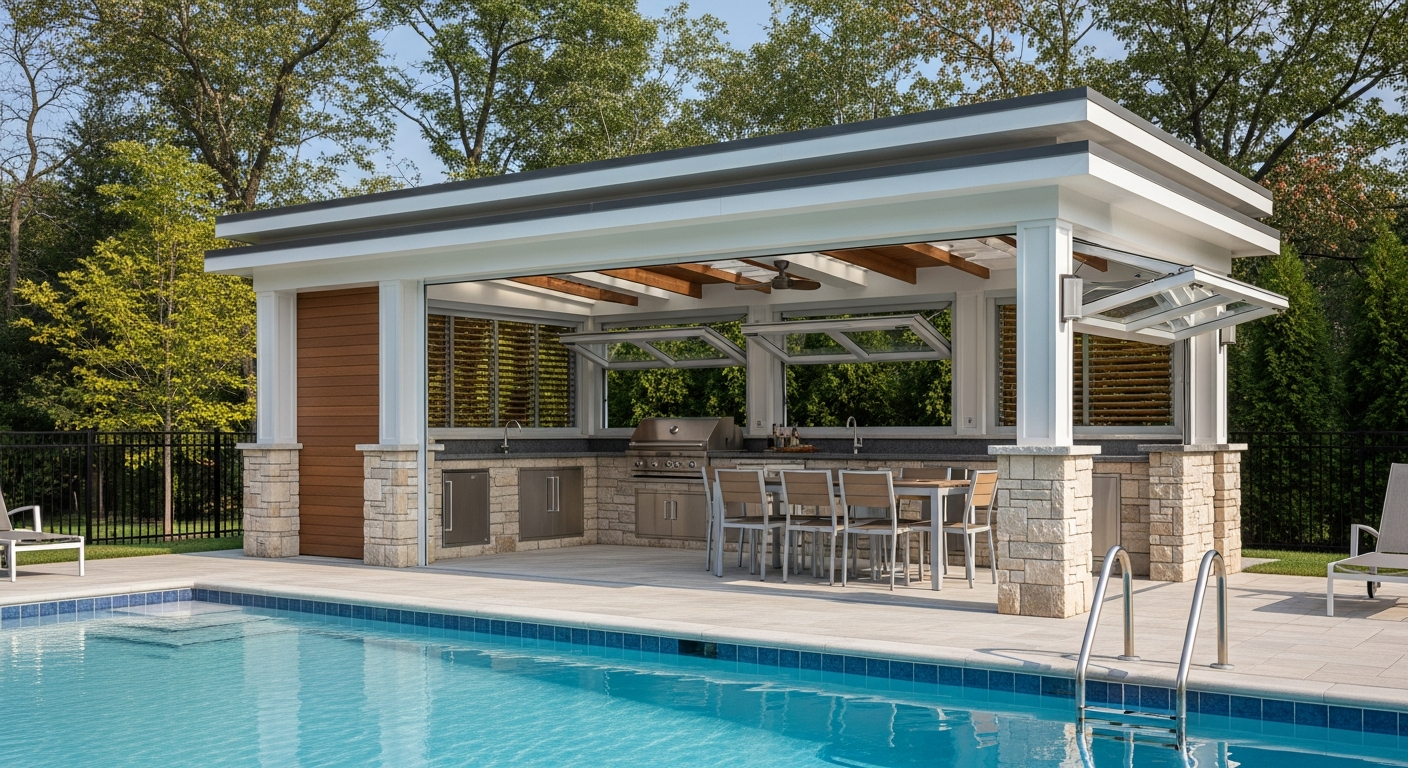
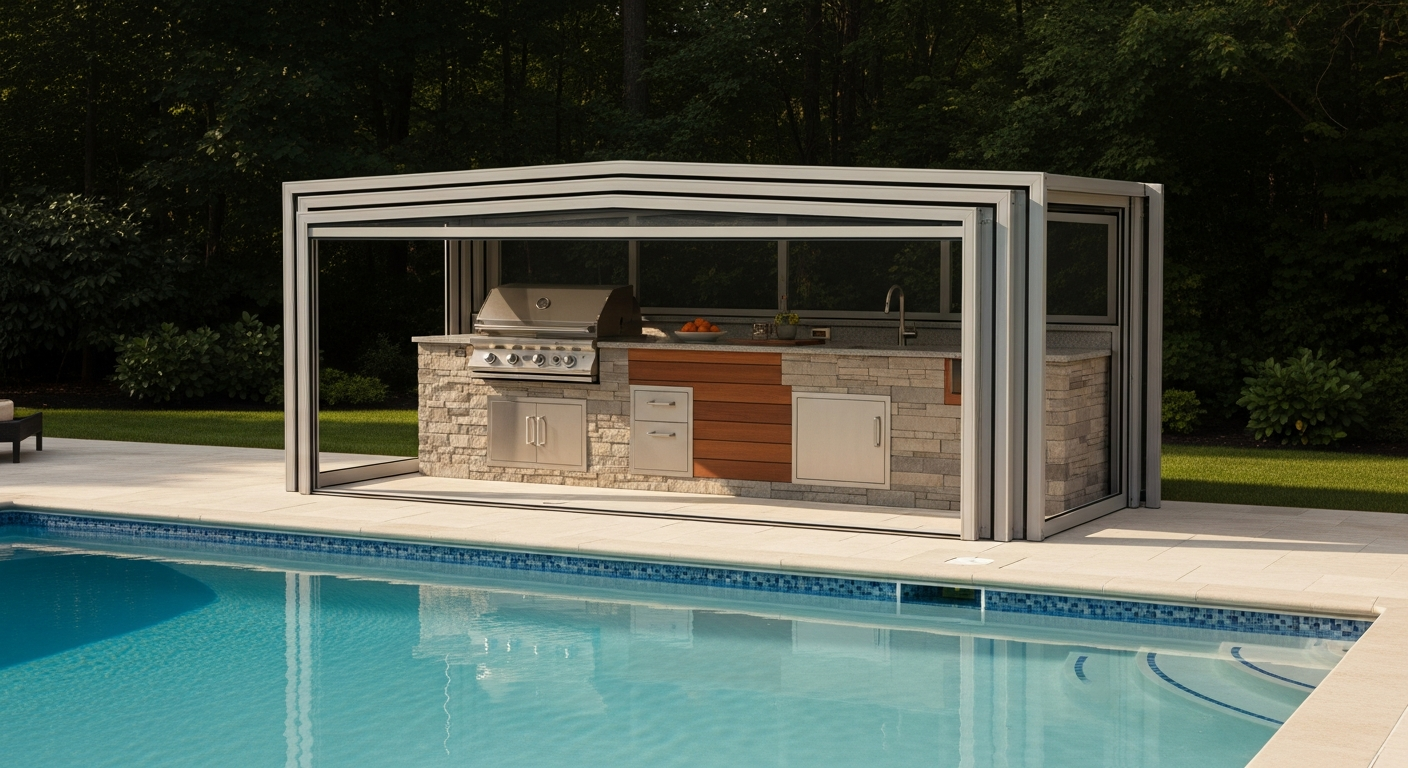
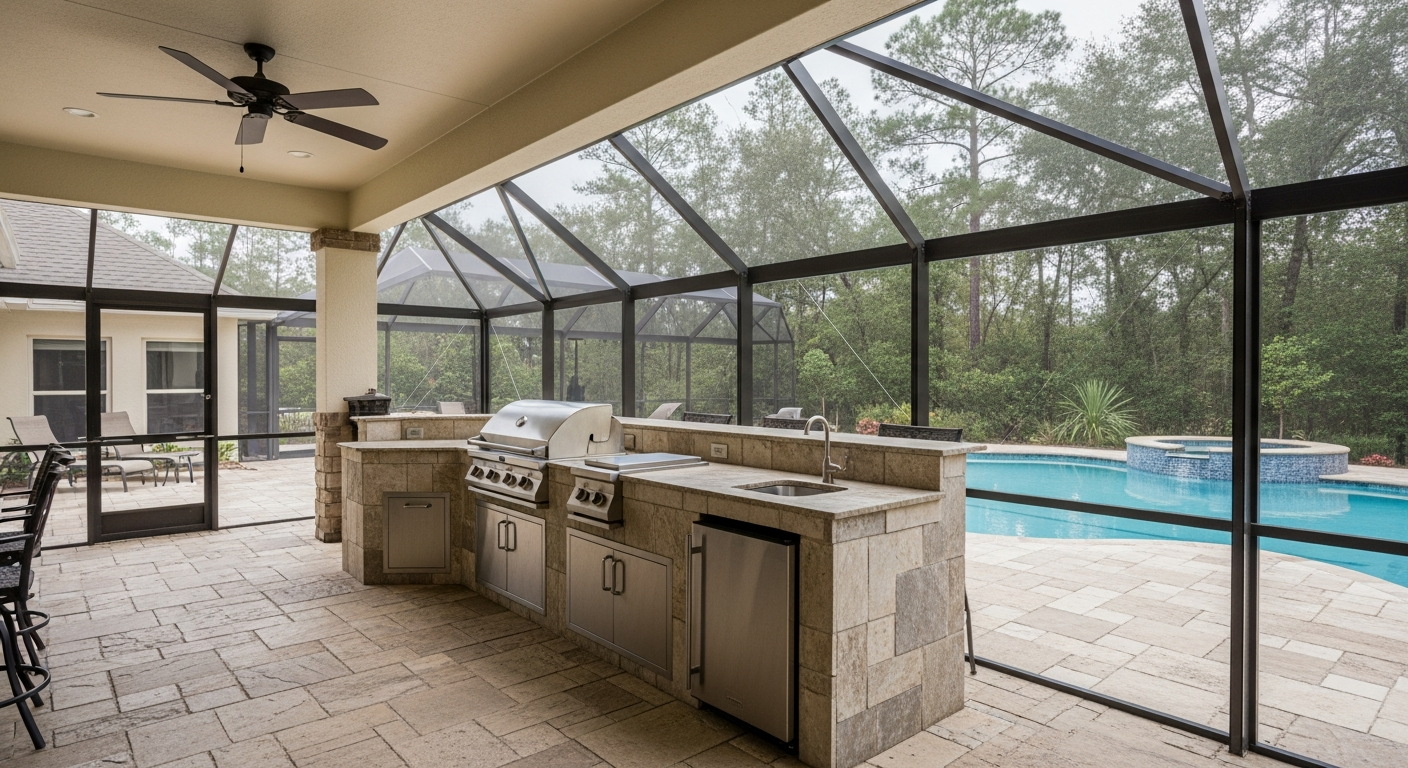
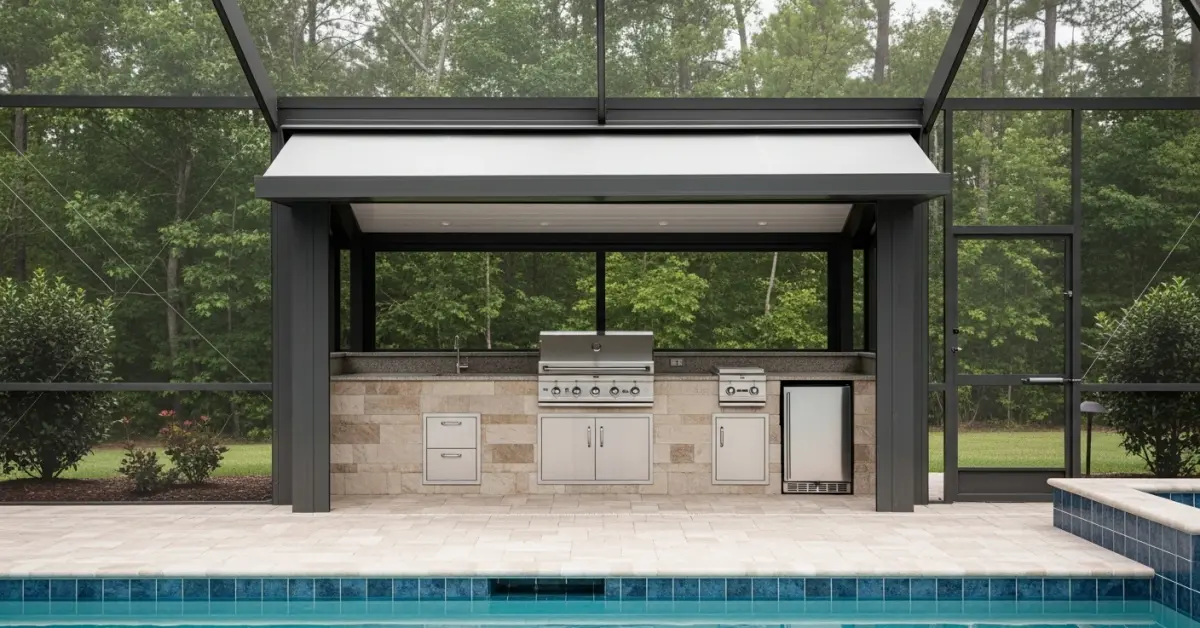
- Framing and Enclosure Selection: The choice between a full glass enclosure versus a high-tensile screen system depends on the client's use case. For either, I mandate a hurricane-rated aluminum frame. The key is ensuring the design facilitates passive cross-ventilation even when closed.
- Appliance and Cabinetry Installation: I follow a strict 6-inch clearance rule between any combustible framing materials and the sides of a high-heat grill. I’ve seen melted vinyl siding from improper placement. This is a non-negotiable fire safety protocol.
- Active Ventilation System Integration: An enclosed space with a grill requires a powerful vent hood. I calculate the required CFM (Cubic Feet per Minute) based on the grill's BTU output and the cubic footage of the space. A typical 36-inch grill in a 200 sq. ft. lanai needs a hood rated for at least 1200 CFM.
Fine-Tuning for Peak Performance and Longevity
The final 10% of the work is what ensures a 20-year lifespan. Once the main components are installed, I focus on the micro-details. I use a smoke pencil to test the vent hood’s capture efficiency and identify dead air spots in the enclosure. All gaps and joints in the structure are sealed with marine-grade silicone sealant, not standard caulk, to create a perfect barrier against moisture and insects. For lighting, all fixtures must be IP65-rated or higher, guaranteeing they are dust-tight and protected against water jets—a must for cleaning and withstanding our driving rain. This level of detail ensures the enclosure doesn't just look good on day one, but performs flawlessly for decades. Now that the core components are specified, have you considered how the dew point within your planned enclosure will interact with the exterior ambient temperature, and how that will affect your choice between insulated glass and a standard screen system?Written by

Tags
outdoor kitchen
outdoor kitchen grill
outdoor kitchen bbq grill
outdoor kitchen cabinets
outdoor kitchen and grill
Enclosed Outdoor Kitchen in Polk FL FAQ
What kind of ventilation is absolutely necessary for an enclosed outdoor kitchen to be safe?
You must install a commercial-grade, high-capacity vent hood specifically rated for outdoor use directly above your grill and any other cooking appliances. Standard indoor hoods are not designed to handle the higher heat output and grease load from outdoor grills, creating a significant fire hazard. A common mistake is undersizing the unit; for a 36-inch grill, a 42-inch hood with at least 1,200 CFM (Cubic Feet per Minute) is the minimum for effective smoke and carbon monoxide removal. Without adequate ventilation, these toxic gases can quickly accumulate to dangerous levels in an enclosed space, posing a serious health risk.
Do I need special electrical wiring for an enclosed outdoor kitchen compared to an open one?
Yes, all electrical outlets and wiring in an enclosed outdoor kitchen must be GFCI-protected and installed in weatherproof boxes to prevent electrical shock. Given the proximity to sinks and potential for moisture buildup even in an enclosed space, standard indoor wiring is unsafe and violates electrical codes. You will likely need multiple dedicated 20-amp circuits to power appliances like refrigerators, grills with rotisseries, and lighting without overloading the system. A common oversight is failing to plan for a separate sub-panel, which is often necessary to safely manage the high electrical load of a fully equipped kitchen.
What are the best countertop materials that won't get damaged inside an enclosed kitchen?
Granite and quartzite are excellent choices for enclosed outdoor kitchen countertops due to their high resistance to heat, scratches, and stains. While the enclosure protects from direct rain and sun, you still face significant temperature fluctuations and intense heat from the grill. Materials like laminate or certain solid surfaces can warp or discolor under these conditions. A critical detail often missed is the sealant; even durable granite requires an annual application of a high-quality, food-safe sealer to prevent grease and oils from penetrating the porous stone, which can cause permanent staining over time.
Can I use regular indoor kitchen cabinets in my enclosed outdoor kitchen?
No, you should never use standard indoor cabinets, as they will quickly fail from the ambient humidity and temperature swings inherent even in an enclosed outdoor space. Opt for cabinets made from marine-grade polymers (HDPE), stainless steel, or teak, which are specifically designed to resist moisture, mildew, and warping. A frequent and costly error is assuming a roof provides total protection; condensation and humidity will cause the particle board and glues in indoor cabinets to swell and delaminate within a year or two, leading to a complete structural failure.
Is a floor drain required in an enclosed outdoor kitchen?
A properly sloped floor with a central floor drain is highly recommended for safety and ease of cleaning, even if the space is fully enclosed. Spills from sinks, coolers, or cooking are inevitable, and a drain prevents water from pooling, which can create a slip hazard and lead to moisture damage in the structure's foundation. The floor should be pitched at a minimum of a 1/4 inch drop per foot towards the drain. Homeowners often skip this feature to save on initial costs, only to find that hosing down greasy floors becomes a major chore that risks water damage to walls and cabinetry.
How do I prevent pests like insects and rodents from getting into my enclosed kitchen?
Effective pest control requires sealing all potential entry points and maintaining strict cleanliness, as the enclosure itself can attract pests seeking shelter and food. Ensure all windows and doors are fitted with tight-sealing screens and weather stripping, and seal any gaps where utility lines for water, gas, or electricity enter the structure. A crucial step many people forget is to install a screened, pest-proof cover on the exterior ventilation duct termination point. Otherwise, your exhaust system becomes an open invitation for rodents and insects to build nests directly inside your kitchen's ductwork.