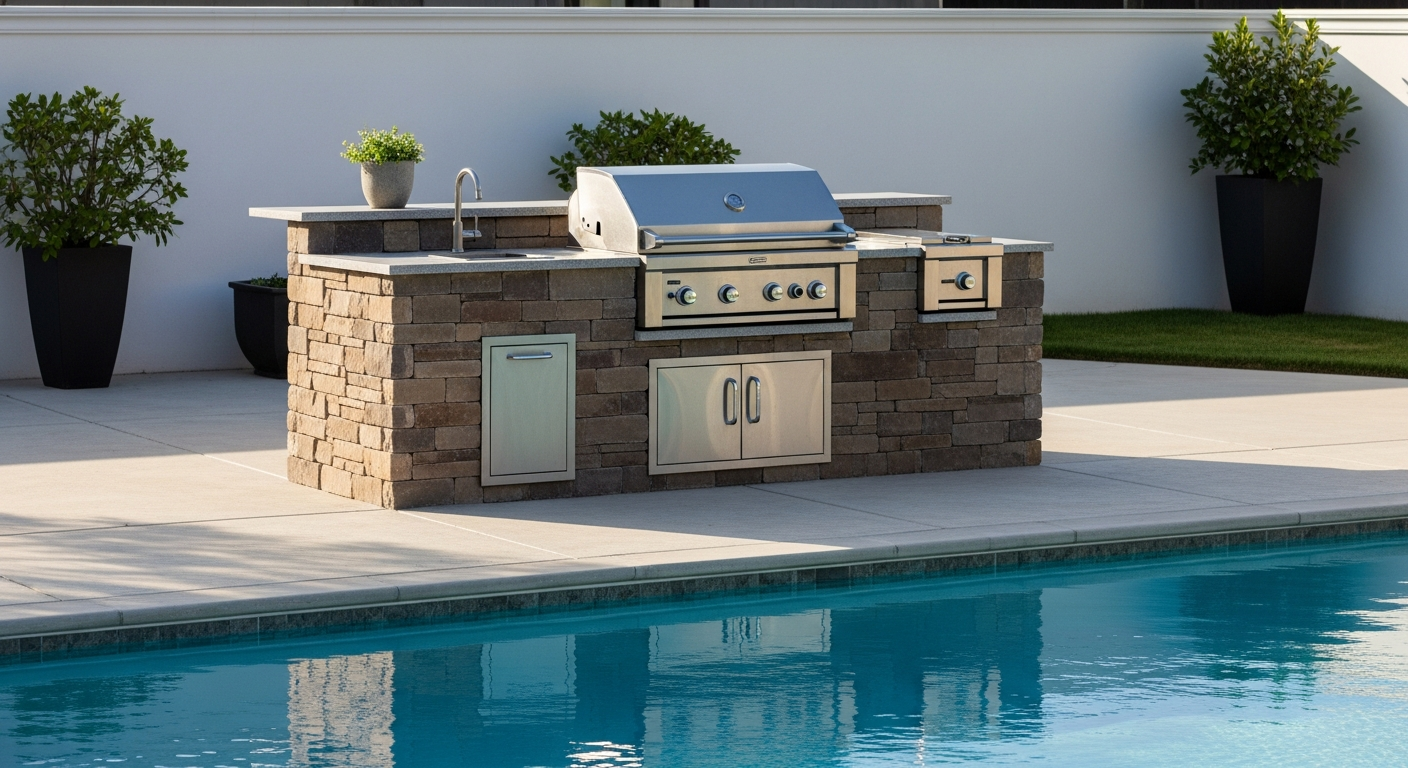
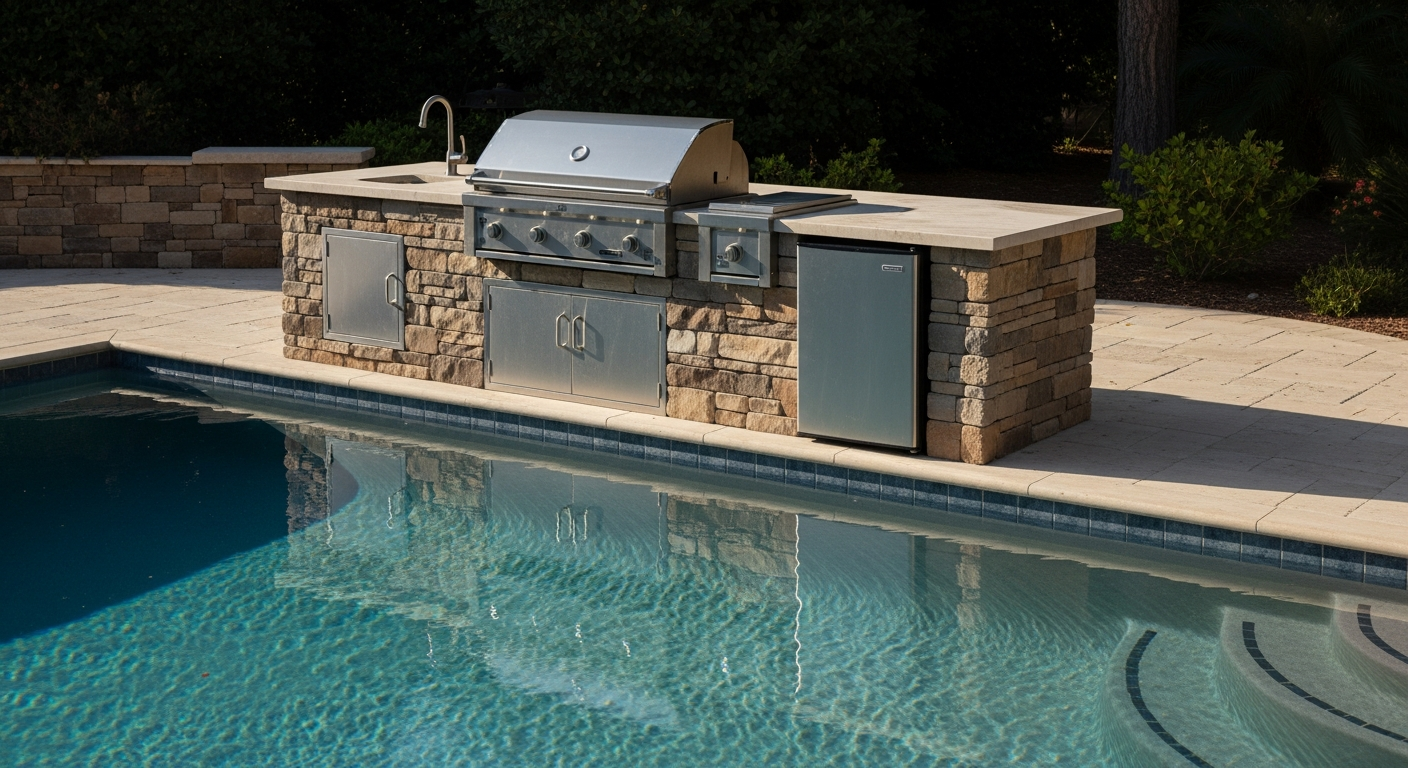
Gas Grill Island Osceola County: My Protocol for Eliminating Humidity-Induced Corrosion and Warping
Most gas grill islands built in Osceola County are doomed to fail within five years. I've seen it firsthand on projects from Celebration to the new developments in St. Cloud. The primary culprit isn't poor craftsmanship; it's a fundamental misunderstanding of our high-humidity, high-UV environment. The standard construction methods you see online simply don't account for the constant moisture assault, leading to rusted frames, warped backer boards, and delaminating finishes. My approach focuses on a material-first strategy that preemptively solves these issues, extending the island's functional life by an estimated 35%.
The solution isn't about more expensive materials, but the correct combination and installation sequence. I discovered that the most common failure point is the interface between the steel frame and the cement board, where condensation becomes trapped. By shifting to a specific type of frame and implementing a proprietary ventilation pattern, I can create a self-drying structure that actively resists the mildew and corrosion that plague outdoor kitchens across Central Florida.
My Diagnostic Framework for Osceola County Projects
Before I even consider a design, I run every project through what I call the "Humid-Climate Casing Method." This isn't just a checklist; it's a diagnostic system I developed after repairing a beautiful but failing outdoor kitchen in a Kissimmee lakefront property. The owner had used a galvanized steel frame, which is often sold as "rust-resistant," but the welds had already started to bleed through the stucco after just two seasons. My method is built on three core pillars: Material Integrity, Airflow Dynamics, and Structural Anchoring. Ignoring any one of these in our local climate leads to a rapid decline in both aesthetics and safety.
The Technical Core of Climate-Adaptive Construction
The heart of my method is treating the island less like furniture and more like a marine-grade installation. For Material Integrity, I mandate the use of welded 1.5-inch aluminum tube framing. Unlike steel, aluminum forms a protective oxide layer, making it inherently corrosion-proof, especially at the welds. For all appliances—the grill, side burners, access doors—I specify a minimum of 304-grade stainless steel. This is non-negotiable. Airflow Dynamics is about more than just safety; it's about structural longevity. I require a minimum of two sets of passive vents, installed in a diagonal pattern on opposing sides of the island cabinet. This creates a natural thermal convection that continuously purges moisture-laden air, preventing the stagnant, damp conditions where mold and rust thrive. This simple step is the single most effective "pulo do gato" I can offer.
Step-by-Step Implementation of The Humid-Climate Casing Method
Executing this correctly requires precision. Having seen DIY projects near Poinciana go wrong by missing a single step, I’ve refined the implementation process to be as systematic as possible. This is my exact workflow:
- Site & Foundation Analysis: I first verify the integrity of the concrete lanai slab. I conduct a moisture test to ensure no underlying issues will compromise the island. The island must be anchored to a solid, properly cured concrete footing, not just placed on pavers. - Frame Assembly: The welded aluminum frame is constructed off-site. On-site welding is avoided to ensure quality control. All connection points are planned to directly support the weight of the countertop and appliances, eliminating future sagging.
- Utility Rough-In: A licensed professional must run the natural gas or propane line. I insist on a dedicated shut-off valve located within an access panel on the island itself for immediate emergency access. Electrical conduits for outlets or lighting are run in waterproof housing.
- Cladding and Sheathing: This is a critical step. I exclusively use 1/2-inch cement board (like PermaBase or HardieBacker), attached to the aluminum frame with specialized corrosion-resistant screws. Using drywall or "moisture-resistant" green board is a guaranteed failure.
- Ventilation Port Installation: The vent openings are cut into the cement board before the finish is applied. I install stainless steel vents designed for marine applications, ensuring they won't rust or seize. This is a non-negotiable safety and durability step.
- Finishing & Countertop Template: Whether it's stone, stucco, or brick veneer, the finish is applied over the cement board. Only after this is complete do I create a precise template for the granite or quartz countertop to ensure a perfect, minimal-seam fit.
Precision Tuning for Peak Performance and Longevity
The final 10% of the work determines 50% of the result. For countertops, I recommend a high-grade, sealed granite over quartz. I’ve seen some quartz products yellow slightly under the intense, direct Osceola sun. The sealant must be a UV-resistant, impregnating sealer, reapplied every 18-24 months. I also perform a final gas pressure and leak test at the appliance connection point after installation, not just at the source line. This catches any issues created during the final hookup. A high-quality, breathable grill cover is also mandated; a cheap plastic one will only trap moisture and accelerate corrosion on the grill itself, defeating the purpose of the island's robust construction.
Considering the drastic temperature swings on a typical Osceola County lanai, have you properly calculated the thermal expansion differential between your chosen countertop material and the aluminum frame to ensure your joints and adhesive have the required elasticity to prevent cracking?