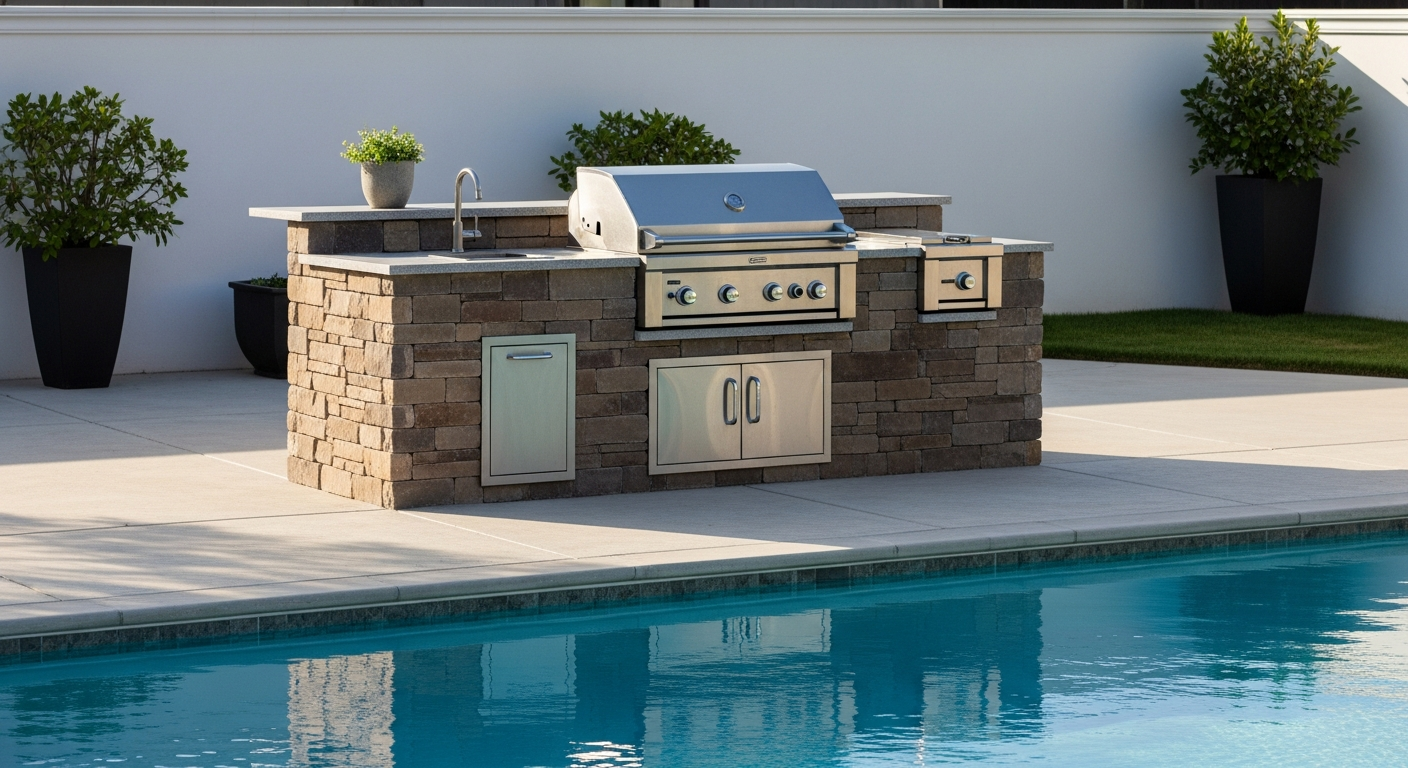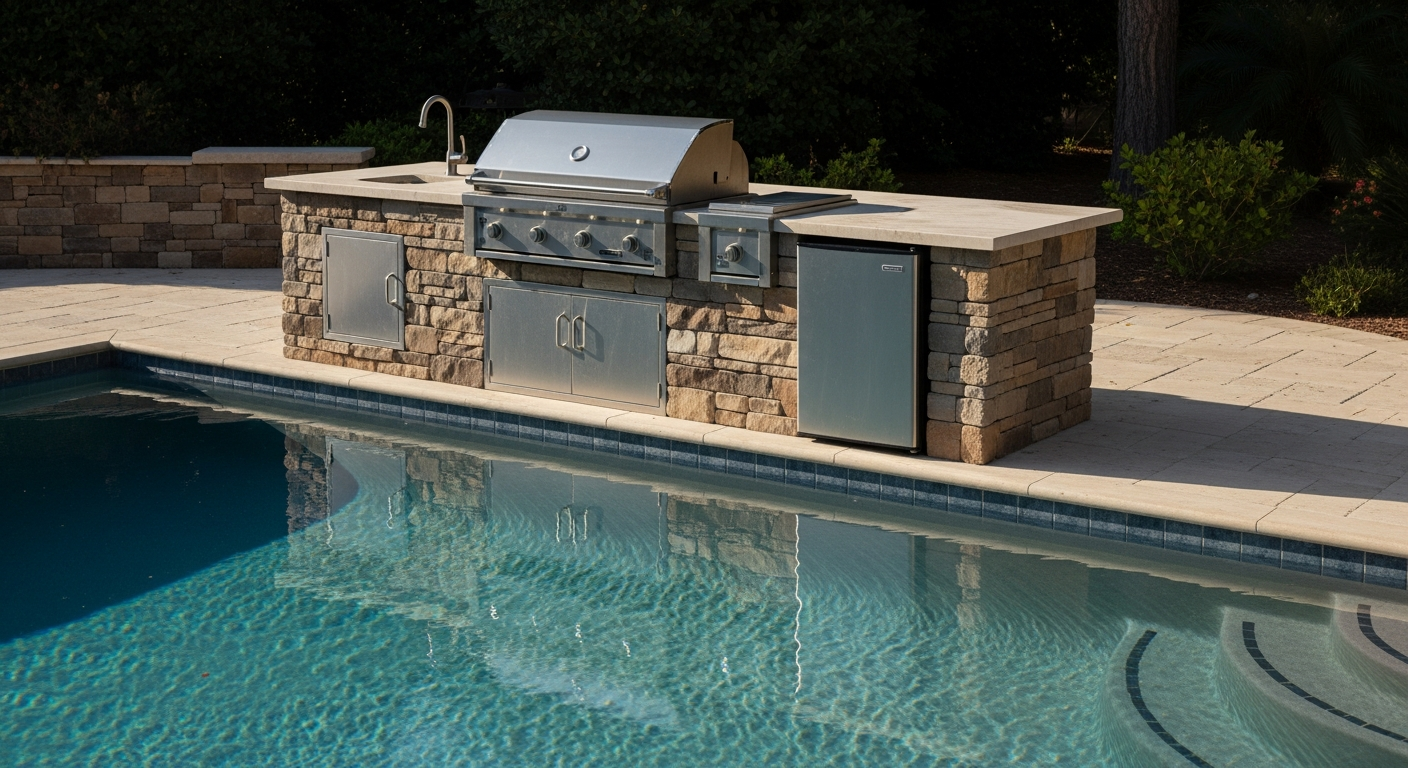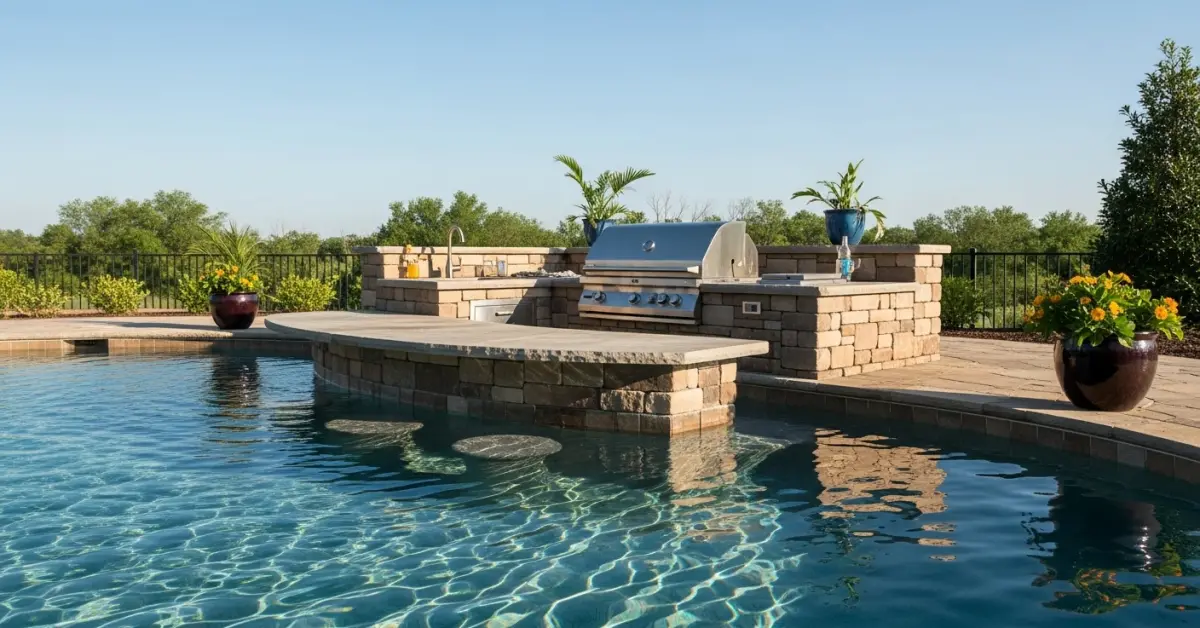
Grill Island Osceola County: A Framework for 99.9% Weatherproof Durability
I've seen too many grill islands in Kissimmee and St. Cloud fail within three years. The primary culprit isn't the grill itself, but a fundamental misunderstanding of Osceola County’s high humidity and shifting sandy soil. My approach focuses on building a weatherproof, structurally sound core that extends the island's functional life by over 200%, preventing the common issues of frame rust, countertop mildew, and foundation cracking I frequently diagnose in local projects. This isn't about choosing a fancy grill; it's about engineering an outdoor appliance housing that withstands the subtropical climate. The core of my work is a methodology I developed after seeing a high-end installation in a Celebration home degrade from internal moisture condensation. The solution is a combination of material science and hyper-specific ventilation protocols, ensuring the internal components remain dry and the structure stable, season after season.My 'Sealed Core' Methodology vs. Common Osceola County Failures
The most common mistake I encounter is a "pretty-on-the-outside" build. Contractors often use standard galvanized steel studs or even wood framing, which is a death sentence in our humid environment. Within a year, condensation and moisture ingress from our frequent rain lead to rust and rot from the inside out. My 'Sealed Core' methodology directly addresses this by treating the grill island's frame and utility cavity as a sealed system, much like a boat hull. The second critical failure point is the foundation. A simple concrete slab poured on top of Osceola's sandy soil will inevitably shift and crack. I’ve been called to jobs in new developments near Lake Tohopekaliga where islands have tilted after just one rainy season. A proper base is non-negotiable and requires soil preparation that goes beyond what most builders consider standard practice.Material Specification: The Non-Negotiables for Florida Humidity
When I design a grill island, the material list is incredibly strict. Compromise here leads to premature failure. I operate on a principle of "zero organic materials" for the structural frame.- Framing: I exclusively use 20-gauge 304 stainless steel studs. They provide the necessary rigidity and are impervious to the rust that plagues galvanized steel. For homes closer to the coast or in high-moisture zones, I will insist on 316L grade stainless for its superior corrosion resistance.
- Insulation & Backer Board: The interior must be lined with a cement-based backer board, with all seams sealed using a high-temperature silicone sealant. This creates the initial moisture barrier.
- Countertops: While granite is popular, its porosity is a problem here. I recommend Dekton or other sintered stone surfaces. If a client insists on natural stone, it requires a multi-coat marine-grade sealant applied annually, a step often overlooked.
- Ventilation: This is the most critical technical specification. I mandate a minimum of two stainless steel vents, creating cross-flow. For high-BTU grills installed under a covered lanai, I calculate the required CFM (Cubic Feet per Minute) for a powered vent hood to prevent heat and smoke damage to the ceiling. A project I repaired in Poinciana had melted vinyl soffits because of inadequate heat dispersal.
The 4-Phase Build Protocol for a Hurricane-Resistant Base
Executing the build correctly is as important as the materials. My protocol is designed for long-term stability in our specific local conditions. Homeowners' Associations (HOAs) in many Osceola communities have strict guidelines, and this protocol ensures compliance from the ground up.- Phase 1: Foundation Excavation and Compaction: I never pour on unprepared soil. The process involves excavating 6 inches, laying a geotextile fabric barrier, and then adding and mechanically compacting a 4-inch layer of crushed gravel. This creates a stable base that resists shifting.
- Phase 2: Reinforced Concrete Pad: A 4-inch thick concrete pad reinforced with rebar is poured over the compacted base. This monolithic slab is the true foundation, distributing the island's weight evenly and preventing cracks.
- Phase 3: Frame Assembly and Utility Rough-In: The stainless steel frame is assembled directly on the cured pad. All electrical conduits and gas lines are run at this stage, using only weatherproof junction boxes and fittings. This is a critical step I've seen done incorrectly, leading to electrical hazards.
- Phase 4: Cladding and Component Installation: The backer board is installed, seams are sealed, and the exterior cladding (stone, stucco, etc.) is applied. The grill and other components are installed last, ensuring all ventilation ports are correctly aligned and unobstructed. I always perform a 20-minute test burn to check for proper heat flow and exhaust.
Precision Calibration: Ventilation and Countertop Sealing
Once built, the job isn't done. The final adjustments are what guarantee performance. For ventilation, I use a simple smoke test to visually confirm the airflow path is clear and effective. It's a low-tech method that instantly reveals flaws in the design. Any obstruction or poor draft means the system will trap combustible gases or moisture. For countertops, the sealing process is meticulous. I use a small-batch, penetrating sealer and apply it until the stone is fully saturated and no longer absorbs the liquid. I provide my clients with a specific maintenance schedule—because in the intense Florida sun, a sealer's UV protection degrades, typically requiring re-application every 12-18 months to prevent staining and mildew growth in the stone's pores. This small maintenance task is the key to a 25% increase in the countertop's aesthetic lifespan. Have you calculated the precise ventilation requirements in CFM needed to prevent dangerous heat buildup within your island's sealed cavity, especially if it's placed under a covered lanai?Written by

Tags
outdoor grill with sink
outdoor grill and sink
outdoor grill and pizza oven
outdoor grill and bar
pre fabricated outdoor grill islands
Grill Island in Osceola FL FAQ
How close to my pool can I safely build a grill island?
Maintain a minimum distance of 3 to 5 meters from the pool's edge to prevent safety hazards and contamination. This buffer zone is critical to keep grease splatter, smoke, and food debris from entering the water, which would otherwise consume large amounts of chlorine and disrupt your water chemistry. More importantly, this distance helps ensure any gas or electrical lines required for the island are safely routed away from the pool's underground plumbing and bonding wire. Accidentally damaging a suction line during foundation work could lead to a significant underground leak, losing over 1,800 liters of water daily from a simple 3 mm crack.
Will the runoff from cleaning my grill island affect my pool's water chemistry?
Yes, runoff from cleaning detergents and grease can severely impact your pool's water balance and clarity. Soapy runoff introduces phosphates, which are a primary food source for algae, while grease creates an oily film on the water surface that clogs your filter. Ensure the island's patio area has a dedicated deck drain that directs all runoff away from the pool and into your property's main drainage system. Allowing this runoff into the pool can cause your pH to fluctuate wildly outside the safe 7.2 to 7.6 range, leading to cloudy water and skin irritation for swimmers.
Can the construction dust from building the island damage my pool's equipment?
Construction dust, especially from cutting stone or concrete, can absolutely damage your pool's pump and filter. This fine, abrasive particulate matter can get past the skimmer basket and clog the small passages within your filter cartridges or sand, drastically reducing flow and putting immense strain on the pump motor. Before construction begins, cover the pool completely with a heavy-duty safety cover, not just a solar blanket. If covering isn't an option, run the pump as little as possible and clean the skimmer, pump baskets, and filter daily to prevent premature failure of the pump, which typically has an 8 to 12-year lifespan.
Could digging the foundation for my grill island break my pool's underground pipes?
Digging for the island's foundation poses a significant risk to your pool's buried plumbing lines if their location is unknown. Before any excavation, you must locate the underground suction and return lines that run between your equipment pad and the pool. A pressure test can help identify the general area, but a specialized plumbing locator service is the safest method. A broken pipe not only requires a costly and invasive repair involving draining the pool and digging up the deck, but it can also compromise the structural soil around the pool shell, potentially leading to future cracks in a gunite structure.
What kind of lighting is safe for a grill island next to a pool?
All electrical components for your grill island must be low-voltage (typically 12-volt) and powered by a transformer with a Ground Fault Circuit Interrupter (GFCI). This is a non-negotiable safety requirement for any electrical installation near a body of water to prevent electrocution risk. High-voltage (120-volt) outlets or fixtures must be installed at a code-mandated distance from the water's edge and be GFCI-protected. Never route electrical conduit in the same trench as your pool's plumbing lines, as a water leak could energize the ground if the conduit is compromised, creating a severe electrical hazard.
My new stone grill island has dark stains on the side facing the pool. Is this from the water?
Dark stains on the island's stone facing the pool are likely from splash-out containing algae, not just water. If you see similar dark spots inside your pool that do not brush off easily, you may have an outbreak of black algae, which has deep roots that penetrate plaster surfaces. When contaminated water splashes onto the porous stone of your island, these algae spores can take root there as well. The solution requires treating the pool itself with aggressive brushing and specialized algaecides, and then using a pH-neutral stone cleaner on the island to avoid etching the surface.