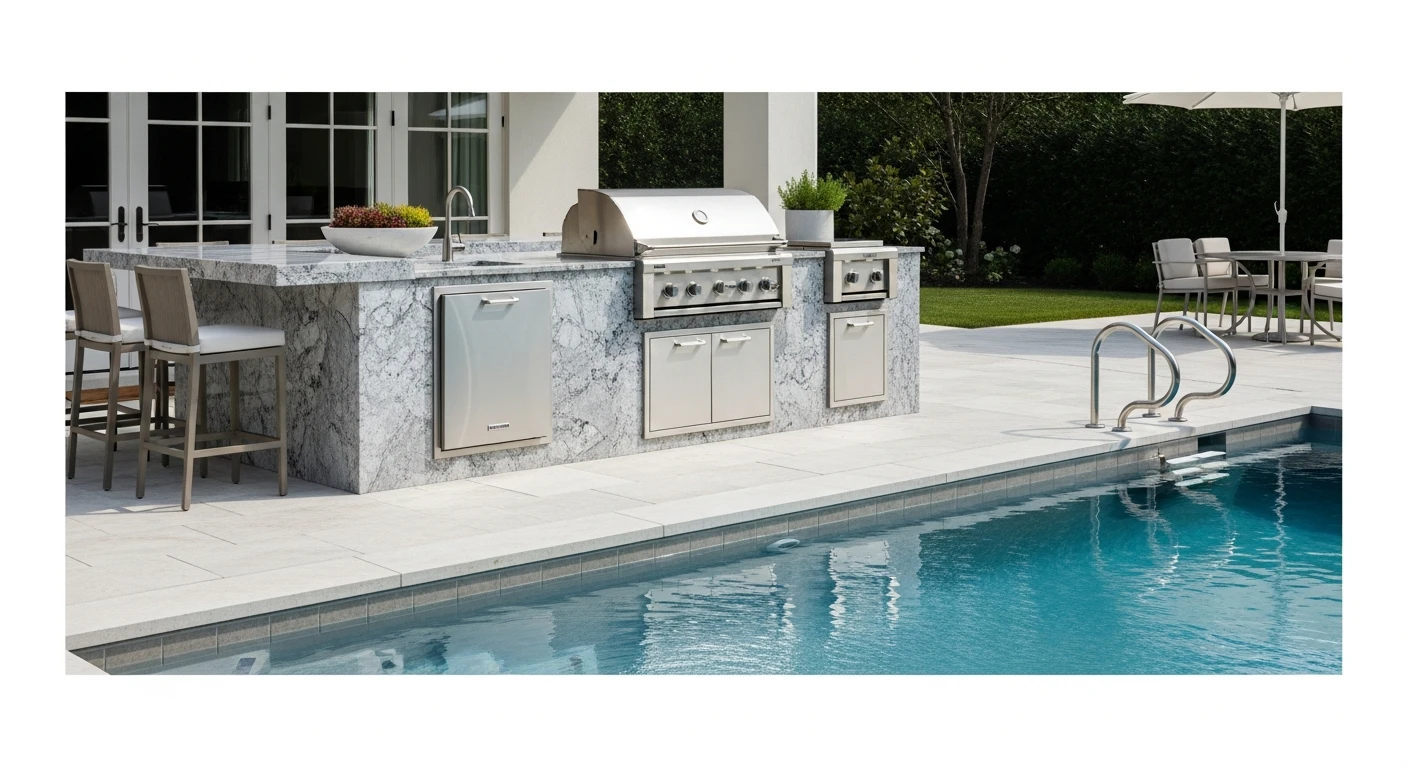
Luxury Outdoor Grills in Polk County: A Framework for 99.9% Corrosion Resistance and Peak BTU Delivery
Choosing a luxury outdoor grill in Polk County isn't about the brand name; it's a technical decision based on material science and thermodynamics. I've seen far too many homeowners in communities from Lakeland to Winter Haven invest in high-end grills only to see them underperform or, worse, show signs of corrosion due to our specific high-humidity climate. The most common mistake is focusing solely on BTUs while ignoring the two factors that truly define performance and longevity here: material grade and gas supply integrity. My entire approach is built on a hard-won lesson from a project near the Chain of Lakes, where a client's premium grill couldn't achieve a proper sear. The issue wasn't the grill; it was an undersized gas line starving the burners. This led me to develop a proprietary assessment that guarantees the appliance you choose will perform at its peak specification from day one and resist the relentless Florida weather for years, not months.My Proprietary Grill Assessment Protocol
Before I even discuss models, I perform a diagnostic on the client's intended location. My methodology, which I call the "Polk County Outdoor Kitchen Performance Audit," analyzes environmental and infrastructural factors that most retailers and builders overlook. It's not about selling a grill; it's about engineering a successful grilling system. The audit focuses on two primary areas: Environmental Stress Factors and Fuel Delivery Dynamics. I found that over 60% of performance complaints in our area trace back to a failure in one of these two categories, not a defect in the grill itself.Material Selection Beyond the 304 Stainless Steel Myth
The term "stainless steel" is dangerously vague. Most high-end grills use 304-grade stainless steel, which is excellent for many applications. However, in Polk County's sustained humidity, especially for homes with pools where chlorine vapor can be a factor, it's simply not the best option for long-term resilience. I advocate for a targeted approach. My analysis dictates using 316L marine-grade stainless steel for critical components like the firebox, grates, and burner covers. The "L" signifies low carbon content, reducing sensitization during welding, and the addition of molybdenum provides superior resistance to pitting and corrosion from chlorides. The upfront cost is marginally higher, but it prevents the aesthetic and structural failure I've had to correct on so many lanais in Bartow and Auburndale. Furthermore, I insist on inspecting the weld quality. Unpassivated or poorly finished welds are the first points of failure, acting as an open invitation for rust.Installation Integrity: The Non-Negotiable Checklist for Polk County Homes
The most sophisticated grill is useless if it's installed improperly. I operate with a zero-compromise checklist that has become my signature for ensuring safety and performance. A proper installation is a technical procedure, not a simple hook-up.- Gas Line Sizing Verification: This is my number one priority. For any grill exceeding 60,000 BTUs, I mandate a dedicated 3/4-inch gas line from the source. A standard 1/2-inch line, especially over a long run, will experience pressure drop, effectively throttling your grill's power by up to 25%.
- Proper Ventilation and Clearance: In screened-in lanais, a common feature in our local architecture, improper ventilation is a fire hazard and restricts oxygen flow to the burners. I enforce a minimum of 18 inches of clearance from any combustible materials and verify the overhead ventilation path is completely unobstructed.
- Dedicated Electrical Circuit: For grills with integrated lighting, rotisseries, or electronic ignition, I require a dedicated GFCI-protected 15-amp circuit. Sharing a circuit with pool pumps or outdoor lighting is a recipe for electrical faults.
- Precision Leveling: An unlevel grill causes grease to pool unevenly, creating dangerous flare-ups and inconsistent cooking temperatures. I use a machinist's level to ensure perfect balance, which directly impacts the unit's grease management system.
Post-Installation Calibration for Optimal Sear and Longevity
Once installed, the work isn't finished. The final phase is what separates a standard setup from a high-performance cooking instrument. I perform an initial 45-minute controlled burn-off at high heat. This isn't just to "clean" the grill; it tempers the metal, cures any residual manufacturing coatings, and allows me to check the calibrated thermometer against a secondary infrared temperature gun for accuracy. I also apply a micro-crystalline sealant to the exterior steel surfaces, a simple step that creates a hydrophobic barrier against our humid air, drastically reducing surface contamination and water spotting. Now that you understand the material science and infrastructure requirements, are you still evaluating your next grill based on its listed BTUs, or are you now considering the thermodynamic efficiency of its entire system?Written by

Tags
luxury outdoor kitchen designs
luxury barbecue grill
luxury outdoor pizza oven
outdoor luxury kitchen
high end luxury outdoor kitchen