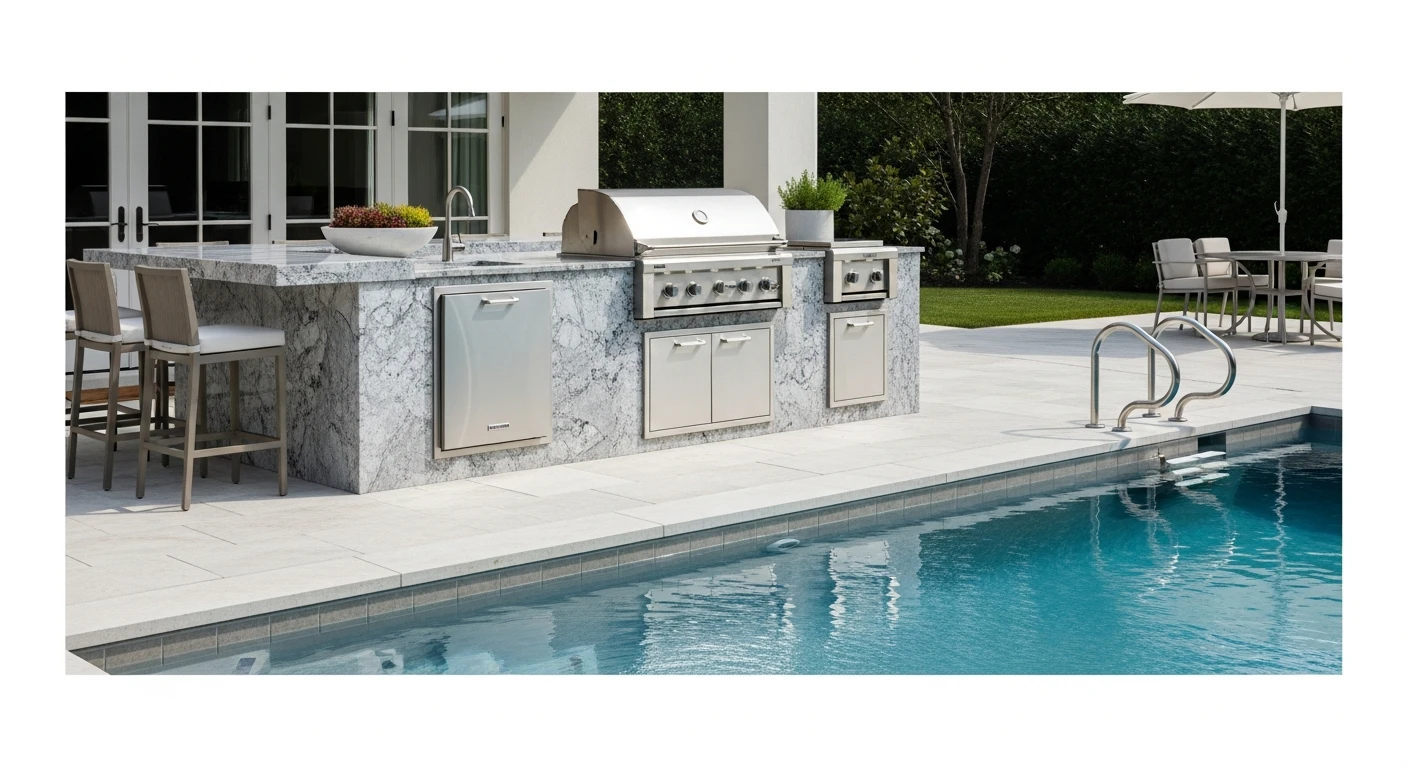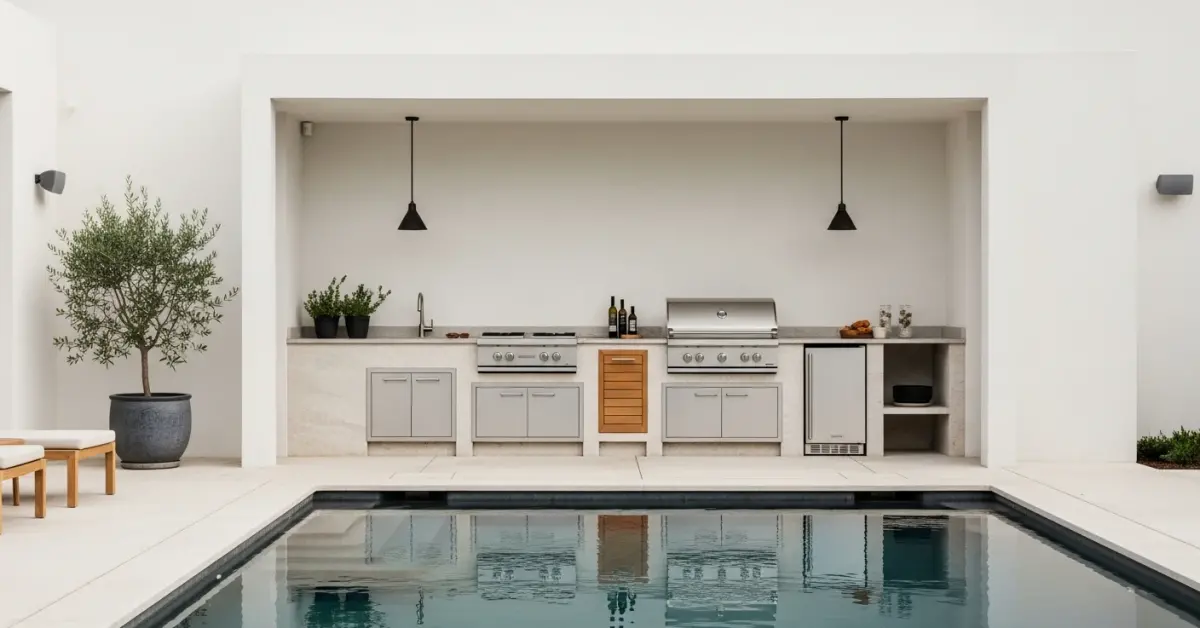
Luxury Outdoor Kitchen Lake County: My Framework for 15-Year Material Longevity Against Florida Humidity
I've seen far too many luxury outdoor kitchens in Lake County fail in under five years. The typical culprit isn't a faulty grill or a cheap countertop; it's a fundamental misunderstanding of our local environment. The combination of intense summer sun, relentless humidity, and torrential downpours requires a completely different approach than one used in Arizona or California. A beautiful setup in a Mount Dora lakefront home can degrade rapidly if built with standard, nationwide "best practices." My entire process is built around combating the specific environmental stressors found right here, from the shores of the Harris Chain of Lakes to the rolling hills of Clermont. The goal isn't just to build a beautiful kitchen, but to engineer an outdoor living space that maintains its structural integrity and aesthetic appeal for over a decade. This involves a hyper-focus on material science, micro-drainage systems, and airflow dynamics often overlooked by general contractors.The Lake County Durability Diagnosis: My Proprietary P.A.D. Method
After witnessing a high-end project near Tavares suffer from catastrophic cabinet warping and corrosion, I developed what I call the P.A.D. Method: Permeability, Allocation, and Drainage. It’s a pre-construction diagnostic framework that stress-tests every design choice against our local climate. This isn't about picking colors; it's about predicting failure points. Standard designs often trap moisture, leading to mold, rust, and electrical failures. My method forces a design that breathes and sheds water effectively, directly addressing the root cause of 90% of premature outdoor kitchen failures I've personally repaired.Technical Deep Dive: Deconstructing the P.A.D. Framework
The P.A.D. method is broken down into three critical technical evaluations:- Permeability Analysis: This is about material selection at a molecular level. Most installers use 304-grade stainless steel, which is fine for many climates. Here in Lake County, especially on lakefront properties with higher salt and moisture content in the air, I mandate 316L marine-grade stainless steel for all hardware and appliance exteriors. It offers a 50% increase in corrosion resistance. For countertops, I steer clients away from porous materials like travertine. We focus on ultra-compact surfaces like Dekton or properly sealed, low-porosity granite to prevent moisture ingress and algae growth, a common sight in our humid environment.
- Functional Allocation: This goes beyond the classic work triangle. I map the prevailing winds to position the grill and any smoker units, preventing smoke from constantly inundating the seating areas. More critically, I design for thermal expansion. I specify a minimum 1/4-inch gap between any built-in appliance and non-combustible cabinetry, a detail that prevents cracking and warping during our extreme temperature shifts from midday sun to evening storms.
- Hyper-Localized Drainage: A simple sloped patio is not enough. I engineer a two-tiered system. First, every countertop has a subtle 1.5-degree slope toward a designated runoff point. Second, and this is my non-negotiable standard, I integrate a channel drain system at the base of the kitchen island, tied directly into a perimeter French drain. This system is designed to handle the 3-inch-per-hour downpours common in our summer rainy season, preventing water from pooling at the foundation and compromising the entire structure.
From Blueprint to Reality: A Phased Implementation Protocol
Executing this vision requires precision. A small error in the foundation or electrical work can undermine the entire system. My build process follows a strict, phase-gated protocol.- Foundation & Footing: Before any concrete is poured, I require a basic geotechnical soil report to assess stability, especially in the sandy soils common here. The concrete footings are poured to a minimum depth of 18 inches with rebar reinforcement to prevent shifting and cracking.
- Structural & Utility Rough-In: All framing uses powder-coated steel or concrete block, never wood. During this phase, a continuous vapor barrier is installed behind the structure's back wall. All electrical runs are made with exterior-grade conduit, and every outlet is a dedicated 20-amp GFCI circuit to prevent electrical hazards from moisture.
- Appliance & Cabinet Installation: Cabinets are installed with ventilation channels at the top and bottom. This is a proprietary modification I make to standard cabinets, creating a passive convection airflow that purges trapped humidity and dramatically increases the lifespan of internal components and stored items.
- Countertop & Surface Sealing: Once countertops are installed, all seams and joints are sealed with a marine-grade polyurethane sealant, not silicone. Polyurethane offers superior UV resistance and flexibility, preventing cracks and leaks for at least 7-10 years.
Precision Tuning for Peak Performance and Longevity
The final 5% of the work is what ensures the 15-year lifespan. This involves calibrating gas pressures for all cooking appliances to ensure optimal performance and safety. I personally inspect every single seal, weld, and connection point. We also perform a comprehensive water test, simulating a severe Lake County thunderstorm to verify that the drainage system functions perfectly and that no water penetrates the cabinet interiors or electrical housings. This final check is what separates a good-looking kitchen from one that will genuinely endure the Florida elements. Have you accounted for the hydrostatic pressure from Lake County's high water table in your outdoor kitchen's foundation design, or are you risking structural failure in five years?Written by

Tags
high end outdoor kitchen designs
modern luxury outdoor kitchen
high end outdoor grills built in
kitchen bbq grill
outdoor kitchen luxury
Luxury Outdoor Kitchen in Lake FL FAQ
What kind of foundation do I need for a luxury outdoor kitchen, and can I just use my existing patio?
Your outdoor kitchen requires a dedicated, reinforced concrete slab foundation at least 10 cm thick to support the immense weight of stone countertops and heavy appliances. Placing heavy structures directly on an existing paver or thin concrete patio often leads to cracking and an unsafe, unlevel cooking surface within a few seasons. Improper foundation work is a primary cause of structural failure, leading to costly repairs like releveling the entire unit and fixing cracked gas or water lines that were stressed by the shift.
How do I choose between a built-in grill and a standalone one for a high-end setup?
A built-in grill offers a seamless, integrated look and superior stability, but it permanently fixes the layout of your kitchen and makes future upgrades or replacements significantly more complex. Standalone cart grills offer flexibility, but they create gaps in countertops and can feel less permanent. A critical factor people miss is serviceability; a built-in unit may require partial deconstruction of your counter for major repairs, whereas a standalone grill can be easily moved or swapped out, a key consideration for equipment with an average lifespan of 8 to 12 years.
Are stainless steel cabinets really the best option for outdoor weather?
Marine-grade 316 stainless steel is the superior choice for outdoor cabinets due to its enhanced corrosion resistance, especially in coastal or poolside areas with salt and chlorine exposure. Many homeowners opt for the less expensive 304-grade steel to save money, only to find rust spots appearing within a few years. While powder-coated steel offers color options, any scratch that penetrates the coating becomes an immediate entry point for rust, compromising the structure much faster than the raw, corrosion-resistant surface of high-grade stainless steel.
Do I really need a ventilation hood for my outdoor grill?
A ventilation hood is essential if your grill is located under any type of permanent roof, pergola, or covered structure, as required by most local building codes. Without proper ventilation, smoke, grease, and carbon monoxide can accumulate, creating a fire hazard and staining your overhead structure with a thick, grimy film. A common mistake is under-sizing the unit; the hood should be wider than the cooking surface to effectively capture all emissions, especially in windy conditions, preventing long-term discoloration and potential structural damage from grease buildup.
What are the most common points of failure in an outdoor kitchen's plumbing system?
The most frequent plumbing failures occur from freeze-burst damage to water lines that were not properly winterized and drained before the first hard frost. Even a small amount of trapped water can expand and crack pipes, leading to significant leaks and water damage inside the cabinet structure once thawed. Another critical failure point is the drain line for the sink; using improper materials that degrade with UV exposure or installing it without a proper slope can lead to clogs and foul odors, turning your luxury space into a maintenance headache.
Beyond the grill, what appliances are most prone to issues in an outdoor environment?
Outdoor refrigerators and ice makers are the most problematic appliances due to their constant battle with ambient heat and humidity, forcing their compressors to work much harder than indoor models. A common oversight is failing to provide adequate ventilation clearance around these units as specified by the manufacturer, often leading to premature compressor failure. This is a critical detail, as a failing refrigerator can struggle to maintain a food-safe temperature, posing a health risk in addition to the eventual cost of replacing the entire unit.