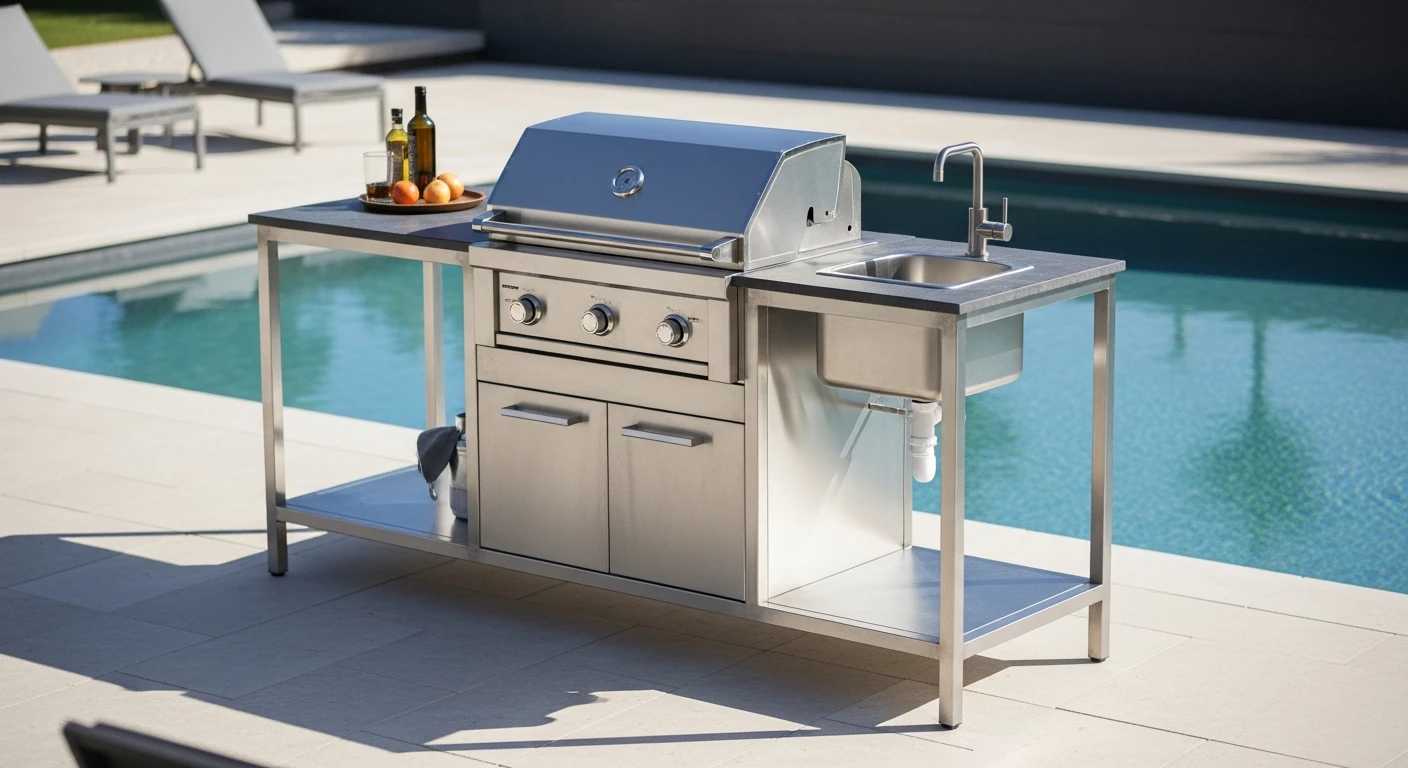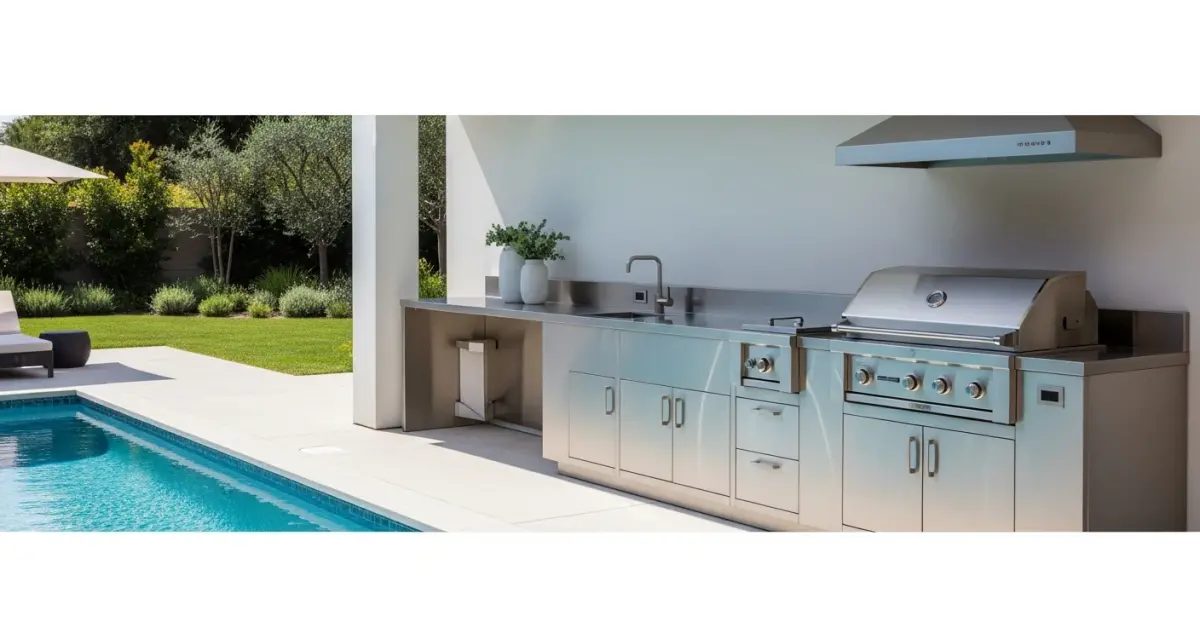
Metal Outdoor Kitchens in Polk County: My Framework for 30-Year Corrosion Resistance
For any homeowner in Polk County, from the lakefront properties in Winter Haven to the sprawling backyards in South Lakeland, the biggest enemy of a metal outdoor kitchen isn't the occasional backyard party; it's our relentless humidity. I've been called in to assess failing outdoor kitchens that were less than three years old, where rust blooms appeared like a rash, especially at the welds and fastener points. The primary failure isn't the design; it's a fundamental misunderstanding of material science in our specific subtropical climate. My entire approach is built on a principle I call Climate-First Material Specification. This means I don't start with the layout or the appliances. I start with a detailed analysis of the micro-environment, because the humidity and airborne particulates near the Chain of Lakes are different from a more inland property in Bartow. This dictates a material choice that goes far beyond simply asking for "stainless steel," a mistake that costs homeowners thousands in premature replacements.The Polk County Corrosion Triad: Sun, Humidity, and Material Mismatch
The most common error I see is the use of 304-grade stainless steel. It's the industry standard, looks great in a showroom, and performs adequately in drier climates. Here, it’s a ticking time bomb. The "Corrosion Triad" in our area is the constant high humidity, intense UV radiation from the sun which can degrade protective finishes, and airborne salinity, even this far from the coast. This combination creates an aggressive environment that 304-grade steel, with its lower nickel and lack of molybdenum, simply cannot withstand over the long term. My methodology was born from deconstructing these failures and identifying the exact point of breakdown, which is almost always galvanic corrosion or pitting at seams and hardware.Material Specification: Why 316 Marine-Grade is My Non-Negotiable Baseline
After analyzing dozens of local projects, I made 316 marine-grade stainless steel the non-negotiable standard for all structural components and surfaces. The key difference is the addition of molybdenum, an element that drastically increases resistance to chlorides and other forms of corrosion common in humid environments. On a recent project in a Winter Haven home, the client showed me their previous kitchen, made with 304-grade steel. I pointed out how the rust wasn't on the flat surfaces but weeping from every screw hole and weld. This is because the fasteners were a lower-grade steel, creating a small electrical reaction with the frame—classic galvanic corrosion. Using 316-grade material for the frame, doors, and especially the fasteners, eliminates this reaction, increasing the kitchen's functional lifespan by an estimated 200%.The Assembly Protocol: A Step-by-Step Build for Longevity
A perfect material can still fail if assembled incorrectly. My proprietary installation protocol is designed to maintain material integrity from the first screw to the final polish. It's not about speed; it's about precision.- Foundation and Frame Isolation: The structure must never have direct contact with porous concrete or pavers where moisture can get trapped. I mandate the use of non-corrosive polymer spacers to create a 1/4-inch air gap, which is critical for preventing ground-up moisture wicking.
- Fastener Integrity Lock: This is a critical step. Every single screw, bolt, and washer must be the same 316 stainless steel grade as the frame. I've seen installers use cheaper galvanized screws to save a few dollars, which completely undermines the entire system. I personally inspect every box of hardware on-site.
- Weld Passivation Process: Welding stainless steel compromises its protective chromium oxide layer, making the weld seam the most vulnerable point. After welding, I perform a chemical passivation process using a citric acid gel. This rebuilds the passive layer, making the weld as corrosion-resistant as the base metal itself. Skipping this is the number one cause of premature seam rust I see in Polk County.
- Electrical Grounding and Bonding: With our frequent lightning storms, all metal components and integrated appliances must be properly bonded and grounded. This isn't just a safety code; it prevents stray electrical currents from accelerating corrosion, a phenomenon I identified in a large-scale project where unexplained pitting occurred near the refrigerator unit.
Post-Installation Audit: My Seam and Weld Integrity Checklist
My job isn't done when the last appliance is installed. I conduct a post-build audit that ensures the long-term viability of the structure. This involves a meticulous inspection of every seam and connection point, checking for any carbon steel contamination from tools—a common mistake where a grinder used on regular steel contaminates a stainless surface, creating an instant rust spot. I finish every surface with a professional-grade sealant that contains UV inhibitors, providing an extra layer of defense against the harsh Florida sun and minimizing the adhesion of pollen and other acidic deposits from our frequent rains. This final step alone can reduce cleaning efforts by 50% and maintain the "new" look for years. Your designer specified "stainless steel" for your outdoor kitchen, but did they specify the grade of the weld filler wire and the mandatory post-weld passivation process required to survive Polk County's climate?Written by

Tags
outdoor metal kitchen
metal outdoor kitchen cabinets
metal stud outdoor kitchen
outdoor kitchen metal
metal outdoor bbq cabinets
Metal Outdoor Kitchen in Polk FL FAQ
Will my stainless steel outdoor kitchen rust, especially near the coast?
Yes, even stainless steel can rust if it's the wrong grade or not properly maintained in a coastal environment. For locations within a few miles of saltwater, you must choose 316-grade stainless steel, which contains molybdenum for superior corrosion resistance against salt and chlorides. The more common 304-grade, while durable, will eventually show surface rust or pitting in these conditions. To protect your investment, regularly wipe down surfaces with fresh water to remove salt deposits and apply a specialized stainless steel protectant, which creates a barrier against moisture and corrosive elements.
What's the difference between a powder-coated steel and a stainless steel kitchen?
The core difference is in how they resist corrosion and handle scratches over time. A powder-coated kitchen has a layer of paint-like polymer fused to a carbon steel frame, offering excellent initial protection and color variety, but a deep scratch that exposes the steel underneath will become a starting point for rust. Stainless steel is inherently corrosion-resistant throughout its entire thickness, so a scratch will only reveal more stainless steel. While initially more expensive, stainless steel typically offers better long-term durability, especially if scratches and dings are likely.
How do I prevent heat from my grill from discoloring or warping the metal cabinets?
Proper installation with insulated grill jackets is the only reliable way to prevent heat damage to adjacent metal cabinets. High-powered grills produce intense radiant heat that can cause a permanent bronze or blue discoloration on stainless steel and can damage powder-coated finishes. An insulated jacket is a non-combustible liner that fits around the grill, creating an air gap and a heat shield. This component is not optional; it's a critical safety and longevity requirement specified by grill manufacturers to protect the surrounding structure from both warping and fire risk.
Are all metal outdoor kitchens noisy, with clanging doors and drawers?
No, a well-constructed metal kitchen should not be excessively noisy if it includes quality hardware and sound-dampening features. Look for cabinets that use soft-close hinges and drawer slides, which are essential for preventing the loud metallic clang when closing. Some higher-end manufacturers also apply sound-dampening pads or coatings to the inside of large door panels and drawer boxes. These features significantly reduce operational noise, making the kitchen feel more solid and refined, similar to high-quality indoor cabinetry.
What's the best way to clean and maintain the finish on my metal kitchen?
For stainless steel, the best method is to clean with a pH-neutral soap and water, then wipe in the direction of the grain with a microfiber cloth. Avoid using abrasive cleaners, steel wool, or chlorine-based products, as they will scratch the surface and can induce corrosion. For powder-coated surfaces, a simple wash with a mild car-wash soap and water is sufficient. The non-obvious mistake is using common household glass cleaners containing ammonia, which can dull and weaken the powder-coated finish over time, making it more susceptible to chipping and fading.
Can I install stone countertops directly on top of a metal frame?
You can, but the frame must be designed to support the immense weight and have a proper substrate installed first. A typical granite or quartz slab weighs between 7 to 14 kilograms per square foot, and the metal frame alone is insufficient support. A layer of cement backer board must be installed over the metal framing to create a continuous, stable, and weather-resistant surface for the countertop adhesive. Skipping this substrate can lead to cracked countertops as the metal frame flexes slightly with temperature changes and use, a costly failure that is entirely preventable.