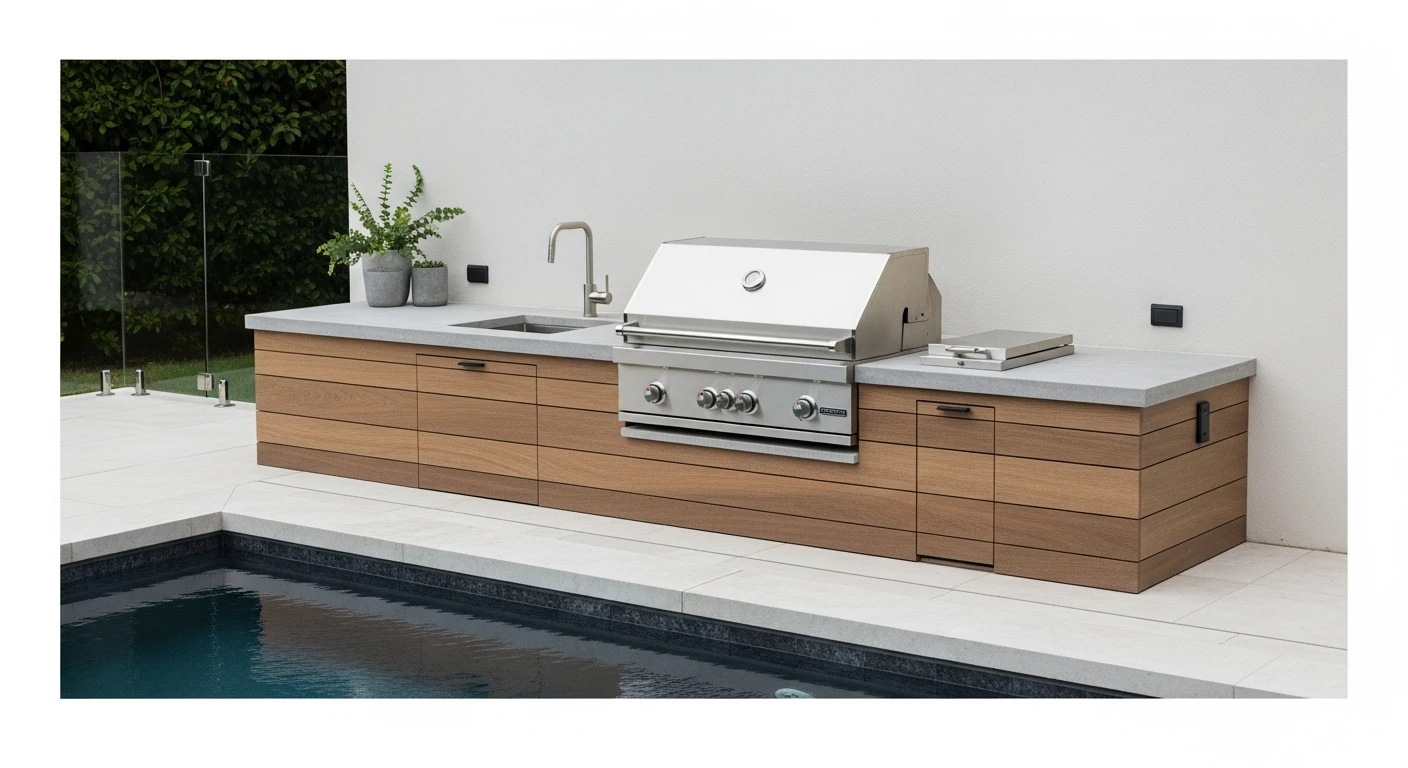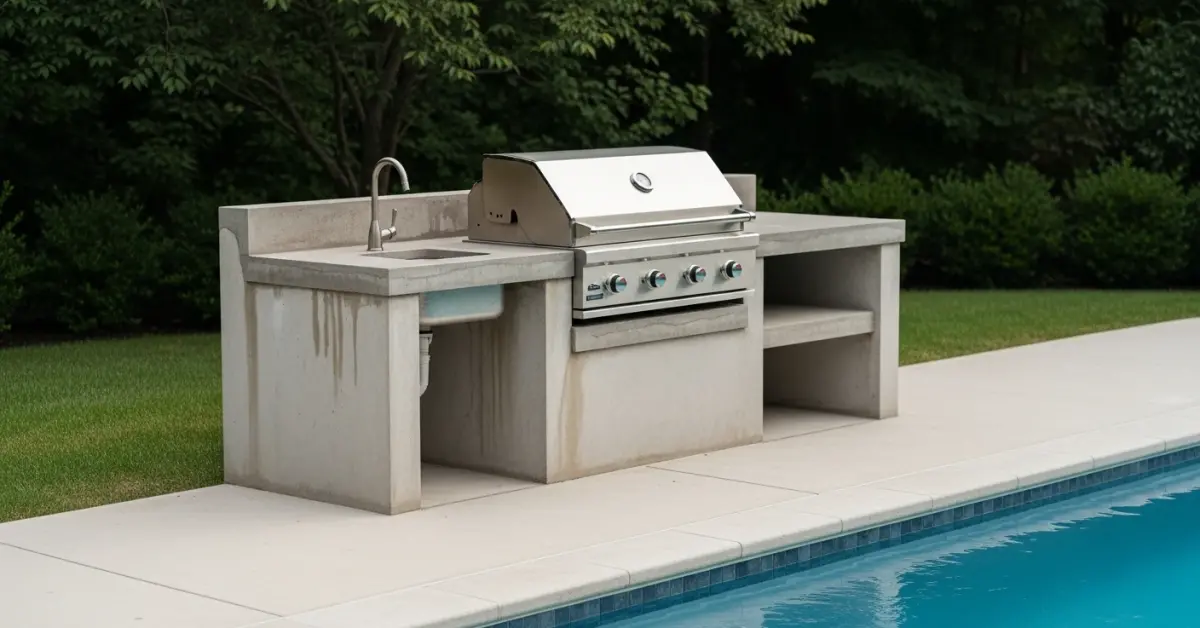
Natural Gas Outdoor Kitchen in Lake County: A Framework for Consistent BTU Output and 15-Year Durability
Building a natural gas outdoor kitchen in Lake County isn't just about assembling a grill and some cabinets; it's a technical exercise in defeating Florida's humidity and ensuring proper gas engineering. The most common failure I see in projects from Clermont to Mount Dora is a dramatic loss in performance. Homeowners invest in high-end grills only to find they can't achieve a proper sear because the gas line was undersized. My entire approach is built on preventing this exact scenario from the start. The second critical failure point is material degradation. The combination of intense sun, high humidity, and proximity to chlorinated pools in many Lake County homes creates a highly corrosive environment. Standard stainless steel simply doesn't last. My proprietary methodology, the Pressurized Flow and Material Integrity (PFMI) audit, addresses these two core issues before a single stone is laid, ensuring your kitchen performs on day one and is structurally sound a decade later.My PFMI Methodology: Pre-Construction Gas Line and Material Audits
Before any design is finalized, I perform a two-part audit. This isn't a simple walkthrough; it's a diagnostic process. I developed this after a project on a lakefront property in Tavares where the original contractor ran a half-inch line nearly 100 feet. The grill barely produced a 20,000 BTU output, rendering it useless for anything other than low-heat cooking. The client was frustrated, and the fix was expensive. My PFMI audit prevents this by mapping the entire system first. The first part is the Pressurized Flow Calculation. I inventory every potential gas appliance—the main grill, a power side burner, a pizza oven, even a fire pit feature. Each has a specific BTU (British Thermal Unit) requirement. The goal is to calculate the total BTU load and the Total Developed Length (TDL) of the gas line from the meter to the furthest appliance. This dictates the required pipe diameter. A common mistake is to size the pipe for the grill alone, forgetting that using the side burner simultaneously will starve both appliances of fuel.Calculating Gas Pipe Sizing and Selecting Climate-Resistant Materials
The technical details are what separate a functional kitchen from a frustrating one. For gas pipe sizing, the math is unforgiving. For a typical large grill (75,000 BTU) and a side burner (25,000 BTU) in a newer Eustis subdivision home with a 50-foot run, a ¾-inch black iron pipe is the absolute minimum. If a pizza oven is added, I immediately upgrade the primary run to a 1-inch pipe to eliminate any potential pressure drop. This ensures all appliances can run at maximum output simultaneously. For materials, the Lake County climate is the enemy. I categorically advise against 304-grade stainless steel for any exterior component. It will show surface rust, or "tea staining," within a year. My standard is 316L marine-grade stainless steel for all access doors, drawers, and appliance facings. The added molybdenum in 316L provides superior resistance to corrosion from moisture and salt or chlorine in the air. For countertops, I steer clients away from porous granite. In our humid environment, it can harbor mold. I specify sintered stone or Dekton, which are non-porous, UV-stable, and can handle extreme temperature changes without cracking.Step-by-Step Implementation for a Code-Compliant Lake County Installation
Once the planning and material selection are complete, the execution must be precise. I follow a strict protocol for installation that ensures safety and longevity. This isn't just a checklist; it's a sequence of quality control gates.- Utility Marking and Permitting: Before any trenching, a call to 811 is mandatory to locate underground utilities. I handle the permit submission with the Lake County building department, providing them with the gas schematics and material specifications upfront.
- Trenching and Pipe Installation: All underground gas lines must be buried at a minimum depth of 18 inches. I exclusively use polyethylene gas pipe for underground runs, as it's impervious to corrosion. A tracer wire is laid in the trench with the pipe, which is critical for locating the line in the future.
- Stub-Outs and Shut-Offs: Where the line surfaces and enters the kitchen island, we transition to black iron pipe. I install a dedicated quarter-turn ball valve for each individual appliance. This is a non-negotiable safety and maintenance feature.
- System Pressure Test: After all lines are run but before appliances are connected, I perform a pressure test. The system is filled with air to 15 PSI and monitored with a manometer for a minimum of 30 minutes. The needle cannot move. This test verifies there are absolutely no leaks in the system.
- Appliance Conversion and Connection: This is a step many DIYers miss. Most high-end grills and burners are shipped configured for propane (LP). They must be converted for natural gas by swapping the burner orifices to the correct, larger size. Failure to do this results in a small, inefficient flame.
Post-Installation: Calibrating Flame Height and Verifying Weather Sealing
My job isn't done when the gas is turned on. The final adjustments are what deliver a premium experience. I calibrate the air shutter on every single burner valve. This adjustment ensures the correct air-to-fuel mixture, producing a clean, blue flame with a small yellow tip. An improper adjustment leads to a lazy, sooty yellow flame that blackens cookware and delivers poor heat. Finally, I meticulously inspect the weather sealing. Every penetration point where a gas line or electrical conduit enters the island structure is sealed with a high-temperature, waterproof silicone. All appliance gaskets are checked to ensure a tight seal. This prevents water intrusion and stops insects from making a home in your investment, a very real concern in our local environment. With the system properly engineered and materials correctly specified, the result is an outdoor kitchen that performs flawlessly year-round. So, now that your gas line is sized for the total BTU load, have you accounted for the pressure drop over a 75-foot run and how that impacts your side burner's simmer control?Written by

Tags
natural gas outdoor kitchen island
natural gas bbq island
outdoor luxury kitchen
built in natural gas outdoor grills
outdoor kitchen natural gas grill
Natural Gas Outdoor Kitchen in Lake FL FAQ
Do I need a dedicated natural gas line for my outdoor kitchen, or can I just tap into an existing one?
You absolutely need a dedicated, properly sized gas line run directly from your meter or main supply line for the outdoor kitchen. Tapping into an existing line, such as one for a fireplace or water heater, will almost certainly lead to insufficient gas pressure, causing your high-demand grill and burners to underperform and potentially creating a hazardous situation. The new line must be calculated based on the total BTU load of all your planned appliances and the distance of the run to ensure everything operates safely and effectively.
My natural gas grill isn't getting hot enough. Is the grill broken?
Before blaming the grill, verify the gas supply line is adequately sized for the grill's BTU rating and the distance from the source. An undersized pipe, typically less than 3/4-inch for most setups, is the most common cause of low flame and poor heating performance, as it restricts the required volume of gas. Also, check that the shut-off valve is fully open and that the regulator, if one is installed, is functioning correctly and is rated for natural gas, not propane.
Can I use my old propane grill or appliances with a new natural gas line?
You cannot directly connect propane appliances to a natural gas line without modifying them with a specific conversion kit. Propane and natural gas operate at different pressures and require different sized orifices in the burners; using the wrong fuel will result in dangerously large, sooty flames and incomplete combustion. While many manufacturers offer a conversion kit, some high-end or older models are not designed to be converted, so confirm availability for your specific appliance before planning the installation.
What are the safety requirements for running a natural gas line underground to my patio?
Underground natural gas lines must be buried at a specific depth, typically 18 to 24 inches, to protect them from accidental damage. The pipe material must be approved for direct burial, and a yellow tracer wire must be run alongside it so the line can be located electronically in the future. All underground piping requires a licensed plumber for installation, and the work must be inspected and pressure-tested to meet local building codes before the trench is backfilled to prevent dangerous leaks.
Is an emergency gas shut-off valve required for the outdoor kitchen itself?
Yes, local codes almost universally require an easily accessible emergency shut-off valve located within a few feet of the appliances. This allows for a quick shutdown of the gas supply to the entire kitchen in case of a fire or significant leak, without needing to access the main meter. Omitting this critical safety feature is a common mistake in DIY installations and will cause the project to fail a safety inspection, not to mention creating a serious hazard for your home and family.
Does my outdoor kitchen need to be a certain distance from my house if it uses natural gas?
Yes, there are strict clearance requirements for locating natural gas appliances, especially high-heat grills. You must maintain a minimum distance from combustible materials, including house siding, deck railings, and overhead structures, as specified by both the appliance manufacturer and local fire codes. A common minimum is 36 inches from any combustible wall, but this can be greater for very high-BTU units. Ignoring these clearance-to-combustibles rules is a primary cause of structure fires originating from outdoor kitchens.