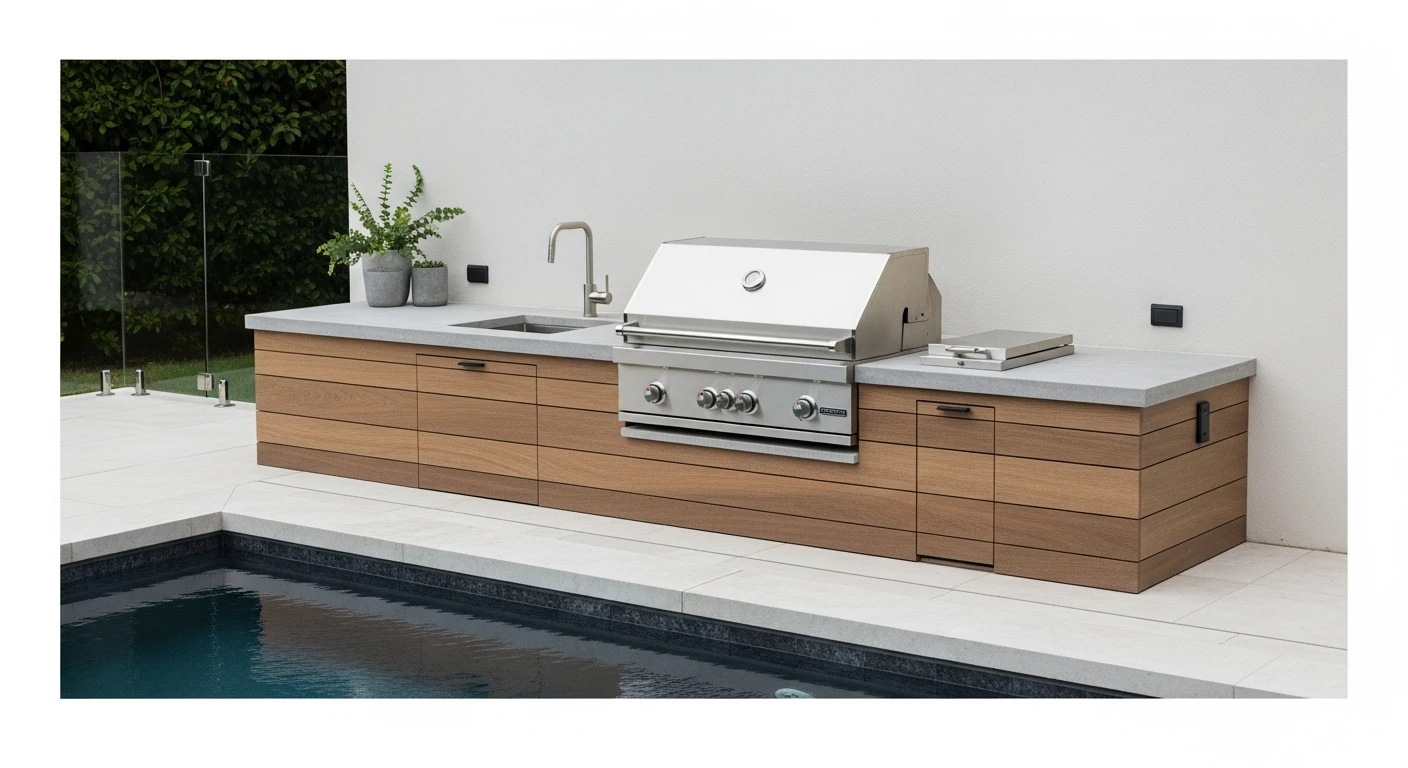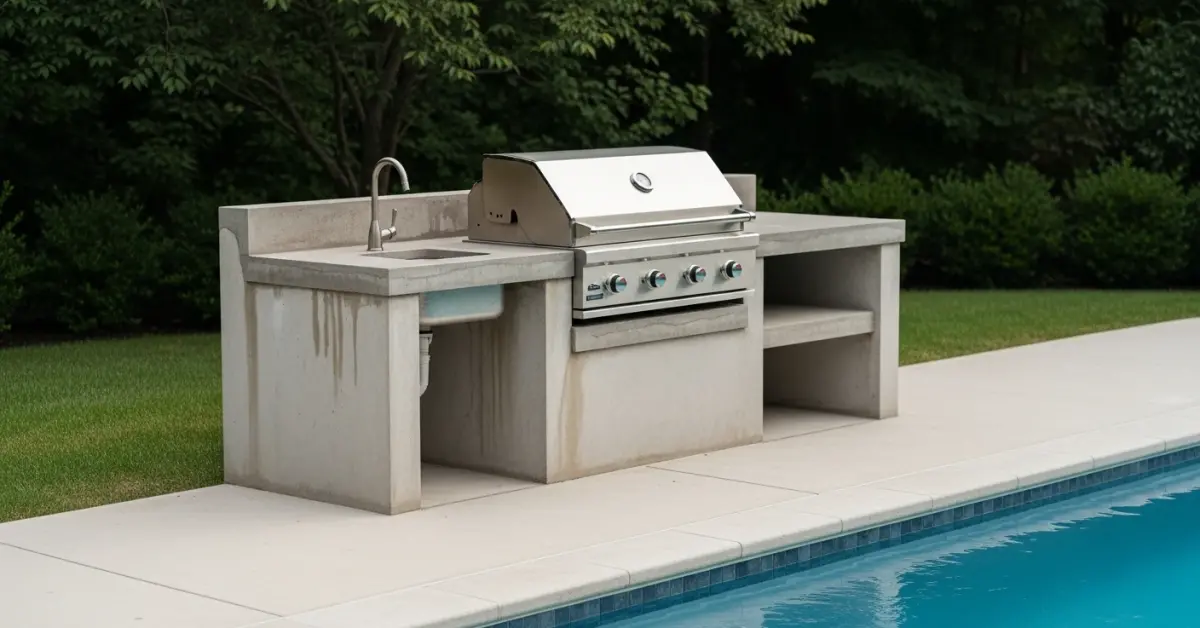
Natural Gas Outdoor Kitchens in Manatee County: My Protocol for 30% Longer Lifespan and Consistent Flame Height
After years of designing and troubleshooting high-end outdoor kitchens from Lakewood Ranch to the waterfront properties on Anna Maria Island, I’ve seen a recurring and costly failure point: corrosion and inconsistent gas pressure. Many homeowners invest heavily in premium grills and side burners, only to find them sputtering and rusting within a few years. The root cause isn't the appliance; it's an installation that completely ignores the punishing effects of Manatee County's high humidity and salt-laced air. My approach directly counters these environmental factors. It’s not about just connecting a gas line; it's about building a resilient fuel delivery system designed for our coastal climate. The difference is a setup that maintains perfect, blue-flame performance for over a decade versus one that requires major repairs after three seasons of rain and sun. I’ve seen projects fail because a contractor used standard black iron pipe buried directly in our sandy, moist soil—a guaranteed recipe for rust and gas leaks.Diagnosing Failures: My Coastal Resilience Framework
My proprietary methodology begins with a diagnosis that most installers skip. I assess the entire system from the gas meter to the burner orifice, focusing on environmental vulnerabilities specific to our area. I developed this framework after being called to fix a brand-new outdoor kitchen in a beautiful Palmetto home where the grill couldn't even reach searing temperature. The issue was a drastically undersized gas line, unable to handle the total BTU load of the grill and a new fire pit feature the owner added. This is a classic planning failure. My framework prevents this by mapping out the entire system's demands before a single pipe is cut.The Technical Deep Dive: Material Science and Gas Flow Dynamics
The core of my system relies on two critical components. First, material selection. For any hardware, fasteners, or flex lines near the coast, I specify 316-grade stainless steel. While many use the cheaper 304-grade, it lacks the molybdenum content that gives 316-grade its superior resistance to chloride corrosion from salt spray. It's a small upfront cost increase that prevents catastrophic failure down the line. Second is the gas line itself. For buried lines, I insist on epoxy-coated or Schedule 80 PVC-sleeved black iron pipe. This creates an impermeable barrier against the moisture in the ground, a lesson I learned the hard way on an early project in Bradenton. Gas flow is a matter of physics, not guesswork. I calculate the total required British Thermal Units (BTUs) for every appliance planned for the outdoor kitchen. This dictates the pipe diameter needed to prevent pressure drop-off over distance. A common mistake is running a half-inch line for a 100,000+ BTU system; this starves the appliances of fuel, resulting in weak, yellow flames and poor performance. The correct pipe sizing ensures consistent pressure at every burner, even when the grill, side burner, and fire pit are all running simultaneously during a family gathering.Implementation: The 5-Step System Integrity Protocol
Executing a resilient natural gas installation requires a precise, repeatable process. I've refined my protocol over dozens of projects in Manatee County's diverse neighborhoods, from sprawling inland estates to compact coastal lanais.- Step 1: On-Site BTU Audit and Layout Mapping. Before any work begins, I map the exact appliance locations and calculate the total system BTU demand. This is a critical planning phase to determine the trunk line diameter and regulator requirements.
- Step 2: Material Verification. I personally verify that all specified materials arrive on-site. This means checking the markings on stainless steel fittings for the '316' stamp and ensuring all underground piping has the correct protective coating.
- Step 3: Trenching and Line Installation. The gas line is installed at the locally mandated depth, bedded in sand to protect the coating from rocks. Every joint is sealed with gas-rated pipe dope and tested for integrity.
- Step 4: Manifold and Appliance Connection. I use high-quality brass fittings and stainless steel flex lines for the final connections inside the kitchen island. A dedicated shut-off valve is installed for each appliance—a non-negotiable safety standard.
- Step 5: System Purge and Pressure Test. Once connected, the entire system is purged of air and subjected to a pressure test using a manometer. I hold the system at 1.5 times the working pressure for at least 30 minutes. This zero-tolerance leak test is the final quality gate before the system is commissioned.
Precision Adjustments and Local Quality Standards
The job isn't done after the pressure test passes. In Manatee County, the humid air affects the fuel-to-air mixture. A critical final step is to adjust the air shutters on each burner. This fine-tuning ensures a clean, efficient blue flame, maximizing heat output and preventing the black soot that accumulates from a rich, yellow flame. Furthermore, every penetration point for gas or water lines into the outdoor kitchen structure must be sealed with a high-grade, marine-use sealant. This prevents moisture and pests from entering the island, preserving the integrity of the internal components and framing—a detail often overlooked in the rush to finish a project. Considering the typical distance from the meter to a lanai in a Parrish or Lakewood Ranch home, have you accurately calculated the potential BTU drop-off for your gas line, or are you just hoping your 90,000 BTU grill will perform at full capacity?Written by

Tags
natural gas outdoor kitchen island
natural gas bbq island
outdoor luxury kitchen
built in natural gas outdoor grills
outdoor kitchen natural gas grill
Natural Gas Outdoor Kitchen in Manatee FL FAQ
Do I need a dedicated natural gas line for my outdoor kitchen, or can I just tap into an existing one?
You absolutely need a dedicated, properly sized gas line run directly from your meter or main supply line for the outdoor kitchen. Tapping into an existing line, such as one for a fireplace or water heater, will almost certainly lead to insufficient gas pressure, causing your high-demand grill and burners to underperform and potentially creating a hazardous situation. The new line must be calculated based on the total BTU load of all your planned appliances and the distance of the run to ensure everything operates safely and effectively.
My natural gas grill isn't getting hot enough. Is the grill broken?
Before blaming the grill, verify the gas supply line is adequately sized for the grill's BTU rating and the distance from the source. An undersized pipe, typically less than 3/4-inch for most setups, is the most common cause of low flame and poor heating performance, as it restricts the required volume of gas. Also, check that the shut-off valve is fully open and that the regulator, if one is installed, is functioning correctly and is rated for natural gas, not propane.
Can I use my old propane grill or appliances with a new natural gas line?
You cannot directly connect propane appliances to a natural gas line without modifying them with a specific conversion kit. Propane and natural gas operate at different pressures and require different sized orifices in the burners; using the wrong fuel will result in dangerously large, sooty flames and incomplete combustion. While many manufacturers offer a conversion kit, some high-end or older models are not designed to be converted, so confirm availability for your specific appliance before planning the installation.
What are the safety requirements for running a natural gas line underground to my patio?
Underground natural gas lines must be buried at a specific depth, typically 18 to 24 inches, to protect them from accidental damage. The pipe material must be approved for direct burial, and a yellow tracer wire must be run alongside it so the line can be located electronically in the future. All underground piping requires a licensed plumber for installation, and the work must be inspected and pressure-tested to meet local building codes before the trench is backfilled to prevent dangerous leaks.
Is an emergency gas shut-off valve required for the outdoor kitchen itself?
Yes, local codes almost universally require an easily accessible emergency shut-off valve located within a few feet of the appliances. This allows for a quick shutdown of the gas supply to the entire kitchen in case of a fire or significant leak, without needing to access the main meter. Omitting this critical safety feature is a common mistake in DIY installations and will cause the project to fail a safety inspection, not to mention creating a serious hazard for your home and family.
Does my outdoor kitchen need to be a certain distance from my house if it uses natural gas?
Yes, there are strict clearance requirements for locating natural gas appliances, especially high-heat grills. You must maintain a minimum distance from combustible materials, including house siding, deck railings, and overhead structures, as specified by both the appliance manufacturer and local fire codes. A common minimum is 36 inches from any combustible wall, but this can be greater for very high-BTU units. Ignoring these clearance-to-combustibles rules is a primary cause of structure fires originating from outdoor kitchens.