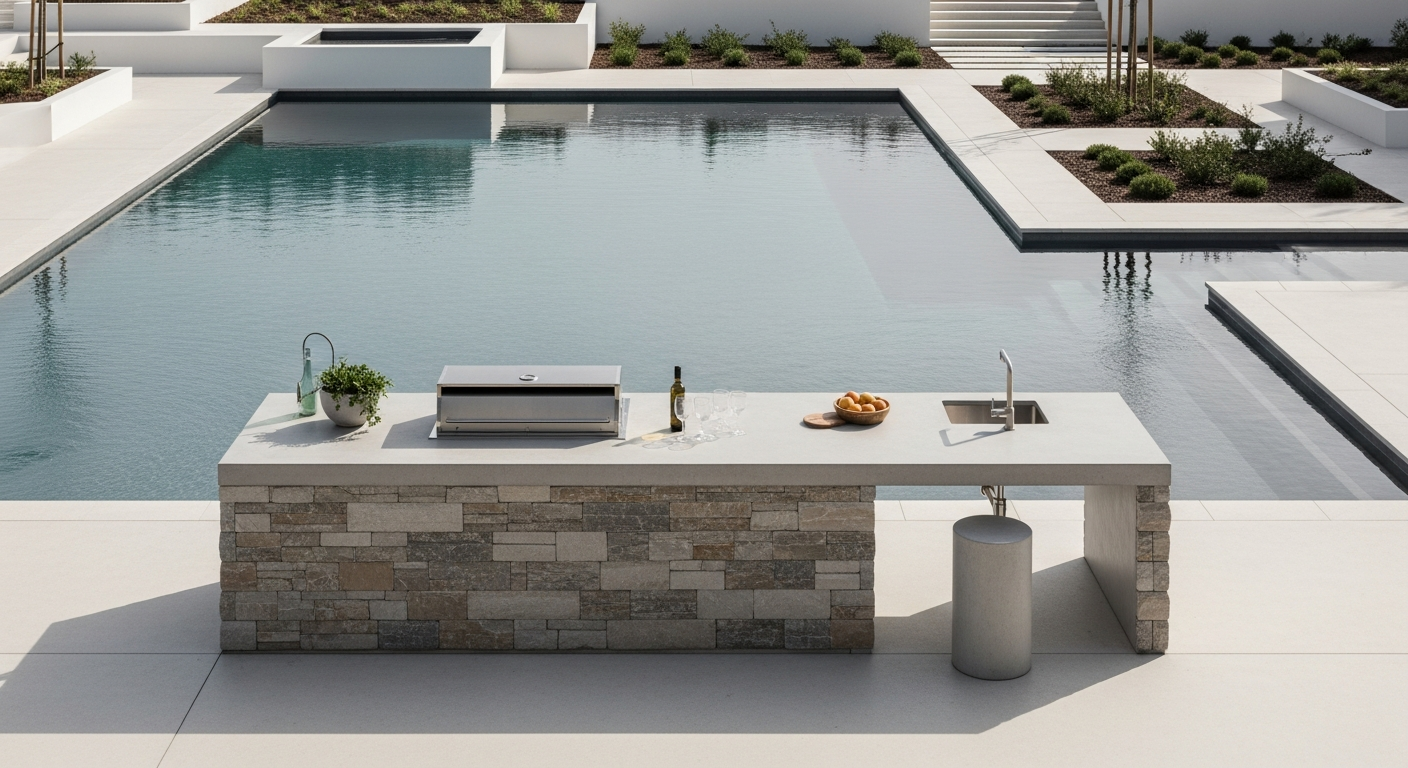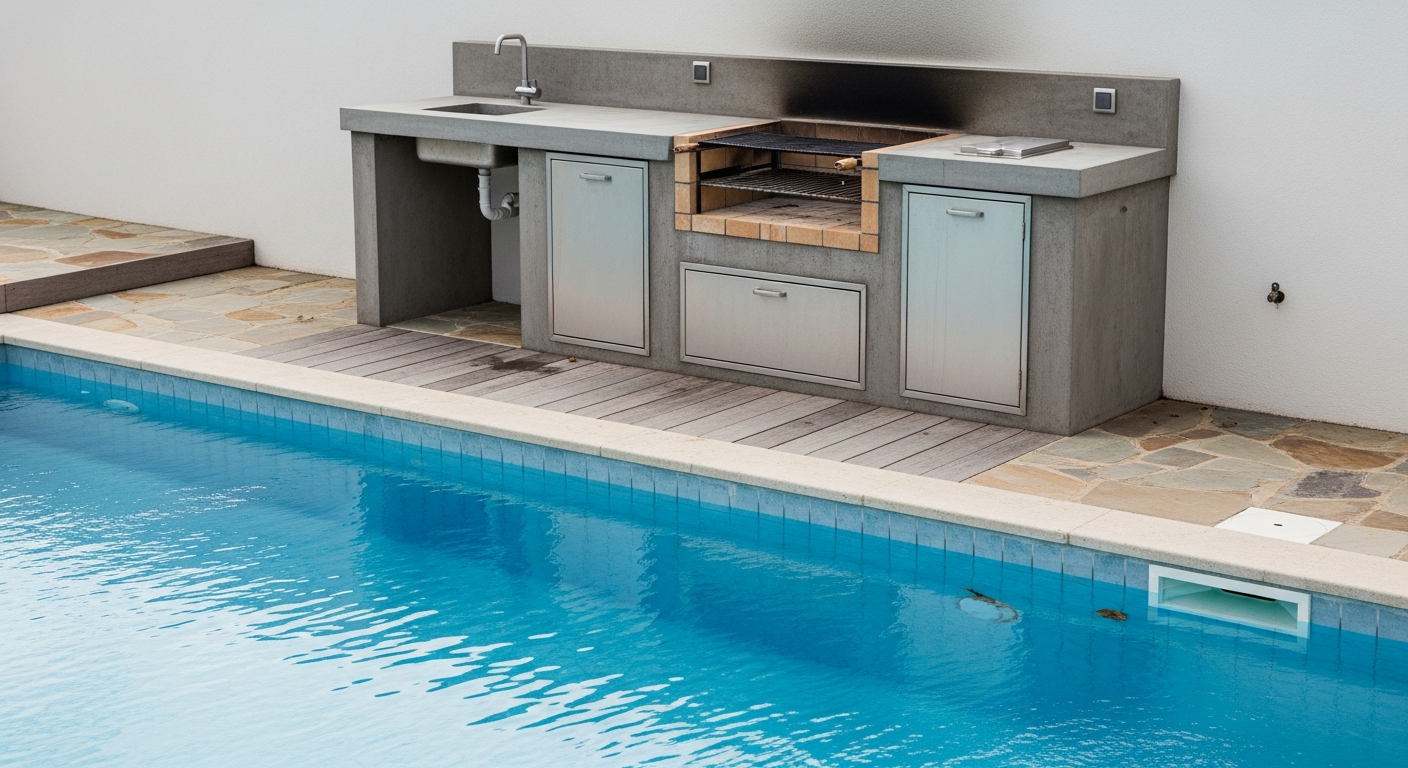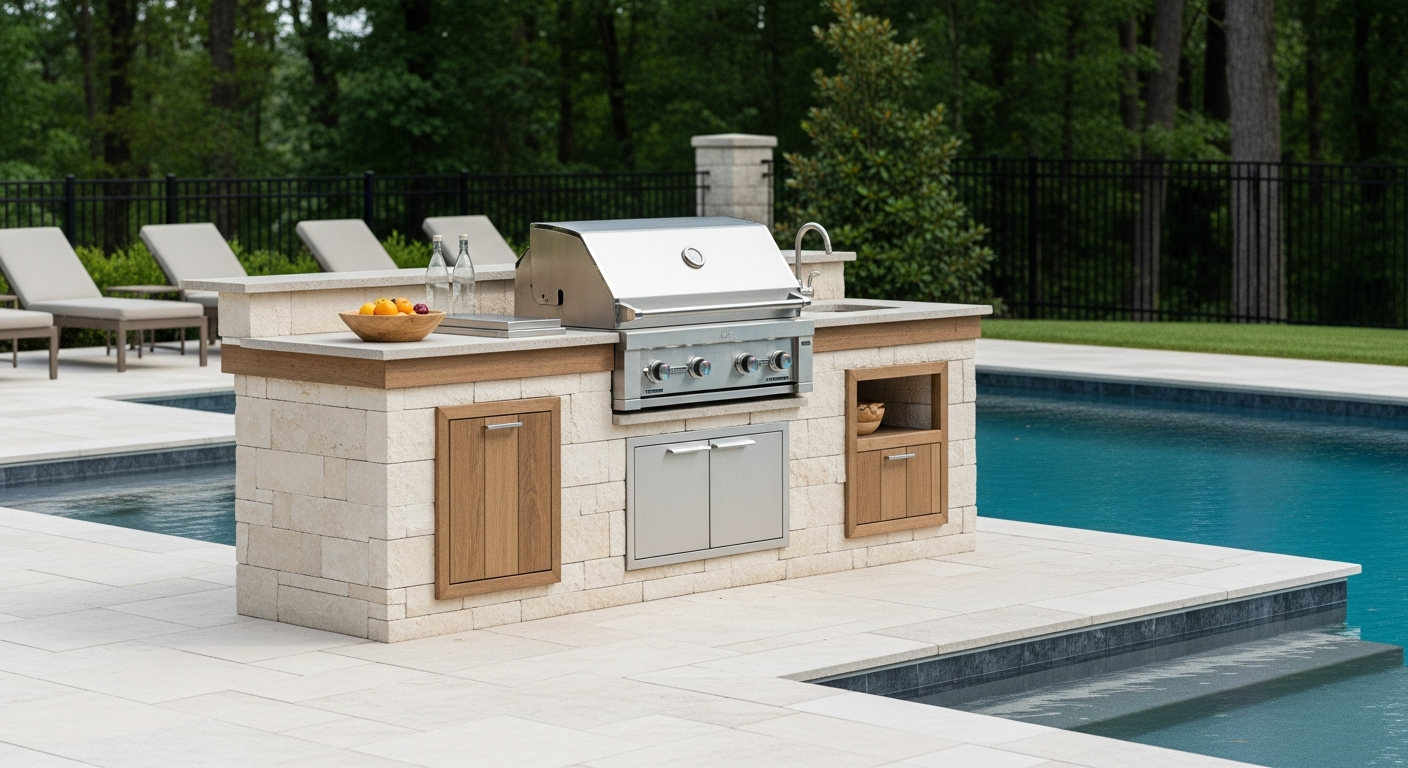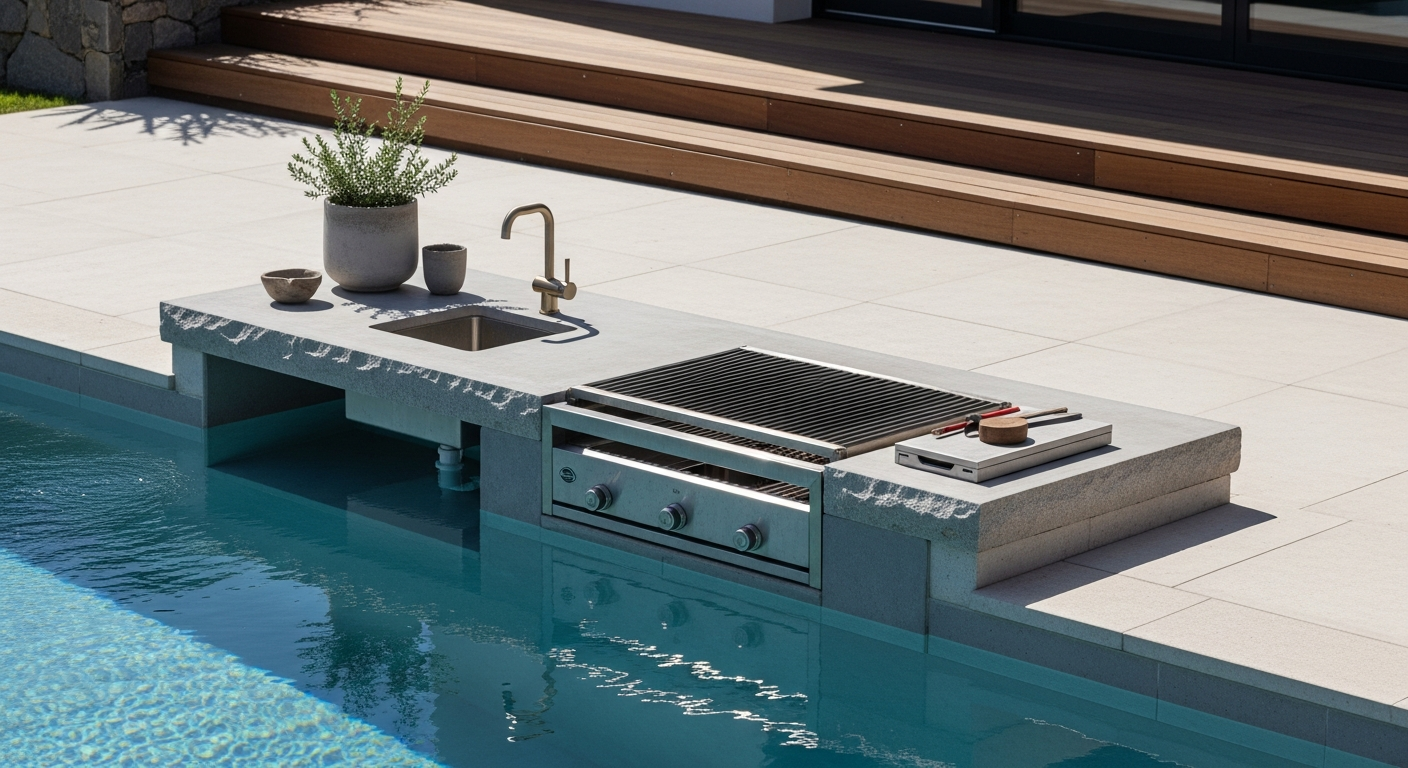
Outdoor Cooking Island Osceola County: A Framework for 20+ Year Structural Integrity
Most outdoor cooking islands in Osceola County fail within a decade, and it's rarely the grill's fault. The primary culprit is a fundamental misunderstanding of our subtropical climate's impact on construction materials. After deconstructing dozens of failing projects from Kissimmee to Harmony, I pinpointed the critical failure point: the structural frame and its interaction with constant humidity, intense UV radiation, and torrential rain. My approach bypasses generic designs, focusing instead on a material-first methodology that guarantees resilience against Osceola’s specific environmental stressors. It’s about building a core structure that won’t warp, rust, or degrade, ensuring the beautiful exterior you invested in doesn’t end up on a crumbling foundation. This isn't just about aesthetics; it's about creating a permanent, high-value addition to your property.The Core Diagnostic: Why Standard Builds Fail in Central Florida
The biggest mistake I see in Osceola County homes, especially in newer developments around Lake Nona and St. Cloud, is the use of wood or steel-stud framing suited for interior construction. A client in Celebration had a gorgeous granite-topped island built with a pressure-treated wood frame. Within three years, the humidity caused it to swell and rot from the inside out, cracking the expensive stone. This is an avoidable and costly error. My proprietary methodology, the Osceola Climate-Proofing Framework, is built on one principle: the island's skeleton must be impervious to moisture and pests. This means completely eliminating organic materials and low-grade metals from the core structure. The entire design process starts with materials scientifically proven to withstand our environment, not with the countertop finish or appliance selection.Technical Material and Structural Specifications
The success of an outdoor kitchen hinges on a few non-negotiable technical choices. I insist on a hierarchy of materials based on long-term performance data, not just initial cost.- Structural Frame: The only two viable options are welded aluminum or galvanized steel framing. Aluminum is lightweight and will never rust. Galvanized steel offers immense strength, critical for supporting heavy concrete or stone countertops. Anything less, like wood or basic steel studs, is a planned failure.
- Hardware and Fasteners: Every screw, bolt, and bracket must be 304-grade stainless steel. Using cheaper zinc-plated or galvanized fasteners is a critical error I've seen on multiple projects. They will bleed rust stains through your beautiful stucco or stone finish within the first rainy season.
- Countertop Selection: While granite is popular, its porosity requires yearly sealing to prevent staining and moisture absorption. For a lower-maintenance, higher-durability option, I often specify sintered stone or Dekton. These materials are non-porous, UV-stable, and resistant to thermal shock—perfect for withstanding a sudden Kissimmee thunderstorm after a hot afternoon.
Implementation Protocol: A Step-by-Step Breakdown
Executing the build requires precision. A flawless design with sloppy execution is worthless. I follow a strict sequence to ensure structural integrity at every stage.- Site & Slab Verification: Before any work begins, I assess the concrete lanai slab. Is it properly cured and thick enough? I look for cracks or signs of shifting. The island must be anchored to a stable foundation using epoxy-anchored bolts, not simple concrete screws which can loosen over time.
- Frame Assembly: The aluminum or steel frame is assembled with precision welds or stainless steel fasteners. We ensure it's perfectly level and square. This step is critical; an uneven frame will transfer stress directly to the countertop, risking cracks.
- Utility Integration: All electrical conduits must be exterior-grade, and I specify schedule 40 PVC to protect wiring from moisture. Gas lines are pressure-tested for leaks twice—once after installation and again before the cladding is installed.
- Cladding & Ventilation: A cement board like HardieBacker is attached to the frame. This creates a stable, water-resistant substrate for the final finish (stone, stucco, etc.). Crucially, we install purpose-built ventilation panels. This non-negotiable safety step ensures that any minor gas leaks from propane or natural gas can dissipate, preventing dangerous gas buildup within the island cavity.
Precision Adjustments for Peak Performance and Safety
The difference between a good build and a great one is in the details that address subtle, long-term risks. These are the final checks that I perform personally. The single most overlooked safety feature is proper airflow. I mandate a minimum of two vents on opposite sides of the cabinet housing any gas appliance to ensure passive cross-ventilation. For high-output grills, I calculate the required square inches of venting based on the appliance's BTU rating—a step most builders skip. Furthermore, every cutout for appliances, sinks, and outlets is sealed with a high-temperature, UV-stable silicone caulk to create a waterproof barrier, preventing water from penetrating the island's core. Now that you understand the material science, have you considered how the specific alloy of your grill's housing will react with your 304-grade stainless steel access doors over a decade of Osceola's heat and humidity?Written by

Tags
patio kitchen island
grill islands for sale
l shaped grill island
outdoor kitchen grill island
outdoor island