Outdoor Grill Island Sarasota: A Framework for 30-Year Structural Integrity Against Salt Air
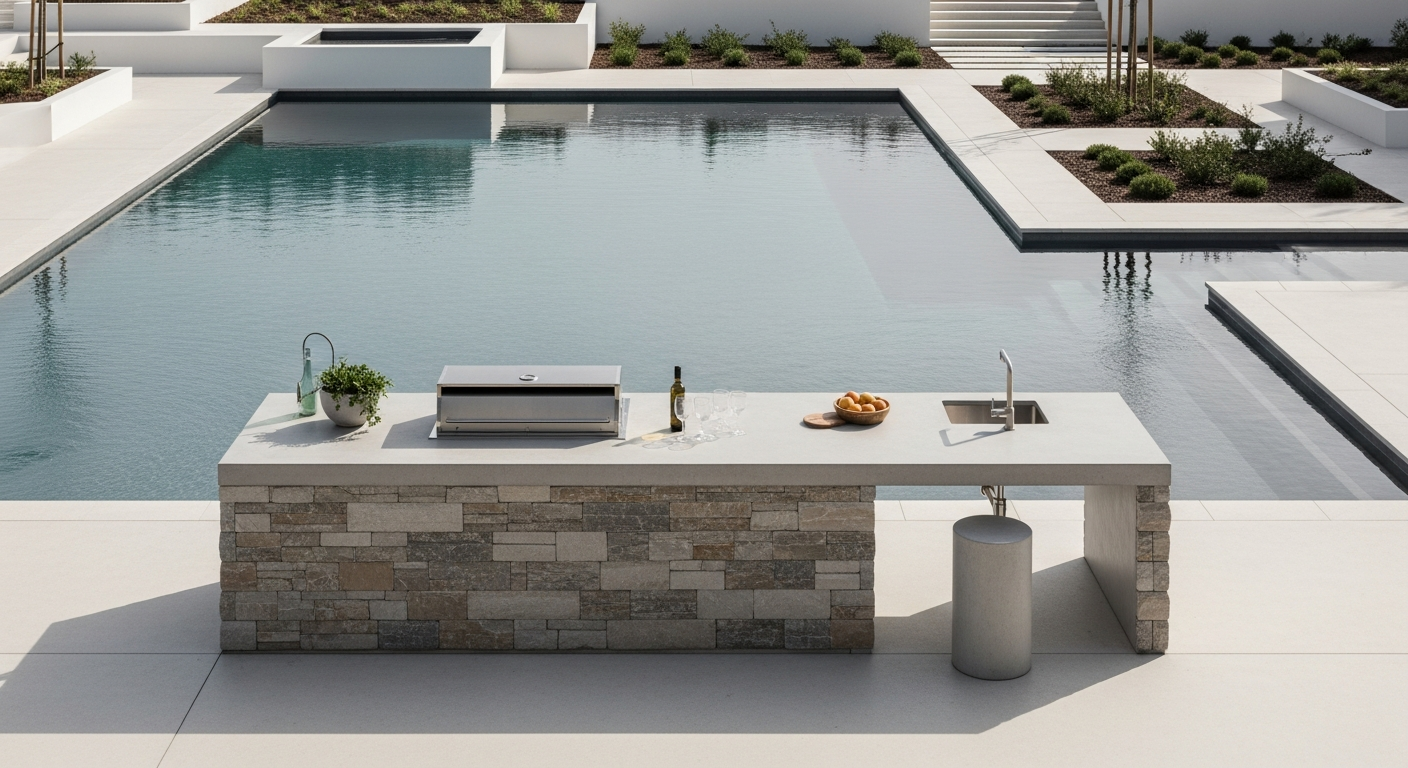
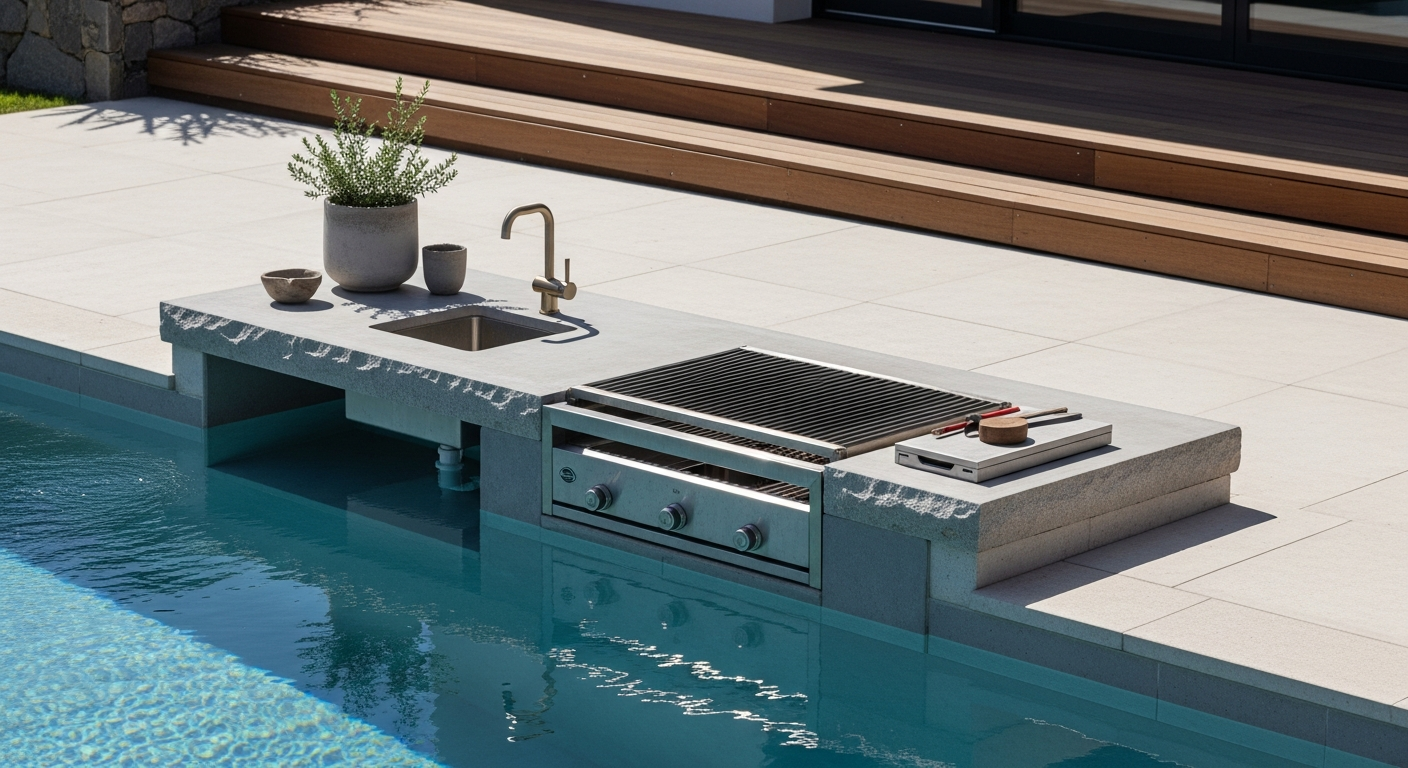
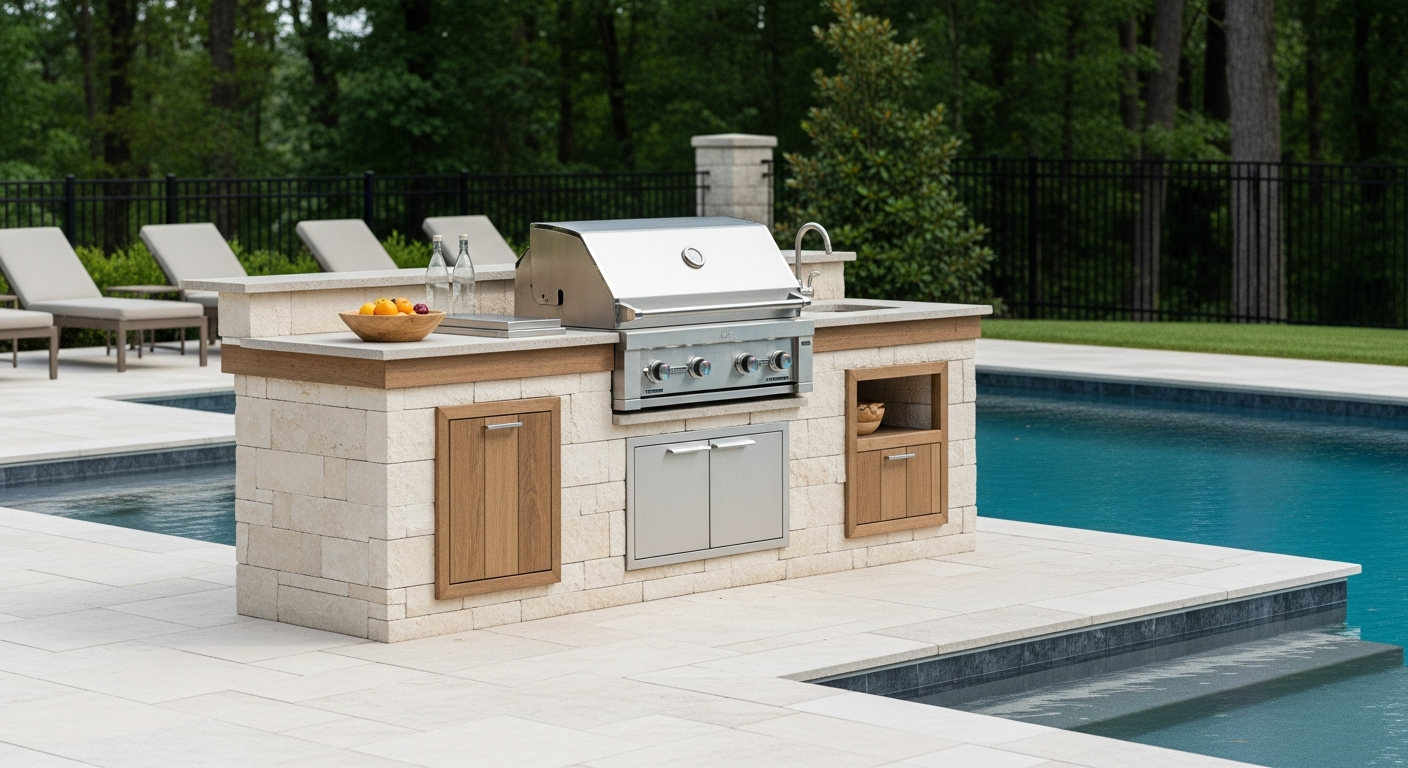
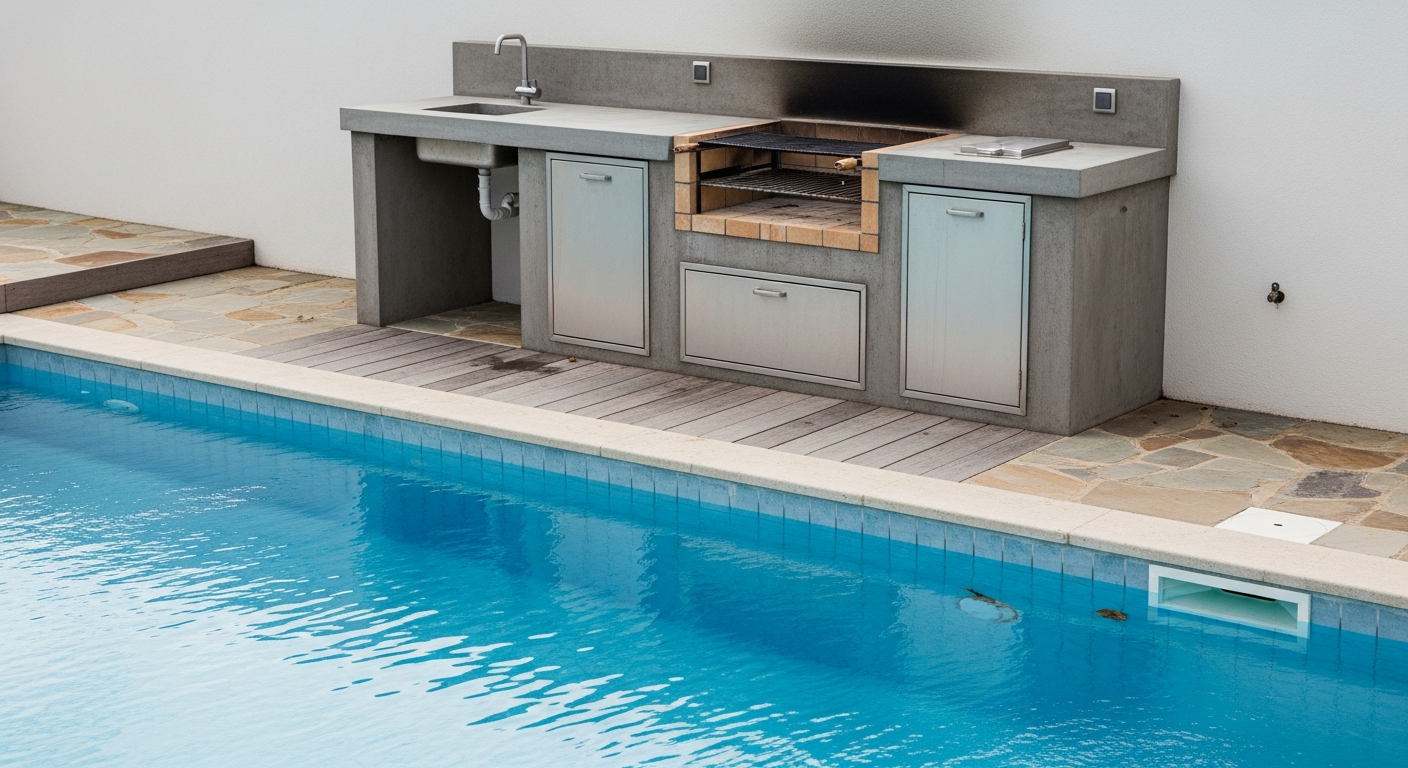
Building an outdoor grill island in Sarasota isn't about picking the fanciest grill. I learned this the hard way on a waterfront project in Bird Key where a client's two-year-old island, built with a standard galvanized steel frame, was already showing significant rust bleed-through on the stucco finish. The salt air had completely compromised the structure from the inside out. That costly failure forced me to develop a new methodology focused entirely on material science and climate-specific engineering. My approach isn't a simple checklist; it's a comprehensive framework that prioritizes the island's core structure and envelope to prevent the exact kind of degradation I witnessed. The goal is to build an asset that withstands Sarasota's unique combination of intense UV radiation, high humidity, and corrosive salt spray, ensuring its structural integrity for decades, not just a few seasons. This is about building it once and building it right.My Coastal Durability Matrix: A Diagnostic Method
Before any design is sketched, I apply what I call the "Coastal Durability Matrix." This is my proprietary diagnostic tool for assessing and specifying materials based on a property's specific microclimate within Sarasota. An island for a newer home in Lakewood Ranch, for instance, faces a different primary challenge (intense, direct sun) than one on Siesta Key (constant, direct salt spray). The matrix forces a decision on four critical components, rejecting common but flawed industry standards.Technical Deep Dive into Material Selection
My matrix has non-negotiable standards for each layer of the island. I've seen too many projects fail because one weak link compromised the entire system.- Framing: The absolute biggest mistake I see is the use of galvanized steel studs. They are not sufficient for our coastal environment. My protocol demands either welded 6061-T6 aluminum tubing or, for maximum longevity, a 304-grade stainless steel frame. Aluminum is lighter and highly corrosion-resistant, while stainless steel is the pinnacle of strength and durability. The marginal increase in upfront cost prevents a complete structural rebuild in 5-7 years.
- Cladding Substrate: Standard drywall or green board is a recipe for mold. I exclusively use a cement backer board, like HardieBacker, with every seam taped and sealed with a liquid-applied waterproofing membrane before any veneer is installed. This creates a monolithic, waterproof box, protecting the frame.
- Countertops: Granite is a popular choice, but its porosity is a liability in our humid climate, leading to staining and mildew if not sealed meticulously every year. I steer my clients toward quartzite or sintered stone like Dekton. These materials are virtually non-porous, highly resistant to UV fading, and can withstand the thermal shock of a hot pan without issue.
- Appliance Grade: Not all "stainless steel" is created equal. For any property west of I-75, I specify appliances made from 316-grade stainless steel. This marine-grade alloy includes molybdenum, which provides a dramatic increase in resistance to chloride corrosion from salt air, preventing the pitting and rust that plagues lower-grade 304 stainless.
The Implementation Protocol: From Slab to Service
Once the materials are specified via the matrix, the build process follows a strict protocol. This is where precision prevents future failures. My team follows this sequence without deviation.- Site & Foundation Analysis: I first assess the foundation. Is it a solid concrete slab or interlocking pavers? For paver patios, which are common in many Sarasota lanais, we must first pour a dedicated reinforced concrete footer to prevent the island's weight from causing sagging and eventual structural cracks.
- Frame Fabrication: The frame is constructed with precision cuts and welds. All welds on aluminum frames are TIG (Tungsten Inert Gas) welded for the cleanest, strongest joints. We incorporate pre-measured cutouts for all appliances, vents, and utility lines to ensure a perfect fit and minimize on-site modifications.
- Utility Rough-In & Waterproofing: All electrical wiring is run through flexible, liquid-tight conduit. Gas lines are pressure-tested for 24 hours before being enclosed. After the utility inspection, the waterproofing membrane is applied to the entire cement board substrate. This is a critical stage that cannot be rushed.
- Veneer and Countertop Installation: We use a high-strength, polymer-modified thin-set mortar for adhering the stone or porcelain veneer. The countertop is set on a bed of 100% silicone adhesive, which creates a waterproof bond while allowing for thermal expansion and contraction.
Precision Adjustments and Quality Control
The final 5% of the work is what guarantees a 100/100 result. These are the small, precise details that most builders overlook.- Mandatory Ventilation: I mandate at least two vents on opposite sides of the island cabinet, creating critical cross-flow ventilation. This is a non-negotiable safety standard to prevent propane or natural gas from accumulating inside the sealed structure.
- Sealant and Gasketing: Every penetration point—where the grill drops in, around the sink, access doors—is sealed with marine-grade silicone sealant. Furthermore, I install a high-temperature gasket around the grill cutout to buffer the countertop material from the grill's focused heat, preventing long-term thermal stress fractures.
- Electrical Safety Protocol: All outlets must be GFCI-protected and installed in weatherproof, "in-use" bubble covers. This allows items to remain plugged in even during a typical Sarasota afternoon rain shower without tripping the breaker or creating a safety hazard.
Written by

Tags
prefabricated bbq islands
modular outdoor grill islands
prefab barbeque islands
prefabricated outdoor kitchen islands
outdoor kitchen island