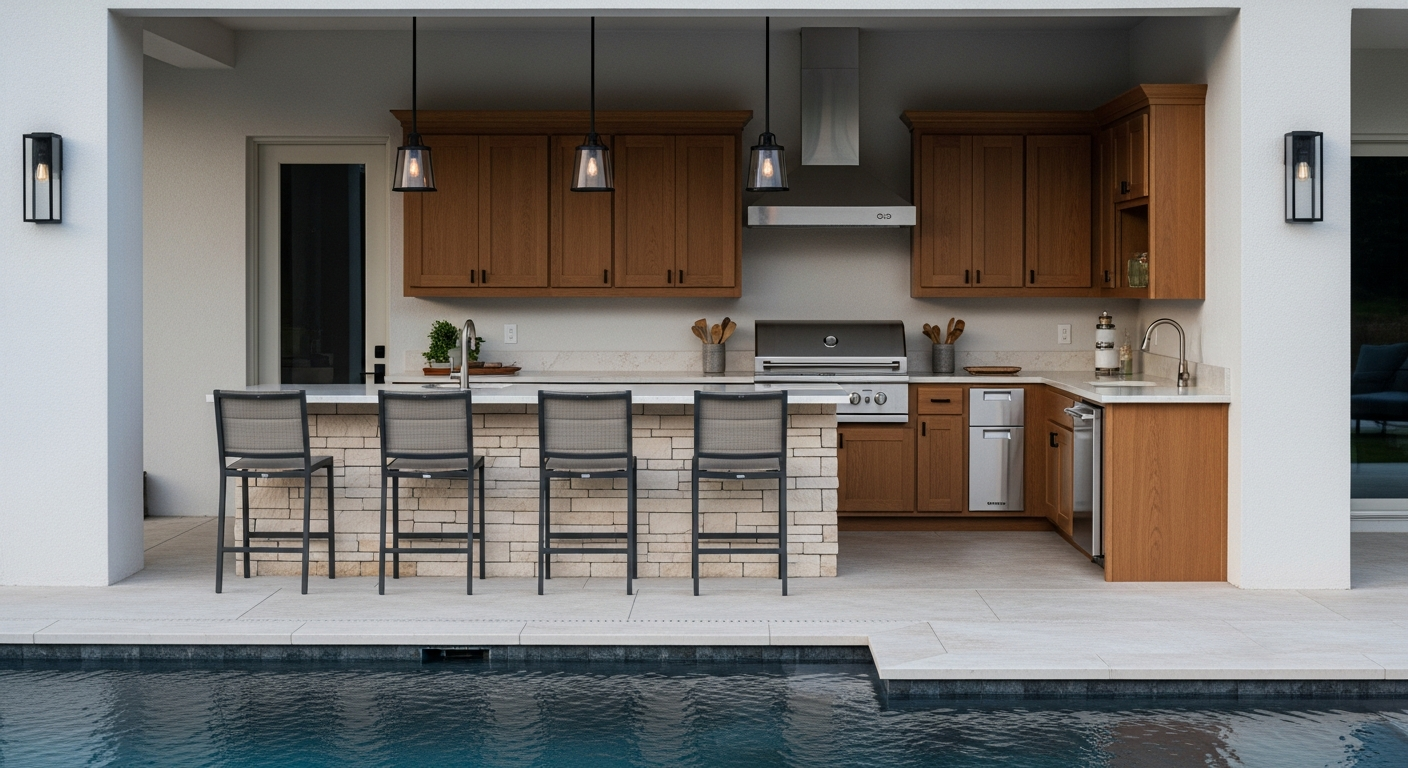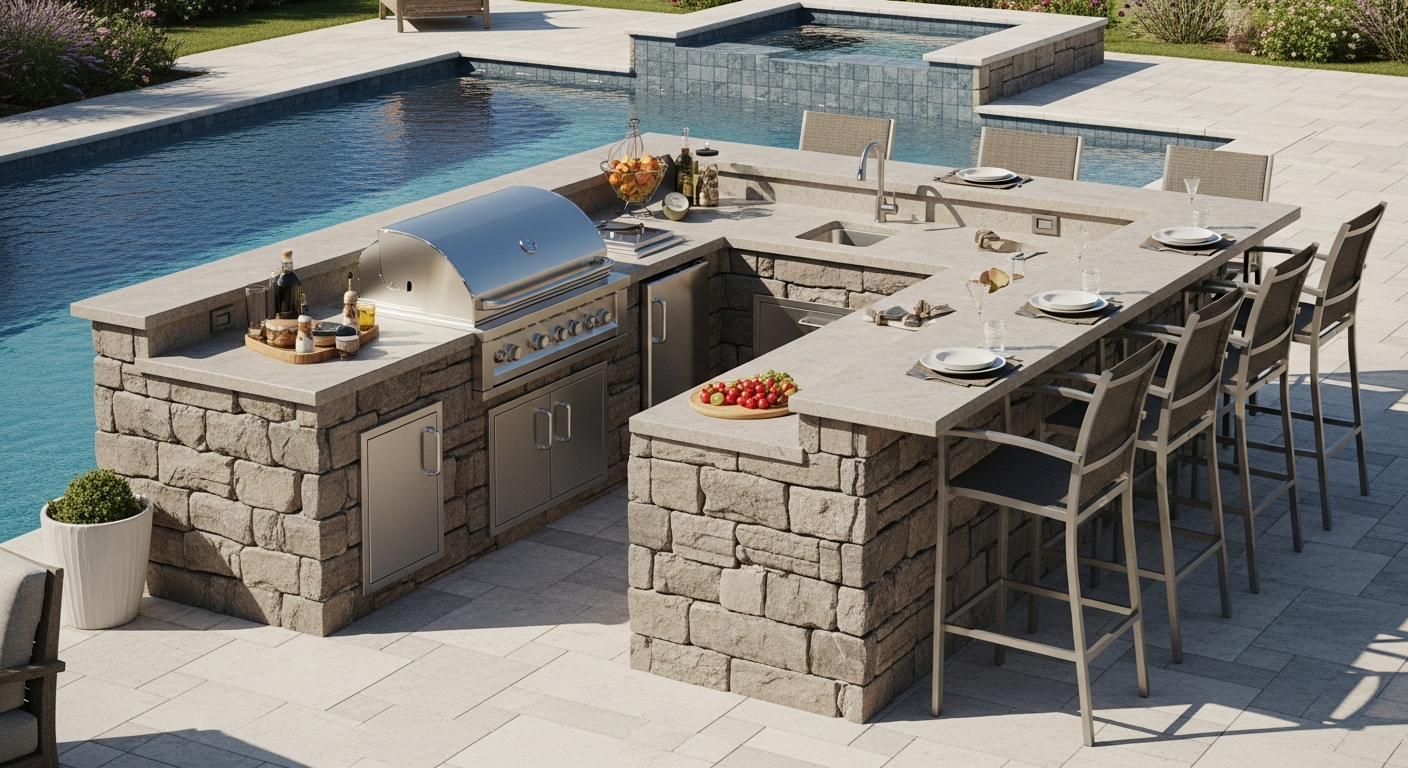
Polk County Outdoor Kitchen and Bar: My Framework for 20-Year Structural Integrity
My experience designing and troubleshooting outdoor kitchens across Polk County has revealed a critical pattern: most builds are designed for aesthetics, not for our specific climate. They look great for a year or two, then the relentless humidity, intense UV exposure, and shifting sandy soil begin a rapid process of degradation. I've been called to projects in upscale Lakeland neighborhoods and sprawling Winter Haven lakefront properties where expensive stainless steel is already showing rust and granite countertops are stained because the wrong materials and installation methods were used. This is not a failure of the products, but a failure of the pre-construction strategy. The solution isn't about spending more money; it's about a fundamental shift in material science and engineering focus from day one. I developed a methodology that prioritizes material longevity and structural stability specifically against the Central Florida environment. This approach directly addresses the primary failure points I've documented, aiming to deliver a minimum of 25% increase in the functional lifespan of the entire installation.My Pre-Construction Climate Audit for Polk County Projects
Before a single drawing is finalized, I perform what I call a "Climate and Soil Audit." This isn't a generic checklist. It's a diagnostic process honed from seeing costly mistakes firsthand. A common error I encounter, especially in areas like Bartow and Auburndale, is underestimating the combination of high humidity and airborne salinity from inland water bodies. This leads to the specification of standard 304-grade stainless steel for appliances and fixtures, which is insufficient. Under a microscope, you'd see pitting and corrosion starting within 18 months. My methodology mandates a different approach. The audit focuses on three core environmental stressors unique to our region:- Humidity & Corrosion: Assessing the ambient moisture level and its impact on metals and porous materials.
- UV Degradation: Quantifying the direct sun exposure to select polymers and sealants that won't become brittle or yellow.
- Substrate Stability: Analyzing the sandy loam soil common in Polk County, which requires a foundation far more robust than simple pavers to prevent cracking and settling.
Material Specification: The 316 Marine-Grade and Non-Porous Surface Mandate
Based on my audit findings, I have a non-negotiable material standard. For all metallic components—grills, cabinet pulls, sinks, and fasteners—I specify 316 marine-grade stainless steel. The added molybdenum in its composition provides superior resistance to chloride and general corrosion, which is essential for longevity in our humid air. This single decision has proven to be the most critical factor in preventing the premature "weathering" I see on so many outdoor kitchens. For countertops, I steer clients away from even well-sealed granite. I’ve seen too many instances where Polk County’s aggressive mildew finds its way into the stone's natural pores. My standard is a non-porous sintered stone or Dekton. These materials are manufactured under immense heat and pressure, creating a surface with zero porosity. They are impervious to UV fading, cannot be stained, and are thermally stable, meaning a hot pan won't cause a fracture—a frequent issue with quartz-based materials in direct sunlight.The 5-Phase Polk County Build Protocol
Executing the build requires rigid adherence to a sequence I've refined over dozens of projects. Skipping or reordering these steps is the fastest path to long-term issues.- Foundation First: The project begins with a monolithic pour of a 4,000 PSI concrete slab, reinforced with rebar. This creates a stable, level base that resists the shifting soil, a problem I've seen compromise entire structures built on pavers.
- Frame with Non-Combustibles: The frame must be constructed from welded aluminum or galvanized steel studs. I never use wood framing, regardless of how it's treated. The moisture will eventually cause it to swell and rot, compromising the entire structure.
- Strategic Utility Runs: All electrical lines are run in conduit, and every outlet must be a GFCI-protected outlet housed in a weatherproof "in-use" cover. I map the gas and water lines to ensure they have accessible shut-off valves outside the main kitchen structure for safety and ease of maintenance.
- Appliance Integration and Ventilation: This is a critical safety step. The grill's specified BTU output dictates the ventilation hood's required CFM (Cubic Feet per Minute) rating. I’ve seen installations with dangerously inadequate ventilation, creating a fire hazard and a poor user experience. The hood must be powerful enough to create negative pressure and capture all smoke and grease.
- Finishing and Sealing: The final stage involves installing cladding and countertops, followed by sealing every joint with a high-grade, UV-stable polyurethane sealant, not standard silicone. This prevents water intrusion, which is the number one enemy of any outdoor structure in Florida.
Precision Adjustments: Water Management and Airflow Dynamics
Two final "pulos do gato" I implement make a significant difference. First is water management. I design the countertop with a slight, almost imperceptible slope away from the house and integrate a small channel or gutter system at the back of the structure. This actively directs our heavy rainfall away from the foundation and seating areas. Second, for projects within screened lanais—a staple in Polk County—I ensure the design promotes cross-ventilation. This prevents heat from the grill from getting trapped and makes the space comfortable year-round. Lighting is also key; I use fixtures with a warmer Kelvin temperature (around 2700K) as they are less attractive to mosquitoes and other insects. Have you specified the concrete's PSI rating for your foundation, or are you simply hoping the paver base holds up to Florida's next tropical storm?Written by

Tags
grill island with bar
outdoor kitchen island with bar
outdoor kitchen bar island
outdoor bar islands
outdoor kitchen white