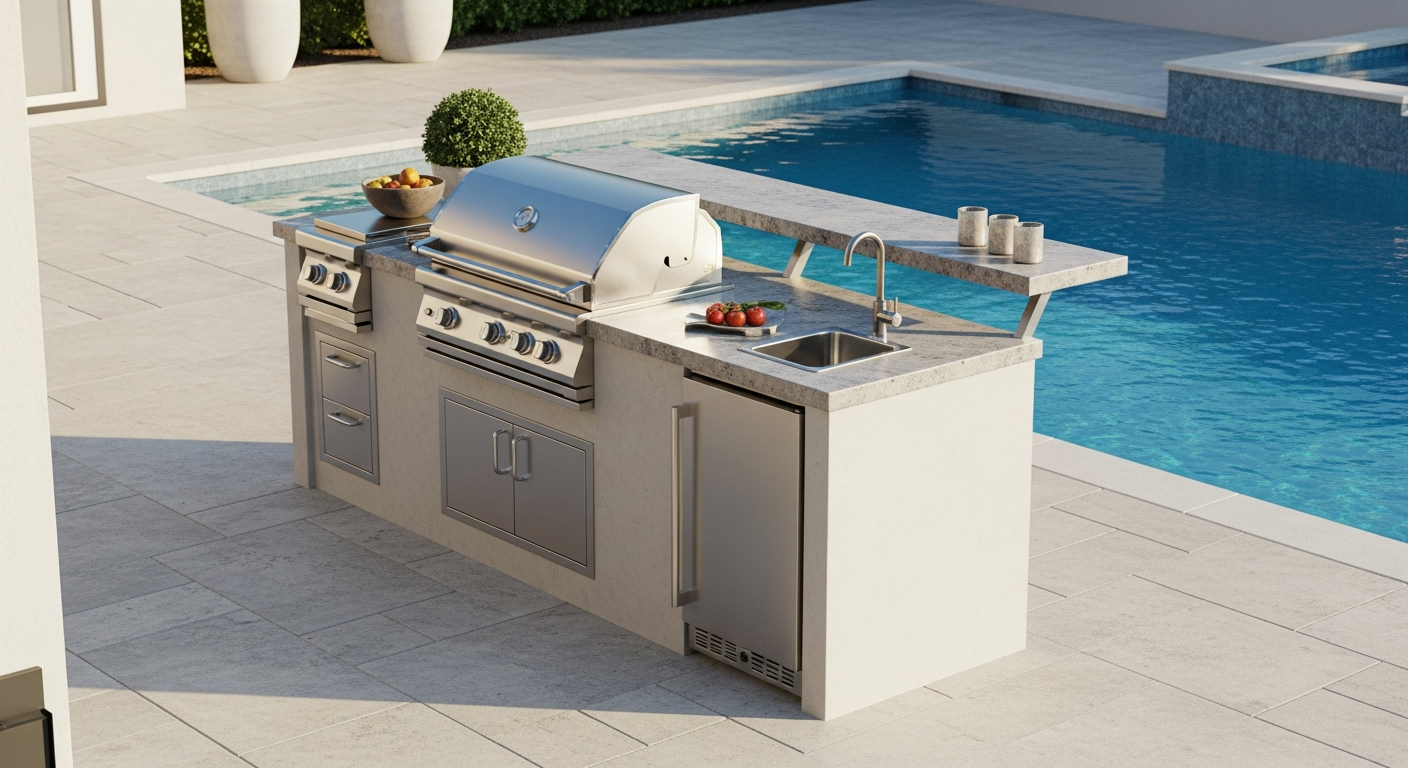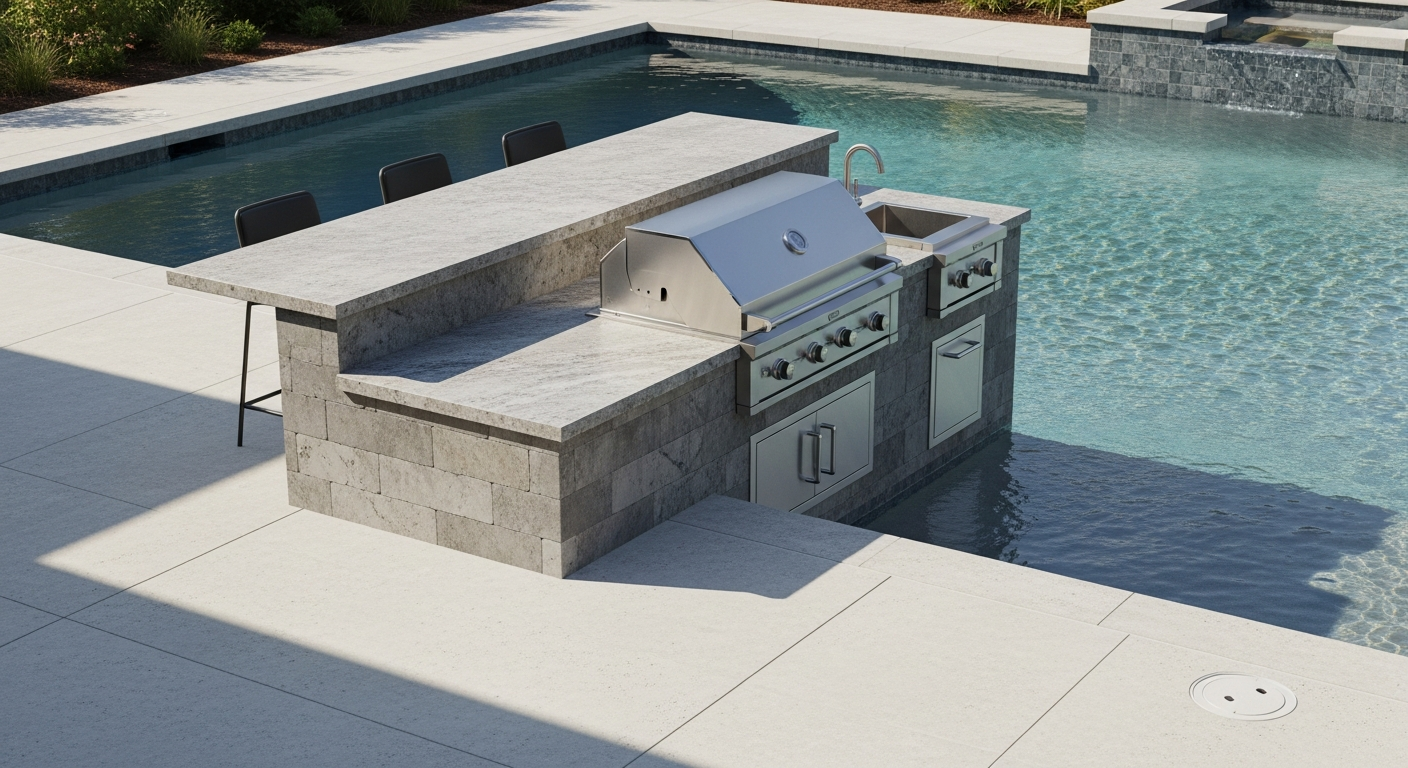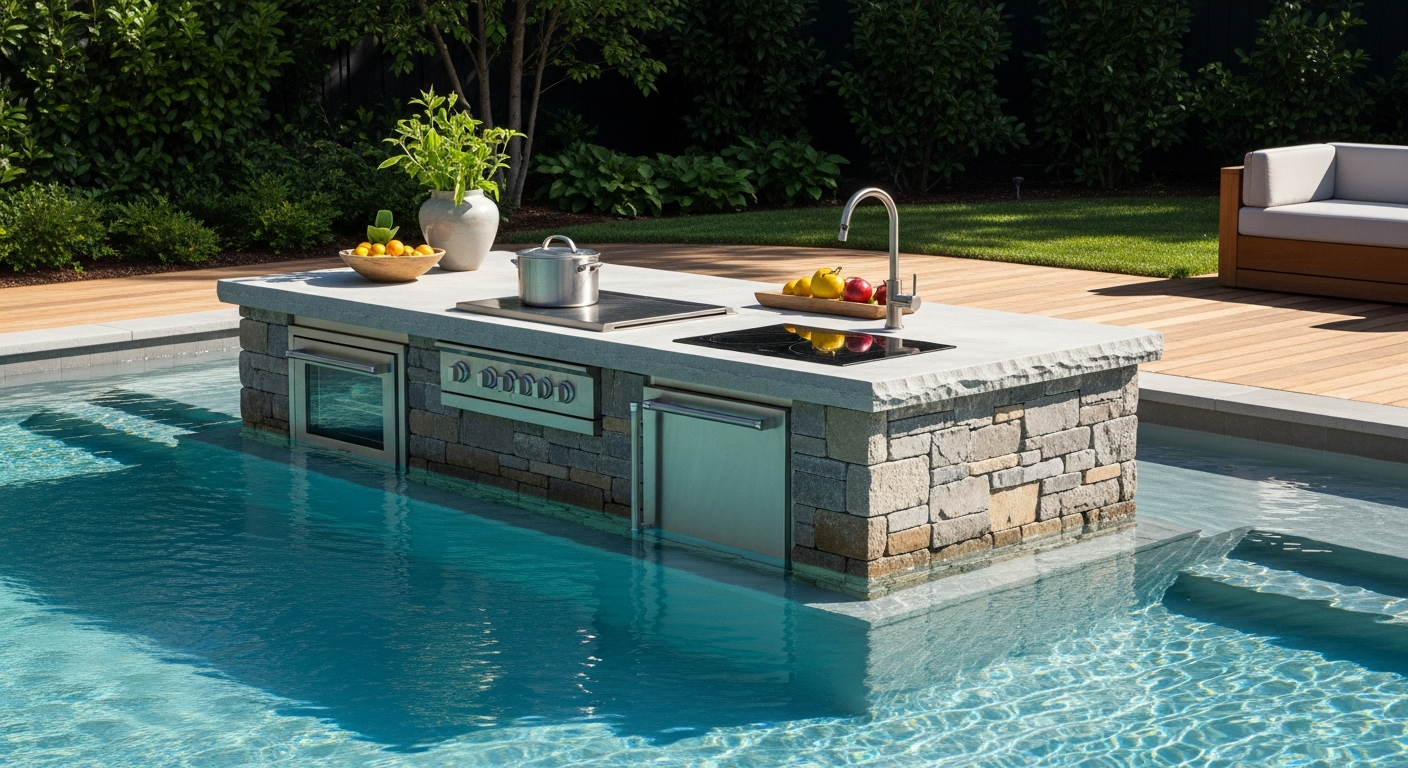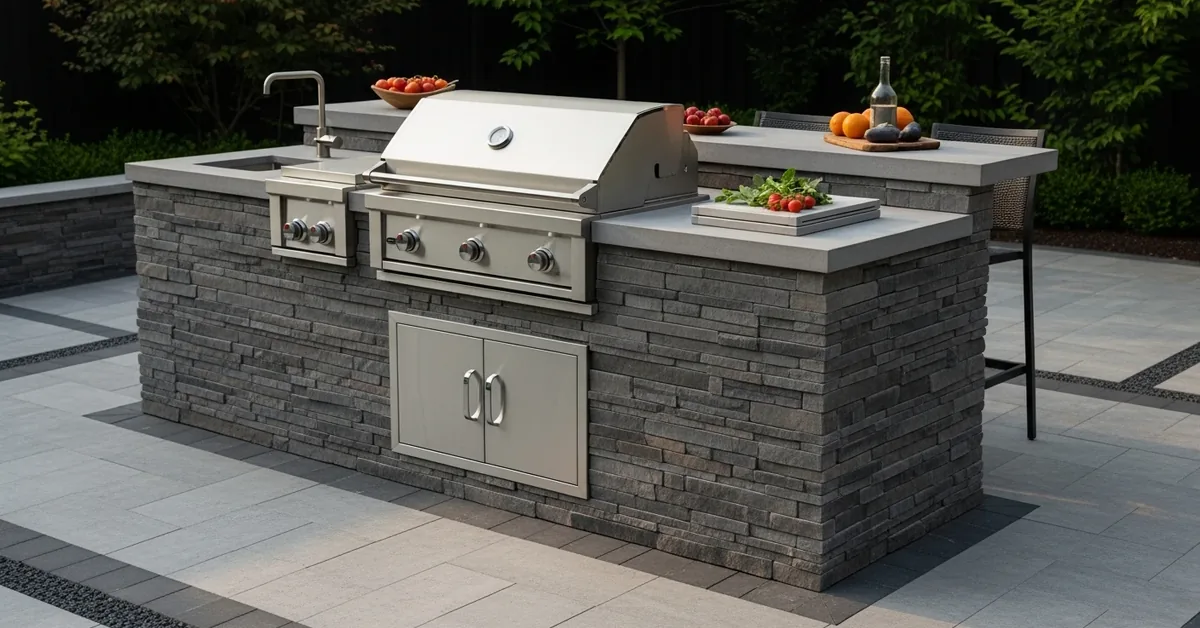
Outdoor Kitchen Grill Island Manatee County: My Framework for a 20-Year Corrosion-Proof Lifespan
After designing and overseeing dozens of outdoor kitchen projects here in Manatee County, from sprawling estates in The Concession to waterfront homes on Anna Maria Island, I’ve seen one catastrophic, recurring failure: material degradation. I’m often called to fix islands that are literally crumbling after just five years, a direct result of contractors using interior-grade logic in a coastal, high-humidity environment. The combination of salty air, intense UV radiation, and torrential summer rains creates a stress test that standard construction simply cannot pass. My entire approach is built on a principle I call "Marine-Grade Transposition." This isn't just about picking "outdoor-rated" materials; it's a specific methodology for selecting and assembling components as if you were building for a saltwater vessel. This framework preemptively solves the issues of galvanic corrosion, moisture wicking, and UV-induced fatigue, which I’ve identified as the three primary failure points in our local climate. The result isn't just a beautiful grill island; it's a permanent outdoor appliance engineered for decades of use.The Salty Air Stress Test: My Diagnostic Protocol for Coastal Builds
Before a single drawing is made, my first step is a site-specific environmental audit. A project in Parrish faces different challenges than one on Longboat Key, and the diagnostic must reflect that. The most common mistake I see is a "one-size-fits-all" approach to material selection. For a large-scale project in Lakewood Ranch, the initial contractor specified a galvanized steel frame. I immediately flagged this; while fine for a dry climate, in our humidity, any scratch in the galvanization becomes a starting point for aggressive rust that expands and cracks the exterior cladding within 36 months. My protocol focuses on identifying these hidden failure points before they are built into the structure.Material Forensics: Selecting Marine-Grade Components
This is where the technical details make or break the project's longevity. My material specification process is non-negotiable and based on empirical data from years of local projects.- Structural Frame: I exclusively specify either welded 1.5-inch 6061-T6 aluminum tubing or concrete masonry units (CMU). Wood framing, even pressure-treated, will eventually succumb to moisture and termites. The aluminum frame provides immense strength without the risk of oxidation that plagues steel.
- Hardware and Fasteners: This is a critical detail. Every single screw, hinge, and drawer slide must be 316L marine-grade stainless steel. Standard 304 stainless steel, often marketed as "outdoor grade," will develop surface rust and fail when in constant contact with the salt and moisture prevalent from Bradenton westward to the coast.
- Cabinetry and Doors: I steer clients away from any wood or wood-composite materials. My go-to is high-density polyethylene (HDPE), a color-through polymer that is impervious to moisture, will not delaminate, and is UV-stable. For a more high-end finish, powder-coated aluminum doors offer a sleek look without the risk of corrosion.
- Countertops: Porous stones are a liability here. I recommend high-density, low-porosity materials like sealed quartzite or a high-quality granite. The key is the sealant; it must be a silane/siloxane-based impregnating sealer, reapplied every 18-24 months, to prevent our humid air from fostering mildew within the stone itself.
Blueprint to Build: My Phased Implementation for Manatee County Islands
A flawless design means nothing without methodical execution. My implementation process is broken down into four distinct phases, each with its own quality control checkpoints. This ensures that the underlying engineering is as sound as the visible finish.- Phase One: Foundation and Framing. We start with a proper reinforced concrete footer, not just a slab paver. The frame, whether CMU or my preferred welded aluminum, is then anchored directly to the footer. I personally inspect every weld on an aluminum frame for full penetration to ensure it can withstand ground shifting and hurricane-force winds.
- Phase Two: Utility Integration. All electrical runs must be in a waterproof conduit, terminating in GFCI-protected, in-use "bubble" covered outlets. For gas grills, I mandate a dedicated shut-off valve that is easily accessible and specify brass fittings over steel to prevent seizing from corrosion.
- Phase Three: Cladding and Surfacing. Before any stone veneer or stucco is applied, the frame is wrapped with a cement board sheathing like HardieBacker, and all seams are waterproofed. This creates a critical moisture barrier, a step I've seen skipped on countless failed projects, leading to internal water damage.
- Phase Four: Appliance Installation and Sealing. Every appliance, especially the grill, must be installed with its corresponding insulated jacket if the island is constructed of combustible materials (which I avoid, but it's code). The final step is sealing all countertop seams and the backsplash junction with a 100% marine-grade silicone sealant.
The Final 5%: Sealing, Ventilation, and Long-Term Integrity Checks
The difference between a good build and an exceptional one lies in the final details. Proper ventilation is not just a suggestion; it's a safety mandate. I ensure there are at least two ventilation panels installed on opposite sides of the cabinet housing the gas grill to prevent dangerous gas buildup. After completion, I run through my proprietary 25-point QC checklist, which includes checking for a perfectly level cooking surface, ensuring a 2% drainage slope on countertops away from the house, and confirming all cabinet doors are aligned with a tolerance of less than 1/8th of an inch. These small details prevent big problems down the road. Before you approve any design, have you calculated the galvanic corrosion potential between your grill’s fasteners and the frame?Written by

Tags
outdoor grill with fridge
modern outdoor grill
bbq grill kitchen
outdoor kitchen grill
outdoor kitchen bbq grill
Outdoor Kitchen Grill Island in Manatee FL FAQ
What's the best material for my grill island countertop to withstand weather and cooking stains?
Granite or quartzite are the top choices for outdoor countertops due to their high resistance to heat, stains, and ultraviolet light degradation. While popular indoors, materials like quartz are a poor choice for outdoor use because the resins that bind the stone will yellow and break down under direct sun exposure. For a truly durable surface, a 3-centimeter thick slab of a dense natural stone like granite is ideal, as it will not crack during freeze-thaw cycles. Always ask for a sealant designed for outdoor applications to be applied, which helps prevent oil from a stray burger from becoming a permanent mark.
Does my grill island need to be vented, even if it's outside?
Yes, any grill installed in a combustible structure like a typical island must have proper ventilation to prevent heat and gas buildup. Your grill's manual will specify the minimum ventilation required, often calling for at least two vents, each with a minimum of 20 square inches of free area, placed on opposite sides for cross-flow. The critical, non-obvious risk is not just fire but a gas explosion; a small propane leak can fill the unvented cabinet, creating a bomb that can be ignited by the grill's own starter. This is a non-negotiable safety feature, not an aesthetic option.
Can I place my grill island directly on my wooden deck or patio pavers?
Placing the island on pavers is standard, but a wooden deck requires careful consideration of the structure's weight and fire safety. A typical grill island can weigh over 1,000 pounds, potentially exceeding the deck's load capacity without additional support blocking beneath. More importantly, you must use a non-combustible base like concrete backer board directly under the island frame to create a thermal break. Simply setting a metal frame on wood is a fire hazard, as radiant heat can slowly char and eventually ignite the decking over time, even without direct flame contact.
Do I need to run dedicated electrical and gas lines to my grill island?
Yes, for any built-in grill and accessories like refrigerators or lighting, you will need dedicated utility lines installed by licensed professionals. A natural gas line must be properly sized for the grill's BTU rating and buried at the code-required depth, typically 18 inches, to prevent accidental rupture. For electrical, a ground-fault circuit interrupter (GFCI) protected circuit is mandatory for all outdoor outlets to prevent shock hazards in wet conditions. Using a simple extension cord or a portable propane tank inside the cabinet are dangerous, temporary solutions that create fire and tripping risks.
What's the real difference between a drop-in grill and a freestanding one for an island?
A drop-in grill is specifically designed to be supported by the countertop, requiring a precise cutout and an insulating jacket for installation in combustible structures. A freestanding grill cannot simply have its cart removed and be placed into an island; it lacks the proper support flanges and, crucially, the required ventilation and heat shielding for a built-in application. Attempting to use a freestanding unit this way voids its warranty and creates a serious fire hazard, as the control panel and gas lines are not designed to be enclosed within a hot, unvented cabinet.
How do I prevent my stainless steel grill and doors from rusting outside?
True rust prevention depends on the grade of the stainless steel and regular cleaning, as not all stainless is created equal. Insist on components made from 304-grade stainless steel, which has a higher nickel and chromium content for superior corrosion resistance compared to the cheaper 430-grade. The non-obvious problem is that surface contaminants, like iron particles from nearby construction or steel wool, can cause even high-grade stainless to show rust spots. Clean your stainless components regularly with a dedicated stainless steel cleaner and a soft cloth, always wiping with the grain, to remove these deposits before they cause pitting.