Outdoor Kitchen Island with Bar in Lake County: A Design Protocol for 20-Year Material Longevity
I’ve seen too many ambitious outdoor kitchen projects in Lake County fail within five years. The dream of entertaining friends on a beautiful evening in Tavares gives way to the reality of rusted hardware, cracked countertops, and moldy cabinets. The core issue isn't a lack of vision; it's a fundamental misunderstanding of how our specific Central Florida climate—with its intense UV radiation and relentless humidity—wages war on building materials. My approach isn't just about aesthetics; it's a materials-first methodology designed to guarantee a 20-year structural and aesthetic lifespan. This starts by rejecting indoor-grade materials and mindsets. I once had to completely gut a two-year-old outdoor kitchen in a beautiful Mount Dora home because the contractor used standard 304-grade stainless steel for the drawers and doors. The surface was already showing significant rust pitting from the moist, lake-effect air. This is a costly and entirely preventable error. My protocol prioritizes material science and micro-climate adaptations from the very first sketch, ensuring your investment is permanent, not a recurring expense.The Zonal Flow Triad: My Diagnostic Framework for Lake County
Before a single material is chosen, I map the island's functionality using my proprietary method: the Zonal Flow Triad. Standard kitchen design often focuses on the "work triangle," but an outdoor bar introduces a critical social dynamic. My framework optimizes the island for how people actually use the space during a gathering, minimizing awkward crossovers and maximizing the host's interaction with guests. It’s about ergonomic efficiency engineered for entertainment.Material Science and Appliance Specification for Peak Performance
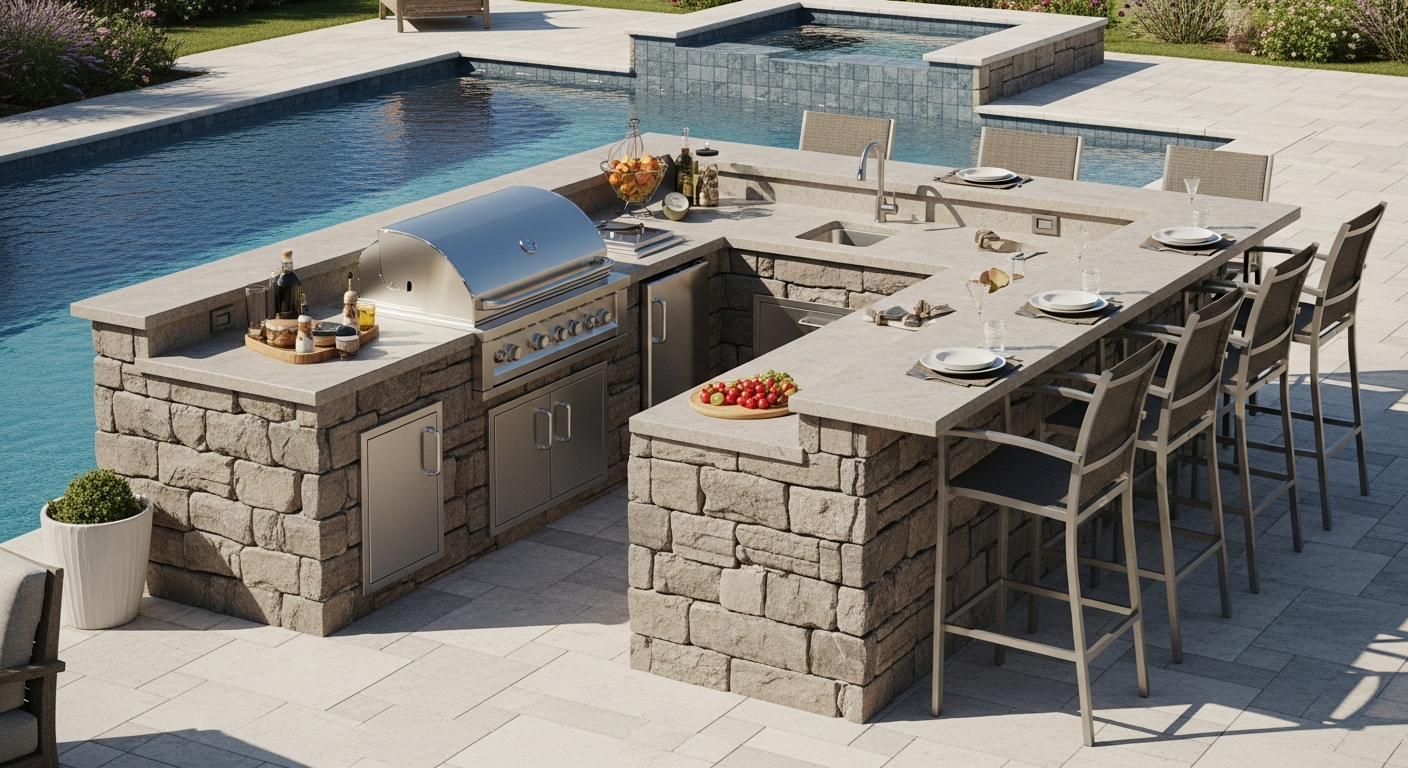
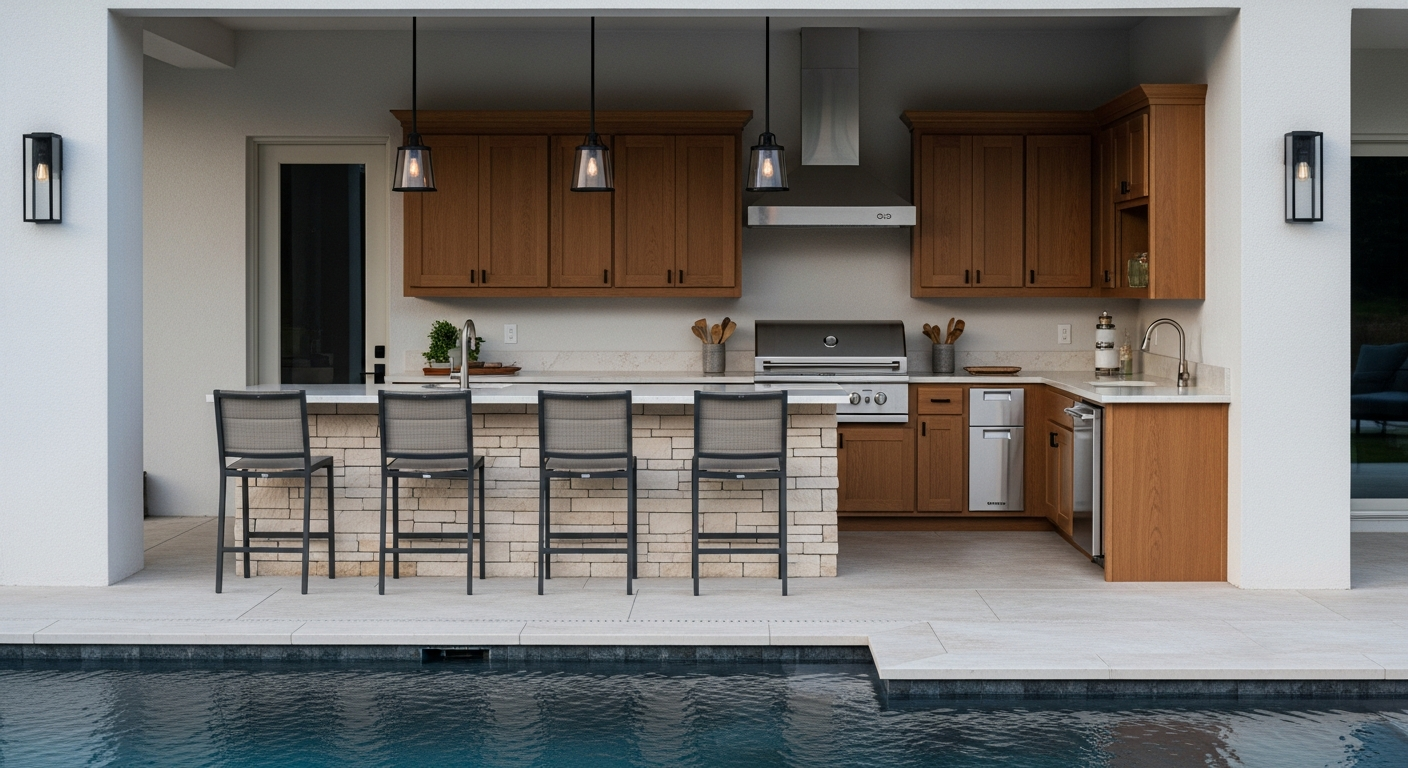
The Zonal Flow Triad directly informs material and appliance selection. Each zone has unique demands. The 'Hot Zone' (grill, side burners) requires different considerations than the 'Wet Zone' (sink, ice bin) or the 'Social Zone' (bar seating). I discovered on a large project in Clermont that placing an outdoor refrigerator on a western-facing wall without proper ventilation increased its energy consumption by nearly 30% and led to premature compressor failure. For countertops, I move clients away from porous granites that aren't sealed for outdoor use. My preference is for Dekton or properly sealed, high-PSI concrete. These can withstand the thermal shock of a hot Florida day followed by a sudden thunderstorm without cracking. For the island's structure, I exclusively use welded aluminum framing or concrete block. I've seen wood-framed islands, even with pressure-treated lumber, succumb to termites and rot in Lake County's damp soil conditions. Every single screw, hinge, and drawer slide must be 316L marine-grade stainless steel to prevent corrosion.The 5-Phase Implementation Blueprint
Execution is about precision. A flawless design is meaningless without a meticulous implementation process. I follow a strict five-phase sequence to eliminate surprises and ensure every technical requirement is met.- Phase 1: Site and Utility Mapping. Before any digging, I precisely locate all underground gas, water, and electrical lines. We plan the new utility runs for maximum efficiency and compliance with Lake County codes, ensuring all outdoor outlets are weather-resistant and GFCI protected.
- Phase 2: Foundation and Framing. A monolithic concrete slab is the only foundation I will build on. This prevents shifting and cracking. The frame is then constructed and perfectly leveled before any cladding is attached.
- Phase 3: Appliance and Storage Integration. We create precise cutouts for the grill, refrigerator, and other components, ensuring proper ventilation clearances as specified by the manufacturer—a step often overlooked, leading to overheating and fire hazards. The use of non-combustible materials around the grill is not negotiable.
- Phase 4: Countertop Templating and Installation. After appliances are set, a digital template of the countertop is created. This ensures a perfect fit, especially for the bar's cantilevered overhang. The top is then secured using a high-strength, outdoor-rated epoxy.
- Phase 5: Electrical, Plumbing, and Gas Finalization. A licensed professional performs all final hookups. I personally conduct a leak test on all gas and water lines and verify every electrical circuit before signing off on the project.
Cantilever Load-Bearing and Micro-Drainage Adjustments
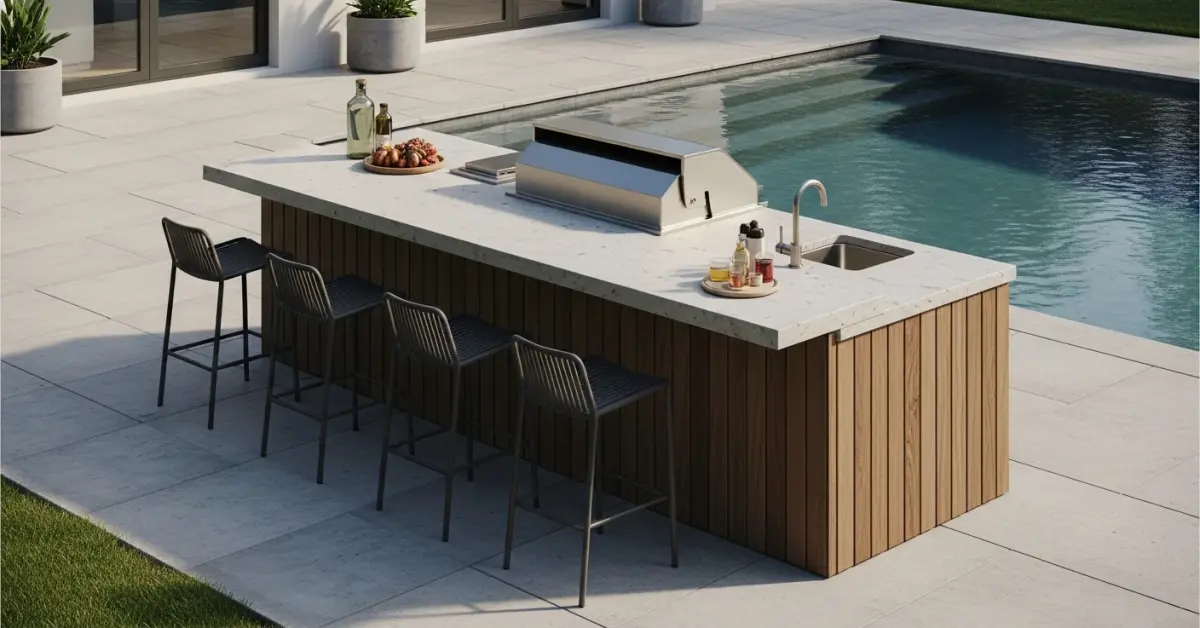
Two details that define the line between an amateur and a professional build are bar support and water management. For a stone or concrete bar overhang, the support system isn't just about holding the static weight of the material. I calculate for a dynamic load of at least 150 lbs per linear foot to account for guests leaning. This often requires hidden steel L-brackets bolted directly into the island's frame. Furthermore, I engineer a subtle 1/8-inch-per-foot slope into the main countertop, directing water away from seating areas and appliances to prevent pooling and staining, a critical detail in our rainy season. With your materials selected and your functional zones defined, how will you ensure the electrical load from the refrigerator, lighting, and a rotisserie motor is calculated correctly to avoid tripping the dedicated GFCI breaker during peak use?Written by

Tags
grill island with bar
outdoor kitchen island bar
outdoor kitchen bar island
outdoor bar islands
outdoor kitchen white
Outdoor Kitchen Island with Bar in Lake FL FAQ
What kind of foundation do I need for an outdoor kitchen island with a bar?
Your outdoor kitchen island requires a solid, level concrete slab at least 10 centimeters thick to prevent shifting and cracking over time. Simply placing a heavy island on pavers or a wooden deck is a common mistake that leads to structural failure, as these surfaces can settle unevenly under the concentrated weight. A proper reinforced concrete footing, especially in regions with freeze-thaw cycles, is non-negotiable for supporting heavy granite countertops and masonry, ensuring your investment remains stable for decades. Neglecting this step can cause dangerous gas line stress and costly countertop fractures.
Do I need special appliances for an outdoor kitchen, or can I use indoor ones?
You must use appliances specifically rated for outdoor use, which are typically constructed from 304-grade stainless steel or higher. Indoor appliances will quickly fail due to rust, corrosion from humidity, and damage to electrical components not designed to withstand temperature swings and moisture. Using an indoor-rated refrigerator or cooktop outside is not only a safety hazard due to potential electrical shorts but will also void any manufacturer's warranty. The investment in outdoor-rated appliances is critical for both longevity and safe operation in an exposed environment.
How far should my outdoor kitchen island be from my house and pool?
Your island's grill must be at least 3 meters away from any combustible siding on your house to comply with fire codes and prevent heat damage. For poolside placement, position the island to minimize the risk of smoke blowing over the water and seating areas, considering prevailing wind directions. It's also critical to maintain a clear, safe pathway of at least 1.2 meters around the island to avoid creating a bottleneck, especially between the hot cooking surfaces and the high-traffic area of a pool deck.
What are the best countertop materials for an outdoor bar that will last?
Granite and quartzite are the top choices for outdoor countertops due to their high resistance to heat, stains, and UV fading. While popular indoors, materials like quartz are a poor choice for outdoor use as the resins that bind the stone together can yellow and degrade in direct sunlight. A common oversight is choosing a very dark-colored stone, which can become dangerously hot to the touch in the summer sun, reaching temperatures well over 65 degrees Celsius. A lighter-colored, sealed natural stone offers the best balance of durability and practicality.
What kind of plumbing and electrical work is required for an island with a sink and fridge?
An outdoor island with a sink and refrigerator requires dedicated plumbing lines for hot and cold water, plus a proper drainage system tied into your home's sanitary sewer. You will also need at least one dedicated 20-amp GFCI-protected circuit to safely power the refrigerator and any outlets. A frequent DIY error is attempting to use a simple garden hose for water supply, which doesn't provide adequate pressure and is not a permanent, code-compliant solution. In cold climates, all water lines must be installed with winterization shut-offs and drainage points to prevent freeze-burst damage.
How do I protect my outdoor kitchen island and bar during the winter?
Proper winterization involves more than just throwing a tarp over the island; you must shut off and drain all water lines to the sink and ice maker to prevent pipes from bursting. Clean the grill grates thoroughly to prevent corrosion and rodent nesting, and disconnect the propane tank for separate storage. Use a custom-fitted, waterproof, and breathable marine-grade canvas cover designed for outdoor kitchens. A cheap plastic tarp will trap moisture, which can lead to mildew growth and damage to stainless steel finishes and electronic igniters.