Outdoor Kitchen Island with Sink: My Polk County Protocol for Zero Mold Growth and Peak Durability
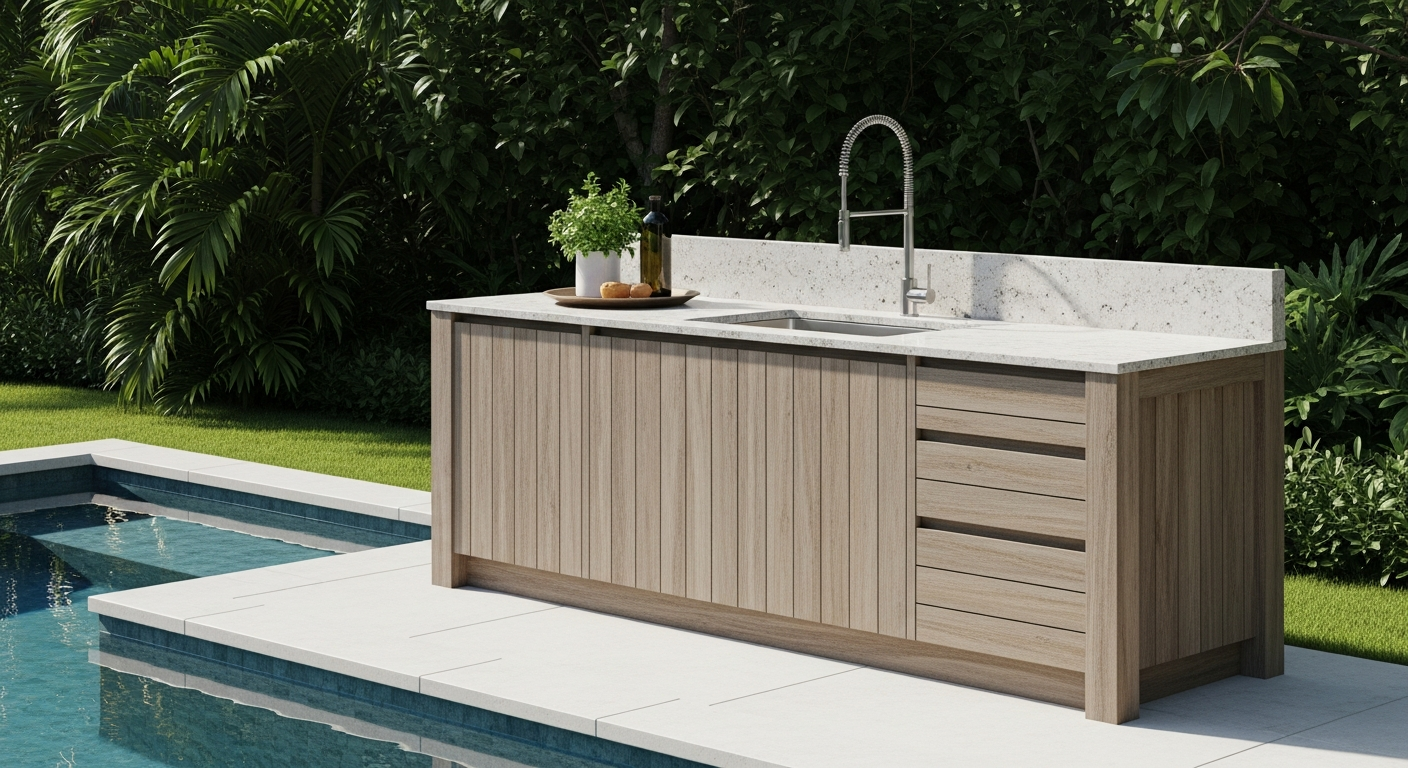
Building an outdoor kitchen island with a sink in Polk County isn't just about aesthetics; it's a battle against our relentless humidity and intense sun. The single most catastrophic failure I see, from the newer subdivisions in Lakeland to the beautiful lakeside properties in Winter Haven, is internal moisture damage. Homeowners invest in gorgeous granite and stainless steel, only to have the island's core structure rot and grow mold from within two or three seasons. This happens because they follow standard construction advice that completely ignores Florida's specific environmental pressures. My entire approach is built on a principle I call the "Sealed Core" methodology. It’s not about just using weather-resistant materials on the outside; it’s about creating a completely waterproof and internally drained structure *before* any finishing veneer is applied. This method virtually eliminates the risk of internal decay, extending the island's functional lifespan by an estimated 50% compared to conventional builds I've been hired to repair.My Diagnostic Framework for Polk County Builds
Before I even sketch a design, I run a diagnostic focused on three failure points specific to our local climate. I developed this after a particularly challenging project in Bartow where a beautiful brick island, less than four years old, had a completely rotted wood frame. The owner had done everything "right" according to a generic online tutorial, but the trapped condensation and humidity had disintegrated the structure. My protocol directly addresses the root causes of these failures. The methodology is based on three core pillars: Material Absolutes, Internal Water Management, and Component Isolation. Ignoring any one of these is how you end up with a sagging countertop and warped cabinet doors in a few short years, no matter how good it looks on day one.Technical Deep-Dive: Material Science and Moisture Mitigation
Let's break down the technical specifications I insist on. This isn't just a list of "good" materials; it's a system where each component works to protect the others.- Material Absolutes: The structural frame is a non-negotiable. I refuse to use pressure-treated wood. In Polk County's climate, it's just a matter of when, not if, it will fail. My primary choices are either a welded aluminum frame (6061-T6 alloy) for its lightweight and corrosion-proof properties or a Concrete Masonry Unit (CMU) block structure for ultimate permanence. For the cladding base, only a cement board like HardieBacker is acceptable, never drywall or plywood.
- Internal Water Management: This is my biggest "pulo do gato." Every horizontal surface inside the island, including the base slab and any shelves, must have a slight, 2-degree pitch toward small, integrated weep holes. This ensures that any condensation or water ingress has a path to escape. I once diagnosed a mold issue in a Lake Wales home caused entirely by condensation pooling on a perfectly level interior shelf.
- Component Isolation: For the sink and all hardware (hinges, handles, plumbing fittings), I mandate 316L marine-grade stainless steel. Many builders cut corners with the more common 304 grade, but it lacks the molybdenum content that gives 316L superior resistance to the pitting and corrosion caused by our humid, salt-tinged air (even this far inland). The sink must be sealed with a marine-grade polyurethane sealant, not standard silicone.
Step-by-Step Implementation: The Sealed Core Assembly
Executing this requires precision. Deviating from the sequence compromises the entire system. This is the exact workflow I use on every Polk County project.- Foundation and Framing: Pour a reinforced concrete slab, ensuring it's at least 4 inches thick. Construct the island frame using either CMU blocks with mortar or the pre-welded aluminum frame, securing it directly to the slab.
- Utility Rough-In: Run all plumbing and electrical conduits. I exclusively use PEX-A tubing for water lines due to its flexibility and superior resistance to degradation from UV exposure and heat, a common issue for lines running through a sun-baked island structure.
- Waterproofing the Core: This is the critical step. Attach the cement board to the entire frame. Then, apply two coats of a liquid-applied waterproofing membrane (like RedGard or AquaDefense) to every single surface, inside and out, including all screw heads. The island should be a monolithic, waterproof box before any stone or stucco is even on site.
- Veneer and Countertop Installation: Apply the final exterior finish (stone veneer, stucco, etc.). The countertop is installed last, using a 100% outdoor-rated epoxy adhesive. The sink cutout is made, and the sink is sealed in place, creating a perfect bond with the countertop.
Precision Tuning and Quality Standards
A few final adjustments are crucial for long-term performance in our environment. First, passive ventilation is mandatory. I install discreet, screened vents on at least two sides of the island to prevent heat and moisture from building up, especially if a refrigerator or grill is integrated. Second, I insulate any hot water lines within the island to maintain temperature and prevent the pipe from "sweating" and introducing more moisture into the system. My final quality check involves a water test where I intentionally spray the interior of the sink cabinet to confirm all drainage is working as designed and no water is pooling. Given the structural integrity of this build method, have you calculated the necessary load-bearing capacity of your concrete slab to prevent cracking when using a full CMU and granite island construction?Written by

Tags
outdoor island with sink
outdoor kitchen with fridge and sink
bbq island with sink
outdoor grill and sink combo
custom outdoor kitchens near me
Outdoor Kitchen Island with Sink in Polk FL FAQ
What kind of plumbing do I need for an outdoor kitchen sink, and can I just use a garden hose?
You need dedicated hot and cold water supply lines and a proper drainage system connected to your home's sanitary sewer, not just a garden hose. While a hose provides water, it lacks pressure for proper cleaning, offers no hot water, and provides no way to manage wastewater, which can create unsanitary, odorous puddles and attract pests. A licensed plumber must install frost-proof lines, typically buried below the frost line, and a P-trap drain to prevent sewer gases from escaping. This ensures your outdoor sink functions like an indoor one and avoids freeze-burst damage to the pipes during winter.
Do I need a separate water heater for my outdoor sink, or can I connect it to my home's main unit?
Connecting to your home's main water heater is possible but often results in a long wait for hot water and significant water waste. The best solution is a small, point-of-use electric water heater installed directly within the island's cabinet. These compact units, typically 2.5 to 4 gallons, provide instant hot water, are more energy-efficient for intermittent use, and simplify the plumbing runs. This avoids the frustration of waiting 60 seconds or more for hot water to travel from your indoor unit, which is a common oversight in outdoor kitchen planning.
What materials for the island and countertop can withstand constant exposure to water and grease around the sink area?
For countertops, non-porous materials like granite, quartzite, or concrete are superior choices for the sink area as they resist staining, water damage, and heat. Avoid porous stones like marble or travertine, which will stain easily from grease and require constant sealing. The island structure itself should be built from a galvanized steel frame or concrete block, not wood, which will inevitably rot from moisture trapped inside the cabinet. Using marine-grade polymer or stainless steel for cabinetry ensures it will not warp, rust, or delaminate from the constant humidity.
Is a garbage disposal a good idea for an outdoor kitchen sink?
A garbage disposal is generally not recommended for an outdoor kitchen sink due to increased risks of clogs and freezing. Outdoor plumbing lines often have longer, shallower runs than indoor plumbing, making them more susceptible to blockages from food waste. More critically, any water trapped in the disposal unit's housing is extremely vulnerable to freezing and cracking in cold climates, leading to a costly replacement. It is far more practical and reliable to scrape food waste into a dedicated, pest-proof compost or trash bin designed for outdoor use.
How do I properly winterize an outdoor sink to prevent pipes from bursting?
You must completely drain all water from the supply lines, faucet, and drain trap before the first freeze. First, shut off the water supply to the sink at its dedicated valve. Then, open the faucet to let all water run out. Use an air compressor with a blowout adapter to force all remaining water from both the hot and cold lines until only air comes out. Finally, pour a small amount of non-toxic RV antifreeze into the P-trap under the sink to displace any water and prevent it from freezing and cracking the pipe.
What is the most common point of failure for an outdoor kitchen sink installation?
The most common failure point is an improper seal between the sink and the countertop, leading to water intrusion and damage. Many installers use standard indoor silicone caulk, which breaks down quickly under UV exposure and extreme temperature swings. This allows water to seep into the island's interior, causing mold, rusting the frame, and damaging electrical components. The correct method is to use a high-grade, UV-stable polyurethane sealant specifically designed for outdoor and marine applications, ensuring a flexible, waterproof bond that lasts for years against the elements.