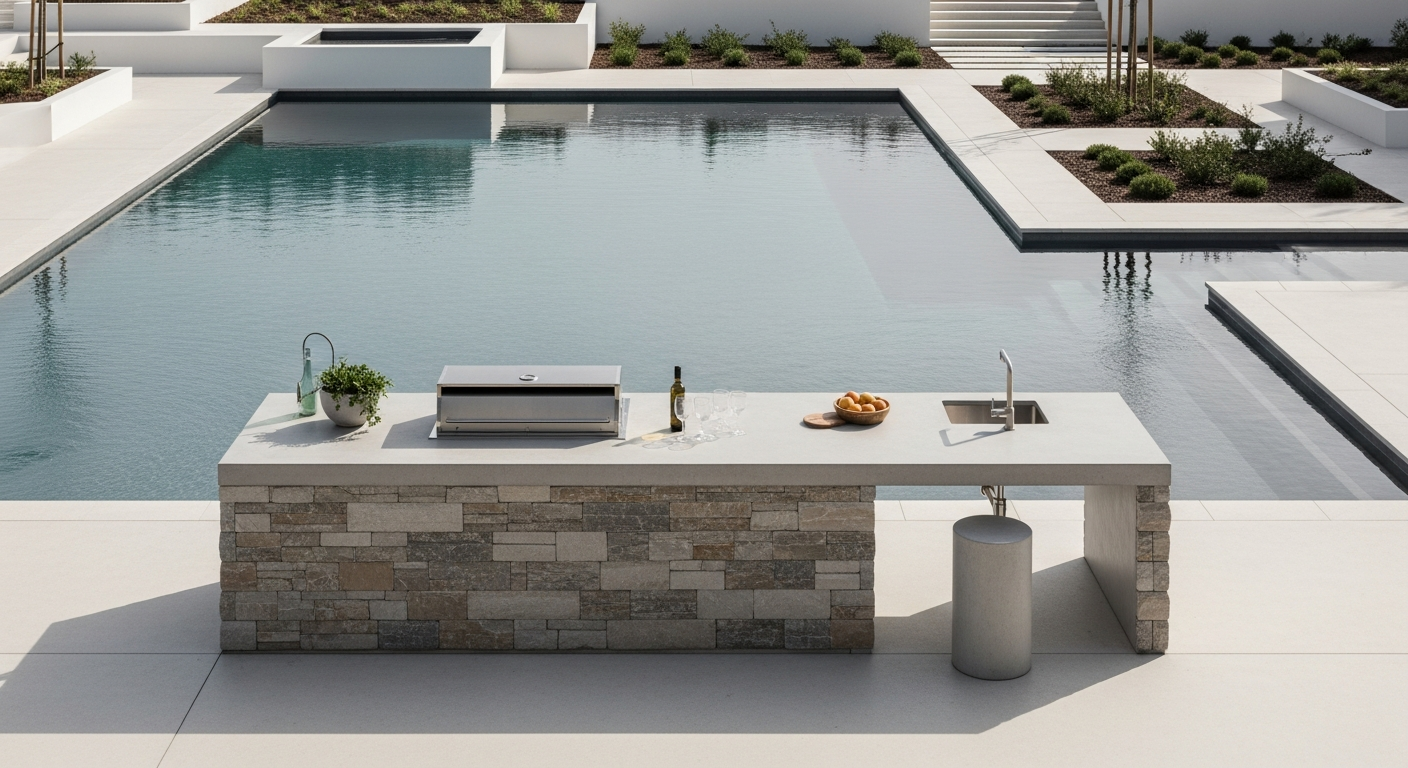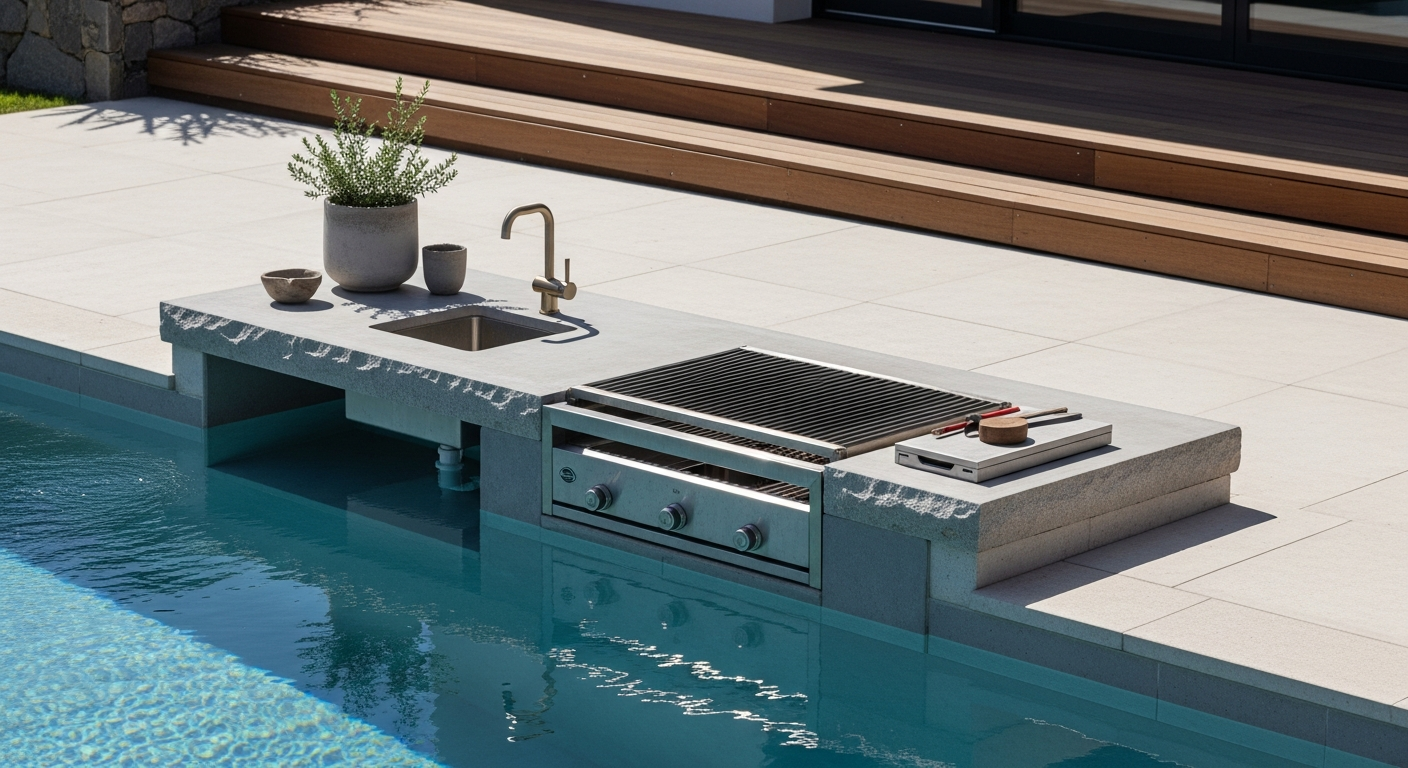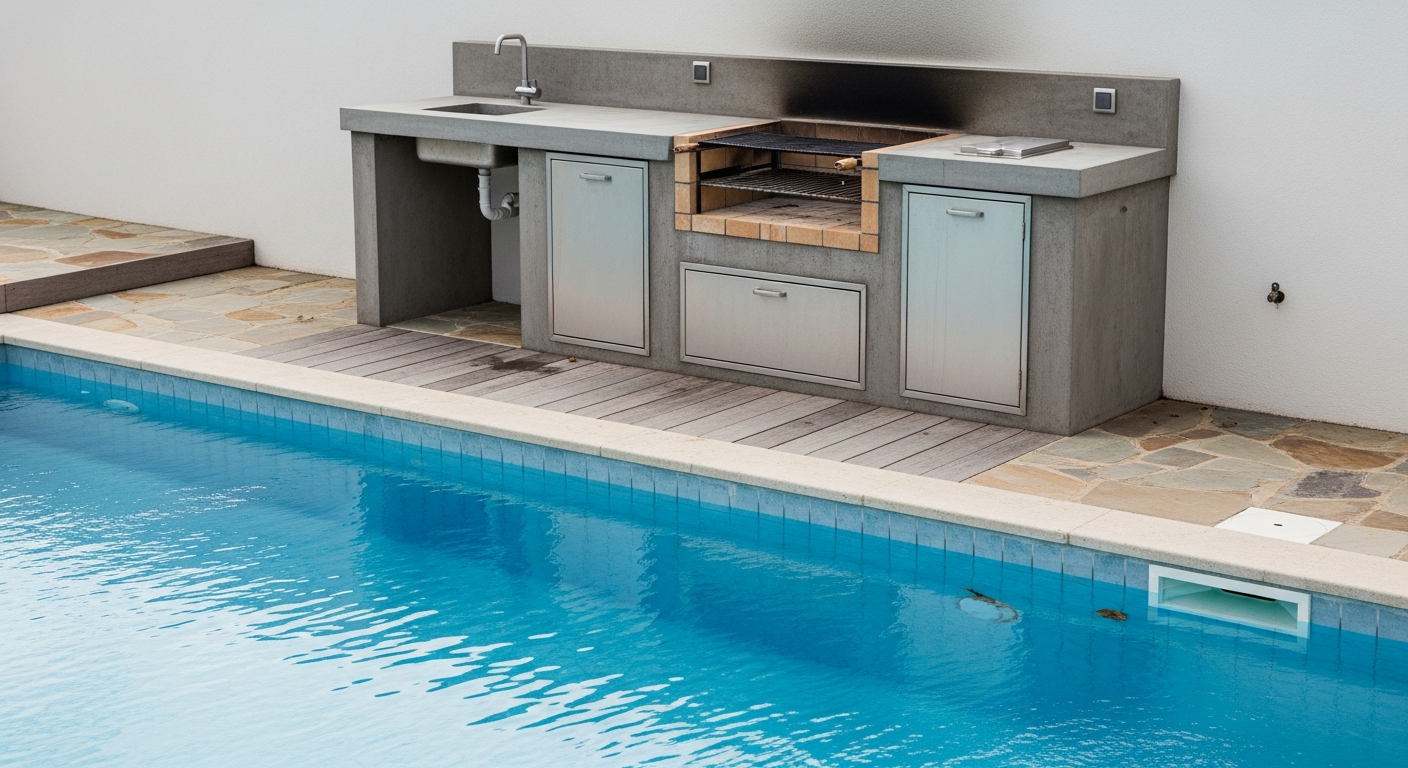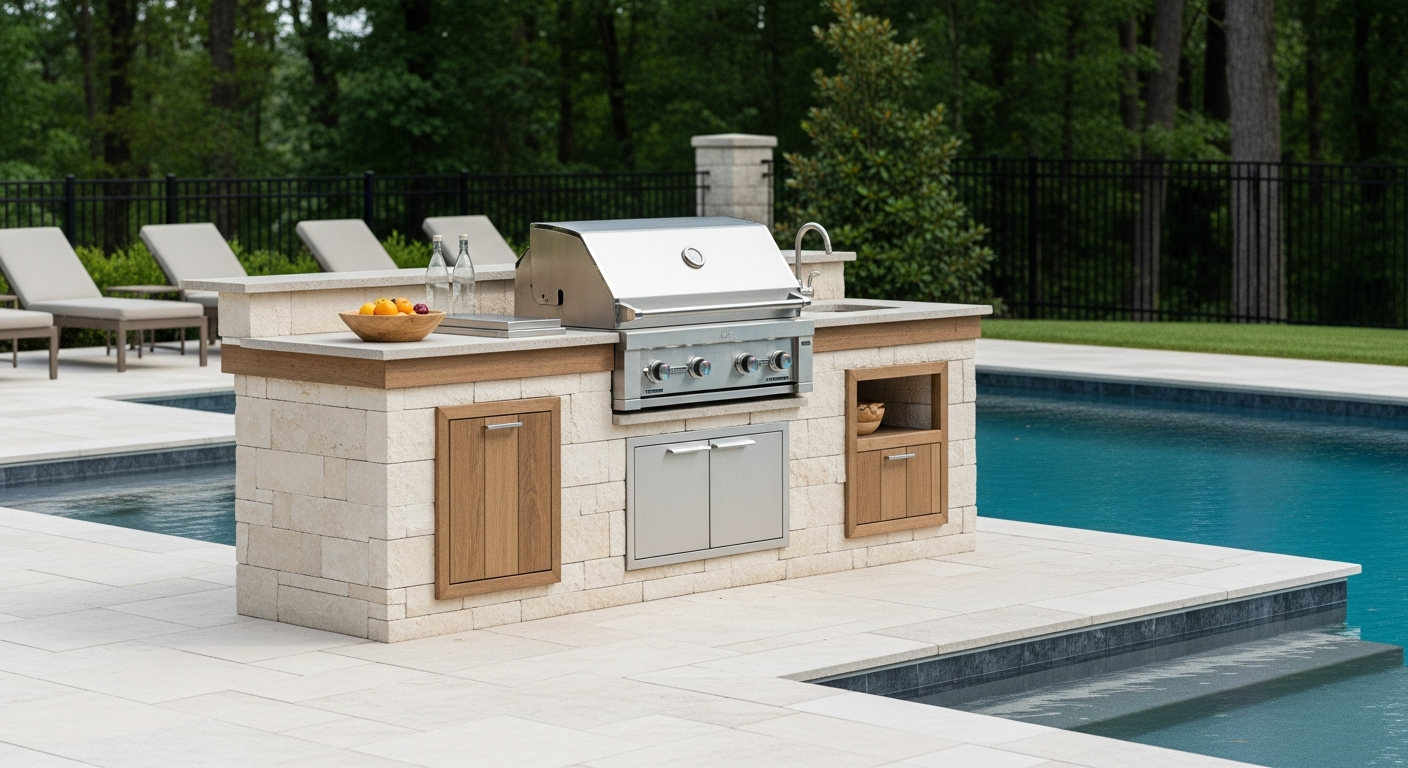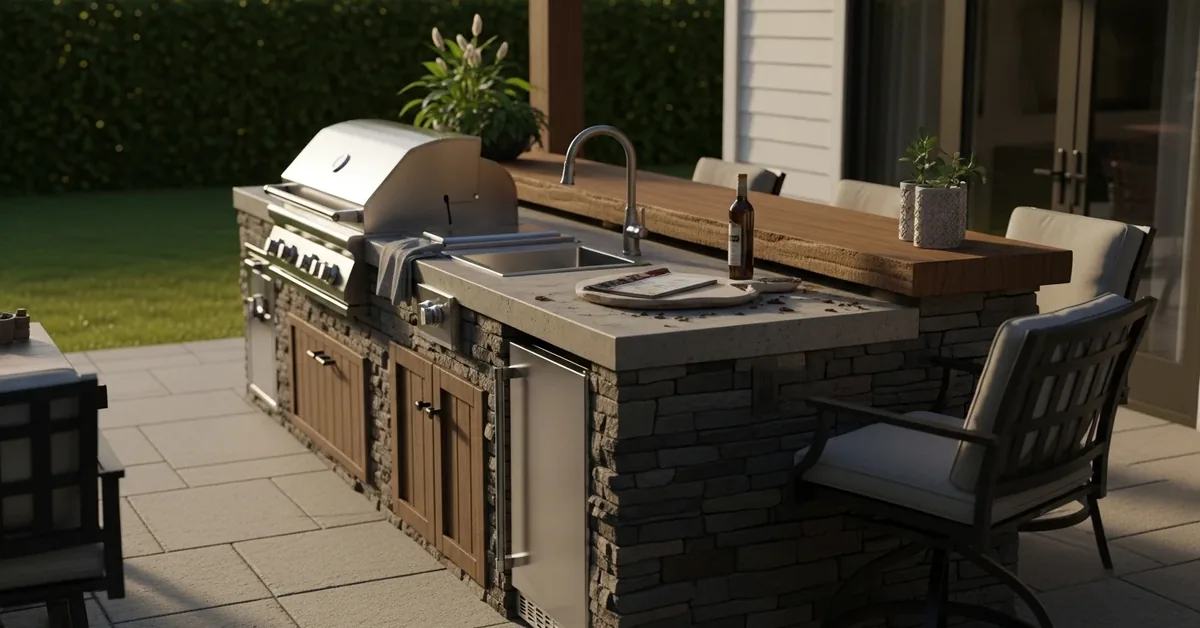
Outdoor Kitchen Island Manatee County: A Framework for 90% Corrosion and Warping Prevention
After years of designing and building outdoor kitchen islands from Lakewood Ranch to Anna Maria Island, I've seen one catastrophic failure repeat itself: material selection based on aesthetics over environmental resilience. The Manatee County climate, with its punishing humidity and salt-laden air, will dismantle a poorly planned project in under three years. I learned this the hard way on an early project in Bradenton Beach, where the 304-grade stainless steel hardware I used showed pitting and rust within 18 months. My approach now is rooted in a material and structural framework I call the Coastal Durability Matrix. This isn't about simply choosing "outdoor-rated" materials; it's about a specific-to-Manatee-County methodology that prioritizes material science and micro-climate adaptation. It’s the difference between a kitchen that looks good for a season and one that performs for a decade or more, directly impacting your property's long-term value.My Coastal Durability Matrix: A Diagnostic Beyond Standard Building Codes
The standard approach to outdoor kitchens often involves a wood or galvanized steel stud frame with a cement board backer. In a dry climate, this might suffice. Here, in Manatee County, it’s a recipe for disaster. I've been called to repair projects where the internal steel frame, hidden behind beautiful stone veneer, had completely rusted through, compromising the entire structure. The culprit is condensation and trapped humidity, a constant in our environment. My matrix starts with the non-negotiable principle that the island's core structure must be impervious to moisture and salt. This eliminates over 50% of the common materials used by less specialized builders.Material Science Breakdown for the Gulf Coast Climate
The core of my system is an uncompromising selection process. For any project, whether it's on a large lanai in The Lake Club or a compact coastal backyard on Longboat Key, the material hierarchy is absolute. I’ve seen homeowners invest heavily in a high-BTU grill only to mount it in a structure that will degrade from the inside out. My analysis focuses on the three most vulnerable components: the frame, the hardware, and the countertop.- Structural Frame: The absolute best-in-class option is a welded 6061-T6 aluminum frame. It's lightweight, incredibly strong, and completely corrosion-proof. Concrete block (CMU) is a viable, robust alternative, but the aluminum frame allows for more complex designs and easier utility integration. I never use wood or galvanized steel, period.
- Hardware & Fasteners: This is a critical failure point. All visible and structural hardware, from cabinet hinges to drawer pulls and assembly screws, must be 316 marine-grade stainless steel. The higher nickel and molybdenum content in 316 steel provides superior resistance to the chloride corrosion caused by our salt air. Standard 304 stainless steel is simply not sufficient for our coastal environment.
- Countertop Surface: Granite is porous and requires constant sealing to prevent mildew and staining from our perpetual humidity. Many types of quartz can suffer from UV degradation, causing the resins to yellow over time under the intense Florida sun. My go-to recommendation is either Dekton or large-format porcelain slabs. These materials are non-porous, completely UV-stable, and resistant to thermal shock, making them virtually indestructible in this climate.
The Phased Implementation Protocol: From Foundation to First Use
Building an outdoor kitchen island that lasts requires a disciplined, phased approach. Rushing any one of these steps introduces a point of weakness that our climate will exploit. My methodology is a checklist-driven process to ensure nothing is overlooked. I've seen expensive mistakes result from simple sequencing errors, like installing electrical conduits after the frame is cladded, leading to improper sealing.- Site & Utility Mapping: Before any work begins, I map all underground utilities and plan the precise runs for gas, water, and electrical lines. This ensures the island placement is optimal and avoids costly re-work. Proper venting for the grill is also planned at this stage, considering prevailing winds.
- Foundation and Anchoring: The island requires a dedicated concrete footer. I specify a 4,000 PSI concrete mix with fiber mesh for added tensile strength, ensuring it won’t crack during our wet-and-dry cycles. The frame is then anchored directly to this foundation.
- Frame Assembly & Appliance Dry-Fit: The welded aluminum frame is assembled on-site. Before any cladding is applied, we perform a dry-fit of all specified appliances—grill, side burners, refrigerator. This confirms all cutouts are precise to 1/8th of an inch, ensuring a perfect, sealed fit later.
- Cladding and Countertop Installation: Once the frame and utilities are set, the chosen exterior cladding (stone veneer, stucco, etc.) is applied using a polymer-modified mortar. The Dekton or porcelain countertop is then installed using a specialized, UV-stable outdoor adhesive, not standard silicone.
Post-Installation Audits: Mitigating Long-Term Climate Damage
The job isn't finished when the last stone is set. My quality standard includes a post-installation audit focused on longevity. These are the small details that prevent the most common service calls I receive for projects I didn't build myself. The single biggest oversight I find is inadequate ventilation within the island structure itself. A built-in grill generates immense heat, and without proper airflow, it can damage internal components and create a safety hazard. My final inspection checklist mandates:- Cross-Ventilation Verification: I ensure there are at least two passive vents, made from 316 stainless steel, installed on opposite sides of the island cabinet that houses the grill. This creates natural convection to dissipate heat and moisture.
- Drainage Plane Check: The countertop is checked with a level to confirm a subtle, 1/16-inch-per-foot slope away from the seating area. This prevents water from pooling, which is critical for minimizing mildew growth.
- Sealant Integrity Test: Every seam and grout line is inspected to ensure a complete, waterproof seal. I provide clients with a maintenance schedule, as even the best sealants need a bi-annual re-application under the constant assault of Manatee County's UV radiation.
Written by

Tags
prefabricated bbq islands
modular outdoor grill islands
prefab barbeque islands
prefabricated outdoor kitchen islands
outdoor kitchen island
Outdoor Kitchen Island in Manatee FL FAQ
What countertop material won't stain or crack in the sun and rain?
Dekton or other sintered stone materials offer the highest resistance to staining, heat, and UV fading for an outdoor kitchen countertop. Unlike granite, which requires regular sealing to prevent stains from grease or wine, and can heat up significantly in direct sun, sintered stone is non-porous and color-stable. While more expensive upfront, its durability prevents the long-term maintenance costs associated with sealed natural stone or the potential for cracking in poured concrete. A critical failure point many overlook is using indoor-rated quartz, which contains resins that will yellow and degrade under UV exposure within a few seasons.
Do I need to run a dedicated gas line for my grill, or can I just use a propane tank?
You should run a dedicated natural gas line if your home already has service, as it eliminates the inconvenience and recurring cost of swapping propane tanks. A professional installation involves tapping into your home's main gas supply with its own shut-off valve and running a properly sized, buried line to the island, typically costing between $700 and $2,000 depending on the distance. Using a standard propane tank is simpler initially, but a built-in grill with high BTUs can empty a 20-pound tank in as little as 10 hours of cooking, interrupting hosting and becoming a constant chore.
Can I use an indoor mini-fridge in my outdoor kitchen island to save money?
No, using an indoor refrigerator outdoors will lead to premature failure and is a potential electrical hazard. Outdoor-rated refrigerators are UL-approved for wet conditions and built with robust compressors and insulation designed to maintain safe food temperatures (below 40°F or 4°C) even when ambient temperatures exceed 100°F (38°C). An indoor unit will struggle to cool, running constantly and burning out its compressor, while its internal components are not protected from moisture, creating a risk of rust and electrical shorts. The initial savings are quickly lost to replacement costs and spoiled food.
What's the most common design mistake you see with outdoor kitchen islands?
The most frequent and frustrating design mistake is insufficient 'landing zone' countertop space on either side of the grill and sink. Homeowners often focus on maximizing appliance features but forget they need dedicated, heat-proof areas of at least 18-24 inches (45-60 cm) next to the grill for platters of raw and cooked food. Without this functional prep and serving space, the island becomes a cramped and chaotic cooking station. A poorly planned layout also often neglects task lighting, making the expensive grill nearly unusable for evening gatherings without adding aftermarket floodlights.
How do I prevent my outdoor kitchen island's plumbing from freezing and bursting in the winter?
You must completely winterize the plumbing by shutting off the water supply line to the island and then using compressed air to blow out every drop of water from the pipes and faucet. Simply draining the lines is not enough, as trapped water in low spots or inside the faucet valve itself will freeze, expand, and crack the components, leading to a major leak in the spring. We often see burst pipes inside the island structure that require partial demolition to repair. Installing drainable shut-off valves at the lowest points during construction makes this annual process significantly easier and more reliable.
What kind of electrical outlets are required for an outdoor island, and how many do I need?
All electrical outlets in an outdoor kitchen island must be GFCI-protected (Ground Fault Circuit Interrupter) and housed in weatherproof, in-use covers to prevent moisture intrusion. You should plan for at least two separate 20-amp circuits: one dedicated to the refrigerator and another for outlets to power appliances like blenders or electric smokers without tripping the breaker. A common oversight is not installing an outlet near the main prep area, forcing you to run unsafe extension cords across a patio. Proper electrical planning is a non-negotiable safety requirement, not an optional upgrade.