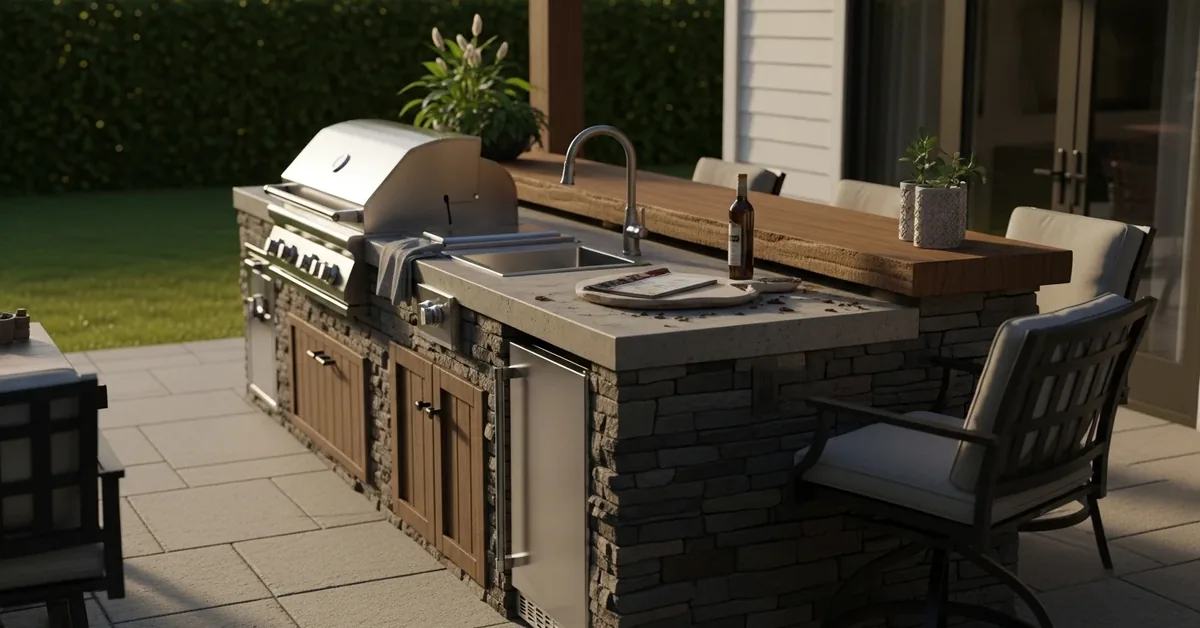
Outdoor Kitchen Island: A Framework for 30-Year Durability in Polk County's Climate
Building an outdoor kitchen island in Polk County isn't about just picking pretty stone and a shiny grill. I've seen too many projects in Lakeland and Winter Haven fail within five years due to one critical oversight: treating it like an indoor project. The combination of intense UV exposure, high humidity, and torrential summer rains creates a uniquely corrosive environment. My approach is built on a material-first principle that prioritizes long-term structural integrity over initial aesthetics, a lesson I learned after being called in to diagnose a catastrophic frame collapse on a lakefront property in Haines City. The core issue I identified was a wood-framed structure with an improper vapor barrier. The trapped moisture, common in our humid climate, led to rot and complete failure. This is why my proprietary methodology completely eliminates organic materials from the core structure. Instead, I focus on creating a non-combustible, moisture-impervious skeleton. This isn't an upgrade; for the Polk County environment, it is the absolute baseline for a lasting investment.My Diagnostic Protocol for Climate-Resilient Construction
Before any design is sketched, I run a project through my "Climate-Resilience Protocol." It's a non-negotiable diagnostic I developed after seeing repeated failures in local builds. The protocol focuses on three primary failure points: substrate degradation, appliance housing corrosion, and countertop warping/staining. The goal is to engineer a solution that actively counteracts the specific environmental stressors we face, from the summer heat in Bartow to the damp air around the Chain of Lakes.A Technical Breakdown of Material Selection
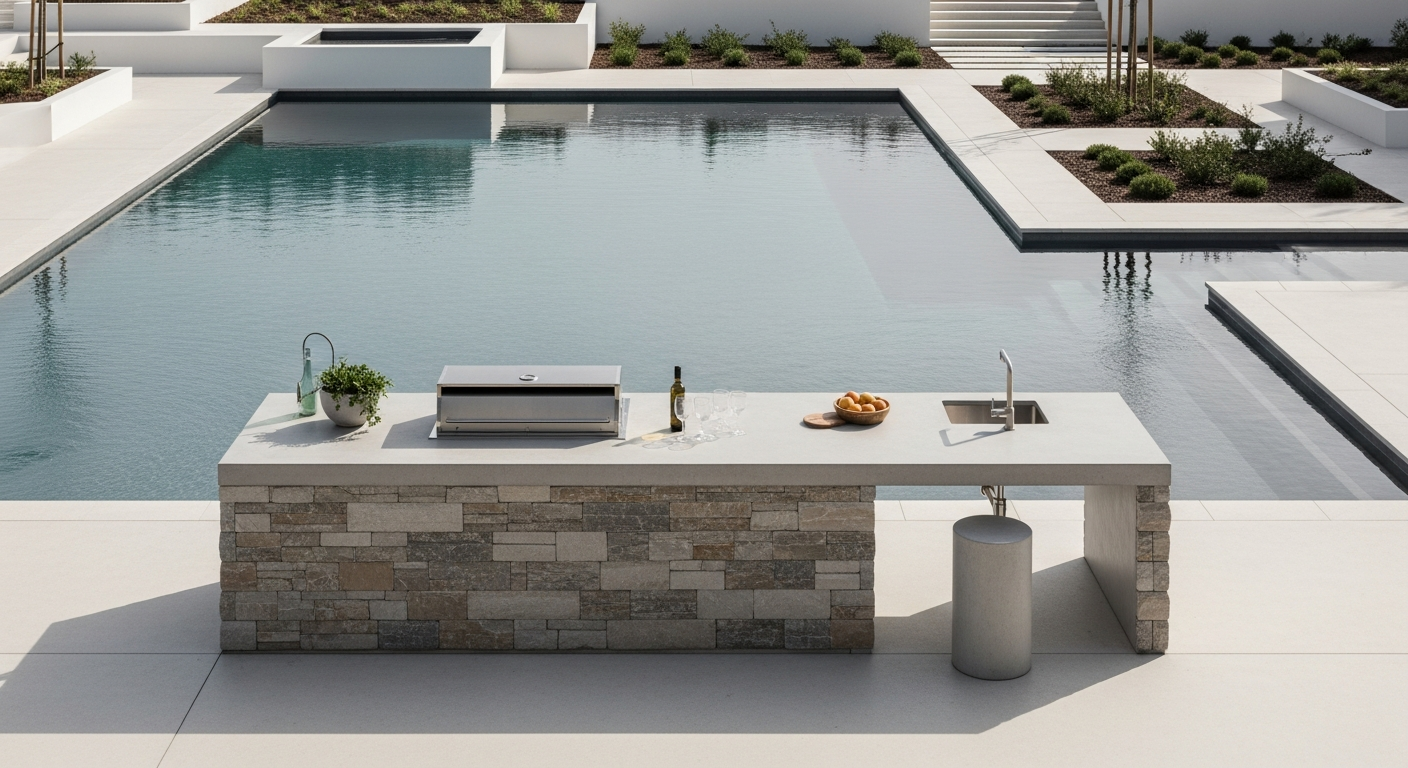
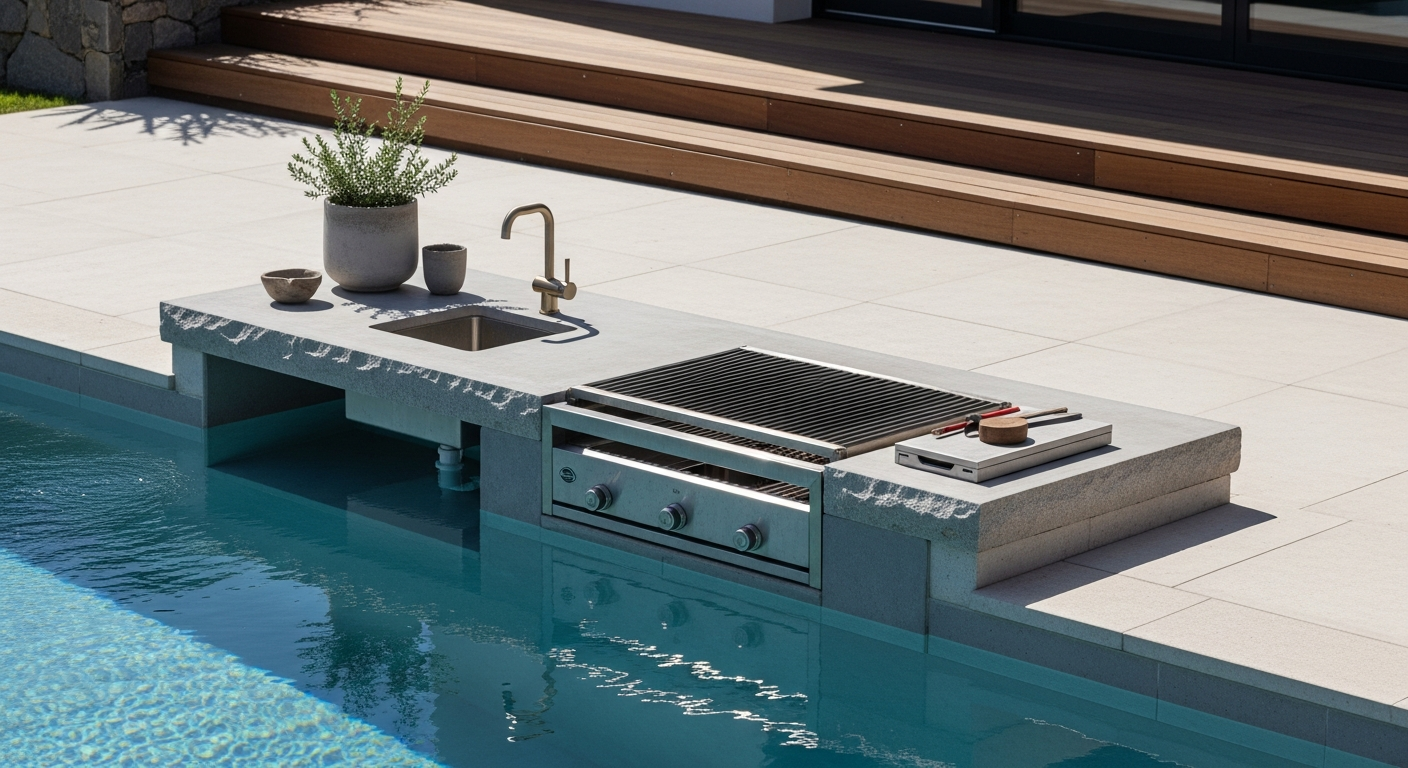
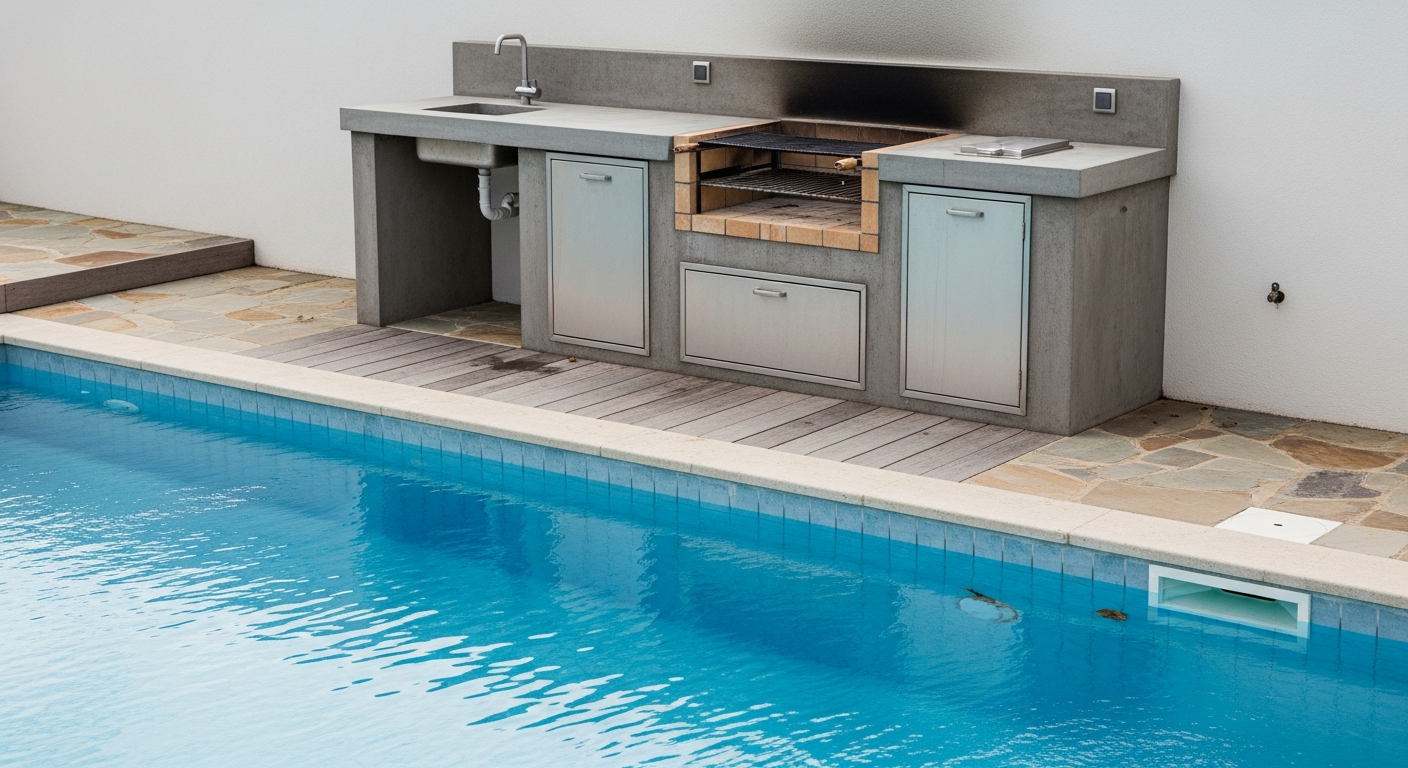
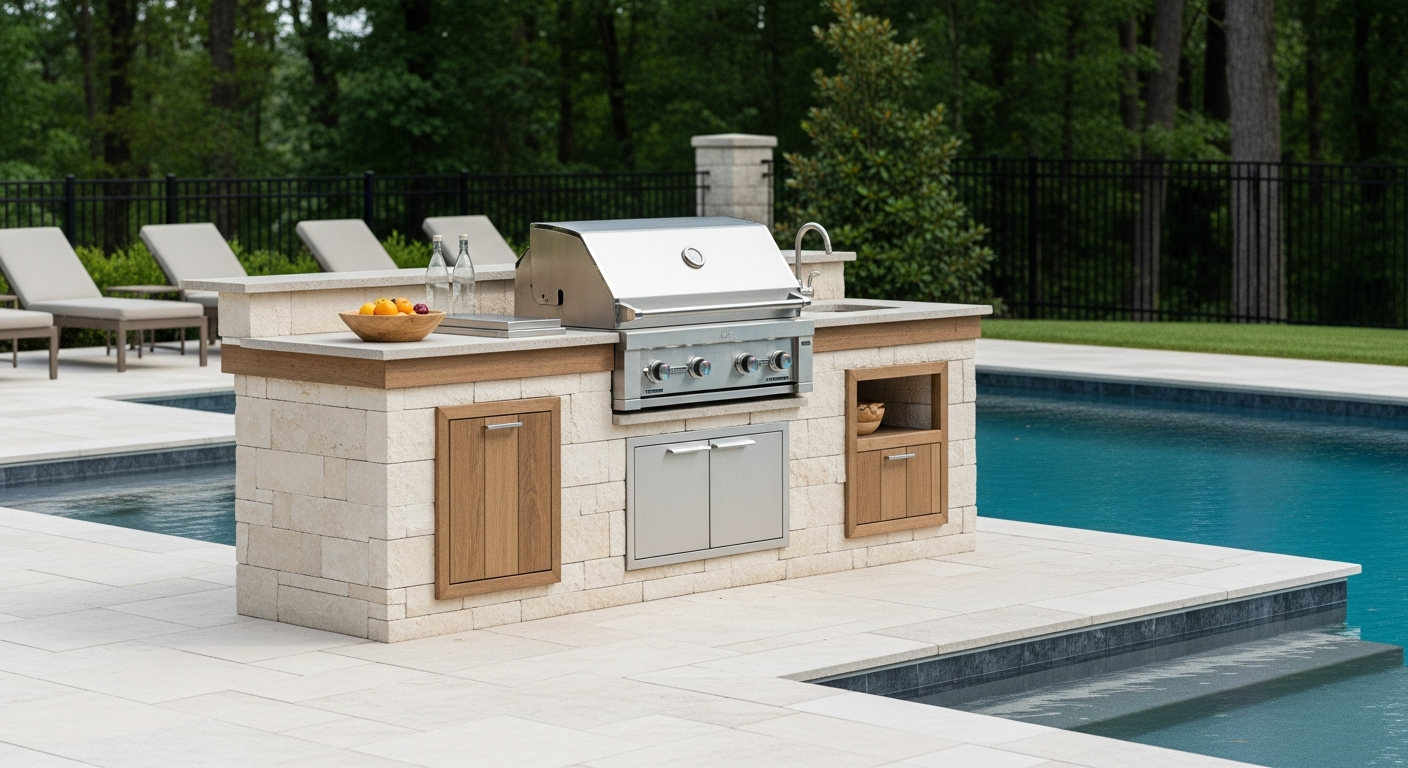
My material selection process is ruthlessly practical. For the island's frame, I exclusively specify 18-gauge or 20-gauge welded aluminum tubing or galvanized steel studs. While some builders use pressure-treated wood, I’ve found it’s only a matter of time before moisture finds a way in, especially at fastener points. An aluminum frame is immune to rot and termites, and its light weight reduces stress on the patio slab, which can be a concern in some of our older neighborhoods with original concrete work. For the cladding, I mandate the use of a cement board substrate, like HardieBacker. Applying stone veneer or stucco directly to a metal frame without this layer is a frequent error that leads to cracking as the metal expands and contracts. For countertops, I steer clients away from porous granite, which can harbor mildew in our climate. My recommendation is almost always a sintered stone surface (like Dekton) or a high-grade, UV-stable quartzite. These materials offer near-zero porosity and can withstand the intense Florida sun without fading or yellowing, ensuring a 25% longer aesthetic lifespan compared to lower-grade materials.Implementation: The Non-Negotiable Pre-Construction Checklist
Executing the build correctly is just as critical as the material selection. I’ve distilled my process into a checklist that I personally review on-site before a single component is assembled. This has saved clients thousands by preventing costly rework.- Utility Mapping: I personally verify the location of all gas, water, and electrical lines. It's crucial to plan for a dedicated GFCI-protected circuit for the island and ensure the gas line is appropriately sized for the grill's BTU output.
- Frame & Substrate Verification: The frame must be perfectly square and level. All seams on the cement board must be taped and mortared with a polymer-modified thin-set, creating a monolithic, waterproof shell. This step is critical for preventing water intrusion.
- Appliance Fit & Ventilation: I demand a minimum 1-inch air gap around all sides of the grill and other "hot" appliances. Most importantly, cross-ventilation panels must be installed in the cabinet base, especially for propane units, to prevent dangerous gas buildup. This is a life-safety issue, not an option.
- Countertop Templating & Sealing: Templates are made only after the entire base is built and clad. Every cut-out for sinks or side burners must be sealed with a marine-grade silicone sealant before the appliance is dropped in. This prevents moisture from wicking into the substrate from the edges.
Precision Tuning for a Polk County Installation
The final 10% of the work is what ensures decades of performance. I focus on the "unseen" details. For instance, all cabinet doors and drawers must be 304-grade stainless steel to resist rust. The fasteners used to attach the cement board to the frame must be specifically rated for that application; using the wrong screw can create a galvanic reaction with the metal frame over time, compromising the connection point. I also specify a final application of a penetrating sealer on any grout lines in the stone veneer, which is a simple step that drastically reduces the potential for mildew growth. Given the thermal expansion and contraction rates of an aluminum frame versus a sintered stone countertop in direct Florida sun, have you calculated the appropriate control joint spacing and specified a flexible, UV-stable sealant to accommodate that movement?Written by

Tags
prefabricated bbq islands
modular outdoor grill islands
prefab barbeque islands
prefabricated outdoor kitchen islands
outdoor kitchen island
Outdoor Kitchen Island in Polk FL FAQ
What countertop material won't stain or crack in the sun and rain?
Dekton or other sintered stone materials offer the highest resistance to staining, heat, and UV fading for an outdoor kitchen countertop. Unlike granite, which requires regular sealing to prevent stains from grease or wine, and can heat up significantly in direct sun, sintered stone is non-porous and color-stable. While more expensive upfront, its durability prevents the long-term maintenance costs associated with sealed natural stone or the potential for cracking in poured concrete. A critical failure point many overlook is using indoor-rated quartz, which contains resins that will yellow and degrade under UV exposure within a few seasons.
Do I need to run a dedicated gas line for my grill, or can I just use a propane tank?
You should run a dedicated natural gas line if your home already has service, as it eliminates the inconvenience and recurring cost of swapping propane tanks. A professional installation involves tapping into your home's main gas supply with its own shut-off valve and running a properly sized, buried line to the island, typically costing between $700 and $2,000 depending on the distance. Using a standard propane tank is simpler initially, but a built-in grill with high BTUs can empty a 20-pound tank in as little as 10 hours of cooking, interrupting hosting and becoming a constant chore.
Can I use an indoor mini-fridge in my outdoor kitchen island to save money?
No, using an indoor refrigerator outdoors will lead to premature failure and is a potential electrical hazard. Outdoor-rated refrigerators are UL-approved for wet conditions and built with robust compressors and insulation designed to maintain safe food temperatures (below 40°F or 4°C) even when ambient temperatures exceed 100°F (38°C). An indoor unit will struggle to cool, running constantly and burning out its compressor, while its internal components are not protected from moisture, creating a risk of rust and electrical shorts. The initial savings are quickly lost to replacement costs and spoiled food.
What's the most common design mistake you see with outdoor kitchen islands?
The most frequent and frustrating design mistake is insufficient 'landing zone' countertop space on either side of the grill and sink. Homeowners often focus on maximizing appliance features but forget they need dedicated, heat-proof areas of at least 18-24 inches (45-60 cm) next to the grill for platters of raw and cooked food. Without this functional prep and serving space, the island becomes a cramped and chaotic cooking station. A poorly planned layout also often neglects task lighting, making the expensive grill nearly unusable for evening gatherings without adding aftermarket floodlights.
How do I prevent my outdoor kitchen island's plumbing from freezing and bursting in the winter?
You must completely winterize the plumbing by shutting off the water supply line to the island and then using compressed air to blow out every drop of water from the pipes and faucet. Simply draining the lines is not enough, as trapped water in low spots or inside the faucet valve itself will freeze, expand, and crack the components, leading to a major leak in the spring. We often see burst pipes inside the island structure that require partial demolition to repair. Installing drainable shut-off valves at the lowest points during construction makes this annual process significantly easier and more reliable.
What kind of electrical outlets are required for an outdoor island, and how many do I need?
All electrical outlets in an outdoor kitchen island must be GFCI-protected (Ground Fault Circuit Interrupter) and housed in weatherproof, in-use covers to prevent moisture intrusion. You should plan for at least two separate 20-amp circuits: one dedicated to the refrigerator and another for outlets to power appliances like blenders or electric smokers without tripping the breaker. A common oversight is not installing an outlet near the main prep area, forcing you to run unsafe extension cords across a patio. Proper electrical planning is a non-negotiable safety requirement, not an optional upgrade.