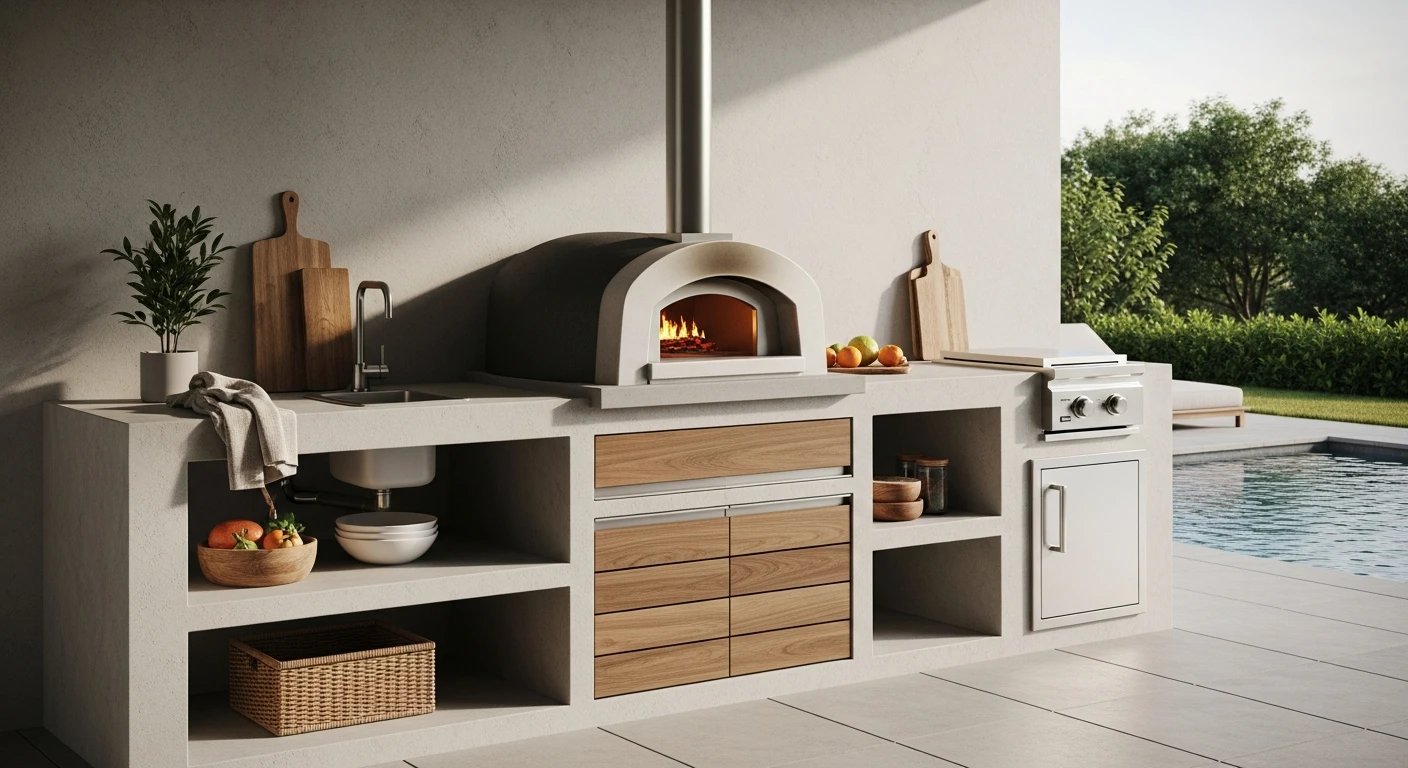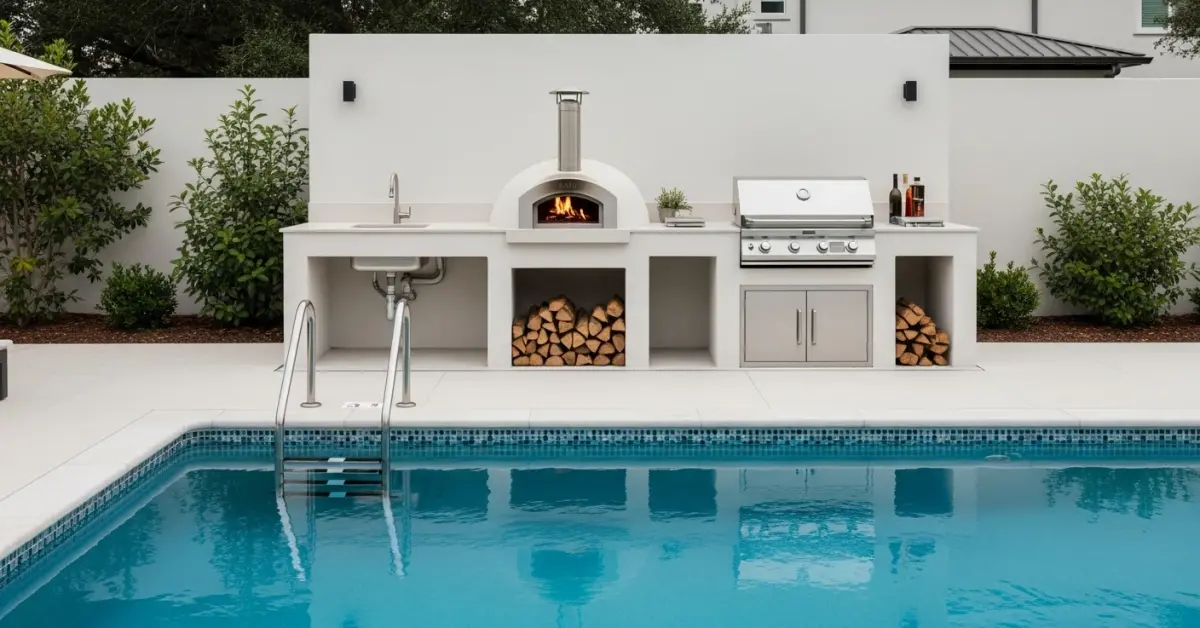
Outdoor Kitchen with Pizza Oven and Grill: A Framework for 99% Uptime in Lake County's Climate
Designing an outdoor kitchen in Lake County isn't about picking the prettiest stone; it's a technical battle against our aggressive freeze-thaw cycle. I’ve seen countless projects in towns like Barrington and Lake Forest fail within two years because their foundations heaved and their materials spalled. The primary failure is always underestimating the immense hydrostatic pressure and moisture penetration that our Illinois winters inflict. My approach sidesteps this common pitfall by focusing on a material and structural matrix designed for climate resilience from the ground up. Instead of just a concrete slab, I mandate insulated footings that extend below the 42-inch frost line, a non-negotiable standard I developed after a costly repair on a Highland Park project. This ensures the entire structure remains stable, preventing the hairline fractures that lead to catastrophic water damage and preserving the investment for decades, not just a few seasons.My Climate-Adaptive Framework: Diagnosing Failure Points Before Construction
The biggest mistake I see is designers treating a Lake County outdoor kitchen like one in a milder climate. They focus on aesthetics first, and the structural engineering is an afterthought. My proprietary methodology, the Climate-Adaptive Framework, inverts this process. I start with a site-specific diagnosis, focusing on water drainage, sun exposure, and the property’s unique microclimate. On a recent project in Libertyville, this initial analysis revealed a high water table, forcing us to incorporate a French drain system around the kitchen's perimeter—a step that prevented a foundation washout the client never would have anticipated.Pillar 1: The Frost-Proof Footing and Non-Porous Material Matrix
The core of my framework is material science. Natural stone is beautiful, but many porous varieties act like sponges during our wet autumns, then crack when that moisture freezes and expands. My material matrix prioritizes a moisture absorption rate of less than 0.5%. This often means guiding clients away from certain types of limestone and toward high-density porcelain pavers or properly sealed granite. For appliances and cabinetry, I specify 304-grade stainless steel as the minimum. If the property is near the lakefront in a town like Lake Bluff, where salt spray and humidity are higher, upgrading to 316-grade (marine grade) steel becomes a critical long-term investment against corrosion. The countertop is another failure point; I’ve seen concrete crack repeatedly. A better solution is sintered stone or quartzite, which offer near-zero porosity and superior thermal shock resistance for our dramatic temperature swings.Workflow Implementation: The Zoned Culinary Triangle and Appliance Integration
A functional outdoor kitchen is about ergonomics and safety, not just hardware. I implement a strict "Zoned Culinary Triangle" to optimize workflow and prevent accidents. This involves mapping out three distinct areas: the Hot Zone, the Cold Zone, and the Prep/Wet Zone.- Establish the Hot Zone: This is for the grill and pizza oven. I insist on a minimum clearance of 24 inches from any combustible structure, a standard often overlooked in DIY plans. The pizza oven's placement is critical; its flue must have an unobstructed path, considering prevailing winds to prevent smoke from blowing back into the seating area.
- Define the Cold Zone: This area houses the outdoor refrigerator and ice maker. It must be placed away from the direct heat of the grill to prevent the compressor from overworking, which I've seen reduce an appliance's lifespan by up to 40%.
- Integrate the Prep & Wet Zone: This includes the sink and counter space. I ensure there's at least 36 inches of uninterrupted counter space next to the grill for food preparation. All plumbing must be designed for easy winterization, with accessible shut-off valves and drainage points to prevent frozen pipes.
- Map Utility Runs First: Before any excavation, confirm the paths for gas, water, and electricity. On one project, we discovered a hidden sprinkler line that would have been severed, causing a massive and expensive delay. This pre-planning is a non-negotiable first step.
Precision Tuning: Flue Dynamics and Cross-Ventilation Protocols
Getting the big pieces right is only half the battle. The final 10% of precision work is what guarantees performance. For the pizza oven, the flue's termination height is a science. A common error is a flue that's too short, causing downdrafts. My protocol requires the flue to terminate at least 2 feet higher than any part of the structure within a 10-foot radius. This ensures proper drafting regardless of wind direction. For the built-in grill, ventilation is a critical safety standard. I mandate at least two vents in the cabinet island—one low for intake and one high for exhaust—to prevent dangerous gas buildup. This small detail, which costs very little to implement, is the single most important safety feature in any custom outdoor kitchen. Given that the prevailing winds in Grayslake often come from the southwest in the summer, have you calculated the precise orientation of your grill and pizza oven to ensure smoke and heat are directed away from your main patio entrance and outdoor dining table?Written by

Tags
outdoor bbq and pizza oven
bbq and pizza oven outdoor kitchen
outdoor grill and pizza oven
outdoor kitchen with grill and pizza oven
outdoor kitchen bbq and pizza oven
Outdoor Kitchen with Pizza Oven and Grill in Lake FL FAQ
How far should I build my outdoor kitchen from the pool's edge?
Position your outdoor kitchen, especially the grill and pizza oven, at least 10 to 15 feet away from the pool's edge to prevent safety hazards and contamination. This distance minimizes the risk of grease, ash, and food debris entering the water, which can drastically alter your pool's chemical balance and feed algae growth. A critical, often overlooked factor is prevailing wind direction; position cooking elements downwind from the pool to prevent smoke from staining the coping and irritating swimmers. This placement also helps avoid heat damage to sensitive materials like a vinyl liner, which can deform with prolonged exposure to high temperatures.
Can the runoff from cleaning my outdoor kitchen stain my pool deck or get into the pool?
Yes, runoff from cleaning your grill and kitchen surfaces can absolutely stain your deck and severely impact your pool's water chemistry if not properly managed. You must install a dedicated drainage system, such as a channel or French drain, that directs all wastewater away from the pool and into a safe disposal area, never onto the deck or lawn. Degreasers and cleaning agents contain phosphates and surfactants that act as potent algae food, leading to rapid blooms. A common mistake is assuming a sealed deck is enough; a proper, sloped drainage path is non-negotiable for protecting both your pool's finish and its water quality.
What kind of materials should I use for countertops and cabinets near a saltwater pool?
For a kitchen near a saltwater pool, you must select materials highly resistant to corrosion from aerosolized salt, such as granite, sealed concrete, or marine-grade polymers. Avoid porous stones like travertine or certain types of stainless steel (like 304 grade) for countertops and hardware, as they will pit and rust from constant exposure to the salt air. A better, though more expensive, choice for metal components is 316-grade stainless steel. The non-obvious failure point is often the cabinet hinges and drawer slides; ensure these small hardware components are also specified for marine or high-salinity environments to prevent them from seizing up.
Will the heat from a large pizza oven damage my nearby pool equipment?
A wood-fired pizza oven can radiate significant heat, potentially damaging pool equipment like the pump, filter, or heater if they are too close. Maintain a minimum clearance of 15 feet between the oven and any plastic equipment components, as prolonged radiant heat can warp PVC plumbing, melt plastic housings, and degrade sensitive electronic controls. Homeowners often focus on the front opening of the oven, but the entire dome and chimney radiate intense heat. Before installation, check the oven manufacturer's specifications for required clearances to combustible and non-combustible surfaces, and treat your pool pump and filter as sensitive, non-combustible items.
Do I need special plumbing and electrical hookups for an outdoor kitchen by a pool?
Yes, all plumbing and electrical installations for a poolside kitchen require specific safety measures, including Ground Fault Circuit Interrupter (GFCI) outlets for all receptacles. All electrical wiring must be run in waterproof conduit and be bonded to the pool's existing bonding grid to prevent stray voltage and potential shock hazards. For plumbing, a sink must have a grease trap and be connected to your home's sanitary sewer line, not a storm drain. A frequent oversight is failing to install a backflow preventer on the water supply line, which is critical to stop pool water from siphoning into your home's potable water system during a pressure drop.
Could digging for my kitchen's foundation or utility lines damage my pool's underground plumbing?
Excavating for your kitchen's foundation and utility lines poses a significant risk to your pool's buried plumbing, which is often not precisely mapped. Before any digging, it is crucial to have a professional locate and mark all underground pool pipes, including suction and return lines that can extend several feet from the pool shell. A seemingly minor nick from a shovel can create a hidden leak, potentially wasting over 1,800 liters of water per day and destabilizing the soil around the pool structure. Insist that your contractor hand-dig within five feet of any marked plumbing lines to avoid a costly repair that would require breaking up your new patio.