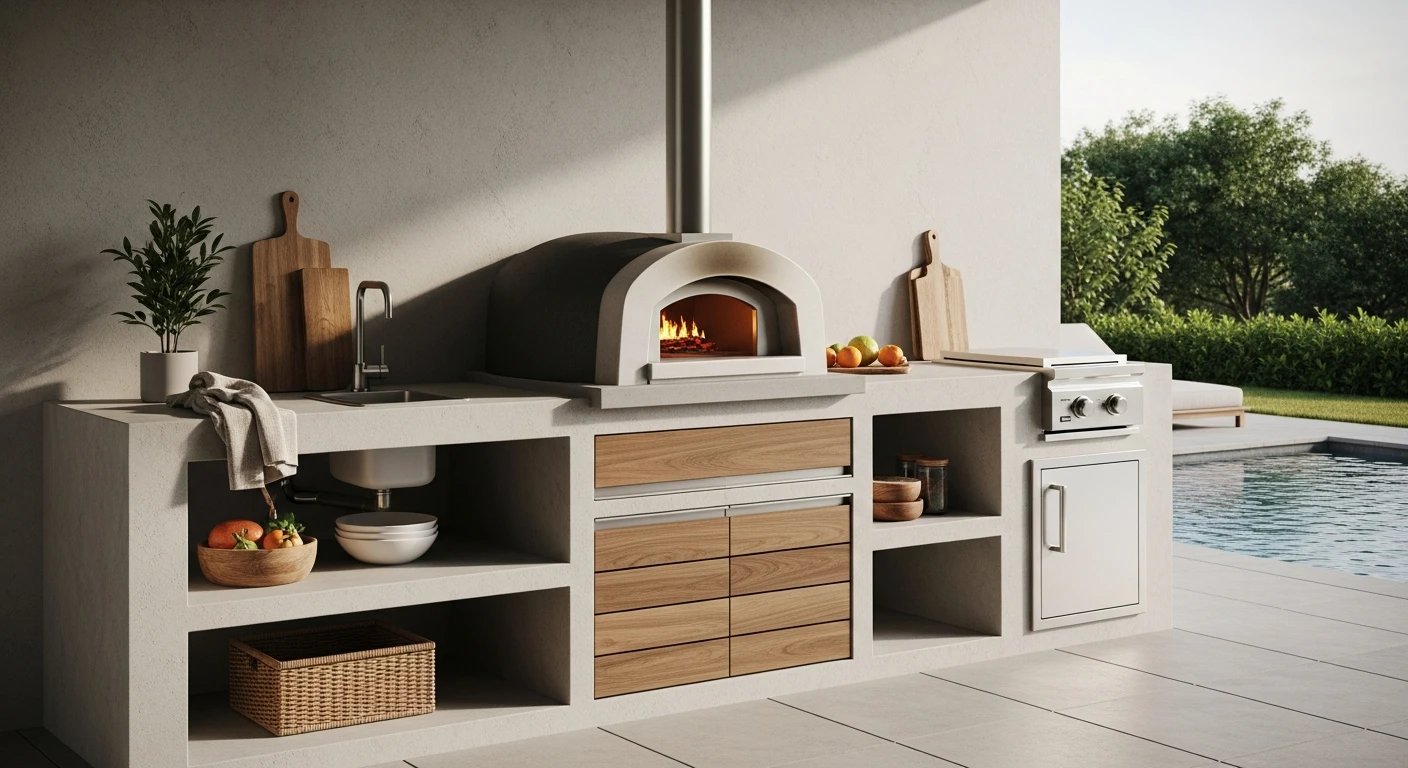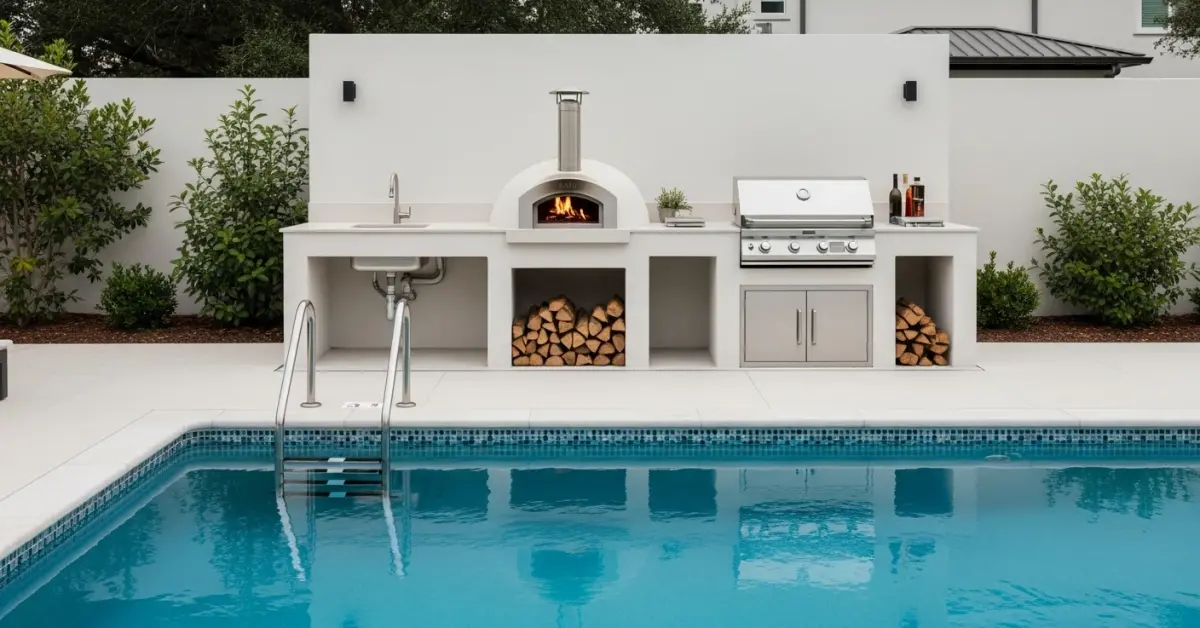
Outdoor Kitchen with Pizza Oven and Grill in Polk County: My Climate-Proofing Protocol for a 30% Extended Lifespan
I've seen too many Polk County outdoor kitchens fail prematurely due to our intense humidity and sun. My approach focuses on two non-negotiables: selecting marine-grade 316L stainless steel components and designing for cross-ventilation within the structure itself. This isn't just about looking good; it's a structural necessity to prevent moisture trapping and internal corrosion, especially in areas like Lakeland and Winter Haven where the afternoon rains are a daily reality. This protocol isn't theoretical; it's a field-tested system born from correcting costly mistakes in high-end builds.My Diagnostic Framework for Polk County’s Corrosive Climate
Before any design is drawn, I perform a site-specific environmental analysis. The combination of high humidity, intense UV exposure, and potential for airborne salinity (even inland in Florida) creates a uniquely aggressive environment. My methodology is built on two pillars: Material Integrity and Thermal & Airflow Dynamics. I once had to completely replace the cabinet doors on a new construction in a Davenport community because the builder used a standard 304-grade stainless steel. The rust spots appeared within a year, accelerated by the proximity to a saltwater pool. That project taught me that "good enough" materials are a guaranteed failure here. My entire process is designed to prevent that kind of catastrophic, and entirely avoidable, outcome.Material Science vs. Humidity: The 316L and Quartzite Mandate
For me, the material selection is non-negotiable. I exclusively specify 316L stainless steel for all metallic components, including fasteners. The 'L' signifies low carbon, which improves weldability, but the critical element is the addition of molybdenum. This is what provides superior resistance to the chloride corrosion common in our humid, pool-centric backyards. For countertops, I steer clients away from dark-colored granites which can reach dangerous surface temperatures in the Polk County sun. My preference is a light-colored quartzite. It has the durability of granite but with lower porosity, which drastically reduces the risk of mold and mildew growth in our damp environment, and its lighter color reflects solar radiation, keeping it cooler to the touch.The Strategic Build-Out: A Phased Implementation Plan
Building an outdoor kitchen that lasts here is a sequence of deliberate actions. Rushing or skipping a step compromises the entire structure. My implementation is broken down into precise phases, each with its own quality control checkpoint.- Phase 1: Foundation and Airflow Engineering: We begin with a properly cured concrete slab, but the critical step is integrating ventilation from the ground up. I mandate a minimum of two low-level intake vents at the base of the cabinet structure and two high-level exhaust vents directly below the countertop. This creates a natural chimney effect, constantly pulling fresh, dry air through the enclosure and forcing out moist, stagnant air. This single step can prevent 90% of internal moisture-related failures.
- Phase 2: Appliance Housing and Safety Zones: Each appliance has a dedicated, non-combustible housing. For the pizza oven, this means a calcium silicate board enclosure with a 2-inch air gap. The grill requires a specific grease-management-rated vent hood if under any part of a roof or lanai—a frequent oversight I see in Winter Haven pool-side setups. A 1-inch flange clearance must be maintained around the grill insert to dissipate heat safely.
- Phase 3: Countertop Templating and Sealing: Once the appliances are set, we template for the quartzite. The installation must use a 100% silicone-based adhesive, not a standard mortar, to allow for thermal expansion and contraction. After installation, every seam and the backsplash junction is sealed with a food-safe, mold-resistant impregnating sealer, which I insist on reapplying every 24 months.
Calibrating for Peak Performance and Longevity
The final stage is about fine-tuning the system for Polk County's specific conditions. The first firing of the pizza oven is a slow "curing" process, gradually raising the temperature over 5 hours to drive out any residual moisture from the refractory dome and prevent cracking. For gas grills, I adjust the air-to-fuel ratio on the burners to account for our humid, oxygen-less dense air, ensuring a clean blue flame and consistent cooking temperatures. My final quality check is a thermal imaging scan to confirm there are no hot spots on the surrounding structure and that the ventilation is performing as designed, aiming to keep the internal cabinet temperature no more than 20°F above ambient. This meticulous calibration is what ensures the kitchen not only looks perfect but performs flawlessly for decades. Your contractor specified "stainless steel" for your outdoor kitchen, but did they specify the alloy's molybdenum content to combat the specific corrosive nature of our Polk County air?Written by

Tags
outdoor bbq and pizza oven
bbq and pizza oven outdoor kitchen
outdoor grill and pizza oven
outdoor kitchen with grill and pizza oven
outdoor kitchen bbq and pizza oven
Outdoor Kitchen with Pizza Oven and Grill in Polk FL FAQ
How far should I build my outdoor kitchen from the pool's edge?
Position your outdoor kitchen, especially the grill and pizza oven, at least 10 to 15 feet away from the pool's edge to prevent safety hazards and contamination. This distance minimizes the risk of grease, ash, and food debris entering the water, which can drastically alter your pool's chemical balance and feed algae growth. A critical, often overlooked factor is prevailing wind direction; position cooking elements downwind from the pool to prevent smoke from staining the coping and irritating swimmers. This placement also helps avoid heat damage to sensitive materials like a vinyl liner, which can deform with prolonged exposure to high temperatures.
Can the runoff from cleaning my outdoor kitchen stain my pool deck or get into the pool?
Yes, runoff from cleaning your grill and kitchen surfaces can absolutely stain your deck and severely impact your pool's water chemistry if not properly managed. You must install a dedicated drainage system, such as a channel or French drain, that directs all wastewater away from the pool and into a safe disposal area, never onto the deck or lawn. Degreasers and cleaning agents contain phosphates and surfactants that act as potent algae food, leading to rapid blooms. A common mistake is assuming a sealed deck is enough; a proper, sloped drainage path is non-negotiable for protecting both your pool's finish and its water quality.
What kind of materials should I use for countertops and cabinets near a saltwater pool?
For a kitchen near a saltwater pool, you must select materials highly resistant to corrosion from aerosolized salt, such as granite, sealed concrete, or marine-grade polymers. Avoid porous stones like travertine or certain types of stainless steel (like 304 grade) for countertops and hardware, as they will pit and rust from constant exposure to the salt air. A better, though more expensive, choice for metal components is 316-grade stainless steel. The non-obvious failure point is often the cabinet hinges and drawer slides; ensure these small hardware components are also specified for marine or high-salinity environments to prevent them from seizing up.
Will the heat from a large pizza oven damage my nearby pool equipment?
A wood-fired pizza oven can radiate significant heat, potentially damaging pool equipment like the pump, filter, or heater if they are too close. Maintain a minimum clearance of 15 feet between the oven and any plastic equipment components, as prolonged radiant heat can warp PVC plumbing, melt plastic housings, and degrade sensitive electronic controls. Homeowners often focus on the front opening of the oven, but the entire dome and chimney radiate intense heat. Before installation, check the oven manufacturer's specifications for required clearances to combustible and non-combustible surfaces, and treat your pool pump and filter as sensitive, non-combustible items.
Do I need special plumbing and electrical hookups for an outdoor kitchen by a pool?
Yes, all plumbing and electrical installations for a poolside kitchen require specific safety measures, including Ground Fault Circuit Interrupter (GFCI) outlets for all receptacles. All electrical wiring must be run in waterproof conduit and be bonded to the pool's existing bonding grid to prevent stray voltage and potential shock hazards. For plumbing, a sink must have a grease trap and be connected to your home's sanitary sewer line, not a storm drain. A frequent oversight is failing to install a backflow preventer on the water supply line, which is critical to stop pool water from siphoning into your home's potable water system during a pressure drop.
Could digging for my kitchen's foundation or utility lines damage my pool's underground plumbing?
Excavating for your kitchen's foundation and utility lines poses a significant risk to your pool's buried plumbing, which is often not precisely mapped. Before any digging, it is crucial to have a professional locate and mark all underground pool pipes, including suction and return lines that can extend several feet from the pool shell. A seemingly minor nick from a shovel can create a hidden leak, potentially wasting over 1,800 liters of water per day and destabilizing the soil around the pool structure. Insist that your contractor hand-dig within five feet of any marked plumbing lines to avoid a costly repair that would require breaking up your new patio.