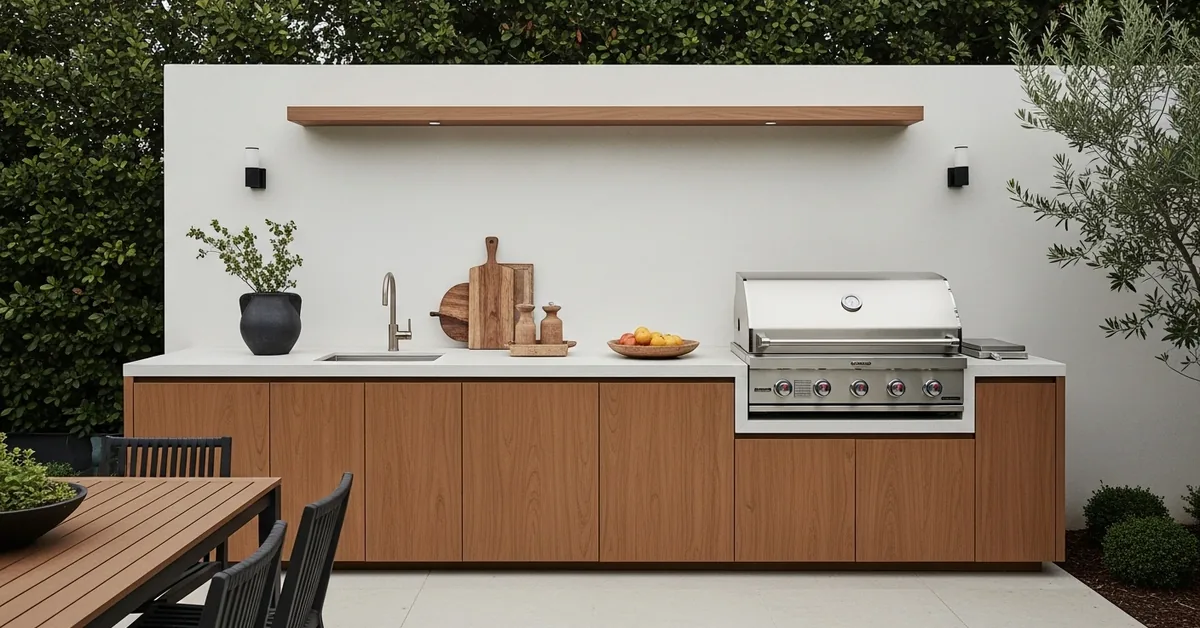
Outdoor Living Kitchen Polk County: My Framework for 30-Year Material Longevity in High-Humidity Zones
As a designer who has built and rectified dozens of outdoor kitchens across Polk County, I've seen a recurring, expensive pattern. Homeowners in beautiful communities from Lakeland to Winter Haven invest in stunning outdoor spaces, only to watch them degrade in under five years. The culprit isn't poor craftsmanship; it's a fundamental misunderstanding of our unique subtropical climate. The intense UV exposure, relentless humidity, and sudden downpours demand a material-first engineering approach, not just an aesthetic one. My methodology moves beyond generic advice and focuses on a climate-resilience audit before a single plan is drawn. This process directly addresses the environmental stressors specific to Central Florida, preventing the rust, warping, and material fatigue I’ve been called in to fix on properties near the Chain of Lakes. This ensures the structure's integrity and a functional lifespan that can exceed 30 years, protecting your investment.My Climate-First Audit for Polk County Outdoor Kitchens
The biggest mistake I see is treating an outdoor kitchen as an extension of an indoor one. The materials and construction principles are fundamentally different. On a recent project in a newer Bartow development, the original builder used standard exterior-grade plywood for the cabinet boxes, which had completely delaminated from moisture intrusion within three years. My diagnostic process starts by analyzing three critical environmental factors specific to the property's micro-location. First is the Direct Sun Exposure Path. I map the sun's trajectory across the proposed site throughout the day and year. This determines not only the placement of the refrigerator to avoid overworking the compressor but also the countertop material selection. A dark granite, for example, can become dangerously hot in the afternoon sun, making the surface unusable. Second, I assess the Prevailing Wind and Rain Direction. This dictates the optimal placement for grills and smokers to prevent smoke from blowing back into the lanai and informs the need for integrated weather-stripping in cabinetry. Finally, I perform a Humidity and Airflow Analysis, identifying potential moisture traps that lead to mold and corrosion.Material Selection: Beyond 304-Grade Stainless Steel
Once the audit is complete, material selection becomes a science, not a guess. Most builders default to 304-grade stainless steel for appliances, which is acceptable. However, the real points of failure are the cabinets, countertops, and framing that support them. My specifications are built to withstand the Polk County climate cycle. For framing, I exclusively use light-gauge steel studs or welded aluminum. Wood framing, even pressure-treated, will eventually warp and fail with the constant humidity. For cabinetry, I avoid wood entirely and specify HDPE (High-Density Polyethylene) or specific PVC-based cabinet systems. These are impervious to water, will not swell or rot, and are easy to clean. For countertops, while granite is popular, I often recommend sintered stone (like Dekton). Its non-porous nature means it won’t stain, and its high UV resistance prevents fading. More importantly, it has a very low thermal expansion rate, preventing cracks under the intense Florida sun.The 4-Phase Polk County Build Protocol
Executing the build requires a precise, phased approach to ensure every component is sealed and integrated correctly. I’ve refined this protocol after seeing installations fail due to overlooked details in the assembly sequence.- Phase 1: Foundation & Utility Mapping. We start with a properly cured concrete slab, ensuring it's pitched correctly for drainage. All plumbing and electrical conduits are run and sealed before any framing begins. This is a critical step to prevent water intrusion from below, especially in areas with Polk County's sandy, porous soil.
- Phase 2: Steel Framing & Appliance Integration. The steel frame is assembled, and appliance cutouts are made with a 1/8-inch tolerance for expansion. I mandate the use of stainless steel fasteners exclusively; galvanized screws will corrode and leave rust streaks within two seasons.
- Phase 3: Cladding & Countertop Templating. A cement backer board is installed over the frame, and all seams are sealed with a waterproof membrane. This creates a fully waterproof "box." Only then is the final stone or stucco finish applied. Countertop templating happens at this stage for a perfect fit.
- Phase 4: Appliance Installation & Ventilation Testing. Appliances are installed, connected, and tested. For the vent hood, I calculate the required CFM (Cubic Feet per Minute) based on the open-air setting, which is often 25% higher than indoor kitchen standards to be effective.
Precision Adjustments & Quality Standards
The difference between a 10-year kitchen and a 30-year kitchen is in the final 5% of the work. These are my non-negotiable quality checks. I insist on creating cabinet cross-ventilation paths, either through discreet vents in the toe-kicks or the back of the island, to prevent stagnant, humid air that breeds mold. Furthermore, every countertop installation must include a drip edge underneath the overhang. This small detail channels rainwater away from the cabinet faces, preventing water streaks and moisture from getting into the doors and drawers. Finally, I perform a "moisture ingress test" with a directed spray of water after construction is complete, identifying and sealing any potential weak points before the project is handed over. This simple test has saved my clients thousands in future repairs. Given the extreme temperature fluctuations from a midday thunderstorm cooling a sun-baked surface, have you calculated the thermal expansion coefficient for your chosen countertop material against the steel frame to prevent long-term stress fractures?Written by

Tags
outdoor kitchen projects
prefab outdoor kitchen
prefabricated outdoor kitchen
modular bbq outdoor kitchen
covered outdoor kitchen
Outdoor Living Kitchen in Polk FL FAQ
What materials should I choose for my outdoor kitchen countertops and cabinets if they're right next to my saltwater pool?
You must select non-porous, corrosion-resistant materials like granite, soapstone, or specialized outdoor-rated stainless steel to withstand constant exposure to salt and chlorinated water. Avoid porous stones like marble or travertine, as they will etch and stain from pool chemical splash-out, and never use standard indoor-grade stainless steel, which will show rust spots within a single season. The key is specifying marine-grade (316) stainless steel for all metallic components, including cabinet hardware and appliance fronts, as it contains molybdenum for superior corrosion resistance against chlorides.
How far away from the pool's edge should my outdoor kitchen be for safety and to protect the equipment?
Your outdoor kitchen, especially any electrical outlets or gas lines, should be located a minimum of 10 to 15 feet from the pool's water edge to comply with most local building codes and prevent electrical hazards. This distance minimizes the risk of splash damage to expensive appliances like grills and refrigerators, whose electronics are not designed for direct water contact. A critical, often overlooked detail is prevailing wind direction; positioning the kitchen upwind from the pool significantly reduces the amount of chlorine vapor and mist that can accelerate corrosion on your equipment.
Do I need a separate plumbing system for my outdoor kitchen sink, or can it connect to my pool's plumbing?
Your outdoor kitchen requires a completely separate plumbing system for both fresh water supply and wastewater drainage; never connect it to the pool's circulation system. Tying into the pool plumbing would introduce soaps, food particles, and grease, which would overwhelm the pool filter, disrupt the water's pH balance, and promote algae growth. The kitchen drain must be properly trapped and routed to your home's main sanitary sewer line, just like an indoor sink, to handle waste safely and prevent odors and clogs.
What kind of ventilation is required for a grill installed under a covered patio or pavilion near my pool?
A grill installed under any type of roof structure requires a dedicated, outdoor-rated vent hood to safely exhaust heat, smoke, and dangerous gases like carbon monoxide away from the seating area. Simply having an open-sided patio is not sufficient ventilation and creates a serious fire and health hazard. The vent hood must be powerful enough for the grill's heat output (measured in BTUs) and constructed from weather-resistant materials to prevent premature failure from humidity and temperature swings common in a poolside environment.
How do I prevent pests like ants and wasps from taking over my outdoor kitchen and dining area?
Effective pest prevention relies on sealing all food sources and eliminating nesting spots, starting with cabinets that have tight-fitting, fully sealed doors. Choose non-porous countertop materials with minimal seams where food debris can collect, and ensure your outdoor trash receptacle has a heavy, self-closing lid. A crucial design choice is to avoid hollow metal legs or unsealed masonry voids in the kitchen's structure, as these are prime locations for wasps to build hidden nests that are difficult and dangerous to remove once established.
What is the most common point of failure you see in outdoor kitchen appliances?
The most common and premature failures in outdoor kitchen appliances are caused by moisture intrusion into their electronic components, such as digital displays and ignition modules. Homeowners often mistakenly believe that a 'weather-resistant' rating means an appliance is fully waterproof, but it is not designed to withstand sustained rain or direct spray from pool cleaning. Using a high-quality, fitted weatherproof cover for every appliance when not in use is the single most important maintenance step to prevent costly electronic repairs and can easily double the lifespan of your investment.