
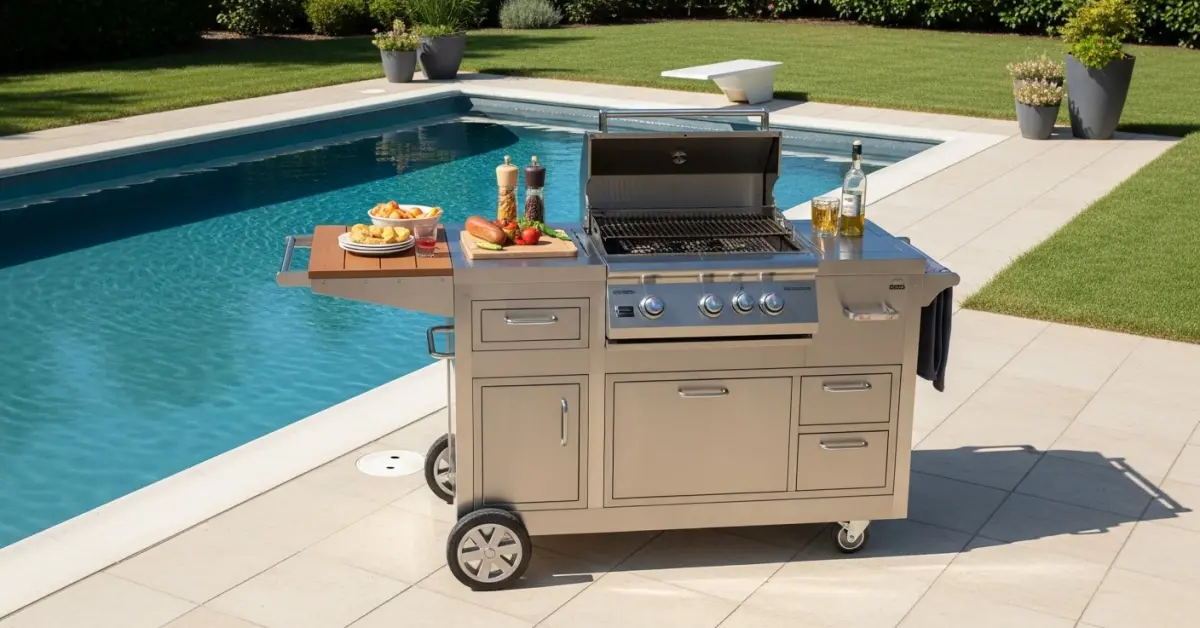
Rolling Outdoor Kitchen Lake County: My Framework for a 15-Year Lifespan in Florida's Humidity
I see the same mistake made across Lake County, from the beautiful lakefront homes in Tavares to the sprawling new constructions in Clermont: homeowners invest in a gorgeous rolling outdoor kitchen, only to watch it degrade in under three years. The culprit isn't just the intense sun and sudden afternoon downpours; it's a fundamental misunderstanding of material science and structural dynamics. The standard off-the-shelf units are simply not engineered for our specific, high-humidity, high-UV environment. My entire approach is built on reversing this trend. I focus on creating a mobile culinary station that's not just an appliance but a piece of engineered equipment. The goal is a minimum 15-year operational lifespan with predictable, minimal maintenance. This is achieved by prioritizing the chassis integrity and material selection over purely aesthetic features, a philosophy I've refined after correcting dozens of failed installations.The C-M-W Framework: My Diagnostic for Mobile Kitchen Failure
After analyzing countless rusted frames and warped countertops, I developed what I call the C-M-W (Chassis, Modularity, Weatherproofing) Framework. It's a diagnostic and building methodology that addresses the three primary failure points I consistently observe. This isn't about picking a nice grill; it's about building the platform that allows that grill to perform for over a decade.A Technical Deep-Dive into the Framework's Core Pillars
The C-M-W Framework forces a shift in thinking. The chassis isn't just a cart; it's the foundation. Modularity isn't a feature; it's a strategic choice for mobility and longevity. And weatherproofing isn't a cover; it's an integrated system.- Chassis Integrity: I’ve seen frames built with spot-welded, thin-gauge steel fail catastrophically. My non-negotiable standard is a frame constructed from 1.5-inch square tubing with a minimum wall thickness of 1/8 inch. All joints must be fully TIG welded for maximum strength. The most critical, and often overlooked, component is the casters. For the uneven pavers and sloped driveways common in Mount Dora, I specify 6-inch locking polyurethane casters with a dynamic load rating at least 200% of the kitchen's total calculated weight. This prevents stress fractures at the mounting points.
- Strategic Modularity: A single, monolithic rolling kitchen is a logistical nightmare. My methodology involves designing separate, dockable modules: one for the grill, one for a prep station with a sink, and one for storage. This keeps each unit under a manageable weight, typically sub-200lbs, making it easy for one person to move and store them to avoid a sudden thunderstorm. This modularity also simplifies repairs and upgrades.
- Integrated Weatherproofing: A simple vinyl cover isn't enough. True weatherproofing starts with materials. I forbid the use of wood or wood-composite countertops. My go-to is marine-grade HDPE or a custom-poured concrete top with a specific sealant. All hardware—screws, hinges, handles—must be 316-grade stainless steel. Standard 304-grade stainless steel, which many high-end brands use, will develop surface rust spots within a single Lake County summer due to the ambient moisture.
From Blueprint to Patio: My 5-Step Rolling Kitchen Assembly Protocol
Building a resilient rolling outdoor kitchen is a process of precision. I’ve distilled my hands-on experience into a strict five-step protocol that eliminates guesswork and ensures a predictable, high-quality outcome. I've used this exact process on projects from large estates in the Eustis area to tighter patio homes where space is at a premium.- Chassis Load Calculation & Design: Before a single piece of metal is cut, I calculate the total weight of all components (grill, propane tank, sink, countertop material). This figure dictates the required material specs for the frame and casters. I model the structure to ensure zero flex under full load.
- Material Sourcing & Verification: I personally verify the grade of the stainless steel and the density of the polymer sheets. A common supplier error is substituting lower-grade materials. This one step has prevented at least three projects from premature failure.
- Frame Assembly & Joint Welding: The frame is tacked together, squared, and then fully TIG welded. I pay special attention to the caster mounting plates, adding extra gussets for reinforcement—a lesson learned from a project where a heavy granite top caused a weld to fail during movement.
- Countertop & Cladding Installation: The countertop is mounted with a small, flexible gap to allow for thermal expansion under the Florida sun. I also engineer a subtle drip-edge design into the countertop overhang, which channels rainwater away from the cabinet faces and frame, preventing water intrusion.
- The "Shove Test" & Final Balance Check: My final quality check is a proprietary, low-tech test. I give the completed unit a firm shove from multiple angles on an uneven surface. It must roll smoothly without wobbling or binding, and the locking casters must hold it perfectly stationary on a slight incline. If it fails, the balance is off, and adjustments are made.
Precision Tuning for Lake County's Unique Conditions
Beyond the core build, a few final adjustments are critical for our local environment. I always recommend a custom-fit cover made from a UV-rated marine fabric like Sunbrella, which won't crack after two seasons of sun exposure. For properties near the Harris Chain of Lakes, I also apply a specific corrosion-inhibiting spray to all weld points as an added layer of protection against the exceptionally high humidity. These small, experience-driven details are what separate a functional unit from a decade-long investment. Given the intense and direct sun exposure here, have you calculated the thermal expansion coefficient of your chosen countertop material and how that will stress the underlying frame over time?Written by

Tags
outdoor kitchen island on wheels
outdoor portable kitchen island
outdoor rolling island
rolling outdoor kitchen island
outdoor island on wheels
Rolling Outdoor Kitchen in Lake FL FAQ
How do I safely connect utilities like gas and water to a rolling outdoor kitchen?
Securely connect your rolling kitchen using a certified flexible gas hose with a quick-disconnect fitting and a food-grade water hose for the sink. For gas, ensure the connection is leak-tested with a soap solution after every hookup and that the propane tank is firmly secured to the cart to prevent tipping. Never use a standard garden hose for your water supply, as it can leach unsafe chemicals; a dedicated potable water hose is essential for any food preparation or hand washing. Always turn off the gas at the tank valve before disconnecting.
Can I leave my rolling outdoor kitchen outside in all weather conditions?
No, you should protect your rolling kitchen from harsh weather by using a heavy-duty, waterproof cover or moving it to a sheltered area like a garage or covered patio. While many units are built with weather-resistant materials like stainless steel and marine-grade polymers, prolonged exposure to rain can damage electrical components like igniters and outlets. More importantly, high winds can create a serious tipping hazard, especially if a heavy propane cylinder is attached, posing a significant safety risk.
What kind of surface is required to safely use and move a rolling outdoor kitchen?
A rolling outdoor kitchen requires a firm, level, and non-combustible surface like a concrete patio, stone pavers, or a solid deck for safe operation. Attempting to use the unit on soft ground like grass or uneven gravel can cause it to become unstable, making cooking hazardous and potentially leading to tipping. The casters, even heavy-duty ones, can sink into soft surfaces, making movement difficult and straining the frame; a minimum surface hardness comparable to asphalt is a good rule of thumb for both stability and mobility.
How much weight can the countertops and shelves on a mobile kitchen typically hold?
Most rolling kitchen countertops are designed to support typical cooking appliances and food prep, but you must check the manufacturer's specific weight limits before placing heavy items. A common failure point is overloading a side shelf, which often has a much lower capacity—sometimes as little as 15 pounds—than the main surface. Placing a heavy cooler or a stack of cast iron pans on an extended side shelf can cause the support bracket to bend or break, creating an immediate safety hazard during use.
What is the best way to clean and maintain the different materials on my rolling kitchen?
Clean stainless steel surfaces with a specialized stainless steel cleaner or a simple mixture of warm water and mild dish soap, always wiping in the direction of the grain to avoid scratches. For stone or composite countertops, avoid acidic cleaners like vinegar, which can etch the surface; use a pH-neutral cleaner instead. The most overlooked maintenance task is cleaning the caster wheels and axles, as debris, grease, and hair can build up, causing them to seize and making the unit extremely difficult to move.
Are there specific safety precautions for grilling on a rolling kitchen compared to a stationary one?
Yes, the primary safety precaution is to always lock the caster wheels before you begin cooking to prevent the unit from moving unexpectedly. Ensure the kitchen is positioned at least 10 feet away from your house siding, deck railings, and any overhanging branches, as its mobility can make it easy to forget standard clearance rules. Before lighting the grill, confirm that the flexible gas hose is not kinked or resting against any hot surfaces of the grill body, a common oversight that can lead to the hose melting and causing a dangerous gas leak.


