Small Outdoor Kitchen Manatee County: My Protocol for a 15-Year Rust-Free Lifespan
After designing and troubleshooting dozens of outdoor kitchens here in Manatee County, I’ve identified a catastrophic, yet common, failure point: premature corrosion. Homeowners in Lakewood Ranch and Parrish invest in beautiful setups, only to see rust spots appear on their stainless steel cabinets and grill hoods within 24 months due to our persistent humidity and salty air, especially for those closer to the Manatee River or out on Anna Maria Island. My entire approach is built to prevent this specific, costly problem before a single cabinet is installed. The solution isn't a special coating or a cleaning routine; it's a non-negotiable material standard and a ventilation strategy most installers overlook. The big-box store "stainless steel" is often a lower grade that simply cannot withstand our environment. The key to longevity isn't just the kitchen's look, but its metallurgical and engineering resilience to the specific atmospheric conditions we face from Bradenton to the coast.My Coastal Durability Framework: Beyond the Aesthetics
I developed my "Coastal Durability Framework" after being called to a project on Longboat Key where a $20,000 outdoor kitchen was showing significant rust after just one season. The owner was told it was "marine-grade," but it clearly wasn't. My framework is a three-part diagnostic and implementation system that ensures structural integrity against the unique challenges of Manatee County's climate. It’s not about picking the prettiest granite; it’s about a system that works. The three core pillars I assess for every project are:- Material Science: Analyzing the specific grade of stainless steel and other materials based on the property's exact proximity to saltwater.
- Airflow Dynamics: Engineering a ventilation solution that not only removes smoke but also mitigates moisture buildup within a lanai or under a patio roof.
- Electrical Integrity: Ensuring all electrical components are not just code-compliant but fortified against moisture intrusion, a common failure point I see in older Bradenton homes.
The Technical Deep Dive on Material Selection
This is the single most critical element. I’ve seen projects fail because the builder tried to save 10% on materials by using the wrong metal. Here's my non-negotiable specification: the absolute minimum for any outdoor metal component, from screws to cabinet faces, is 304-grade stainless steel. It has a higher nickel and chromium content than the cheaper 430-grade, which provides superior corrosion resistance. For any property east of I-75, this is generally sufficient. However, for any project on Anna Maria Island, Longboat Key, or within a mile of the coast, I mandate 316-grade stainless steel. This is a true marine-grade alloy containing molybdenum, which dramatically increases its resistance to chlorides (salt). It's a higher upfront investment, but it prevents a complete replacement in five years. For countertops, I steer clients away from certain porous stones that can harbor mildew in our humidity, recommending dense granite or specially formulated outdoor-rated quartz composites that won't yellow in the intense Florida sun.Step-by-Step Implementation for Lanai and Patio Kitchens
Executing the build requires a precise, sequential process. I've refined this list over years of installations, from compact lanai kitchens in new Parrish communities to more exposed patio setups in West Bradenton. Each step is a critical control point.- Phase 1: Site and Utility Audit. I personally verify the location of a dedicated GFCI-protected circuit. Tapping into existing lanai lighting circuits is a major code violation I've had to fix multiple times. We also assess the concrete pad for proper slope to ensure water doesn't pool against the cabinet base.
- Phase 2: Frame and Cabinet Installation. All structural components and fasteners must be the specified stainless steel grade. I’ve seen installers use zinc-plated screws that rust and stain the cabinet faces within a year. This is a small detail that has a massive impact on the kitchen's lifespan.
- Phase 3: Ventilation System Mapping. For kitchens inside a screened lanai, a vent hood is not an option; it's a necessity. I perform a specific CFM (Cubic Feet per Minute) calculation based on the grill's BTU output and the enclosed volume of the lanai space to ensure effective smoke and grease capture, preventing buildup on the screen and ceiling.
- Phase 4: Appliance and Countertop Integration. We ensure all appliances, like refrigerators and side burners, have the required manufacturer-specified clearance from combustible materials. This is a critical fire safety check. Countertops are installed with a slight overhang (at least 1.5 inches) to shield the cabinet doors from rain.
Precision Adjustments for Peak Performance and Safety
The final 5% of the work is what separates a standard installation from a truly resilient one. These are the small adjustments that I insist on. For instance, after installing a granite countertop, we apply a high-quality penetrating sealer and educate the homeowner on a re-application schedule. This prevents our frequent rain showers and humidity from causing water spots or stains. Another critical check is the gas line. We perform a leak test at a higher pressure than required by code to ensure the connections are absolutely secure. Finally, I test the entire electrical system under load, ensuring the GFCI breaker is functioning perfectly and that there are no voltage drops when the refrigerator compressor kicks in at the same time as the ignition system. This level of detail prevents nuisance tripping and ensures reliability. Have you confirmed that your chosen contractor's material specifications differentiate between 304-grade and 316-grade stainless steel based on your home's specific location within Manatee County?Written by

Tags
outdoor kitchen designs for small spaces
mini outdoor kitchen
compact outdoor kitchen
small outdoor kitchen with bar
small outdoor kitchen island
Small Outdoor Kitchen in Manatee FL FAQ
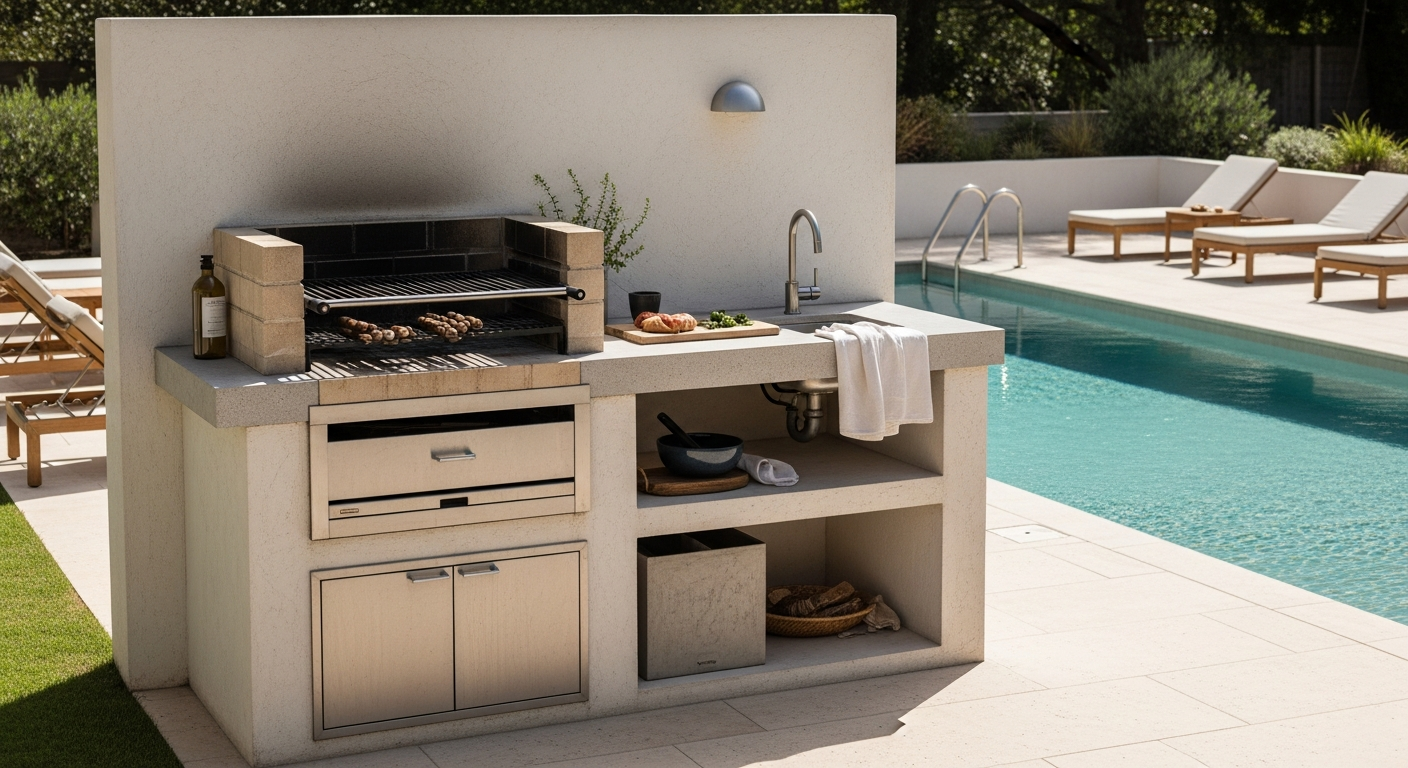
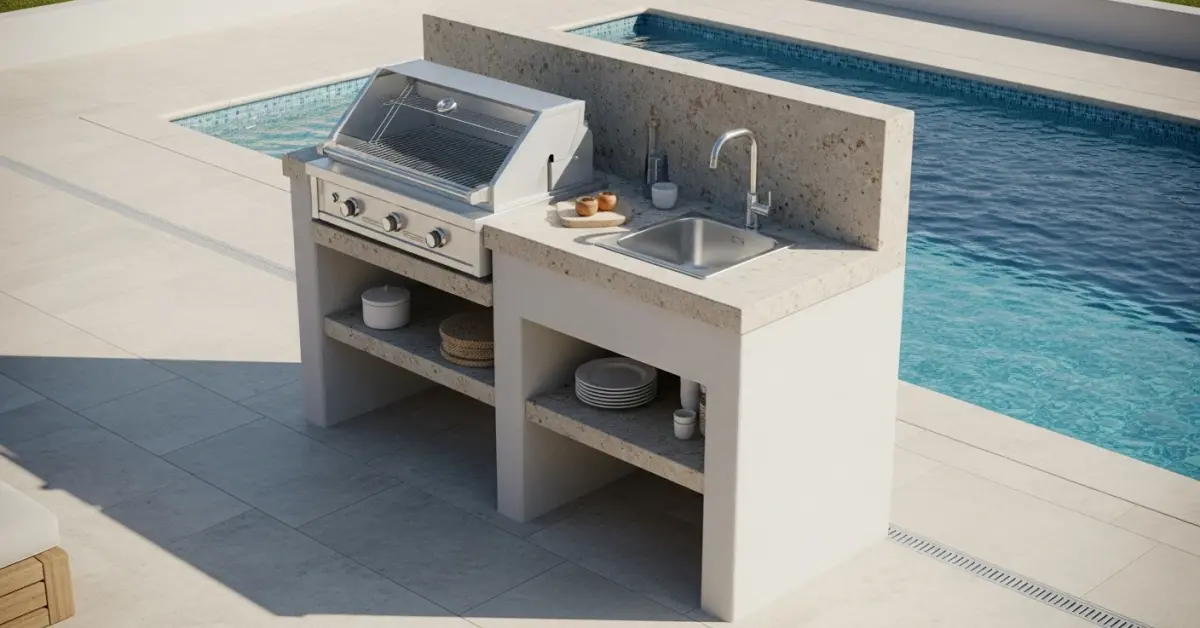
Can I install a sink in my small outdoor kitchen if it's right next to my pool?
Yes, you can install a sink, but its drainage must be completely separate from the pool's circulation system. Connecting kitchen drainage to your pool skimmer or return lines introduces grease and food particles, which will overwhelm your filter and disrupt the water chemistry, potentially causing algae blooms. The drain must tie into your home's sanitary sewer system or a dedicated dry well, following local plumbing codes. Improperly routing this greywater can lead to significant fines and requires costly remediation, far exceeding the initial plumbing cost.
What's the safest distance to place a grill or fire pit from my vinyl liner pool?
Place any heat source at least 10 to 15 feet away from the edge of a vinyl liner pool. Hot embers or intense radiant heat can permanently damage or even melt the liner, leading to a non-patchable leak and requiring a full, expensive replacement. Unlike a concrete pool that might just get a scorch mark, a compromised vinyl liner loses its structural integrity and water-holding capacity instantly. Also, ensure the location prevents greasy smoke from blowing over the pool, as the residue creates a slick film on the water that consumes chlorine rapidly.
Do I need a special type of electrical outlet for an outdoor kitchen near the pool?
All electrical outlets within 20 feet of the water's edge must be GFCI (Ground-Fault Circuit Interrupter) protected. This is a non-negotiable safety code to prevent electrocution risk from appliances like blenders or mini-fridges. Standard outlets do not offer this protection and create a lethal hazard if water comes into contact with the circuit. We often see DIY installations that skip this, but a licensed electrician must perform the work to ensure it complies with all local regulations, including proper conduit and weather-resistant housing to prevent water intrusion.
What countertop material won't be ruined by pool water splash-out?
Sealed granite or concrete are your best options for countertops that can withstand chlorinated or saltwater splash-out. Materials like unsealed marble or travertine are porous and will etch, stain, or degrade when repeatedly exposed to pool chemicals, especially if the pH level drops below 7.2, making the water more acidic. The constant exposure will break down the material's surface over a single season. Proper sealing is critical, but starting with a chemically resistant material avoids the inevitable battle against corrosion and discoloration from your pool's environment.
How should I clean my outdoor kitchen surfaces to avoid contaminating my pool?
Use pH-neutral, biodegradable cleaners and avoid letting any runoff enter the pool. Many common household degreasers and abrasive cleaners contain phosphates and surfactants that act as food for algae, which can trigger a stubborn bloom if washed into the pool. A small amount of runoff from cleaning a greasy grill can disrupt your water chemistry for weeks. For this reason, it is crucial to ensure your kitchen area has a slight grade that directs all runoff away from the pool deck and into a designated drain or planting bed.
Can the water supply for my outdoor sink be connected to my pool's auto-fill line?
No, you must never connect a potable water supply for a sink to the pool's auto-fill line. Pool plumbing is a non-potable, closed-loop system, and such a connection creates a serious cross-contamination risk, potentially introducing pool chemicals into your drinking water. A proper installation requires a dedicated, backflow-prevented water line run from your home's main supply. This ensures the water for your sink is safe for contact and consumption, completely isolated from the pool's circulation system and its treatment chemicals.