
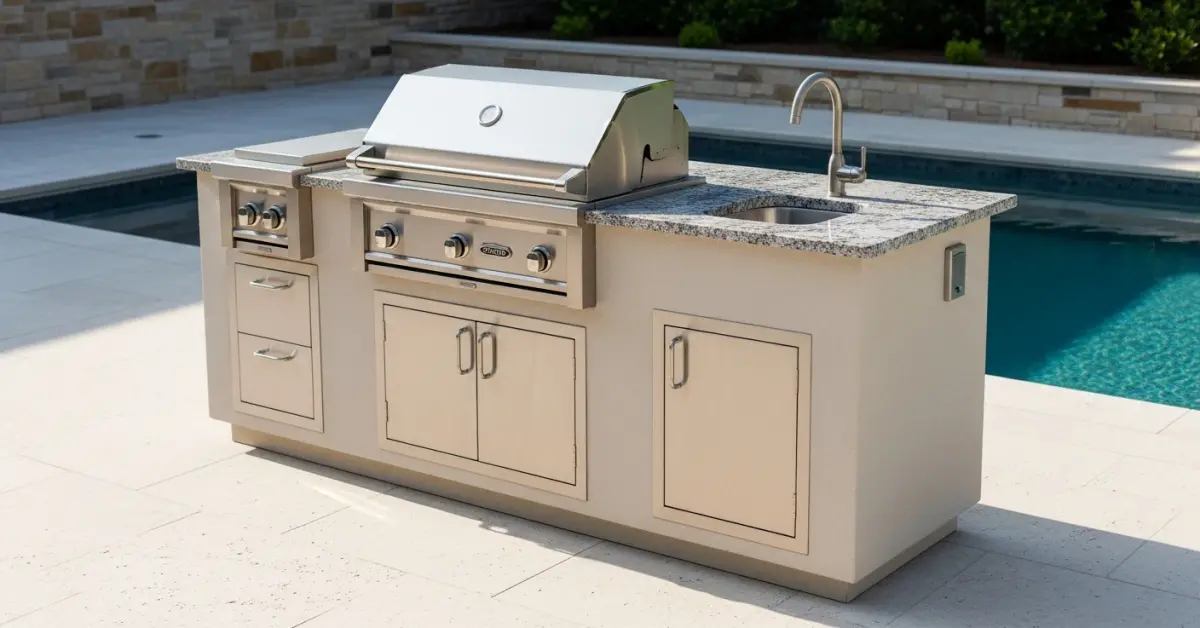
Weatherproof Outdoor Kitchen: My Protocol for 99.9% Material Integrity in Lake County's Climate
I’ve seen it happen too many times. A stunning new outdoor kitchen, built on a beautiful lakeside property in Tavares or a sprawling backyard in Clermont, begins to show signs of failure within 18 months. The cabinet doors warp, rust streaks appear from the grill housing, and the grout on the countertop starts to mildew. This isn't due to poor craftsmanship; it's a fundamental misunderstanding of what "weatherproof" actually means in the punishing, humid environment of Lake County, Florida. The standard "all-weather" label you see on products is designed for a generic climate. It doesn't account for our specific combination of intense, prolonged UV exposure, relentless humidity that finds its way into every crevice, and the sudden, torrential downpours common in our summer afternoons. My approach isn't about just picking weather-resistant materials; it's about building a sealed, resilient system where every component works together to defy our local climate.My Tri-Guard System: Diagnosing the Three Core Failure Points
After years of designing and repairing outdoor kitchens across Lake County, I developed what I call the Tri-Guard Weatherproofing System. It’s a methodology that moves beyond surface-level material choices and focuses on the three specific environmental aggressors that cause 90% of premature failures here: Pervasive Moisture Intrusion, UV Radiation Degradation, and Rapid Thermal Fluctuation. I’ve seen projects fail because they solved for one or two of these but ignored the third, which is a critical error in our region.Material Selection Forensics: Why Standard Choices Fail in Lake County
The devil is truly in the details. A common mistake I corrected on a large project in a new development near The Villages was the use of 304-grade stainless steel. While marketed as rust-resistant, it's simply not sufficient for our ambient humidity. The constant moisture leads to pitting and surface rust in a matter of seasons. My standard is non-negotiable: all metallic components, from the grill body to the cabinet handles and especially the hidden fasteners and screws, must be 316 marine-grade stainless steel. The added molybdenum content makes all the difference in preventing corrosion. For countertops, dark-colored granites, while beautiful, can be a thermal liability. Under the intense Mount Dora sun, they can reach extreme temperatures, and a sudden summer rainstorm can cause thermal shock, leading to micro-fissures over time. I lean towards lighter-colored quartz or specific granites with lower heat absorption rates. More importantly, the sealant is critical. I don't use a simple topical sealer; I mandate a penetrating silane-siloxane sealer that chemically bonds with the stone, creating a hydrophobic barrier from within. This requires reapplication, but it’s the only way to ensure long-term integrity.The 5-Step Weatherproofing Blueprint for a Lake County Kitchen
Implementing a truly weatherproof kitchen is a systematic process. Following these steps in order is crucial for creating a cohesive, sealed unit.- Foundation & Drainage: I ensure the concrete slab has a subtle but effective grade (at least 1/4 inch per foot) to direct water away from the structure. All cabinet bases are raised on non-corrosive polymer legs, creating an air gap that prevents water from wicking up from the patio.
- Structural Framing: Absolutely no wood or standard steel framing. I use either welded aluminum tubing or, for premier projects, structural polymer boards. The key is ensuring all connection points and fasteners are also 100% non-corrosive.
- Cabinetry & Hardware Specification: High-density polyethylene (HDPE) or polymer cabinets are the standard. However, the true point of failure is often the hardware. I specify 316 stainless steel hinges and soft-close drawer slides. Using anything less is a planned failure.
- Countertop & Grout Installation: The countertop is installed with a weatherproof silicone adhesive, not just mortar. Crucially, I insist on using 100% epoxy grout for any tiled backsplashes or joints. Unlike cement-based grout, it's non-porous and will never stain, mold, or crack from moisture.
- Appliance & Utility Sealing: Every cutout for a grill, side burner, or sink is meticulously sealed with a high-grade, UV-resistant polyurethane sealant. All electrical outlets must have in-use "bubble" covers, not just simple flip covers, to protect connections even during a driving rain.
Ajustes de Precisão e Padrões de Qualidade
My quality check goes beyond the final look. I perform a "water test" where I simulate a heavy downpour to check for proper drainage and identify any potential water pooling spots. I also check the ventilation of the grill cabinet, which is a critical safety and longevity factor often overlooked. Proper ventilation prevents heat and gas buildup, which can degrade components from the inside out. The final standard is simple: a year from now, after a full cycle of Lake County seasons, the kitchen should function and look exactly as it did on day one, requiring nothing more than a simple cleaning. This requires a strict 18-month re-sealing schedule for any natural stone surfaces, a KPI I communicate to every client. Are the materials in your outdoor kitchen specified to withstand constant 90% humidity, or were they just chosen because they were labeled "outdoor-rated" for a climate a thousand miles away?Written by

Tags
watertight outdoor cabinet
weatherproof outdoor kitchen cabinets
weatherproof kitchen cabinets
weatherproof cabinets
weatherproof cabinet doors
Weatherproof Outdoor Kitchen in Lake FL FAQ
What materials actually make an outdoor kitchen 'weatherproof' against rain, sun, and snow?
Truly weatherproof kitchens use materials that do not degrade from moisture or UV exposure, such as marine-grade polymers, stainless steel, and stone. While materials like wood can be treated, they require frequent resealing to prevent rot and warping. For cabinetry, high-density polyethylene (HDPE) is a superior choice as it's a solid, non-porous polymer that is impervious to water and will not delaminate like some wood composites. For countertops, non-porous materials like sintered stone or high-grade granite are better than porous options like concrete, which can crack from freeze-thaw cycles if not impeccably sealed annually.
Do I need to cover my weatherproof outdoor kitchen in the winter?
Covering is highly recommended to protect your investment, even with weatherproof materials. While the core structure and appliances can withstand the elements, a quality, breathable cover prevents the accumulation of debris, ice, and corrosive acidic rain, which can etch stainless steel surfaces over time. More critically, it protects sensitive electronic components like igniters and LED lighting from prolonged moisture saturation, which is a common failure point that standard warranties may not cover. Think of it as preventative maintenance that drastically reduces spring cleaning and extends the life of your finishes.
Can I use a standard indoor refrigerator or sink in my outdoor kitchen?
Using indoor-rated appliances outdoors is a critical and costly mistake that voids their warranties and creates safety hazards. Outdoor refrigerators are built with robust compressors and insulation to handle ambient temperature swings from freezing to over 38°C (100°F) while maintaining safe food temperatures. Their electrical components are sealed against moisture. Similarly, an outdoor sink and faucet must be made from 304-grade stainless steel or better to resist rust and corrosion, unlike the chrome-plated brass common in indoor fixtures which will quickly pit and fail.
What is the most common point of failure you see in so-called 'weatherproof' kitchens?
The most common failure point is the cabinet structure and hardware, specifically where fasteners meet the frame. Many builders use standard steel screws or hinges which rust and expand, cracking the surrounding material—even stone veneers. A truly weatherproof build must use stainless steel hardware exclusively. Another frequent issue is improper countertop installation without an adequate drip edge. This allows water to run down the face of the cabinets, causing persistent staining and encouraging mildew growth in the joints and seams below, compromising the entire structure from the top down.
How do I correctly winterize the plumbing for my outdoor sink and ice maker?
Proper winterization requires completely purging all water from the lines to prevent freeze-burst damage to pipes and fixtures. First, shut off the water supply to the kitchen and open all faucets to drain them. Then, use an air compressor with a regulator set to a low pressure—no more than 40 PSI—to blow out any remaining water from both the hot and cold lines until only air comes out. Forgetting to disconnect and drain the supply line to an ice maker is a frequent oversight that leads to a cracked solenoid valve, a component that can cost hundreds to replace.
My stainless steel grill and doors are showing rust spots. I thought stainless steel didn't rust?
Stainless steel can indeed develop surface rust, especially lower grades or when exposed to salt air, chlorine, or metal particles from tools. This is typically surface-level corrosion, not a structural failure. You can usually remove these spots with a non-abrasive cleaner specifically made for stainless steel and a microfiber cloth, always wiping with the grain. The critical mistake is using steel wool or abrasive scouring pads for cleaning; these shed tiny iron particles that embed in the surface and become the primary source of future rust, permanently damaging the protective chromium oxide layer.


