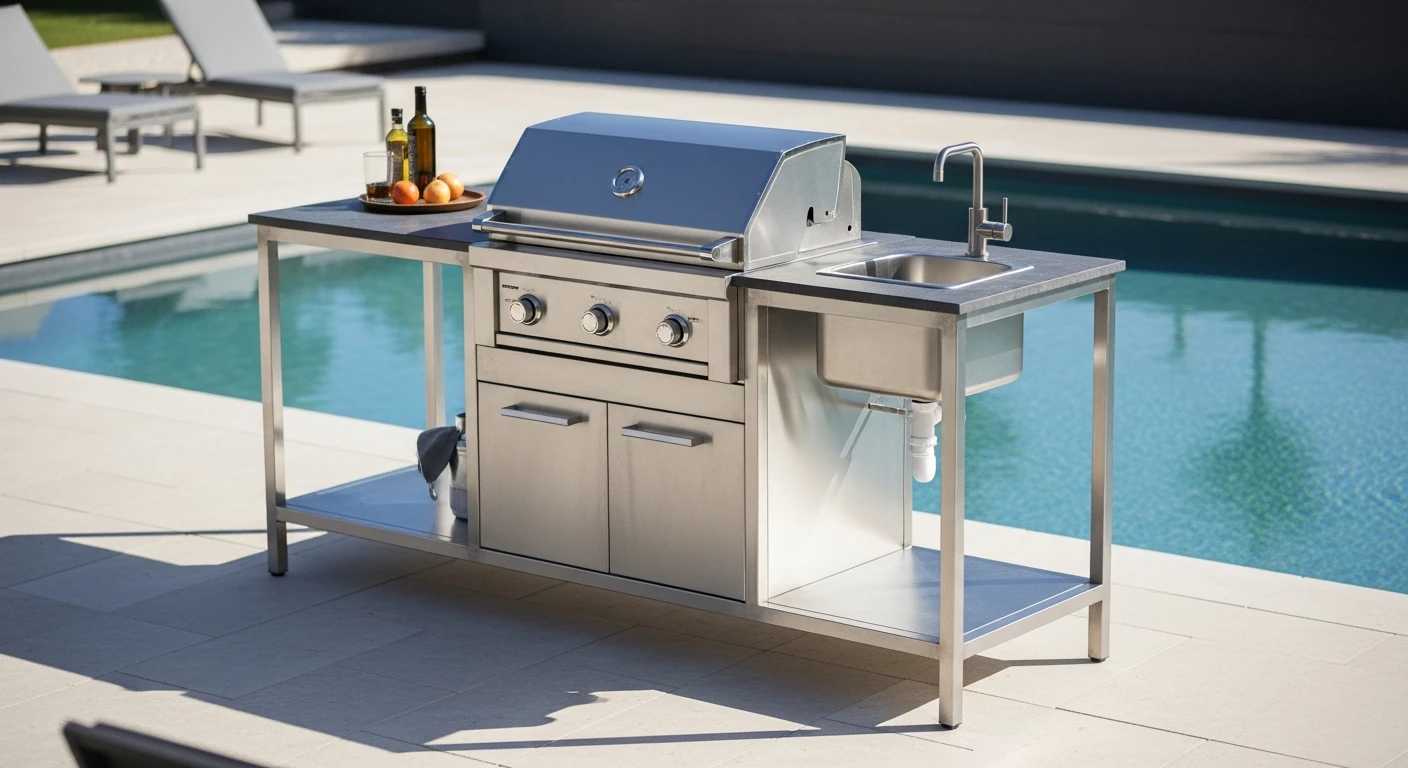
Hillsborough County Outdoor Metal Kitchen: My Protocol to Triple Material Lifespan Against Salt Air
If you're planning an outdoor metal kitchen for your home in Hillsborough County, your primary enemy isn't the summer heat; it's the corrosive blend of humidity and salt air, especially in areas like South Tampa or near the bay in Apollo Beach. I've been called to fix far too many rusted, pitted, and failed "stainless steel" kitchens that were less than three years old. The failure almost always stems from a fundamental misunderstanding of material science in our specific coastal environment. The common mistake is specifying a standard 304-grade stainless steel, which is perfectly fine for an indoor appliance but completely inadequate for the year-round assault of our local climate. My entire methodology is built around preventing this single, costly error from the start. It’s about specifying not just the right material, but the right fabrication and installation techniques to create a truly permanent outdoor asset, not a temporary fixture.The Critical Failure Point: Identifying Corrosion Accelerants in Tampa Bay Climates
My diagnostic process for any outdoor metal project in this county begins with what I call the Coastal Corrosion Triangle. This framework analyzes the three primary vectors of failure I’ve consistently observed from Riverview to Carrollwood. The problem isn't a single issue but the catastrophic intersection of substandard materials, compromised welds, and poor moisture management. Most contractors only address one of these, if any at all. I developed this after deconstructing a high-end project in a waterfront home where the cabinet seams were bleeding rust after just one rainy season. The owner was told "all stainless steel is the same." This is a dangerously false assumption. The microscopic pits and rust stains weren't just cosmetic; they were indicators of systemic structural failure brewing beneath the surface, a process called crevice corrosion that is accelerated by our constant humidity.Beyond 304 Steel: Specifying Marine-Grade 316L for Longevity
The technical solution is precise and non-negotiable. For any outdoor metal surface in Hillsborough County, the baseline specification must be 316L marine-grade stainless steel. The key difference is the addition of molybdenum, an element that dramatically increases resistance to chloride corrosion—the exact type caused by salt in the air. This single material upgrade can increase the corrosion-free lifespan by over 200%. Furthermore, the fabrication itself is a critical control point. Welding stainless steel disrupts its protective chromium-oxide layer, making the seams a hotspot for rust. I mandate a process called weld passivation, a chemical treatment that cleans the weld and restores this passive protective layer. I've seen projects fail exclusively at the weld points because this step was skipped to save a few hundred dollars. That's the silent killer of outdoor kitchens. The finish also matters; a brushed #4 finish is superior as it hides minor scratches and water spots better than a mirror polish, which is a maintenance nightmare with our frequent downpours.Fabrication and Installation Framework for a Zero-Failure Outdoor Kitchen
Once the material is correctly specified, the implementation phase must be just as rigorous. My proprietary checklist ensures that the design accounts for the realities of our local weather patterns, from intense sun to torrential summer rain. This is not just assembly; it's environmental engineering.- Design for Drainage and Airflow: Every cabinet must have a sloped floor and concealed weep holes. I also design in passive ventilation gaps at the top and bottom of cabinet runs to prevent humid, stagnant air from being trapped inside—a primary cause of interior mold and corrosion.
- Isolate Dissimilar Metals: A common error I fix is seeing galvanized steel fasteners used on a stainless steel frame. This creates galvanic corrosion, where one metal sacrifices itself to the other. I mandate the use of only 316L-grade stainless fasteners and nylon washers to create a dielectric break.
- Countertop Integration Seal: The seam where the countertop meets the metal cabinet base is a major water intrusion point. A simple bead of silicone isn't enough. My protocol requires a high-grade, UV-stable polyurethane marine sealant that forms a flexible, impermeable gasket.
- Component Grounding: For kitchens with complex electrical systems (refrigerators, lighting), I ensure all major metal components are properly bonded and grounded. This isn't just for safety; it helps mitigate stray electrical currents that can accelerate metal degradation.
Post-Installation Audits: The Final 5% That Guarantees Performance
The job isn't done when the last screw is turned. A final quality audit is what separates a good installation from a great one. After the project is complete, I perform a water test, deliberately soaking the entire structure to check for leaks and confirm proper drainage. I also use a simple saline solution spray on a test area of the welds to check the efficacy of the passivation; if there's no discoloration after 24 hours, the job is done right. This final check is my personal guarantee that the kitchen will stand up to the worst a Hillsborough summer can throw at it. Your contractor specified "stainless steel," but did they confirm the post-weld chromium oxide layer was chemically restored to prevent seam-line failure?Written by

Tags
outdoor kitchen steel
outdoor steel kitchen
outdoor kitchen stainless steel
outdoor stainless steel sink cabinet
outdoor stainless sink