Patio Paver Installers in Charlotte County: My Protocol for Mitigating Sub-base Failure in Sandy Soils
Finding a patio paver installer in Charlotte County is not the primary challenge. The real issue is locating a professional whose work can withstand our intense rainy seasons and notoriously sandy soil without sinking, shifting, or becoming a weed-filled mess within two years. I've seen countless paver patios in Port Charlotte and Punta Gorda fail not because of the paver quality, but due to a fundamentally flawed installation that ignores our unique ground conditions. My entire approach is built on a single, non-negotiable principle: the patio's lifespan is determined by the invisible sub-base, not the visible surface. A standard 4-inch gravel base, which might work elsewhere, is a recipe for failure here. My methodology focuses on creating a stable, engineered foundation that actively manages water and resists the soil displacement common from Rotonda West to Englewood.My Diagnostic Framework for Florida Paver Longevity
Before a single paver is laid, I perform what I call a Sub-Base Integrity Audit. This isn't just about measuring the area. It’s a technical assessment of the specific challenges your property presents. I’ve seen projects near the Peace River with a significantly higher water table, requiring a different approach than a drier, more inland lot. The standard "dig, dump, and compact" method is a gamble I'm unwilling to take with a client's investment. My audit focuses on two critical variables: soil composition and site drainage patterns. Ignoring these is the number one cause of premature paver failure in this region.Deconstructing Sub-Base Failure: Soil Type and Hydrostatic Pressure
The technical villain in Charlotte County is hydrostatic pressure—the force exerted by water trapped in saturated soil. Our fine, sandy soil has poor load-bearing capacity when wet. During a heavy downpour, water pushes upwards against the paver base. If the base isn't designed to drain efficiently, it liquefies the sand beneath, causing pavers to sink and shift. I once had to completely rebuild a lanai deck in a Port Charlotte home where the previous installer used a dense grade base (crusher run) directly on top of sand. Within 18 months, the hydrostatic pressure had turned the foundation into mush, creating dangerous low spots around the pool cage. This is where a specialized base construction becomes non-negotiable.The Core Implementation: A Step-by-Step Breakdown
Executing a paver installation that lasts for decades in our climate requires a meticulous, multi-layered approach. My process is designed for maximum stability and water permeability, directly countering the issues of our local environment.- Excavation and Grading: I excavate to a minimum depth of 7-8 inches, not the standard 6. This allows for a thicker, more stable base. Crucially, I establish a minimum 2% grade sloping away from any structure's foundation to ensure positive drainage.
- Sub-base Stabilization: This is my proprietary step. I lay a high-tensile geotextile separation fabric over the compacted native soil. This fabric prevents the aggregate base from mixing with the sand below, maintaining the base's integrity for years.
- Aggregate Base Installation: I exclusively use #57 stone (clean, crushed angular stone) for the base, never crusher run or pea gravel. Its angular nature allows the stones to lock together for stability, while the voids between them provide excellent drainage, relieving hydrostatic pressure. The base is installed in 2-inch lifts, with each lift being compacted with a plate compactor until it reaches at least 98% Proctor density.
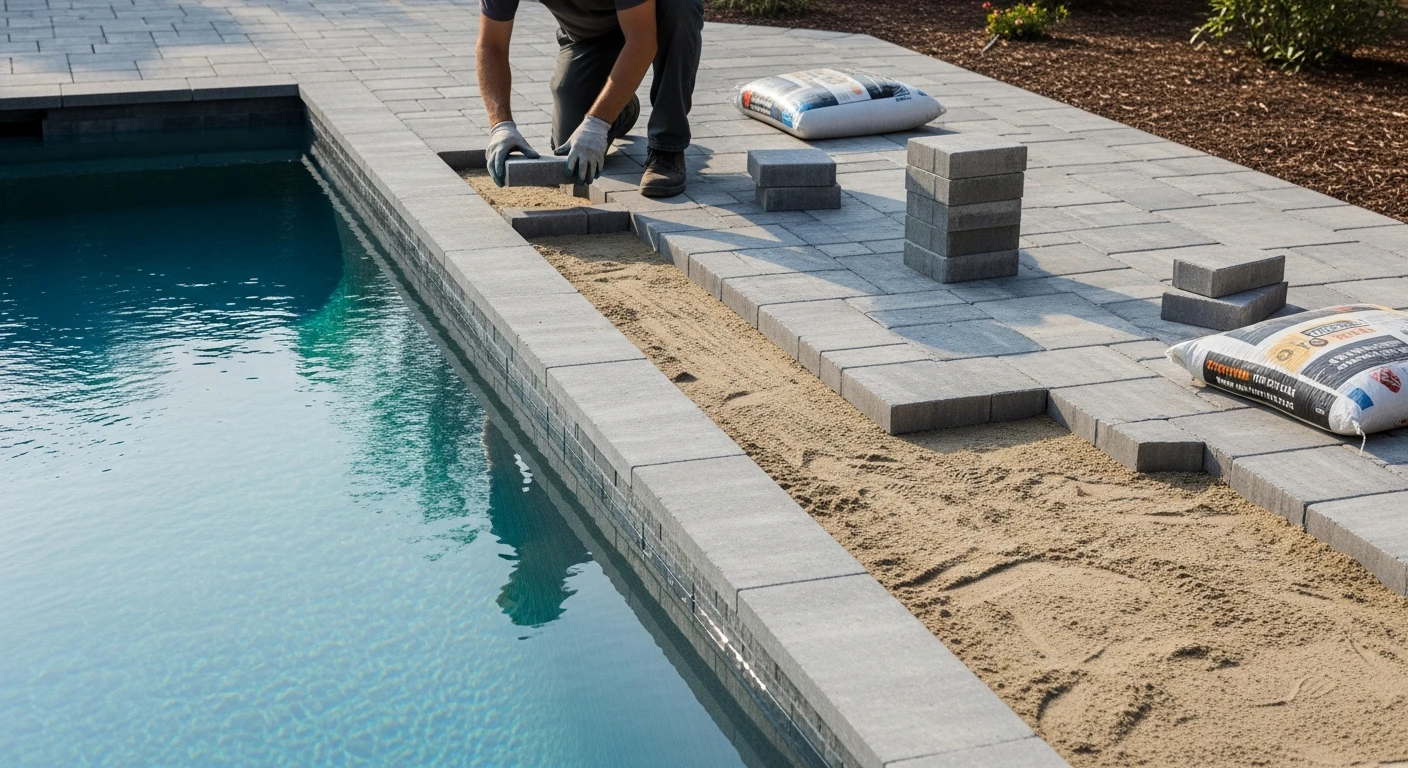
- Bedding Sand and Paver Setting: A uniform 1-inch layer of coarse bedding sand is screeded. The pavers are then set in the desired pattern, using string lines to ensure perfectly straight courses.
Precision Finishing and Quality Control Metrics
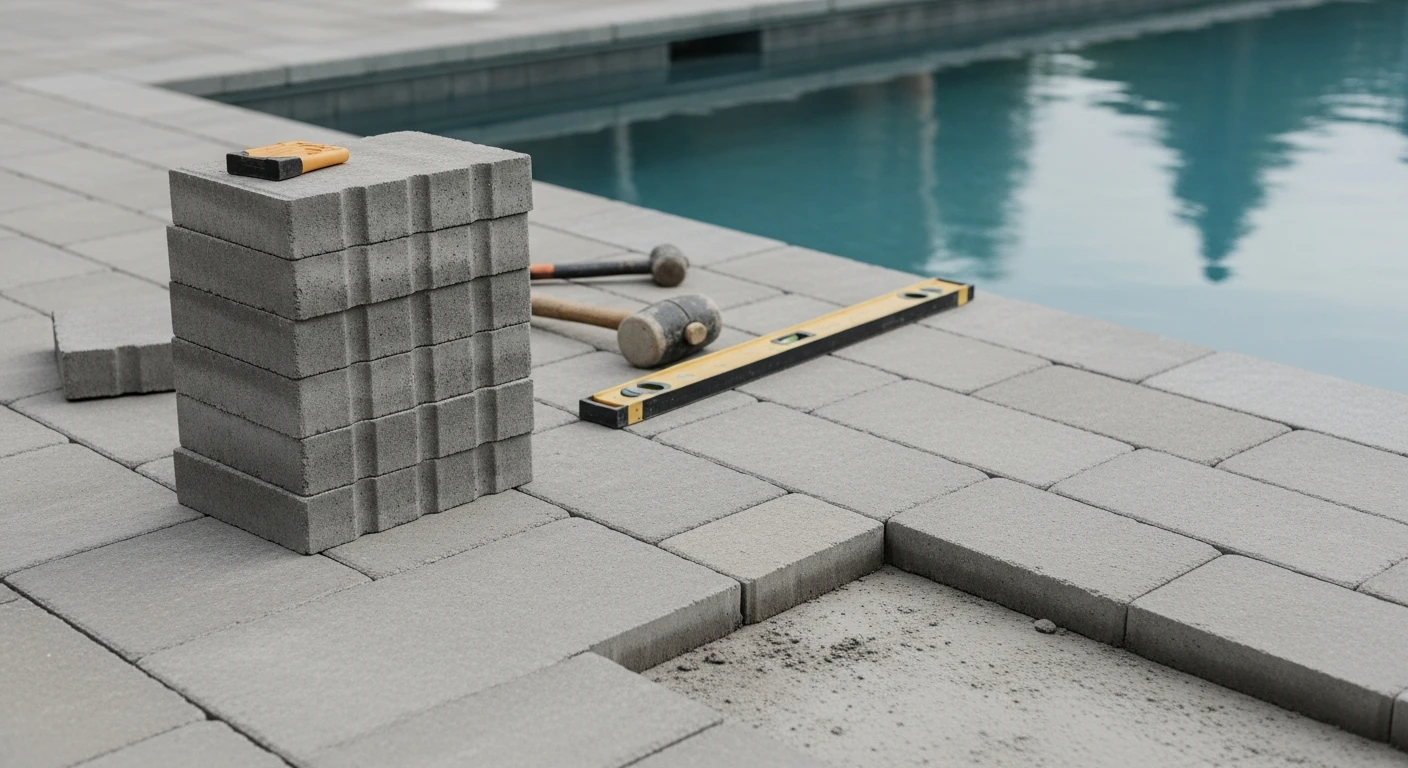
The final steps are what separate a professional job from an average one. After the pavers are cut and the edge restraints (like Snap-Edge) are securely spiked in place, the quality control begins. I use a 6-foot straightedge to check for lippage; no paver should be more than 1/8 inch higher or lower than its neighbor. The final compaction is done with a plate compactor protected by a urethane mat to prevent scuffing the pavers. For jointing, I use a high-grade polymeric sand with built-in fungicides to combat the inevitable mold and weed growth spurred by our Florida humidity. The sand is swept in dry, compacted, and then activated with a fine mist of water, locking the entire system together. A final application of a quality breathable sealer is recommended after 30 days to protect against stains and sun fading. Before you hire any installer, are you prepared to ask them what specific geotextile fabric and aggregate base combination they propose for your property's soil type and drainage conditions?Written by

Tags
install pavers near me
paver installation near me
paver patio installation near me
cheap paver installers near me
driveway paver installers near me