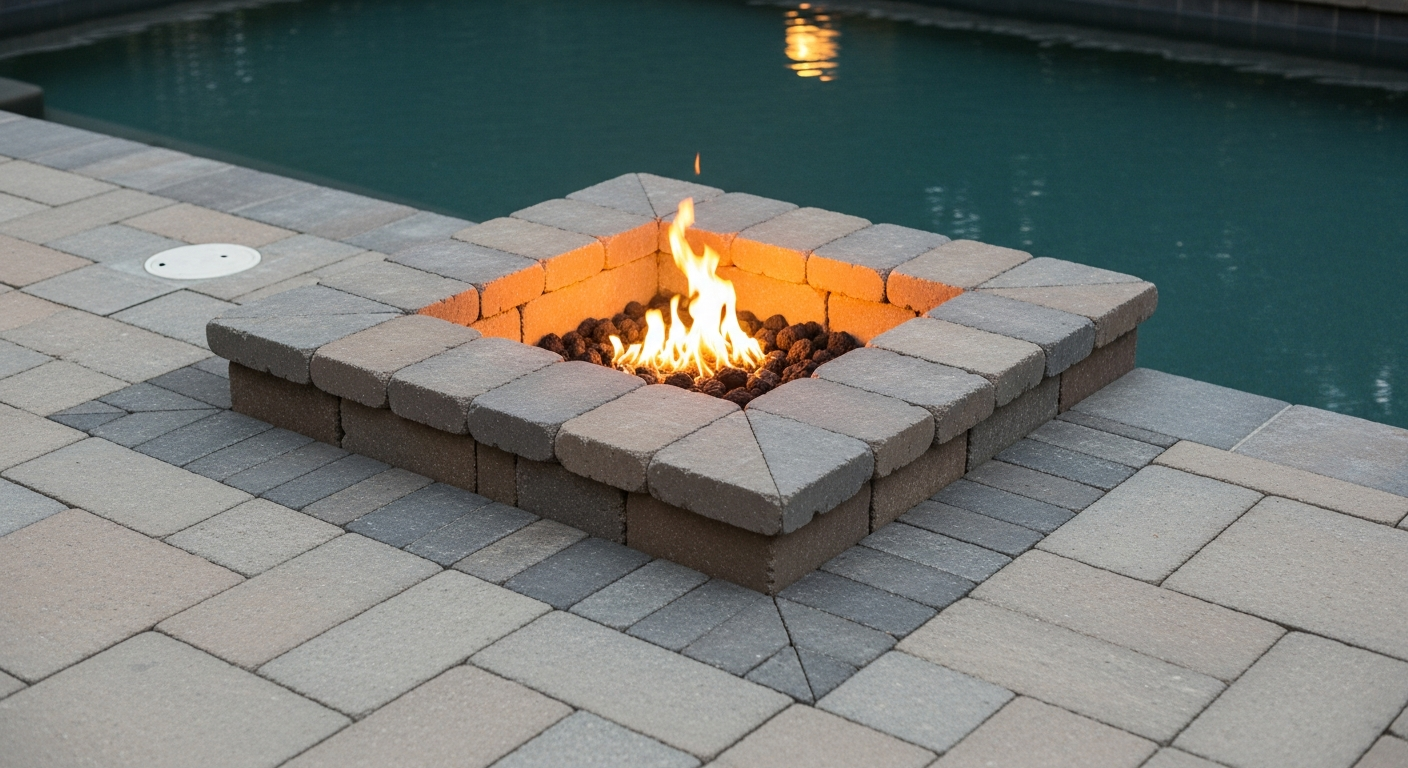
Paver Fire Pit Area in Seminole County: My Sub-base Protocol for a Zero-Settlement Installation
Building a paver fire pit area in Seminole County isn't just about laying pretty stones; it's a battle against our unique environmental conditions. I've been called to fix far too many sunken, weed-infested pits in beautiful Lake Mary and Sanford homes where the initial installation failed to account for our sandy soil and torrential summer rains. The most common point of failure I see is an improperly prepared sub-base, leading to paver settlement within 18-24 months. My entire approach is built on preventing this specific outcome. Forget the standard 4-inch gravel base you read about online. For the soil conditions here, from the clay-mix in parts of Oviedo to the sandier lots in Casselberry, that's a recipe for failure. My proprietary methodology focuses on achieving a 98% Modified Proctor Density on the sub-base, which essentially creates a concrete-like foundation that guarantees no sinking or shifting, even with our high water table.My Diagnostic Framework for Seminole County Soil
Before I even bring a compactor on-site, my first step is a soil assessment. The problem isn't just sand; it's the inconsistency. A standard approach fails because it treats all ground as equal. My methodology, which I developed after a particularly challenging project in Winter Springs with severe drainage issues, involves a three-part analysis: soil composition, water table proximity, and runoff mapping. This dictates the exact depth of excavation and the specific materials I use. A common mistake is using generic "paver base" which often contains too many fines (small particles) that retain water and turn to mush during our rainy season.The Technical Deep Dive: Geotextiles and Base Material Specification
The secret to longevity isn't just compaction; it's separation and drainage. Here's the technical breakdown of my system:- Layer 1: The Non-Woven Geotextile Fabric. This is the single most critical component DIYers and many contractors skip. I lay a professional-grade 8oz non-woven geotextile fabric at the bottom of the excavation. Its job is to permanently separate the compacted aggregate base from the native sandy soil. This prevents the sand from migrating upwards and the base from sinking downwards over time, a process called soil migration.
- Layer 2: The Aggregate Base. I never use less than a 6-inch base, and often specify 8 inches for areas with poor drainage. My material of choice is FDOT-certified #57 stone or crushed concrete. It must be angular for interlocking properties. Crucially, I compact this base in 2-inch lifts (layers). Compacting a full 6 inches at once only densifies the top layer, leaving the bottom loose and prone to settlement. Each lift is wetted and compacted to that 98% density target.
- Layer 3: The Bedding Sand. This layer is for fine-tuning, not for structural support. I use exactly 1 inch of coarse, washed concrete sand (ASTM C33). More than an inch is a catastrophic error I often have to correct; it acts like a sponge and allows pavers to shift. This 1-inch screeded layer provides a perfect setting bed for the final pavers.
Implementation Protocol: From Excavation to Final Seal
Executing the plan requires precision. A beautiful design means nothing if the execution is flawed. This is my field-tested checklist for every Seminole County fire pit project.- Excavation & Utilities: First, call 811. It's not optional. I then excavate 7 to 9 inches below the final paver height, plus the thickness of the paver itself. The excavation must have a slight, consistent grade away from any structures.
- Base Installation & Compaction: After laying the geotextile fabric, I add the first 2-inch lift of aggregate. I use a plate compactor to make at least three passes over every square foot. Repeat for each subsequent lift until the final base height is achieved.
- Edge Restraint Installation: Before the sand layer, I install heavy-duty plastic or aluminum paver edging, secured with 10-inch steel spikes. This is non-negotiable; it locks the entire system together and prevents the outer pavers from creeping outwards.
- Paver Laying & Jointing: I lay the pavers, cutting as needed with a diamond-blade wet saw for clean edges. Once all pavers are set, I do a final compaction run to lock them into the sand bed. The final, crucial step is sweeping in high-quality polymeric sand. This sand, when activated with a light mist of water, hardens like mortar, locking the pavers together and preventing both weed growth and ant hills.
Precision Tuning for Florida's Climate
A few final adjustments are what separate a good job from a perfect one. I ensure a minimum 1.5% grade on the entire patio surface to handle our sudden downpours, directing water away from the home's foundation and the fire pit itself. I also insist on using a steel fire ring insert inside the pit. This protects the concrete paver blocks from direct flame contact, preventing thermal shock that leads to spalling and cracking. Finally, after the polymeric sand has cured for 48 hours, I apply a high-solids, UV-resistant penetrating sealer to protect the pavers from the intense Florida sun and prevent fading. This single step can increase the color life of the pavers by 50%. Have you accounted for the specific heat rating of your paver blocks and ensured it's compatible with the BTU output of your chosen gas burner insert?Written by

Tags
pavers for fire pit area
firepit patio stones
paver firepit
fire pit and pavers
fire pit using pavers