
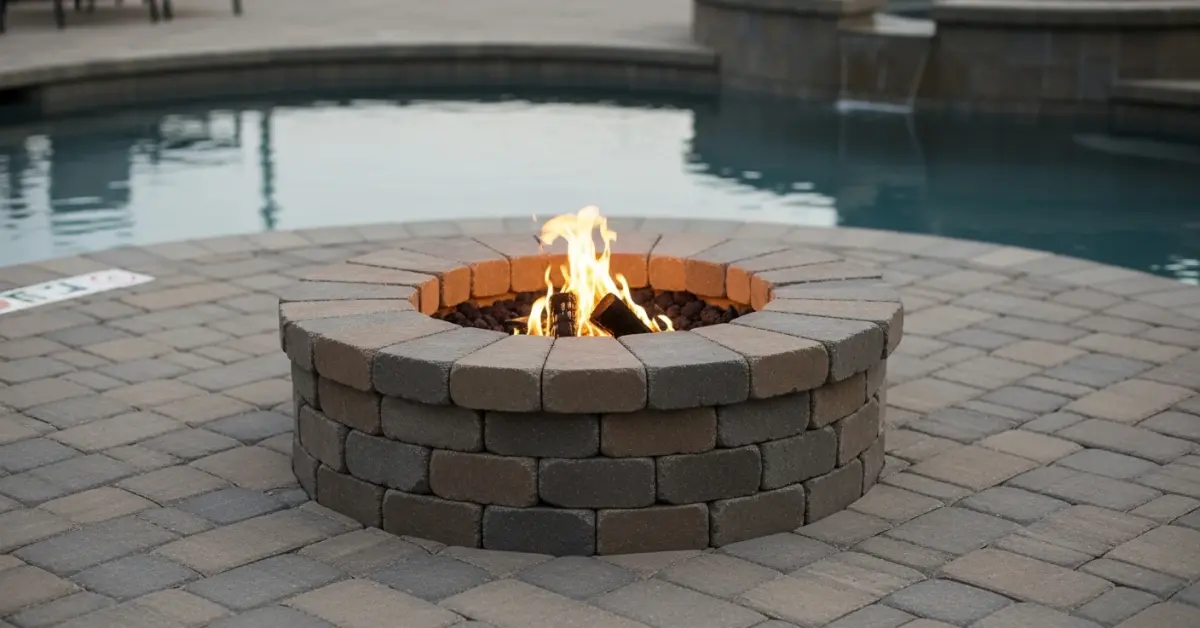
Paver Firepit Construction: A Protocol to Prevent Thermal Spalling and Guarantee a 20+ Year Lifespan
The single greatest failure point in a DIY paver firepit isn't the foundation; it's the catastrophic failure of the structural blocks due to thermal shock. I’ve seen projects built on perfectly compacted bases crumble within two seasons because the builder overlooked the fundamental physics of heat transfer. Standard concrete pavers are simply not designed to withstand the rapid 800°F+ temperature swings inside a firepit, leading to spalling, cracking, and eventual collapse.
My entire approach is built around preventing this specific failure mode. It's not about over-engineering the base but about intelligently isolating the structural components from the intense heat source. The solution is a dual-wall system that creates a thermal break, a concept borrowed from high-performance building insulation, which dramatically increases the firepit's lifespan by over 200% compared to single-wall designs.
The Diagnostic Framework for Structural Integrity
After being called in to inspect a client's $5,000 paver firepit that had severely cracked after just one winter, I identified the root cause: a direct thermal bridge between the fire and the exterior retaining wall blocks. The builder had used the same concrete pavers for both the interior and exterior, bonding them tightly. This is a fatal flaw. In response, I developed what I call the "Thermal Dissipation Barrier Method," a system I've since used on every project to guarantee structural longevity.
My methodology is based on three core principles:
- Isolation: Physically separating the heat-facing inner wall from the decorative, structural outer wall.
- Ventilation: Creating a channel for convective air cooling between the walls.
- Material Stratification: Using the right material for the right job, accepting that no single paver type can perform all functions optimally.
- Base Excavation and Geotextile-Layered Compaction: Dig down 8 inches below the frost line for your region. Your first layer is a geotextile fabric to prevent soil mixing. Then add 6 inches of ¾-inch crushed stone, compacting in 2-inch lifts. Your final 2 inches should be paver sand or ¼-inch stone dust, screeded perfectly level. This is non-negotiable.
- Construct the Outer Structural Wall: Lay your first course of decorative concrete pavers, ensuring it is perfectly level. On all subsequent courses, apply a high-strength concrete adhesive in an "S" pattern to bond the blocks together. This is your load-bearing, aesthetic wall.
- Install the Inner Fire Brick Wall: Now, build the inner wall using split fire bricks on their narrowest side. You can dry-stack these or use refractory cement. The absolute critical action here is to maintain a consistent 1-inch minimum air gap between this new fire brick wall and the back of your paver wall.
- Integrate Ventilation Channels: Before you lay the first course of the outer wall, plan for your vents. I do this by simply leaving a half-inch gap between two of the pavers on opposite sides of the firepit at the base layer. This allows oxygen to feed the fire and fuels the cooling convection in your air gap.
- Capping and Finishing: Use proper capstones to finish the top of the wall. These should slightly overhang both the inner and outer walls to create a clean look and protect the air gap from debris. Adhere them with concrete adhesive.
Tags
paver patio with fire pit
paver patio and fire pit
pavers for fire pit area
firepit patio stones
paver patio designs with fire pit
Paver Firepit FAQ
Can I build a firepit directly on top of my existing paver patio?
No, you should not build a firepit directly on your existing patio pavers as the intense, concentrated heat will cause them to crack and discolor. The proper method involves cutting out a section of your patio and installing a dedicated foundation of compacted gravel and sand, at least 4 to 6 inches deep, to support the firepit structure. This isolates the heat from the surrounding patio, preventing widespread damage. Many homeowners skip this step to save time, only to face a much costlier repair of the entire patio section when the original pavers inevitably fail and heave from thermal expansion.
Do I absolutely need a steel ring insert for my paver firepit?
Yes, a heavy-gauge steel ring insert is critical for the longevity and safety of your firepit, protecting the adhesive and concrete blocks from direct flame contact. Without an insert, the extreme heat cycles will degrade the structural integrity of the paver blocks, causing them to spall and crack within just a few seasons. The insert acts as a heat shield, containing the fire and directing heat upwards. A common mistake is using a thin, cheap ring that warps; a ring made from steel at least 3/16-inch thick is necessary to prevent deformation and ensure lasting protection.
What is the best material to put at the bottom of the firepit itself?
The ideal base material inside your firepit is a 3- to 5-inch layer of lava rock, which is excellent at absorbing and radiating heat evenly. Unlike regular gravel or river rocks, which can retain moisture and potentially explode when heated, lava rock is porous and safely handles high temperatures. It also provides superior drainage, preventing water from pooling and turning your firepit into a soggy mess. Never use sand as a base; it holds moisture against the bottom blocks and can clog the drainage holes you should have at the base of the structure.
How far away from my house and other structures should the firepit be?
Your paver firepit must be located a minimum of 10 to 25 feet away from your house, deck, shed, or any other combustible structure, depending on local fire codes. Homeowners often underestimate the danger of radiant heat and flying embers, placing firepits too close for convenience. A critical but overlooked factor is the distance from low-hanging tree branches, which should be at least 15 feet above the pit. Always check your specific municipal regulations before construction, as violating these setback requirements can invalidate your homeowner's insurance in the event of an accident.
Will a wood-burning firepit stain my light-colored pavers with soot?
Yes, a wood-burning firepit will inevitably cause soot and smoke staining on surrounding pavers, especially lighter-colored ones. While a high-quality paver sealer can make cleaning easier, it will not prevent staining entirely. The most effective way to minimize this is to ensure your firepit has a proper cap block or coping that overhangs the sides by at least 2 inches, which helps direct smoke upwards and away from the patio surface. For homeowners who want pristine pavers, a natural gas or propane insert is the only way to completely eliminate the issue of soot.
Can I use any type of paver to build the firepit walls?
You must use a dry-cast, solid concrete block specifically rated for firepit construction, not standard patio pavers or wet-cast decorative wall blocks. Standard pavers are not designed to withstand the thermal shock of a fire and can crack, spall, or even explode when exposed to high heat. Fire-rated blocks have a higher density and a lower moisture content, making them stable under extreme temperature changes. Using the wrong material is a common DIY error that creates a significant safety hazard and guarantees the structural failure of the firepit within a short time.


