
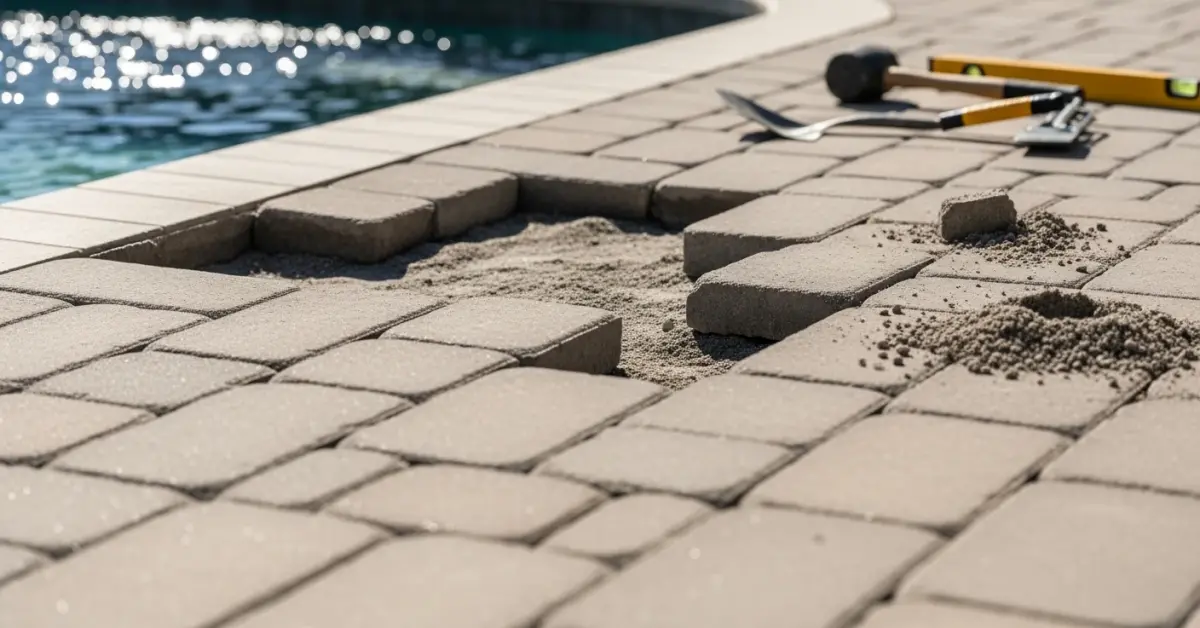
Paver Patio Repair: A Sub-Base Protocol to Prevent Recurrent Failure by 90%
I'm often called to fix a "wobbly paver," but after 15 years in hardscaping, I can tell you the paver itself is rarely the problem. The real culprit is almost always a catastrophic failure of the sub-base, a problem that simply patching the surface will never solve. Most repair guides miss this crucial point, leading to repeated work and frustration.
My approach focuses on addressing the foundational integrity, not just the cosmetic symptom. This isn't about just adding more sand; it's a systematic process to diagnose and rebuild the patio's structural layers. By correcting the base, we don't just fix the one loose paver; we increase the lifespan of the entire installation by a measurable margin, often preventing future issues for years to come.
The Root Cause Analysis: My 3-Point Sub-Base Failure Diagnostic
Before I even lift a paver, I perform a diagnostic that I've developed over hundreds of projects. The goal is to identify the precise failure mechanism. Homeowners and even some contractors jump straight to replacing pavers, but that's like putting a new tire on a car with a broken axle. My methodology assesses three critical failure points: edge restraint collapse, improper water management, and compaction degradation. I've seen brand-new patios fail in under 18 months because one of these three elements was overlooked. A common error I see is a failed plastic edge restraint that has heaved from frost, allowing the bedding sand and pavers to shift laterally.
Deconstructing Compaction Ratios and Water Ingress
Let's get technical. A stable paver system relies on a base compacted to at least 95% standard proctor density. When I investigate a sunken area, I often find the original installer used insufficient base material or, more commonly, failed to compact it in 2-inch lifts. This creates voids in the aggregate. Over time, water ingress, often from poor grading or downspouts, saturates this poorly compacted base. This water, combined with freeze-thaw cycles, creates hydrostatic pressure that literally liquefies the bedding sand, causing the pavers above to sink. My diagnostic often involves taking a small core sample to physically inspect the base aggregate and identify the presence of excessive fines or organic material, which are immediate red flags for future failure. Using a layer of geotextile fabric between the subgrade soil and the aggregate base is a non-negotiable step in my rebuilds to prevent this exact type of contamination.
The Tactical Paver Reset: From Extraction to Compaction
Once the diagnosis is complete, the repair itself is surgical. This is my field-tested process for a permanent fix, not a temporary patch.
- Perimeter Marking and Extraction: I use a string line to mark out an area at least 12 inches beyond the visibly failed section. This is critical because the base failure is always larger than it appears on the surface. I then use two flathead screwdrivers or dedicated paver extractors to carefully lift the pavers, numbering them on the back with a lumber crayon if they have a complex pattern.
- Base Excavation and Analysis: I remove all the bedding sand and the compromised base aggregate. The goal is to get down to undisturbed, compacted subgrade. This is where I often find the "smoking gun"—a pocket of clay, a buried tree root, or aggregate full of soil.
- The Rebuild Protocol:
- I lay down a high-quality, non-woven geotextile fabric. This is my insurance policy against soil migration into the new base.
- I add new, clean ¾-inch crushed stone aggregate in 2-inch lifts. Each lift is compacted with a plate compactor until the machine begins to bounce, indicating maximum compaction has been achieved. I aim for a minimum of 4 inches of compacted base for pedestrian areas.
- I screed a uniform 1-inch layer of coarse bedding sand (must meet ASTM C144 standards). I never use stone dust, as it retains moisture.
- Paver Reinstallation and Joint Stabilization: The pavers are re-laid, using the original numbering as a guide. They are then seated into the bedding sand using the plate compactor over a protective mat. Finally, I sweep in polymeric sand, ensuring it fills the joints completely before activating it with a very fine mist of water.
Tags
paving stone repair
fix pavers
brick paver patio repair near me
paver repair near me
paver installation and repair
Paver Patio Repair FAQ
Why are my pavers sinking in one spot? Is it just a simple fix?
Sinking pavers are almost always caused by a failure of the compacted base underneath, not the pavers themselves. While topping it off with sand is a tempting quick fix, this is a temporary solution that will sink again within a year as the underlying issue—poor water drainage or base compaction—remains unaddressed. A proper repair involves removing the pavers in the affected area, excavating the old base material, and rebuilding it with at least 4-6 inches of new, properly compacted aggregate base before reinstalling the pavers. This ensures water drains correctly and prevents the same spot from failing again.
Can I just power wash the weeds and old sand out and add new sand myself?
You can, but improper technique often creates bigger problems down the road. Power washing can easily dislodge the crucial leveling sand bed directly beneath the pavers, causing them to shift and become uneven over time. Furthermore, if you are using polymeric sand, applying too much water during activation or leaving a haze on the paver surface can cause it to fail prematurely or permanently stain your patio. Professional application ensures the correct water volume and a clean sweep, hardening the joints correctly to lock pavers and resist weeds for its full 3-5 year lifespan.
What's the white haze on my pavers, and how do I get rid of it?
That white haze is likely efflorescence, which is a natural deposit of mineral salts left behind as water evaporates from within the paver. While it is not structurally harmful, it can be an eyesore. It often appears on newer installations and may fade on its own, but persistent cases can be treated with specialized cleaners designed to dissolve the salts without damaging the paver's color or texture. Avoid using muriatic acid, as an incorrect dilution can permanently etch the surface and alter the color of your pavers, a mistake that is irreversible.
My pavers are rocking and uneven. How dangerous is this?
Uneven pavers that rock underfoot are a significant trip-and-fall hazard, creating a serious liability risk for you as a homeowner. This instability, known as paver creep, is often caused by a failing edge restraint—the plastic or concrete border that is supposed to hold the entire paver field under compression. When the edge fails, the pavers at the perimeter shift, which has a domino effect causing looseness across the patio. The fix requires reinstalling or upgrading the edge restraint and re-compacting the pavers to lock them back into a tight, stable grid.
Some of my pavers are cracked. Do I need to replace the whole patio?
No, you do not need to replace the entire patio for a few cracked pavers. One of the primary advantages of a paver system is the ability to perform spot repairs by replacing individual units. A technician can carefully extract the damaged pavers using specialized tools that avoid disturbing the surrounding area. The challenge, however, is finding a perfect color match, as pavers from a new batch may differ slightly due to production variations and weathering. It is a good practice to always keep 10-15 attic stock pavers from the original installation for this exact purpose.
There are ant hills all over my patio joints. Is this just a pest problem?
Ants are not just a nuisance; they are a clear indicator of structural failure in your patio's jointing system. When ants can build mounds, it means the jointing sand has washed away or degraded, creating voids that allow them to excavate the crucial leveling sand from beneath your pavers. This process, called undermining, will inevitably lead to pavers sinking and becoming unstable. Simply spraying for ants is a temporary fix; the permanent solution is to clean out the joints and refill them with high-quality polymeric sand, which hardens to create a barrier that pests cannot penetrate.


