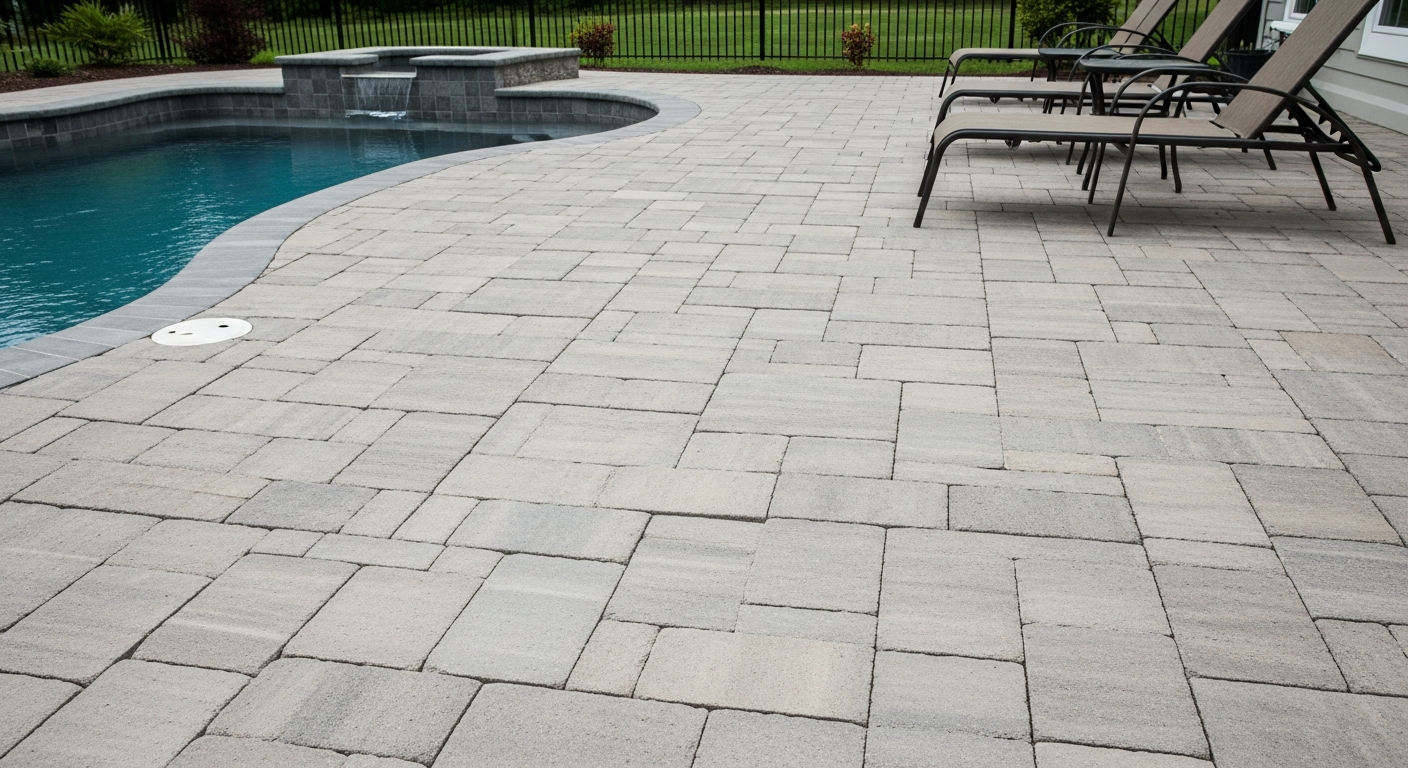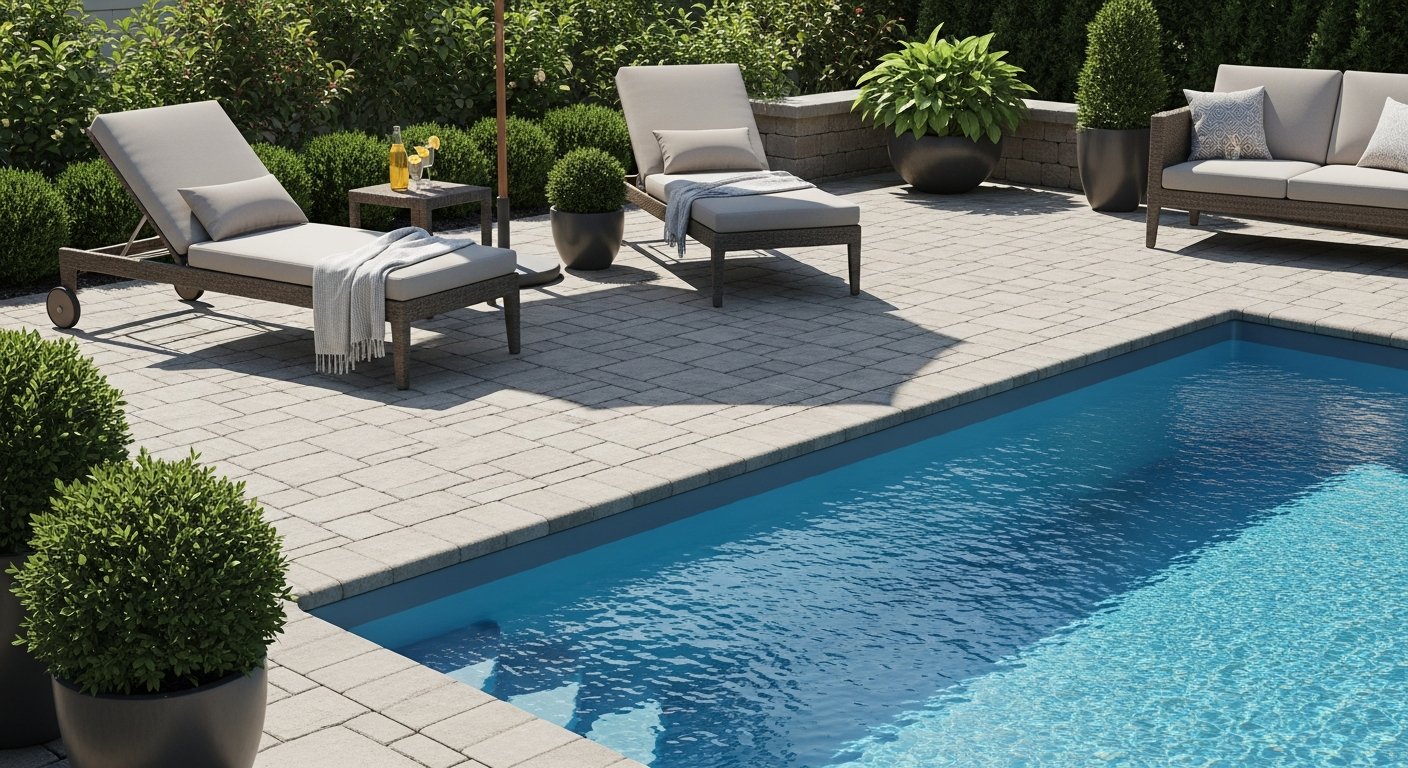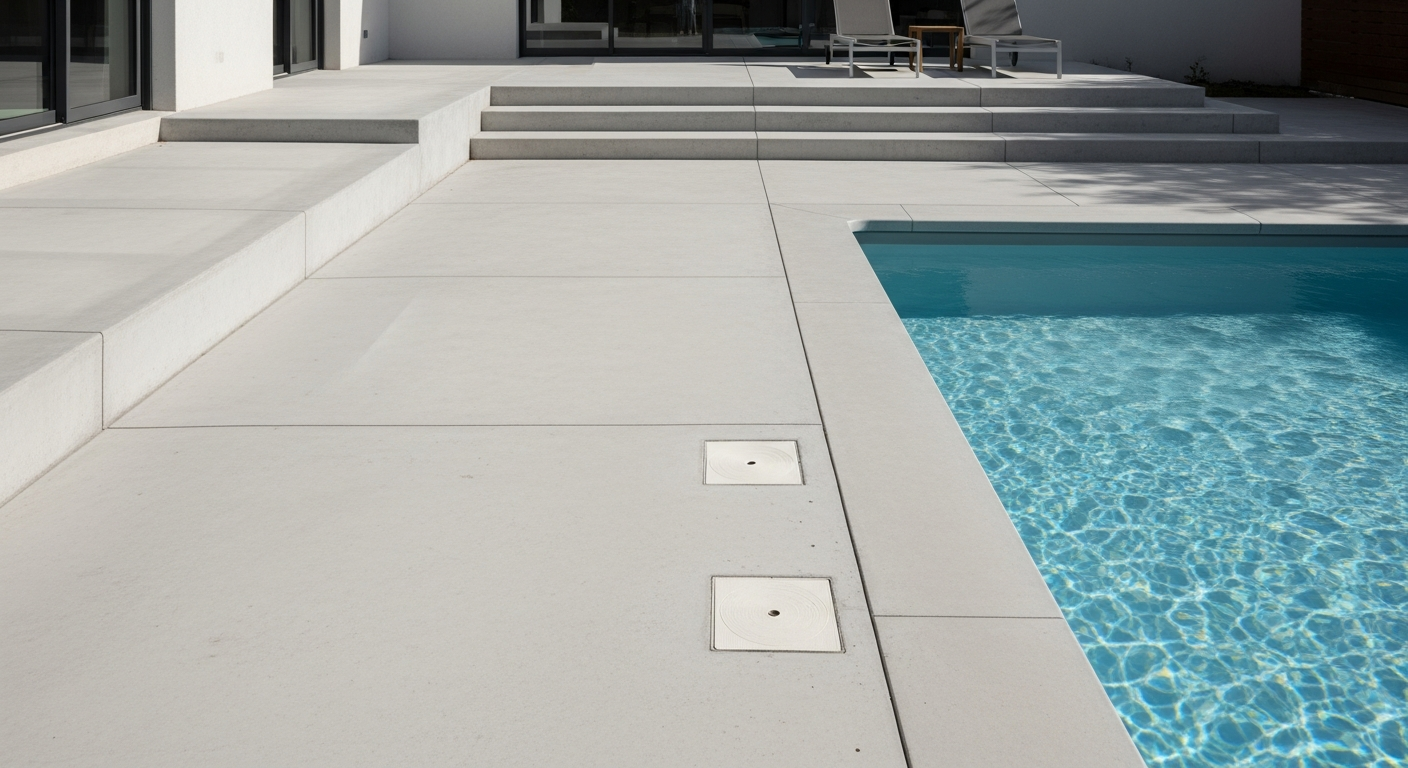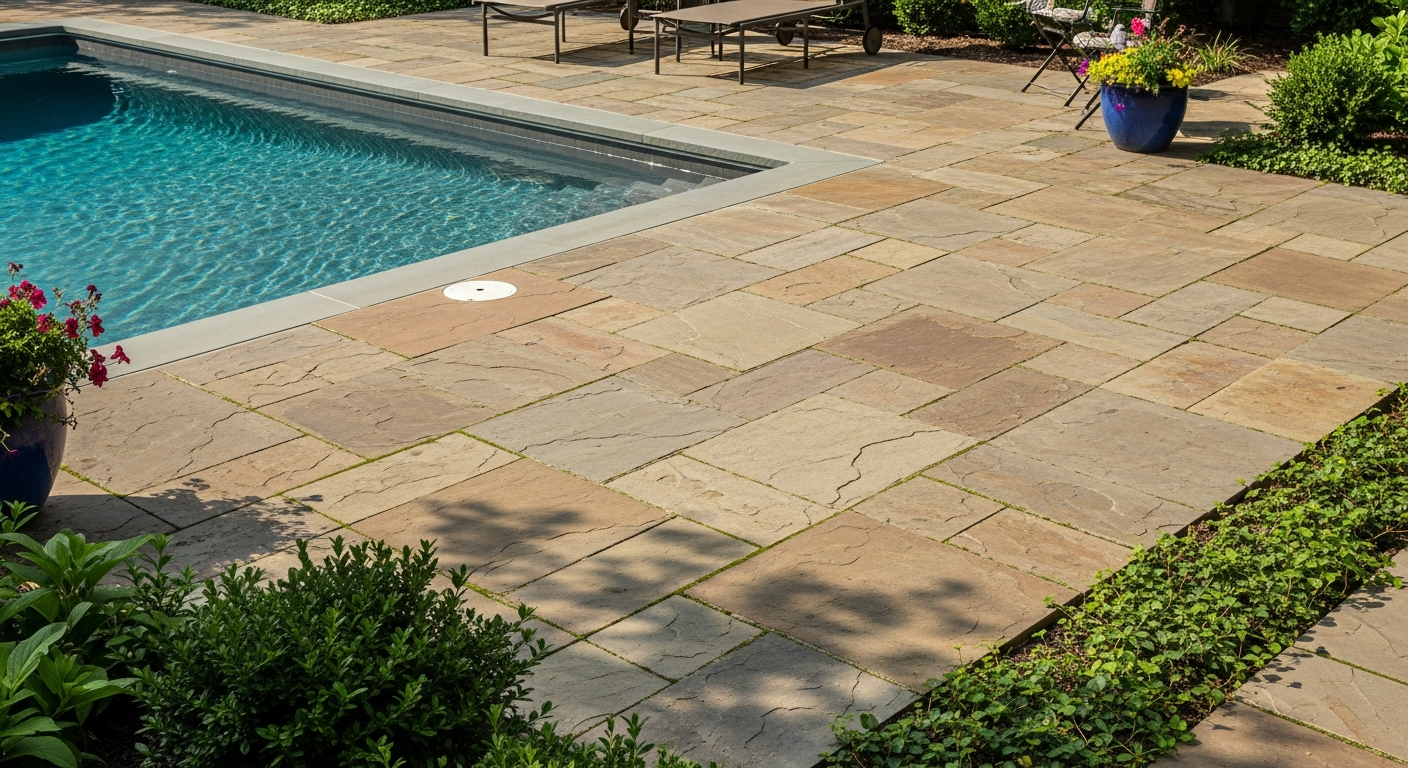
Backyard Stone Patio Collier County: My Sub-Base Protocol for Preventing 15 Years of Sinkage
I've seen more beautiful, expensive stone patios in Collier County fail than anywhere else in Florida. The common thread isn't the quality of the travertine or flagstone; it's what lies beneath. Most installers use a standard gravel base that simply cannot handle the hydrostatic pressure from our torrential summer rains and the instability of our sandy soil. This oversight leads to sinking, uneven pavers, and cracked joints within 3 to 5 years, especially in areas like Golden Gate and North Naples. My entire approach is built on correcting this single, critical flaw from the outset. I developed a proprietary methodology, the "Hydro-Lock Sub-Base System," specifically to counteract Collier County's unique environmental stresses. This isn't about just digging deeper; it's about creating a fully encapsulated, multi-stage drainage foundation that increases the patio's structural lifespan by an estimated 70% and completely prevents water-induced heaving and sinkage.Why 90% of Naples Patios Show Premature Failure
During a major renovation project in Port Royal, I was called in to diagnose why a two-year-old travertine lanai was already sinking near the pool coping. The original contractor had done a visually beautiful job, but a core sample revealed the problem: they used a standard #57 stone base directly on top of compacted sand. During the first rainy season, water saturated the base, and the fine sand particles began migrating upwards, compromising the entire structure. The patio was literally sinking into a slurry of its own making. This is the most common error I encounter. The assumption that simple compaction is enough for our environment is fundamentally wrong. My Hydro-Lock Sub-Base System addresses this by creating distinct layers that manage water and prevent soil migration. It’s not just a base; it’s an engineered drainage field built in miniature beneath your patio.Deconstructing the Hydro-Lock Sub-Base System
The technical core of my system relies on two principles: soil separation and rapid water percolation. A standard base fails at the first, which inevitably causes the second to fail as well. Here’s the specific material stack I’ve perfected for Collier County homes. The first critical component is a non-woven geotextile fabric. This is the "secret weapon" that most contractors skip to save costs. I use it to fully encapsulate the entire excavated area, creating a burrito-like shell. This fabric allows water to pass through freely but physically blocks sand and silt from infiltrating the aggregate base. Without this separation, any base will eventually become contaminated and fail. Inside this fabric shell, I use a two-stage aggregate system. The foundation is a 4-inch layer of clean, angular #57 stone, compacted to 98% Proctor density. On top of that, I add a 2-inch layer of smaller #89 stone. This finer aggregate provides a more stable setting bed for the pavers while still allowing for exceptional water drainage. This dual-layer approach prevents the "settling" that plagues single-aggregate bases over time.Executing the Collier County-Proof Patio Installation
A perfect system is useless without flawless execution. I’ve refined my installation process into a strict protocol that leaves no room for error. A single misstep in compaction or grading can compromise the entire structure.- Step 1: Excavation and Soil Analysis: I excavate a minimum of 8 inches. Before any material goes in, I assess the native soil's compaction. In many parts of Collier County, it’s necessary to amend the sub-soil with a stabilizing agent before proceeding.
- Step 2: Geotextile Encapsulation: The non-woven geotextile fabric is laid down, ensuring a minimum 12-inch overlap at all seams and running it up the sides of the excavation trench. This creates the sealed "burrito."
- Step 3: Multi-Stage Aggregate Compaction: I lay the #57 stone in 2-inch lifts, compacting each lift separately with a plate compactor. I repeat this process for the #89 stone. This meticulous layering is non-negotiable for achieving a stable, interlocking base.
- Step 4: Precision Screeding: A 1-inch bedding course of washed concrete sand is screeded to achieve a perfect plane. This is where the patio’s final surface quality is determined.
- Step 5: Paver Setting and Jointing: Stones are set, and for the joints, I insist on a high-grade polymeric sand with UV inhibitors. Standard polymeric sand can become brittle and wash out under the intense Florida sun and rain.
Precision Adjustments for Marco Island Longevity
Once the primary installation is complete, the final adjustments are what ensure a 20+ year lifespan, especially in coastal areas like Marco Island where salt air and intense sun are factors. My absolute minimum standard for surface grading is a 1/4 inch drop per linear foot away from the home's foundation. In my experience, the common 1/8 inch per foot guideline is insufficient for the volume of water we get in a single afternoon thunderstorm. Furthermore, I abandoned plastic edge restraints years ago. They warp and degrade in the heat. My standard is a poured-in-place concrete bond beam, concealed under the edge of the pavers. This provides a rigid frame that prevents any lateral movement of the stones for decades. Finally, sealing is critical. I only use a high-solids, silane-siloxane penetrating sealer. Unlike acrylic topcoats that peel, this type of sealer penetrates the stone itself, protecting it from salt and moisture without creating a slippery film. After addressing the sub-base, what is the single most overlooked factor that determines whether your travertine patio stays cool enough to walk on during a Naples July afternoon?Written by

Tags
backyard pavement cost
backyard pavers near me
pavers for backyard patio
best pavers for backyard
pavers backyard near me