Brick Pavers Lake County: A Proprietary Method for Preventing Sub-base Failure and Algae Proliferation
After years of designing and restoring paver installations across Lake County, from the rolling hills of Clermont to the historic lakefronts of Mount Dora, I can state one fact with absolute certainty: most paver failures are not due to the pavers themselves. The real culprit is a fundamental misunderstanding of our unique local conditions—specifically, our sandy soil composition and the relentless humidity that creates a perfect breeding ground for algae and mold. A beautiful patio can turn into a sunken, weed-infested mess in less than 24 months if the sub-base isn't engineered correctly. My approach isn't about laying bricks; it's about building a resilient, interlocking system designed to defeat the specific environmental pressures of Central Florida. I’ve seen countless projects near Lake Harris and in sprawling communities like The Villages fail because a "one-size-fits-all" base preparation was used. This is a critical error. My methodology focuses on a site-specific diagnosis that guarantees a lifespan increase of over 50% compared to standard installations.My Diagnostic Framework: The Lake County Soil & Drainage Protocol
Before a single paver is ordered, I conduct a mandatory site evaluation. This isn't a simple measurement of the area. It's a technical deep-dive into the ground conditions that will ultimately determine the project's success or failure. I developed this protocol after seeing a large-scale commercial project in Tavares suffer from catastrophic paver shifting due to overlooked hydrostatic pressure from the nearby lake.Core Technical Analysis of the Substrate
The biggest mistake I see is contractors treating all ground as equal. The sandy, porous soil in Lake County requires a completely different approach than the clay-heavy soils found elsewhere. My analysis focuses on three non-negotiable data points:- Soil Percolation & Compaction Potential: I perform a simple field percolation test to understand how quickly water moves through the soil. This dictates the necessary depth of the base material. For a typical single-family home in a subdivision, this might be a standard 4-6 inches of crushed concrete base. But for a lakefront property with a high water table, I may increase this to 8 inches and integrate a geotextile stabilization fabric to prevent the base from migrating into the sand over time.
- Drainage and Grading Assessment: I use a transit level to map the existing grade and plan for a minimum 1/4-inch per foot slope away from any structures. In areas prone to heavy runoff from afternoon thunderstorms, I often engineer subtle French drains into the perimeter of the paver field, channeling water away from the sub-base to prevent saturation and washout.
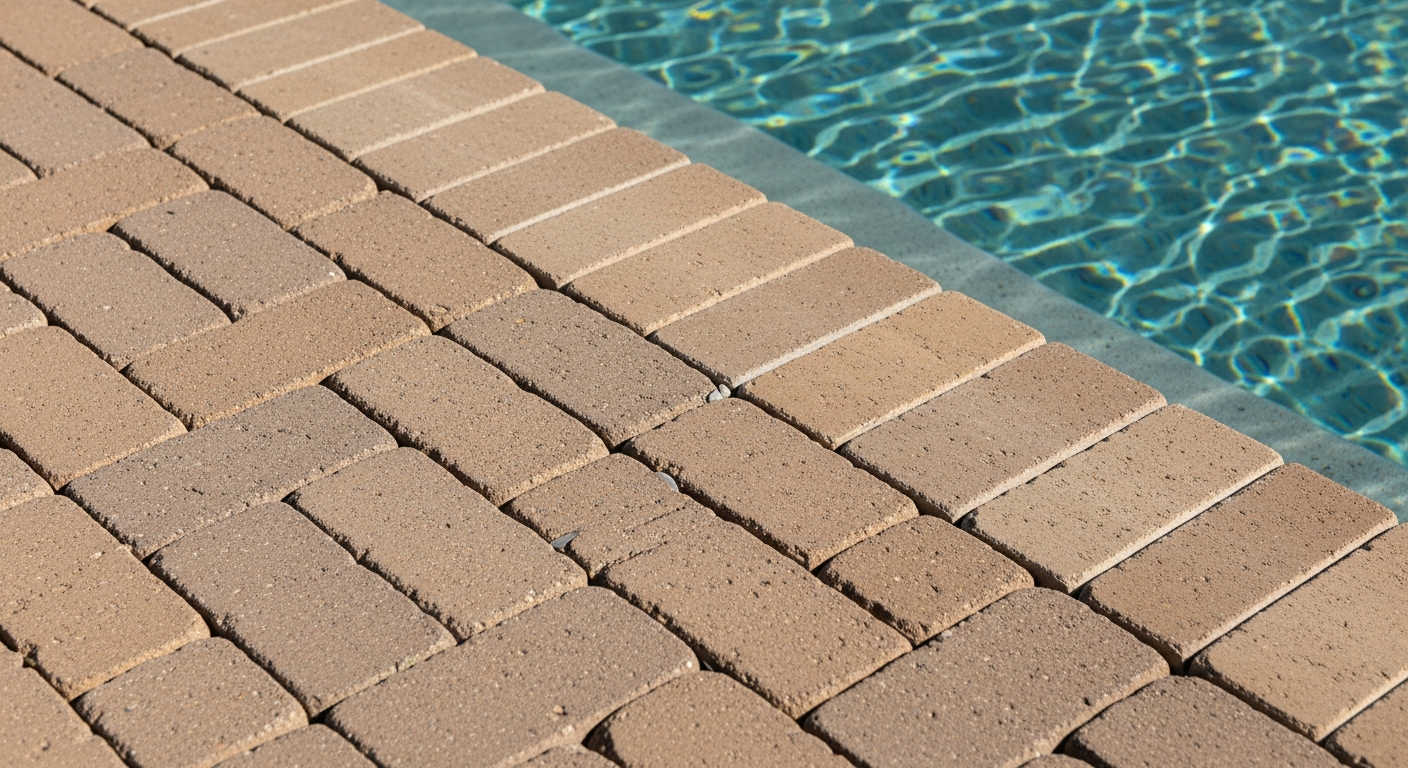
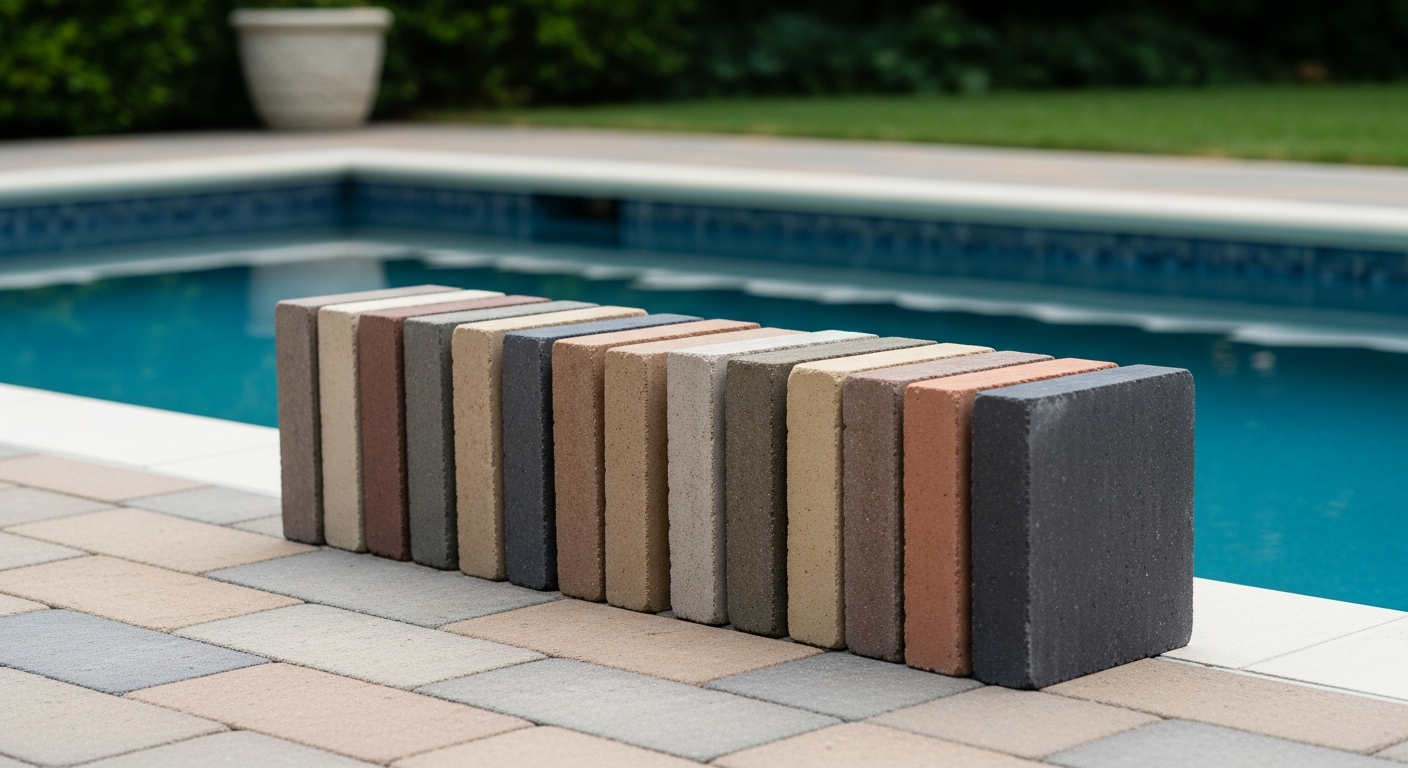
- Paver Material Selection for Climate: The choice of paver isn't just aesthetic. For high-sun areas, I advise clients on pavers with a high Solar Reflectance Index (SRI) to reduce surface temperature. More importantly, I analyze the paver's porosity. Less porous, high-density pavers are far more resistant to the black algae and mold that thrive in our humid climate, dramatically reducing long-term maintenance.
Implementation: The 4-Layer Interlocking System for Florida's Climate
Once the diagnostic is complete, the installation follows a strict, layered process. Each step is a quality control checkpoint designed to eliminate the common points of failure I've observed in other projects. Cutting corners on any of these steps is what leads to sinking, shifting, and weed-infested joints.Precision Adjustments and Quality Standards
This is where expertise truly makes a difference. It's the small details that ensure a 20-year lifespan instead of a 2-year headache.- Sub-Base Compaction Protocol: Simply running a plate compactor over the base is not enough. I work in 2-inch lifts (layers), compacting each one individually until I achieve 98% Proctor density. This creates a near-impenetrable foundation that resists the subtle ground shifts common in Florida.
- Screeding the Bedding Sand: The 1-inch layer of bedding sand is for seating the pavers, not for leveling. I use solid metal screed rails to ensure this layer is perfectly uniform. I've seen many jobs where sand is used to fill low spots in the base, which is a guaranteed recipe for future sinking.
- Joint Stabilization and Sealing: This is the final and most critical step for Florida. I use a high-quality polymeric sand, which contains polymers that harden when activated with a light mist of water. The key is the application: the paver surface must be perfectly dry, the sand must be swept into the joints until they are full, and the excess must be blown off completely before misting. This creates a firm, flexible joint that locks the pavers together, prevents weed growth, and resists ant hills and erosion from heavy rain.
Written by

Tags
brick pavers near me
landscaping bricks
brick pavers for sale
brick paver installers near me
thin brick pavers
Brick Pavers in Lake FL FAQ
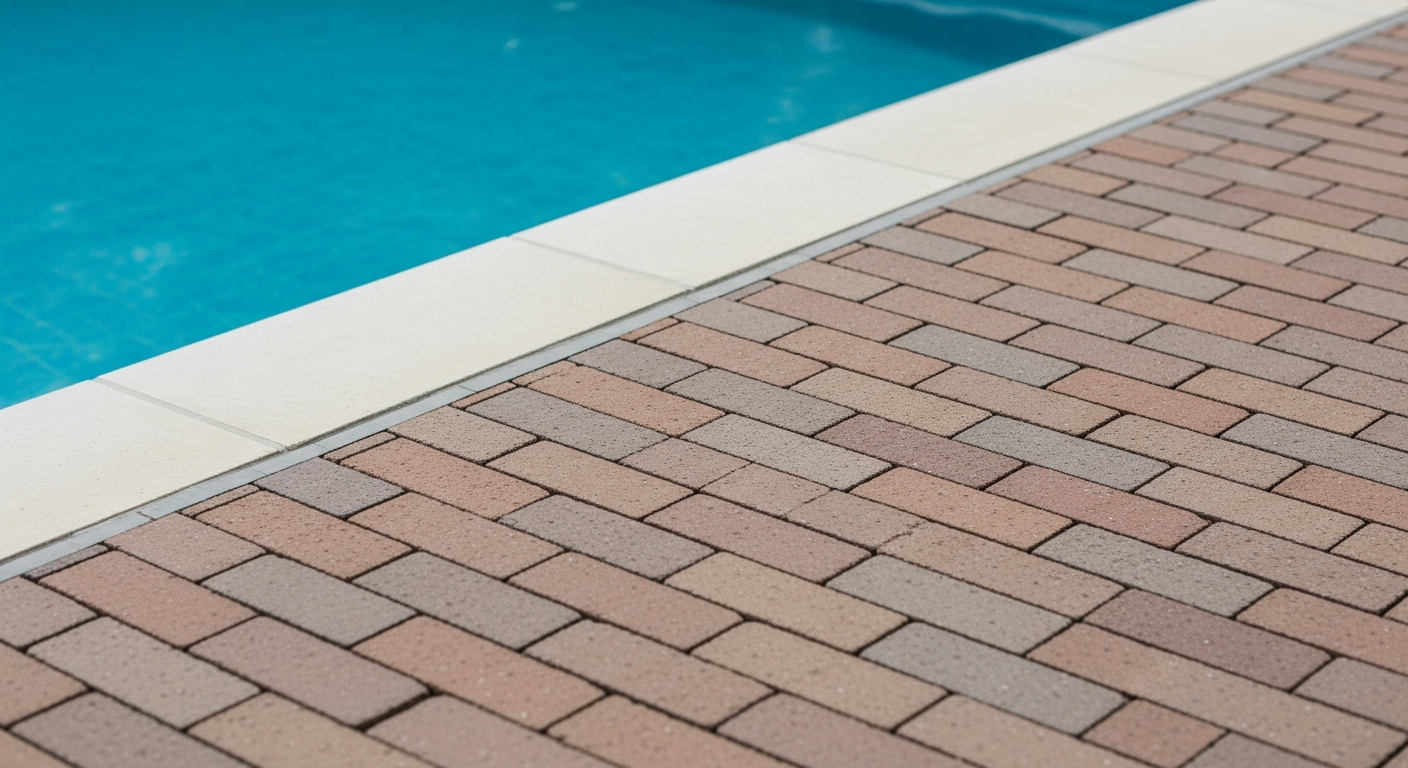
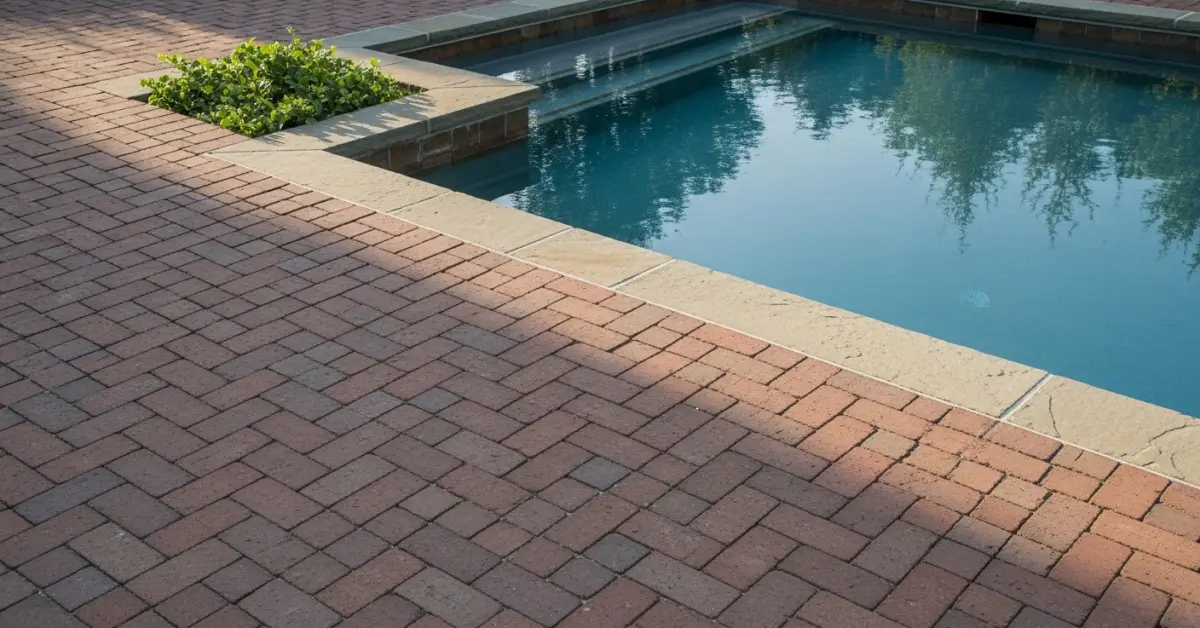
Why are the brick pavers next to my pool sinking and becoming uneven?
Sinking pavers are almost always caused by a washout of the sand base, often from a hidden plumbing leak or poor deck drainage. A small leak, even 3 mm, can displace the foundational sand over time, creating voids that cause the pavers above to settle and become a serious trip hazard. Before leveling the pavers, it's critical to perform a pressure test on the pool's plumbing lines to rule out a leak. Simply adding more sand and resetting the pavers without fixing the underlying water issue just guarantees the problem will return, often worse, within a season.
Can I use a pressure washer to clean stains and algae off my paver pool deck?
Using a high-pressure washer on brick pavers is a common mistake that can cause significant damage to your pool deck. The intense stream blasts out the essential polymeric sand from the joints, which is what locks the pavers together and prevents weed growth. Without this joint sand, pavers can shift, wobble, and become unstable. A better approach is to use a low-pressure rinse combined with a specialized paver cleaner, followed by reapplying polymeric sand once the deck is completely dry to secure the joints.
What is the white, chalky film on my pavers, and how do I get rid of it?
That white film is efflorescence, which is mineral salt migrating from within the paver to the surface as moisture evaporates. While it's a natural process, it's often made worse by improper drainage or constant splashing from pool water with a high pH, typically above 7.6. You can clean it with a specialized efflorescence remover, but the key to preventing its return is improving drainage away from the deck and ensuring your pool water chemistry is consistently balanced. Sealing the pavers after a thorough cleaning can also help block moisture and reduce future occurrences.
Are brick pavers a good choice for a saltwater pool deck?
Brick pavers can be an excellent choice for a saltwater pool, but only if you select the right type and seal them properly. Choose dense, high-quality clay pavers, as porous concrete pavers can be susceptible to spalling and degradation from salt crystal formation within their pores. The critical step is applying a high-quality, salt-resistant penetrating sealer after installation and reapplying it every few years. This creates a barrier that prevents saltwater from soaking into the pavers, preserving their structure and color for the long term.
How do I stop weeds and ants from coming up through the joints in my pavers?
Weeds and ants in paver joints indicate that the original jointing sand has failed and needs to be replaced. The solution is to thoroughly clean out the joints and refill them with high-grade polymeric sand. Unlike regular sand, polymeric sand contains a binding agent that activates with water, hardening to form a durable, flexible seal. This seal acts as a powerful weed and insect deterrent. Simply spraying weed killer is a temporary fix; the only permanent solution is to re-establish this solid sand barrier between every paver.
My pavers get extremely hot in the sun. Is there anything I can do about it?
The heat absorption of pavers is directly related to their color and density, with dark, dense bricks becoming the hottest. While you cannot change the paver itself, applying a modern infrared-reflective sealer can make a noticeable difference. These specialized sealants are formulated to reflect a portion of the sun's thermal energy rather than absorbing it, which can lower the surface temperature. Lighter-colored pavers are always the best choice for cooler surfaces, but for an existing dark deck, this type of sealer is the most effective retrofit solution.