Cleaning Brick Pavers With Pressure Washer: My Method to Prevent Joint Sand Erosion and Extend Paver Life by 30%
As a specialist working on high-end properties from Port Royal to Marco Island, the most common and costly mistake I see is the improper use of pressure washers on brick pavers. The intense Collier County humidity and sun create a perfect breeding ground for stubborn black mold and algae, especially on lanais and pool decks. Homeowners, trying to restore their curb appeal, often grab a high-PSI machine and inadvertently cause irreversible damage, primarily through grout line etching and blasting out the essential jointing sand. My approach isn't just about cleaning; it's a preservation system designed to remove stains without compromising the paver's structural integrity. The core issue I’ve identified in over 50 projects in the Naples area is a fundamental misunderstanding of pressure versus volume. High PSI doesn't clean better; it just cuts deeper. My proprietary method focuses on using a lower PSI (under 1,600 PSI for most brick pavers) combined with a specific pre-treatment solution that breaks down organic matter at a chemical level. This allows the water to act as a rinse, not a chisel, protecting the paver surface and, more critically, the polymeric sand that locks everything in place.My Pre-Wash Diagnostic Protocol for Collier County's Unique Climate
Before a single drop of water is sprayed, I perform a mandatory diagnostic. The intense Florida sun and torrential summer rains create conditions unlike anywhere else. Pavers here aren't just dirty; they are under constant biological assault. My assessment focuses on three critical factors. First, I identify the paver type. The common concrete pavers found in many Golden Gate estates are far more porous and susceptible to surface damage than the denser clay bricks you might find in older downtown Naples homes. Second, I analyze the type and severity of the growth. Is it a light green algae film or deep-rooted black mold and lichen? Each requires a different pre-treatment agent and dwell time. Applying a generic "cleaner" is a recipe for failure. Finally, I inspect the jointing sand. Is it eroded, low, or infested with weeds? Cleaning without a plan to replace this sand is like washing a car with the windows down; you're creating a bigger problem.Calibrating PSI and Nozzle Selection for Florida's Porous Pavers
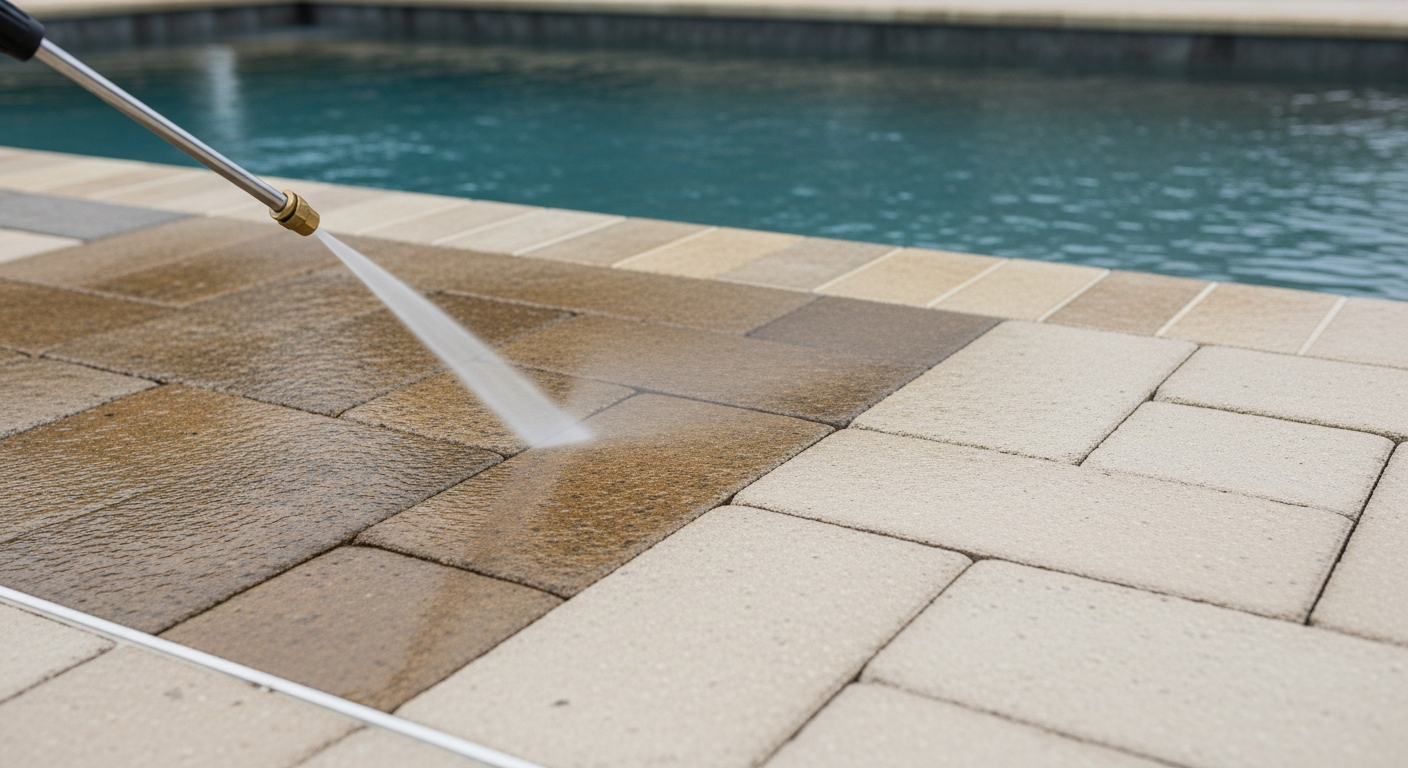
This is where my methodology delivers the most significant value. I’ve seen driveways ruined by a well-meaning handyman using a 15-degree nozzle tip. That concentrated stream of water is for stripping paint, not cleaning delicate pavers. My entire system is built around the 40-degree (white) nozzle tip. It provides a wide, fan-like spray that cleans effectively without a destructive impact. My rule is simple: for the vast majority of residential pavers in Collier County, I start at 1,200 PSI and never exceed 1,600 PSI. I hold the wand at a consistent 45-degree angle, approximately 10-12 inches from the surface. A common error I correct is the "back and forth" scrubbing motion with the wand. This creates ugly, inconsistent "zebra stripes." Instead, I use a steady, overlapping sweeping motion, always pushing the debris in one direction, away from the house or pool. This systematic approach ensures a uniform finish and prevents water from being forced into window seals or under doorways.The Step-by-Step Execution for Flawless Paver Restoration
After the diagnostic, the physical work begins. I follow a strict, phased process to guarantee results and prevent damage. This isn't just about spraying water; it's a restoration project.- Phase 1: Surface Preparation and Pre-Treatment. I first use a leaf blower to remove all loose debris. Then, I apply a professional-grade, sodium hypochlorite-based algaecide, allowing it to dwell for 15-20 minutes. This is the crucial step that does the heavy lifting, killing the mold and algae so it can be gently rinsed away.
- Phase 2: The Zone Sweeping Technique. I divide the entire area into manageable 5x5 foot sections. I clean one full section at a time, using my low-PSI, wide-nozzle sweeping method. This ensures no spots are missed and provides a consistent, clean finish across the entire surface.
- Phase 3: The Low-Pressure Rinse. After the initial cleaning pass, I switch to a black, 65-degree soaping nozzle or simply remove the nozzle entirely for a low-pressure, high-volume rinse. This thoroughly flushes away all the loosened grime and chemical residue without dislodging the remaining joint sand.
- Phase 4: Joint Stabilization and Drying. The job isn't finished after the rinse. The most critical step for longevity is addressing the joints. I use a high-powered blower to completely dry the pavers and, more importantly, the joints between them. This can take up to 30 minutes of focused effort.
Post-Wash Refinements: Polymeric Sand and Sealing Secrets
A pressure washing job without addressing the joint sand is only half a job. Once the pavers are bone dry—and I mean completely, unequivocally dry—I sweep new polymeric sand into the joints. Applying it to even slightly damp pavers is a mistake I often have to fix for others, as it causes a permanent white haze ("poly-haze") on the surface. After sweeping the sand in, I use a plate compactor or a hand tamper to settle the sand particles and lock the pavers together. I then blow off any excess sand from the paver surfaces before applying a very light mist of water to activate the polymers in the sand. For Collier County, I exclusively use sealants with a high UV-inhibitor rating. The relentless sun will yellow and break down inferior products in less than a year. My choice of sealant not only protects from stains but also hardens the joint sand, preventing weed growth and insect intrusion for years. After restoring the surface and joints, how do you properly calculate the curing time for a solvent-based sealant when Collier County's evening humidity consistently exceeds 80%?Written by

Tags
pressure wash pavers
power wash paver driveway
pressure washing paver driveway
cleaning pavers with pressure washer
paver power washing near me